Preview
 Send
Send Share
Share
 Details

 Download
 Similars
 X-Ray
X-Ray Diaporama
 Stats
StatsTennessee


 Read More
Hand Made Oil Reproduction
Hand-painted oil on canvas in your size and frame, made to order by our artists. ( Switch to Print Switch to Digital Image)




P118B $10

P118H $10

P118W $10

P438Z $10

P508JH $12

P508YH $12

P805H $10

P805Z $10

P919BZ $10

P919G $10

P919XJ $10

P959ZH $10

P968JZ $12

W106C $8

W218G $10

W218JH $8

W218Y $10

W307PJ $10

W316G $10

W316PJ $8

W316Y $10

W398PJ $8

W4111J $10

W500HY $15

W500JH $15

W692G $12

W849H $8

W940BG $15

W953PJ $8
Pick from our preset sizes that match the artwork's original proportions.

You may enter your own dimensions to fit a specific frame or space. If your selected size does not match the original image's proportions, we will either crop the artwork or extend the painting with additional hand-painted elements. A digital mockup will be sent for your approval before production begins.
Please note that the on-screen preview does not reflect the actual cropping or extension. Only the mockup will accurately show the final composition.
While custom sizes are available, we recommend selecting a dimension from the predefined list to preserve the original proportions.
After order, ArtsDot.com team will email client for instructions and provide a mockup preview
Worldwide Delivery () in 3/4 weeks instead of standard 5 weeks. (16 September). No compromise on quality.

Free Worldwide Express Shipping

High-Quality Linen Canvas

Full Shipping Insurance

Customs Tax Refund Guarantee

True Color Matching Guarantee

100-Day Return Policy (Defects Only)

100% Money-Back Guarantee

Bulk Discount Offer
 Glass option is only available in size under 110 CM

Tennessee
Reproduction Medium
Reproduction Size
-


Total Price
$ 263
A Poet of the American Landscape: Unveiling “Tennessee” by Alexander Helwig Wyant
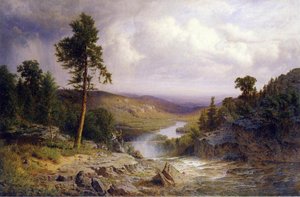
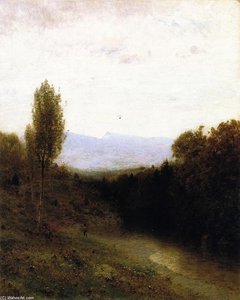
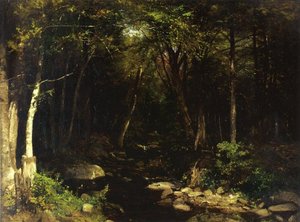
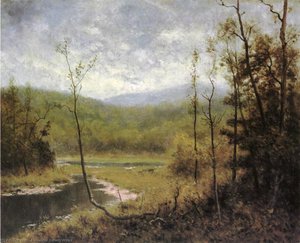
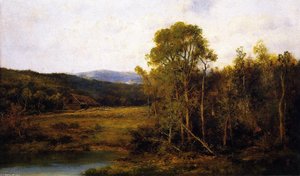
Alexander Helwig Wyant’s “Tennessee,” painted in 1866, isn't merely a depiction of a river valley; it’s an immersive experience, a carefully constructed evocation of mood and atmosphere. Wyant, a pivotal figure bridging the romanticism of the Hudson River School with the nascent tonalism movement, possessed a rare gift: he translated the subtle poetry of nature into visual form, imbuing his canvases with a profound sense of introspection. This particular work captures a fleeting moment in the Tennessee countryside – perhaps late afternoon, judging by the diffused light and the muted palette – yet it transcends simple representation to become a meditation on solitude, memory, and the enduring beauty of the American wilderness.
The painting immediately draws the eye into its heart: a broad river, rendered with a delicate wash of blues and greens, snakes through a gently rolling landscape. Mountains, hazy in the distance, provide a dramatic backdrop, their peaks softened by atmospheric perspective – a technique borrowed from the masters of light and color like J.M.W. Turner. Scattered amongst the trees are hints of human presence, a small figure near the riverbank suggesting a quiet observer, lost in contemplation. Wyant’s brushstrokes are loose and expressive, avoiding sharp outlines and favoring instead a blending of tones that creates an almost dreamlike quality. This deliberate ambiguity invites the viewer to project their own emotions and experiences onto the scene.
The Tonalist Vision: Light, Shadow, and Emotion
Wyant’s approach aligns perfectly with the principles of tonalism, a movement that sought to capture not just the appearance of objects but also the *feeling* they evoked. Unlike the Hudson River School's emphasis on detailed realism and dramatic lighting, Wyant favored subtle gradations of tone – variations in light and shadow – to create an atmosphere of mood and emotion. He achieved this through a layering technique, applying thin washes of paint that gradually built up to form the final image. The absence of strong color contrasts contributes to the painting’s sense of quiet melancholy, while the diffused light suggests a timelessness, as if the scene exists outside of specific time or place.
The choice of subject matter – a rural landscape – is also significant. Wyant was deeply interested in exploring the relationship between humanity and nature, often depicting scenes that evoked feelings of nostalgia and longing for simpler times. “Tennessee” embodies this theme perfectly, inviting us to pause and reflect on our connection to the natural world.
Historical Context: A Painter’s Journey
Wyant's artistic development was shaped by a series of transformative experiences. Initially influenced by George Inness, he later traveled extensively in Europe, studying with Hans Gude in Düsseldorf and Karlsruhe. These journeys exposed him to new techniques and perspectives, broadening his understanding of landscape painting. However, it was his return to America and the challenges posed by a stroke that ultimately led him to refine his style – forcing him to adapt and innovate, using only his left hand to create works of remarkable sensitivity and depth.
The painting’s creation coincided with a period of profound change in American history. The Civil War was raging, and the nation was grappling with issues of identity and division. Wyant's work reflects this turmoil, capturing a sense of uncertainty and melancholy that resonates deeply within the viewer. Despite the somber mood, there is also an underlying current of hope – a belief in the enduring beauty and resilience of the American landscape.
Symbolism and Emotional Resonance
Beyond its technical merits, “Tennessee” is rich in symbolism. The river itself represents the flow of time and life, while the mountains symbolize strength and permanence. The solitary figure suggests a yearning for connection and belonging. The overall effect is one of quiet contemplation – an invitation to lose oneself in the beauty of nature and reflect on our place within it. “Tennessee” isn’t just a painting; it's a portal into a world of feeling, a testament to Wyant’s extraordinary ability to capture the essence of the American spirit.
Related Artworks


Artist Biography
A Poet of Atmospheric Landscapes: The Life and Art of Alexander Helwig Wyant
Alexander Helwig Wyant, born in 1836 in Port Washington, Ohio, occupies a fascinating transitional space in American art history. He wasn’t merely a painter *of* landscapes; he was a poet *with* landscapes, translating the subtle moods of nature onto canvas with an increasingly refined sensitivity. His journey began humbly, sketching along the banks of the Ohio River near Cincinnati, but quickly blossomed into a dedicated pursuit fueled by encounters with pivotal figures and transformative experiences. A crucial moment arrived in 1857 when Wyant encountered the work of George Inness, whose influence would profoundly shape his artistic trajectory. This meeting spurred him to relocate to New York City, seeking mentorship and formal training at the National Academy of Design, generously supported by the patronage of Nicholas Longworth. A subsequent journey to Europe in 1860 further broadened his horizons, exposing him to diverse artistic traditions in Germany and brief sojourns in England and Ireland. These early experiences laid the foundation for a career that would bridge the detailed realism of the Hudson River School with the evocative subtleties of Tonalism.From Detailed Observation to Atmospheric Resonance
Wyant’s initial works clearly demonstrate the influence of the Hudson River School, characterized by meticulous depictions of natural scenes and a celebration of America's pristine wilderness. However, even in these early paintings, hints of his future direction are visible – a growing interest in atmospheric effects and a tendency towards more subdued color palettes. Over time, this inclination intensified, leading him away from purely representational painting and toward the emerging aesthetic of Tonalism. This movement, which flourished in the late 19th century, prioritized mood, atmosphere, and poetic interpretation over precise detail. Wyant became increasingly reliant on a restricted palette dominated by whites, grays, and earth tones, using these nuanced shades to capture the ephemeral qualities of light and shadow. He masterfully employed clouds not as dramatic focal points, but as vehicles for creating subtle emotional resonance within his landscapes. A defining moment in this artistic evolution occurred in 1873 when a stroke paralyzed his right arm. Forced to adapt, Wyant remarkably taught himself to paint with his left hand – an adversity that arguably intensified his focus on atmospheric effects and emotional expression, stripping away any reliance on technical virtuosity and forcing him to distill his vision to its purest essence.Exhibitions, Affiliations, and a Growing Recognition
Throughout his career, Wyant actively sought opportunities to showcase his work, exhibiting consistently at the National Academy of Design from 1864 until his death in 1892. He also participated in exhibitions organized by prominent art associations such as the Brooklyn Art Association, Boston Art Club, and Pennsylvania Academy of Fine Arts, steadily building a reputation among collectors and fellow artists. Notable works like *Mohawk Valley*, now held at the Metropolitan Museum of Art, exemplify his mature style – a harmonious blend of detailed observation and atmospheric sensitivity. His final painting, *Arkville Autumn Landscape*, stands as a poignant testament to his enduring passion for landscape art. Beyond exhibitions, Wyant was deeply involved in the artistic community, playing an instrumental role in the founding of the American Watercolor Society in 1878, further solidifying his commitment to advancing American painting. He also maintained affiliations with prestigious organizations like the Century Association and the National Academy of Design, demonstrating his standing within the established art world.A Legacy Bridging Traditions
Alexander Helwig Wyant’s historical significance lies in his ability to synthesize diverse artistic influences and forge a unique path between the grandeur of the Hudson River School and the introspective moodiness of Tonalism. He wasn't simply imitating earlier styles; he was actively transforming them, shifting the focus from purely representational depictions of nature towards more subjective and emotionally resonant interpretations. His work reflects a growing desire among American artists to move beyond mere imitation of European models and develop a distinctly national artistic voice. While not widely celebrated during his lifetime, Wyant’s paintings have gained increasing recognition in recent decades for their poetic quality, subtle beauty, and profound understanding of the natural world. His later works, particularly those created in Arkville, New York, reveal a clear connection to the Barbizon painters – a group of French artists who emphasized *plein air* painting and a focus on capturing the fleeting effects of light and atmosphere. Wyant’s contemplative approach to landscape art continues to inspire artists and captivate audiences today, cementing his place as a pivotal figure in American art history.Influences and Artistic Kinship
- George Inness: A primary mentor whose emphasis on tonal values and atmospheric effects profoundly influenced Wyant’s artistic development.
- John Constable & J.M.W. Turner: British landscape painters whose innovative use of light, color, and atmosphere served as a source of inspiration for Wyant's evolving style.
- Hudson River School: Wyant initially followed this tradition, absorbing its emphasis on detailed observation and grand vistas, but ultimately diverged towards the more nuanced aesthetic of Tonalism.
- American Barbizon Movement: His later work aligned with the principles of this movement, emphasizing *plein air* painting, a focus on natural light, and a rejection of academic conventions.
- Century Association & National Academy of Design: Wyant’s membership in these prestigious artistic organizations underscored his standing within the American art community and provided opportunities for exhibition and networking.
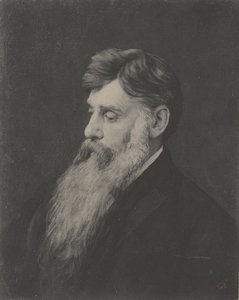
Alexander Helwig Wyant
1836 - 1892 , United States of America
Quick Facts
- Artistic Movement Or Style: Tonalism, Hudson River School
- Artists Or Movements Influenced By This Artist:
- American Watercolor Society
- Barbizon movement
- Artists Who Influenced This Artist:
- George Inness
- John Constable
- J.M.W. Turner
- Date Of Birth: January 11, 1836
- Date Of Death: November 29, 1892
- Full Name: Alexander Helwig Wyant
- Nationality: American
- Notable Artworks:
- Mohawk Valley
- Arkville Autumn Landscape
- The Flume
- Pool in the Woods
- Place Of Birth: Port Washington, USA
Related Articles
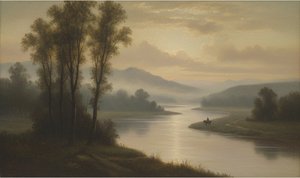
George Elbert Burr: A Pioneer of American Tonalism & Evocative Landscape Painting
Explore the captivating landscapes of George Elbert Burr, a pioneer of American Tonalism. Discover his masterful etchings, drypoints & watercolors – and learn about collecting this influential artist's work.
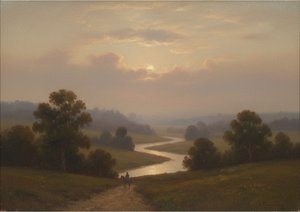
Atmospheric Visions: Exploring Tonalism in American Painting
Explore the captivating world of American Tonalism! Discover its history, key artists like Whistler & Inness, techniques, and lasting influence on art. Expert insights for collectors & enthusiasts.
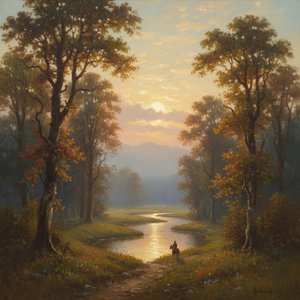
George Inness: Transcendental Landscapes & the American Search for Spiritual Harmony
Explore the profound landscapes of George Inness, a leading American artist-philosopher. Discover his spiritual approach to painting, influences, and lasting legacy with ArtsDot.

Evocations of Place: A Historical Journey Through Landscape Art
Explore the rich history of landscape art with ArtsDot. Discover renowned artists, movements like Impressionism & Romanticism, and expert guidance for collecting timeless pieces. Find your perfect serene escape today!
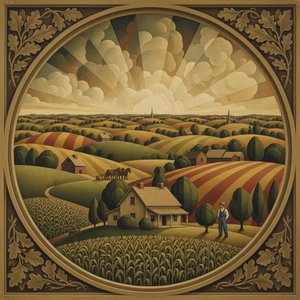
Grant Wood & American Regionalism: Identity, Myth & the Rural Landscape
Explore the world of Grant Wood & American Regionalism with ArtsDot. Discover the symbolism behind 'American Gothic', recurring themes, and the movement's lasting impact on art history. High-quality reproductions available.