 Preview
 Send
Send Share
Share
 Details

 Download
 Similars
 X-Ray
X-Ray Diaporama
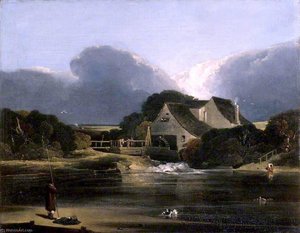
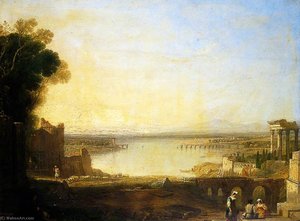
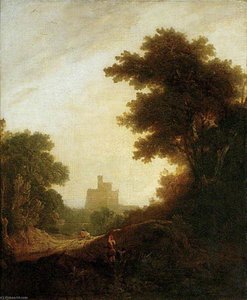
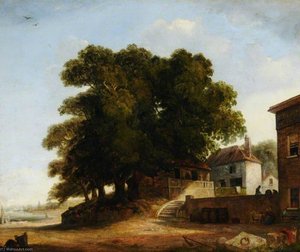
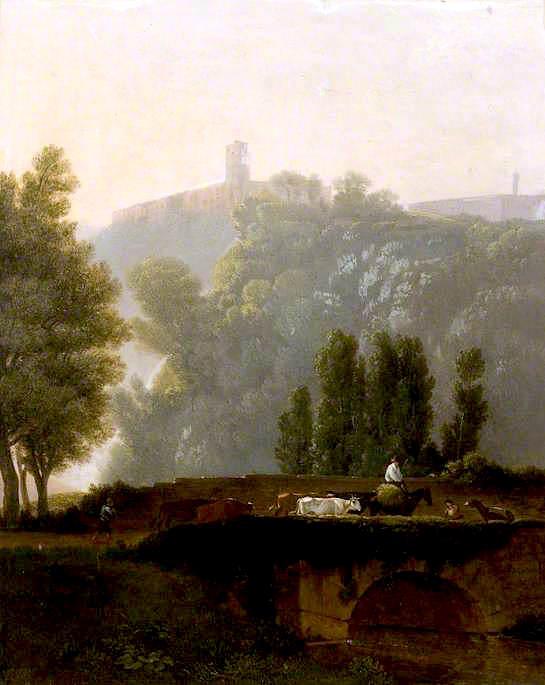
Landscape and Figures
 Oil On Canvas
- WallArt
- Romanticism
 1829
1829 47.0 x 38.0 cm
 Alfred East Art Gallery
 Read More
Hand Made Oil Reproduction
Hand-painted oil on canvas in your size and frame, made to order by our artists. ( Buy Print Buy Image)




P118B $10

P118H $10

P118W $10

P438Z $10

P508JH $12

P508YH $12

P805H $10

P805Z $10

P919BZ $10

P919G $10

P919XJ $10

P959ZH $10

P968JZ $12

W106C $8

W218G $10

W218JH $8

W218Y $10

W307PJ $10

W316G $10

W316PJ $8

W316Y $10

W398PJ $8

W4111J $10

W500HY $15

W500JH $15

W692G $12

W849H $8

W940BG $15

W953PJ $8




Pick from our preset sizes that match the artwork's original proportions.

You may enter your own dimensions to fit a specific frame or space. If your selected size does not match the original image's proportions, we will either crop the artwork or extend the painting with additional hand-painted elements. A digital mockup will be sent for your approval before production begins.
Please note that the on-screen preview does not reflect the actual cropping or extension. Only the mockup will accurately show the final composition.
While custom sizes are available, we recommend selecting a dimension from the predefined list to preserve the original proportions.
After order, ArtsDot.com team will email client for instructions and provide a mockup preview
Worldwide Delivery () in 3/4 weeks instead of standard 5 weeks. (16 August). No compromise on quality.

Free Worldwide Express Shipping

High-Quality Linen Canvas

Full Shipping Insurance

Customs Tax Refund Guarantee

True Color Matching Guarantee

60-Day Return Policy (Defects Only)

100% Money-Back Guarantee

Bulk Discount Offer
 Glass option is only available in size under 110 CM

Landscape and Figures
Reproduction Medium
Reproduction Size
-


Total Price
$ 288
Artwork Description
A Tranquil Vision of Rural England: Sir Augustus Wall Callcott’s “The Entrance to the Pool of London”
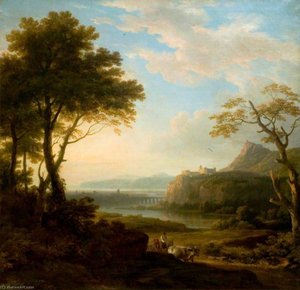
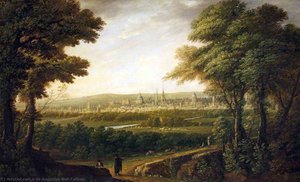
Sir Augustus Wall Callcott's "The Entrance to the Pool of London," painted in 1816, stands as a quintessential example of Romantic landscape painting—a testament to the artistic fervor and aesthetic sensibilities of early 19th-century Britain. Executed with meticulous attention to detail and bathed in diffused light, this artwork transports viewers back to a time when capturing the sublime beauty of nature was considered paramount to artistic achievement. The scene depicts a picturesque riverside vista overlooking London’s Pool of London, skillfully rendered by Callcott's masterful brushwork and tonal gradations.Composition and Technique: Embracing Romantic Ideals
The painting employs a pyramidal compositional structure, drawing the eye upwards from the foreground figures—a man carrying a bundle on his back and a young boy—towards the distant castle perched atop a hill. This deliberate arrangement reinforces the grandeur of the landscape while simultaneously grounding the viewer in the earthly realm. Callcott’s technique is characterized by layering oil paints to achieve subtle atmospheric haze, creating an illusion of depth that captures the misty conditions prevalent along the Thames estuary. The artist's brushstrokes are delicate and expressive, conveying texture—particularly evident in the foliage and water reflections—without resorting to hyperrealism. This understated realism aligns perfectly with Romantic ideals, prioritizing emotion and imagination over strict scientific observation.Symbolic Resonance: Landscape as Reflection of Humanity
Beyond its aesthetic beauty, “The Entrance to the Pool of London” is laden with symbolic significance. The river itself represents the flow of life—its ceaseless movement mirroring the passage of time and embodying both serenity and potential turbulence. The castle symbolizes power and distance, serving as a focal point for contemplation and reminding us of the grandeur of history. Furthermore, the figures – the man and boy – embody human activity within this idyllic setting, suggesting harmony between mankind and nature. Their presence underscores the Romantic preoccupation with portraying humanity’s relationship to its environment.Historical Context: The Rise of Landscape Painting
The painting emerged during a period of significant artistic innovation in Britain, coinciding with the burgeoning influence of Romanticism. Artists like Callcott sought inspiration from the dramatic landscapes of Scotland and Wales, rejecting Neoclassical conventions that favored idealized forms and restrained palettes. This movement championed emotion, imagination, and individualism—values reflected in Callcott’s evocative depiction of London's riverside landscape. The artwork’s enduring appeal lies not only in its visual splendor but also in its ability to evoke a profound sense of peace and contemplation—a timeless reminder of the beauty inherent in the natural world.A Legacy of Romantic Impressionism
“The Entrance to the Pool of London” exemplifies Callcott's contribution to landscape painting, establishing him as one of the foremost artists of his era. Its meticulous attention to tonal subtleties and atmospheric perspective foreshadowed later developments in Impressionist technique—a testament to Callcott’s visionary grasp of artistic principles and his unwavering devotion to capturing the essence of Romantic emotion.Related Artworks

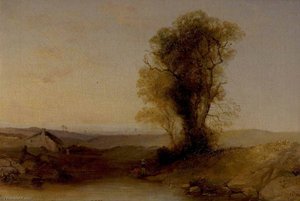
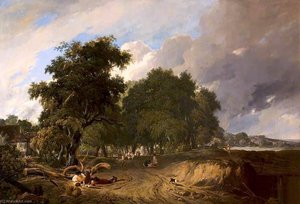
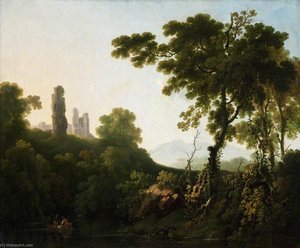
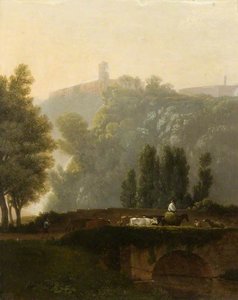
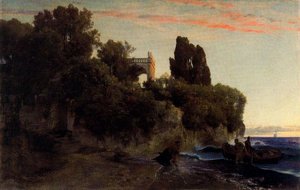
Artist Biography
early life and training
sir augustus wall callcott, a renowned english landscape painter, was born on february 20, 1779, in kensington gravel pits, a village on the western edge of london. his early life was marked by a passion for music, which led him to sing in the choir of westminster abbey for several years. later, he became a student of the royal academy, where he began his artistic career as a portrait painter under the tutelage of john hoppner.rise to prominence
callcott's preference for landscape painting soon became apparent, and after 1804, he exclusively exhibited landscapes. his skill, elegant design, and charming tone led to a steady rise in his reputation. in 1806, he was elected an associate of the royal academy, and in 1810, he became a full academician.notable works and exhibitions
some of callcott's most notable works include:- the entrance to the pool of london (1816)
- the mouth of the tyne (1818)
- a dead calm on the medway (1820)
- rochester (1824)
- raffaelle and the fornarina (1837) - a rare example of his figure paintings, which can be found in the south kensington museum (sheepshanks collection), now part of the v&a
legacy and later life
callcott received a knighthood in 1837 upon queen victoria's accession. he succeeded william seguier as surveyor of the queen's pictures in 1843. callcott passed away on november 25, 1844, and was buried in kensal green cemetery. view more works by sir augustus wall callcott on ArtsDot.com: explore more on wikipedia: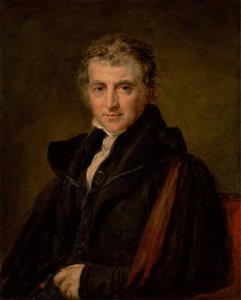
Sir Augustus Wall Callcott
1779 - 1844 , United Kingdom
Quick Facts
- Artistic Movement Or Style: Romantic Landscape Painting
- Artists Or Movements Influenced By This Artist: ['Turner']
- Artists Who Influenced This Artist: ['John Hoppner']
- Date Of Birth: February 20, 1779
- Date Of Death: November 25, 1844
- Full Name: Augustus Wall Callcott
- Nationality: British
- Notable Artworks:
- The Entrance to the Pool of London
- The Mouth of the Tyne
- A Dead Calm on the Medway
- Rochester
- Raffaelle and the Fornarina
- Place Of Birth: Kensington, United Kingdom
Related Articles

Romantic Landscapes: 10 Masterpieces for Your Home | ArtsDot
Journey through 10 Romantic landscape masterpieces by Friedrich, Turner & Cole. Explore emotional art, sublime nature scenes & iconic 19th-century paintings. Find museum-quality reproductions for your home at ArtsDot.com – discover the full collection online!
Sir Augustus Wall Callcott: A Life Painted with Light & Atmosphere
Explore the life & art of Sir Augustus Wall Callcott, a celebrated British landscape painter known for his serene scenes and elegant compositions. Discover his Romantic influences & lasting legacy at ArtsDot.

Beyond the Horizon: 10 Landscape Masterpieces for Your Home Decor
Journey through 10 breathtaking landscape paintings by Monet, Van Gogh & more! Explore iconic artworks, artistic techniques & find inspiration for your home decor. Museum-quality reproductions at ArtsDot.com. Discover all masterpieces on ArtsDot.com

John Constable's Masterpieces: Explore 25 Iconic Landscapes for Your Home
Journey through John Constable's 25 most celebrated landscapes. Explore Romanticism, Dedham Vale & his masterful use of light in iconic paintings like 'Hay Wain'. Find museum-quality art reproductions and elevate your home decor on ArtsDot.com.

The Sublime and the Picturesque: Exploring Emotion & Nature in Romantic Landscape Painting
Explore the emotional power of Romantic landscape painting! Discover the sublime & picturesque traditions, key artists like Friedrich & Cole, and find your perfect artwork at ArtsDot.