

 Preview
 Send
Send Share
Share
 Details

 Download
 Similars
 X-Ray
X-Ray Diaporama
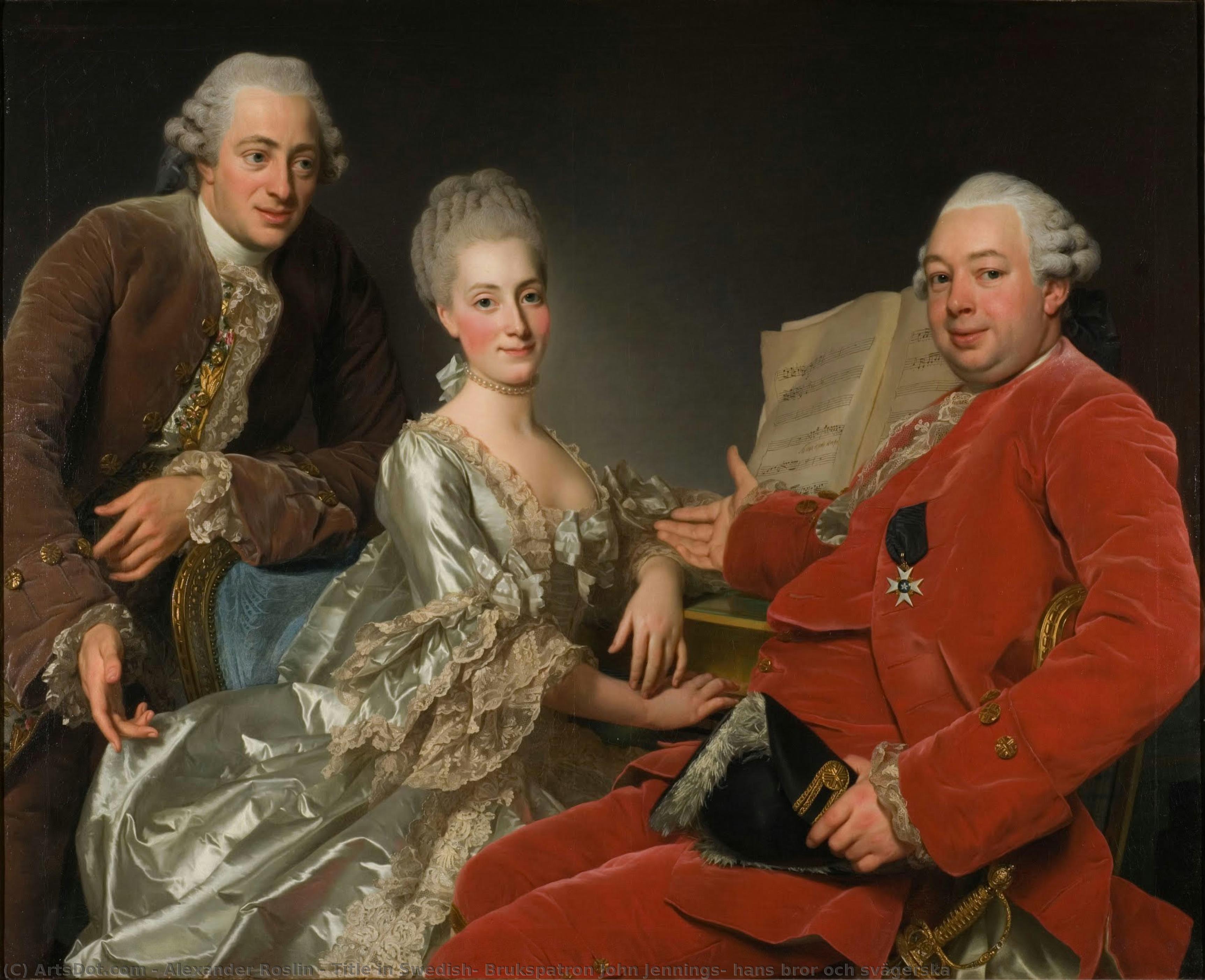
Title in Swedish: Brukspatron John Jennings, hans bror och svägerska
 Acrylic On Canvas
- WallArt
- Rococo
 1769
1769 1480.0 x 1210.0 cm
 Nationalmuseum
 Read More
Purchase a high-resolution, enhanced digital image, far superior to the online preview.
Each file is meticulously prepared by our in-house specialists using advanced tools and expert manual retouching. We ensure every image has exceptional clarity, precise color accuracy, and fine detail.
The final file is delivered via email within 72 hours, optimized for immediate use in professional, editorial, and print environments. This is the same quality trusted by top-tier design studios, publishers, and galleries.
Digital Image
Download a high-resolution file for personal display, printing, and creative projects. ( Buy Print Buy Hand Made Painting)
Included in Every Digital Image Order
Expert Digital Delivery, Guaranteed
When you choose ArtsDot.com, you're not just getting an image - you're receiving a professionally enhanced digital artwork, crafted with precision and backed by a satisfaction guarantee. Here's everything that comes with your order, automatically:

Fast Email Delivery
Your high-resolution digital image file will be emailed to you within 72 hours of ordering - ready for immediate use.

AI-Enhanced Digital File
Your artwork is professionally optimized using advanced AI tools and manual editing, ensuring maximum detail, clarity, and color accuracy.

Free Lifetime Re-Delivery
Accidentally deleted or lost your file? No worries - we'll resend it to you anytime, free of charge.

No Import Fees - Ever
Enjoy your artwork instantly with zero customs, duties, or delivery fees - digital downloads are always tax-free.

Color Accuracy Guarantee
We ensure your digital image reflects the original colors as closely as possible using professional tools and color management.

60-Day Satisfaction Guarantee
If you're not satisfied with your digital image, we'll revise it or refund 100% within 60 days - no questions asked.

100% Money-Back Guarantee
Not satisfied? Get a full refund within 60 days of receiving your digital file - no questions asked.

Bulk Order Discounts
Buy 3 images, save 10% - Buy 5, save 15% - Buy 10+, save 20%. Great for creative projects, galleries, and agencies.
Collectible Description
A Glimpse into the Rococo Salon: Alexander Roslin’s “Brukspatron John Jennings, hans bror och svägerska”
Alexander Roslin's 1769 portrait, "Brukspatron John Jennings, hans bror och svägerska," offers a captivating window into the opulent world of 18th-century Swedish aristocracy. More than just a likeness, it’s a carefully constructed tableau vivant – a staged scene brimming with social significance and subtle theatricality. Roslin, a master portraitist who served prominent families across Europe, doesn't simply depict his subjects; he crafts narratives within their appearances, revealing layers of wealth, status, and the intricate dance of relationships that defined high society.
The painting centers on John Jennings, an iron-foundry proprietor, seated alongside his brother and sister-in-law. The composition immediately draws the eye to Jennings himself, radiating a quiet confidence as he gestures expansively, seemingly showcasing his family’s prosperity. His attire – a richly embroidered red jacket – speaks volumes about his position within the social hierarchy, while the carefully arranged details around him—the open book, the subtle hints of luxury in the background—reinforce this impression. The sister-in-law, positioned between the brothers, embodies an elegance and composure characteristic of women of her station. Her posture is upright, her gestures refined, reflecting a controlled grace that was highly valued within aristocratic circles.
The Language of Rococo: Style and Technique
Roslin’s style firmly anchors this portrait within the Rococo movement – an era renowned for its elegance, ornamentation, and playful sensuality. The painting is characterized by soft, diffused lighting, creating a hazy atmosphere that lends a dreamlike quality to the scene. Roslin masterfully employs delicate brushstrokes and shimmering colors, particularly in the fabrics of the figures’ clothing. Note the luxurious textures of the velvet, silk, and brocade – meticulously rendered to convey both their beauty and their cost. The use of pastel shades contributes to the overall sense of refinement and sophistication, a hallmark of Rococo art.
Technically, Roslin demonstrates a remarkable understanding of anatomy and perspective. He captures not only the physical appearance of his subjects but also their personalities through subtle shifts in expression and body language. The figures are rendered with an almost sculptural quality, emphasizing their forms and creating a sense of depth within the composition. The background, though relatively simple, is carefully designed to provide context and reinforce the family’s status – the presence of a chair and a book suggests a comfortable domestic setting, while the couch hints at further social gatherings.
Symbolism and Social Commentary
Beyond its aesthetic qualities, “Brukspatron John Jennings” offers a glimpse into the complex social dynamics of 18th-century Sweden. The portrait isn’t merely a celebration of wealth; it's also a subtle commentary on the roles and expectations placed upon men and women within that society. The brothers, positioned as equals, represent the traditional patriarchal structure, while the sister-in-law embodies the ideal of female virtue and domesticity. Her gaze, directed towards the viewer, invites engagement and subtly asserts her presence within the scene.
Furthermore, the theatricality evident in the figures’ poses—the sweeping gestures, the carefully arranged expressions—reflects the prevalence of role-playing and masquerades within aristocratic society. As research reveals, 18th-century elites frequently engaged in elaborate performances designed to impress visitors and reinforce their social standing. Roslin skillfully captures this spirit of theatricality, transforming a simple portrait into a miniature drama.
A Legacy of Elegance: Reproduction and Interpretation
Created nearly two and a half centuries ago, “Brukspatron John Jennings” remains a testament to Alexander Roslin’s artistic skill and his ability to capture the essence of his subjects. Today, high-quality reproductions offer an accessible way to appreciate this remarkable work of art. When selecting a reproduction, consider the level of detail and accuracy – a faithful rendering will truly transport you back to the opulent salons of 18th-century Sweden. The painting’s enduring appeal lies not only in its beauty but also in its ability to evoke a sense of history, social commentary, and the timeless allure of human connection.
Related Artworks
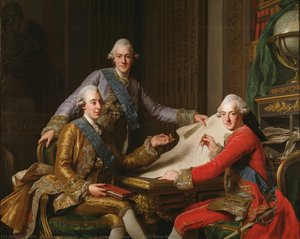
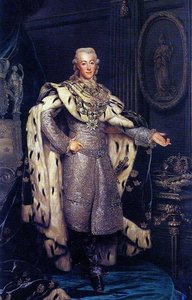
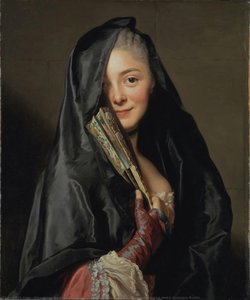
Artist Biography
A Life Dedicated to Portraiture: The World of Alexander Roslin
Born in Malmö, Sweden, in 1718, Alexander Roslin emerged as one of the most celebrated Rococo portraitists of his era. Initially destined for a practical life as a naval draughtsman – his father was a naval physician – young Alexander’s innate artistic talent quickly steered him toward a different path. His early training under Admiralty Captain Lars Ehrenbill provided foundational skills, but it was his subsequent apprenticeship with Georg Engelhard Schröder in Stockholm that truly ignited his passion and shaped his aesthetic sensibilities. Schröder exposed Roslin to the grand masters of portraiture, notably Hyacinthe Rigaud and Nicolas de Largillière, whose influence would become subtly woven into the fabric of his own distinctive style. These formative years instilled not only technical proficiency but also a deep appreciation for capturing character and social standing within the conventions of aristocratic representation.From Swedish Beginnings to Parisian Triumph
Roslin’s artistic journey wasn't confined by national borders. After establishing himself in Scania with portraits of local nobility – works that, while skillful, initially reflected a certain conventional stiffness inherited from Schröder – he embarked on a period of travel and exploration. An invitation to work for Frederick, Margrave of Brandenburg-Kulmbach in Bayreuth led him to Italy, where he immersed himself in the study of Renaissance and Baroque masters. This Italian sojourn broadened his artistic horizons and honed his ability to portray prominent families, including those connected to the Duke of Parma. However, it was Paris that ultimately became Roslin’s adopted home and the epicenter of his success. Settling there in 1752, he rapidly ascended within the Parisian art world, gaining recognition for a style that masterfully blended Classicist refinement with the vibrant colors and playful elegance characteristic of the Rococo period. His election to the French Art Academy solidified his position as a leading portraitist, sought after by the aristocracy and elite circles of society. A European Grand Tour followed between 1774-1778, taking him back to Stockholm, Vienna, and St. Petersburg, extending his patronage network across the continent. Even as he returned to Paris in 1778, a sense of decline began to creep into his health, coinciding with the shifting political landscape that would soon diminish the demand for lavish aristocratic portraiture during the French Revolution.A Master of Texture and Psychological Insight
Roslin’s artistic prowess lay not only in his ability to faithfully reproduce likenesses but also in his exceptional skill at rendering textures and materials with breathtaking realism. He was renowned for his depictions of sumptuous fabrics – silks, velvets, satins – shimmering jewels, and delicate lace, each detail meticulously rendered to convey a sense of luxury and refinement. However, beyond mere technical virtuosity, Roslin possessed a remarkable gift for capturing the inner character of his sitters. His portraits weren’t simply representations of outward appearance; they were attempts to reveal personality, social standing, and even fleeting emotions. This psychological depth, combined with his masterful technique, set him apart from many of his contemporaries. He wasn't merely painting clothes and faces; he was crafting narratives about the individuals who inhabited them. His style is often described as a delicate balance between the formality of Classicism and the lightheartedness of Rococo, creating portraits that are both dignified and engaging. The influence of Rigaud and Largillière is visible in his compositions and poses, but Roslin infused these traditions with his own unique sensibility, developing a distinctive approach to color and brushwork. Later works show a shift towards Dutch color treatment, demonstrating an evolving artistic vision even as his health declined.Legacy and Enduring Appeal
Alexander Roslin’s legacy extends far beyond the confines of 18th-century aristocratic portraiture. His works are now held in major museums worldwide, including the Louvre and the National Gallery, testament to their enduring artistic merit and historical significance. The sale of his *Portrait of Jeanne Sophie de Vignerot du Plessis, Countess of Egmont Pignatelli* for US$3 million in 2006 underscores the continued demand for his paintings among collectors and art enthusiasts. His *Portrait of Louis, Duke of La Rochefoucauld*, which won a prize over Jean-Baptiste Greuze, further cemented his prominence within the Parisian art scene. Perhaps one of his most poignant works is the *Double Portrait of Alexander Roslin and Marie-Suzanne Roslin* (1767), a tender depiction of the artist with his wife, Marie-Suzanne Giroust – herself a talented pastellist. This painting not only showcases their artistic collaboration but also offers a glimpse into their personal connection. Considered one of Sweden’s most celebrated artists in Europe during the 18th century, Roslin successfully bridged stylistic divides and achieved international recognition. His meticulous attention to detail, his ability to capture personality, and his masterful technique continue to inspire admiration and influence portrait painters today. He remains a pivotal figure in the history of art, embodying the elegance, refinement, and intellectual curiosity of the Rococo era. His work serves as a window into a bygone world, offering us a glimpse into the lives and sensibilities of those who shaped 18th-century Europe.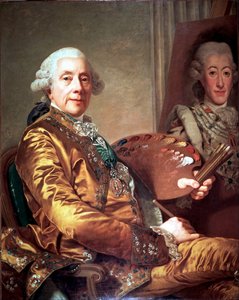
Alexander Roslin
1718 - 1793 , Sweden
Quick Facts
- Artistic Movement Or Style: Rococo
- Artists Or Movements Influenced By This Artist: ['Subsequent portrait painters']
- Artists Who Influenced This Artist:
- Hyacinthe Rigaud
- Nicolas de Largillière
- Date Of Birth: July 15, 1718
- Date Of Death: 1793
- Full Name: Alexander Roslin
- Nationality: Swedish
- Notable Artworks:
- Portrait of Jeanne Sophie de Vignerot du Plessis
- Portrait of Louis, Duke of La Rochefoucauld
- Double Portrait of Roslin & Marie-Suzanne
- Place Of Birth: Malmö, Sweden

