 Preview
 Send
Send Share
Share
 Details

 Download
 Similars
 X-Ray
X-Ray Diaporama
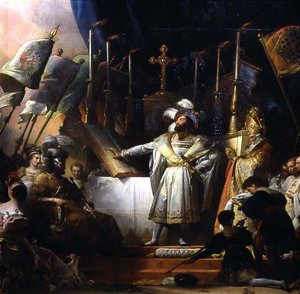
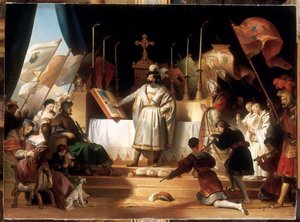
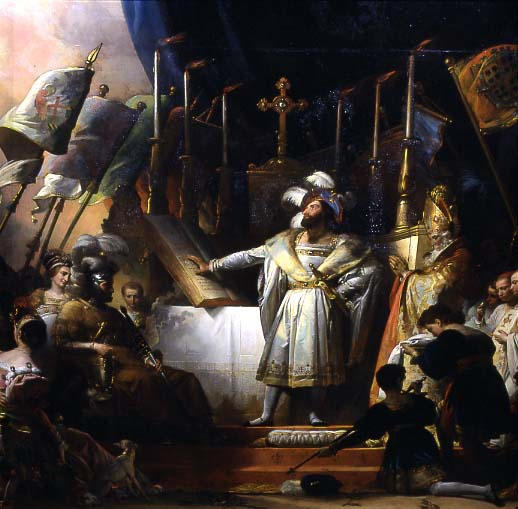
François Ier armé chevalier par Bayard


 Read More
Giclée / Art Print
Museum-quality giclée or canvas print with fast production and flexible finish options. ( Buy Hand Made Painting Buy Image)




P118B $10

P118H $10

P118W $10

P438Z $10

P508JH $12

P508YH $12

P805H $10

P805Z $10

P919BZ $10

P919G $10

P919XJ $10

P959ZH $10

P968JZ $12

W106C $8

W218G $10

W218JH $8

W218Y $10

W307PJ $10

W316G $10

W316PJ $8

W316Y $10

W398PJ $8

W4111J $10

W500HY $15

W500JH $15

W692G $12

W849H $8

W940BG $15

W953PJ $8




Pick from our preset sizes that match the artwork's original proportions.

You may enter your own dimensions to fit a specific frame or space. If your selected size does not match the original image's proportions, we will either crop the artwork or extend the image with a mirrored or solid-fill edge. A digital mockup will be sent for your approval before production begins.
Please note that the on-screen preview does not reflect the actual cropping or extension. Only the mockup will accurately show the final composition.
While custom sizes are available, we recommend selecting a dimension from the predefined list to preserve the original proportions.
Worldwide Delivery () in 2 weeks instead of standard 4/5 weeks. (26 August)

Free Worldwide Express Shipping

High-Quality Linen Canvas

Full Shipping Insurance

Customs Tax Refund Guarantee

True Color Matching Guarantee

60-Day Return Policy (Defects Only)

100% Money-Back Guarantee

Bulk Discount Offer
 Glass option is only available in size under 110 CM

François Ier armé chevalier par Bayard
Giclée / Art Print
Reproduction Size
-


Total Price
$ 63
Collectible Description
A Regal Encounter: The Grandeur of François Ier and Bayard
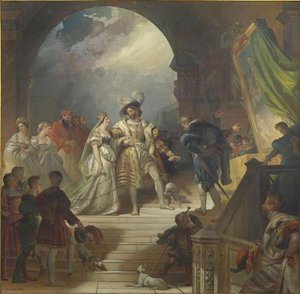
In the sweeping, monumental canvas of “François Ier armé chevalier par Bayard,” Alexandre-Évariste Fragonard invites us into a pivotal moment of French Renaissance splendor. This is not merely a historical documentation of a ceremony; it is a theatrical masterpiece that captures the very essence of chivalry and royal legitimacy. The scene depicts the ceremonial knighting of King François Ier, a moment thick with the weight of tradition and the promise of martial honor. As we gaze upon the composition, we are transported to an era where lineage and loyalty were etched in steel and gold, feeling the palpable tension and solemnity that accompanied such a profound transition of status.
Fragonard, the son of the legendary Jean-Honoré Fragonard, masterfully navigates the shifting tides of his era, blending the structured discipline of Neoclassicism with the emotive, turbulent spirit of Romanticism. The composition is anchored by a powerful pyramidal structure, placing the King at the apex to command an immediate sense of sovereign authority. Around him, a bustling tableau of nobles and attendants creates a sense of movement and life, yet the eye is perpetually drawn back to the central drama. Through the use of diagonal lines and a dynamic arrangement of figures, Fragonard ensures that the stillness of the architectural backdrop—defined by imposing columns and a sacred altar—is constantly challenged by the human energy surrounding the throne.
The Alchemy of Light and Color
The emotional resonance of this work is profoundly heightened by Fragonard’s sophisticated use of light and shadow. He employs a dramatic, almost theatrical spotlight that illuminates François Ier and his immediate entourage, casting a radiant glow upon the central action while allowing the periphery to recede into deep, mysterious shadows. This technique, reminiscent of Caravaggio’s chiaroscuro, isolates the ceremony from the mundane world, elevating the knighting to a divine or legendary event. The interplay of light against the polished surfaces of armor and the rich textures of heavy drapery creates a sensory experience that is both tactile and visually arresting.
The color palette is a sumptuous celebration of royal prestige. Warm, opulent hues dominate the canvas; golds, deep crimsons, and earthy ochres weave together to evoke a sense of immense wealth and historical permanence. These warm tones are punctuated by strategic splashes of azure and ivory, providing a necessary breath of air amidst the richness. Every brushstroke serves a symbolic purpose, where the pervasive gold reflects the sun-like glory of the monarchy, and the deep reds signify the blood, passion, and sacrifice inherent in the knightly code. For the discerning collector or interior designer, such a palette offers an unparalleled opportunity to introduce warmth, depth, and a sense of timeless luxury into a sophisticated living space.
A Legacy for the Modern Collector
To possess a reproduction of this caliber is to bring a piece of French history into the contemporary home. The artwork transcends its 19th-century origins, offering a profound exploration of themes that remain eternally relevant: honor, duty, and the enduring power of legacy. The meticulous detail—from the smooth sheen of the knight's armor to the intricate folds of ceremonial robes—demonstrates a level of craftsmanship that commands respect and inspires awe.
Whether placed as a focal point in a grand library, an elegant dining room, or a curated gallery wall, this painting serves as more than decoration; it acts as a conversation piece that bridges the gap between the classical past and the modern aesthetic. It provides an atmosphere of intellectual depth and historical gravity, making it an ideal selection for those who seek to surround themselves with art that possesses both narrative complexity and breathtaking visual splendor.
Related Artworks


Artist Biography
A Legacy Bridging Eras: Alexandre-Évariste Fragonard
Born into the radiant world of Rococo artistry in Grasse, France, on October 26, 1780, Alexandre-Évariste Fragonard inherited a legacy that both propelled and subtly challenged his artistic path. As the son of the celebrated Jean-Honoré Fragonard and Marie-Anne Fragonard, he was immersed from infancy in an atmosphere of creative fervor, where brushstrokes danced with light and emotion. This familial connection wasn’t merely one of lineage; it was a foundational education, a direct transmission of technical skill and a sensibility for evocative subject matter that would shape his early development. However, Alexandre-Évariste wouldn't simply replicate his father’s style. His journey would be marked by a fascinating negotiation between the fading elegance of the Rococo and the rising tide of Neoclassicism, ultimately forging a distinctive voice within the evolving landscape of 19th-century French art. He passed away in Paris on November 10, 1850, leaving behind a body of work that offers valuable insights into an era defined by political upheaval and shifting aesthetic ideals.Formative Years and Artistic Education
Alexandre-Évariste’s initial artistic training was, unsurprisingly, guided by his father. Jean-Honoré Fragonard instilled in him a mastery of drawing and painting techniques, nurturing an innate talent for capturing form and expression. This early tutelage laid the groundwork for a fluid and graceful style that would remain characteristic throughout his career. Yet, recognizing the changing artistic climate, Jean-Honoré also encouraged his son to broaden his horizons. This led Alexandre-Évariste to study under Jacques-Louis David, the leading figure of Neoclassicism—a pivotal moment in his development. David’s influence introduced a new discipline and rigor to Fragonard's approach, emphasizing structured composition, precise draftsmanship, and a focus on historical accuracy. This exposure wasn’t about abandoning the Rococo entirely; rather, it was about synthesizing its inherent grace with the Neoclassical emphasis on order and clarity. The result was an artistic sensibility uniquely positioned between two worlds—a blend of emotional resonance and intellectual control.The Troubadour Style and Major Works
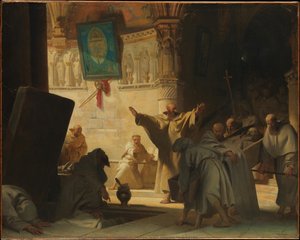
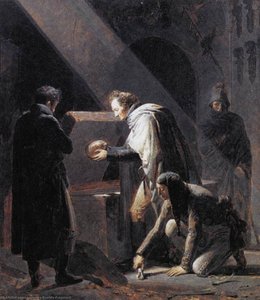
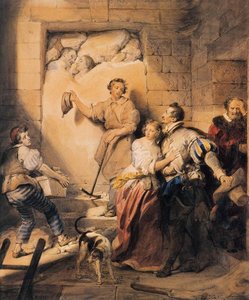
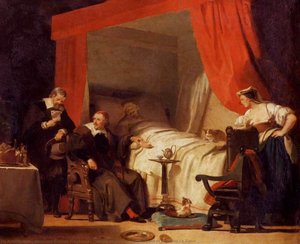
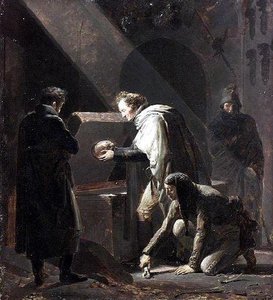
Alexandre-Évariste Fragonard found his niche within the *Troubadour* style, a popular movement in 19th-century France that romanticized historical and literary subjects. This genre allowed him to explore narratives rich with drama, emotion, and nationalistic fervor. His paintings are not merely depictions of past events; they are carefully constructed scenes designed to evoke a specific mood or convey a particular message. François Ier armé chevalier par Bayard, for example, vividly portrays the knighting of Francis I by Bayard, capturing a moment of chivalry and regal power. Vivant Denon Replacing El Cid's Remains in their Tombs is a particularly poignant work, exploring themes of mortality, grief, and the enduring legacy of heroes. Cardinal Mazarin at the Deathbed of Eustache Le Sueur offers another compelling glimpse into French history, illustrating a tender yet somber scene with masterful use of light and shadow. Beyond painting, Fragonard also excelled as a sculptor, notably creating the pediment for the Chambre des Députés (French Chamber of Deputies) and a colossal statue of General Pichegru—demonstrating his versatility and skill across different artistic mediums.Navigating a Turbulent Era
Fragonard’s career unfolded against a backdrop of immense political and social change in France, encompassing the French Revolution, the Napoleonic era, and the subsequent Restoration period. This turbulent context profoundly influenced his work. He received commissions from Napoleon Bonaparte himself, a testament to his growing reputation as an artist capable of capturing historical narratives with both grandeur and sensitivity. These commissions weren’t simply about artistic patronage; they were statements of power and national identity. The prevailing tastes of the time favored dramatic storytelling and themes that resonated with a sense of French pride—qualities that Fragonard skillfully incorporated into his paintings. He adeptly navigated the shifting political landscape, adapting his style to meet the demands of different patrons while maintaining his own artistic integrity. His ability to capture both the spectacle and the human cost of these historical events cemented his place as a significant chronicler of his time.A Lasting Impression
While Alexandre-Évariste Fragonard may not enjoy the same widespread recognition as his father, his contribution to 19th-century French art is undeniable. He successfully bridged the gap between the Rococo’s playful elegance and Neoclassicism’s formal rigor, creating a distinctive style that resonated with contemporary audiences and continues to captivate viewers today. His paintings and sculptures offer invaluable insights into the artistic preferences and historical consciousness of his era—a period marked by both upheaval and innovation. He wasn't merely an imitator of past styles; he was a synthesist, blending tradition with modernity to create works that are both visually stunning and intellectually stimulating. Fragonard’s legacy lies in his ability to tell compelling stories through art, capturing the drama, emotion, and complexity of a nation undergoing profound transformation.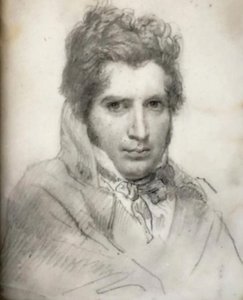
alexandre évariste fragonard
1780 - 1850 , France
Quick Facts
- Artistic Movement Or Style: Troubadour style
- Artists Who Influenced This Artist:
- Jean-Honoré Fragonard
- Jacques-Louis David
- Date Of Birth: October 26, 1780
- Date Of Death: November 10, 1850
- Full Name: Alexandre-Évariste Fragonard
- Nationality: French
- Notable Artworks:
- François Ier armé chevalier
- Vivant Denon Replacing El Cid
- Cardinal Mazarin at Deathbed
- Place Of Birth: Grasse, France
Related Articles

Masterpieces of the Soil: The Top 25 Artworks by Jean-François Millet
Immerse yourself in the soul of French Realism with our curated guide to the top 25 Jean-François Millet artworks. Explore the profound beauty of Barbizon school masterpieces and find museum-quality art reproductions for your home. Discover all masterpieces on ArtsDot.com.
10 Iconic Neoclassical Masterpieces That Changed Art History Forever
Journey through history with 10 Neoclassical masterpieces. From Jacques-Louis David to Ingres, explore the stories behind these timeless icons. Find museum-quality art reproductions and elegant decor inspiration at ArtsDot.com. Discover all masterpieces on ArtsDot.com
Daniel Ridgway Knight: A Study in Victorian Genre Painting & Rural Idealism
Explore the captivating world of Daniel Ridgway Knight, a master of Victorian genre painting. Discover his serene rural scenes, realistic technique & lasting influence on American Impressionism. Learn about his life, art, and collectibility.

Dame Laura Knight: Reclaiming the Female Gaze in Modern British Art
Explore the life & work of Dame Laura Knight, a pioneering British artist who challenged conventions with her vibrant depictions of theatre, ballet, and wartime scenes. Discover her feminist legacy & artistic innovations.
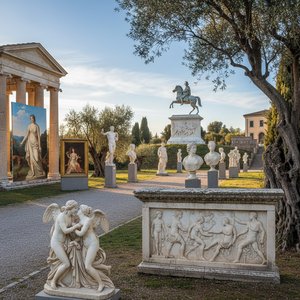
Neoclassical Art: 10 Masterpieces That Shaped History |
Explore 10 defining Neoclassical masterpieces by David, Ingres & Canova. Discover the history, symbolism & artistry behind these iconic paintings and sculptures. Find museum-quality art reproductions at – elevate your home with timeless beauty.