Early Life & Academic Foundations: A Parisian Apprenticeship
Daniel Ridgway Knight (15 March 1839 – 9 March 1924) was an American artist born in Chambersburg, Pennsylvania. == Biography == Knight was a pupil at the École des Beaux-Arts, Paris, under Gleyre, and later worked in the private studio of Meissonie...
Daniel Ridgway Knight, born in the quiet Pennsylvania town of Chambersburg in 1839, embarked on a journey that would lead him far from his Quaker upbringing and into the heart of the French art world. Though initially steered towards more practical pursuits – hardware or shipbuilding – Knight’s passion for painting proved undeniable. His early studies at the Pennsylvania Academy of the Fine Arts laid a crucial foundation, placing him amongst contemporaries like Thomas Eakins and Mary Cassatt, yet it was his decision to travel to Paris in 1861 that truly shaped his artistic destiny. The École des Beaux-Arts offered rigorous training under established masters such as Charles Gleyre, but it was the private studio of Jean-François Meissonier where Knight found a mentor whose influence would resonate throughout his career. Meissonier’s meticulous attention to detail and dedication to historical accuracy instilled in Knight a commitment to realism that would become a hallmark of his style. This period wasn't merely about technical skill; it was an immersion into a vibrant artistic culture, fostering friendships with emerging talents like Renoir and Sisley – connections that subtly broadened his aesthetic horizons.
The Appeal of Rural France: Finding Inspiration in Peasant Life
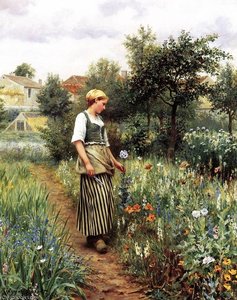 untitled (2225)
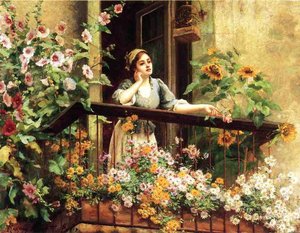
Discover Daniel Ridgway Knight’s serene pastoral oil painting! Captivating realism & romantic landscapes depict rural beauty. Explore this timeless piece of American art.
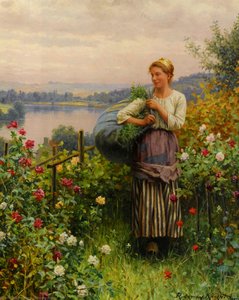
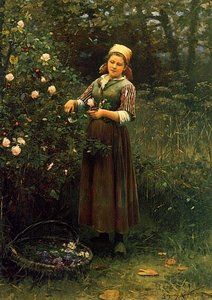
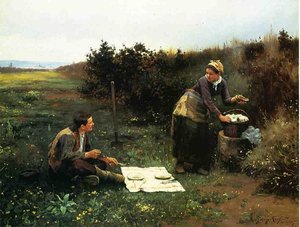
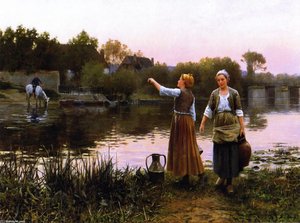
The outbreak of the American Civil War briefly drew Knight back to the United States, where he served as a private in the Union Army. This experience, though impactful, ultimately reinforced his desire for a life dedicated to art, and upon his return to France in 1872, he settled permanently in Poissy on the Seine. It was here that Knight discovered his true subject matter: the lives of French peasant women. Unlike many artists who romanticized or idealized rural existence, Knight sought to capture the authenticity of everyday moments – washing clothes by the river, tending gardens, simply pausing for reflection. This wasn’t a depiction of hardship, but rather a celebration of quiet dignity and connection to the land. He was captivated by the interplay of light and shadow on their faces, the textures of their clothing, and the serene beauty of the French countryside. His choice of subject matter, while popular, distinguished him from contemporaries focused on grand historical narratives or urban scenes; he found poetry in the mundane, a quiet revolution within the established art world.
A Master of Realism: Technique, Light, and Composition
Daniel Ridgway Knight lived in the XIX – XX cent., a remarkable figure of American Realism and Naturalism. Find more works of this artist at Wikiart.org ...
Knight’s mastery wasn't simply about *what* he painted, but *how*. He possessed an exceptional ability to render light with breathtaking accuracy, creating canvases that seemed to glow from within. This was achieved through meticulous observation and a dedication to painting *en plein air*, even constructing a glass studio to allow him to work outdoors year-round. His brushwork, while precise, wasn’t cold or mechanical; it conveyed the subtle nuances of texture – the rough weave of linen, the delicate petals of flowers, the weathered skin of his subjects. He carefully studied the effects of different times of day on the landscape, capturing the warm hues of sunset and the cool tones of twilight with equal skill. Compositionally, Knight favored balanced arrangements that drew the viewer’s eye to the central figure, often framing them within lush foliage or against a backdrop of idyllic scenery. His paintings weren't merely representations of reality; they were carefully constructed harmonies of color, light, and form.
Critical Reception & Artistic Recognition: Salon Successes and Accolades
Knight’s dedication to his craft didn’t go unnoticed. He first garnered significant recognition at the Paris Salon in 1882 with “Un Deuil,” a large oil canvas that showcased his burgeoning talent for realistic portraiture. This success opened doors, leading to further exhibitions and commissions. The accolades continued to accumulate – a silver medal at the Exposition Universelle in 1889, followed by knighthood in the Legion of Honor. He was also honored with the gold medal from the Pennsylvania Academy of the Fine Arts in 1893, solidifying his reputation as a leading figure in American art. These awards weren’t simply symbolic; they represented a validation of Knight’s unique vision and technical skill. His paintings resonated with collectors who appreciated their serene beauty and meticulous detail, establishing him as a sought-after artist during his lifetime. The consistent praise from critics and the public alike allowed him to continue pursuing his artistic passions without compromise.
Knight's Enduring Legacy: Influence on American Impressionism & Beyond
While often categorized as a Realist, Daniel Ridgway Knight’s work also foreshadowed elements of Impressionism. His focus on light and atmosphere, coupled with his *plein air* technique, paved the way for later generations of American artists who embraced these principles. Though he didn't fully align himself with the Impressionist movement, his influence can be seen in the works of painters seeking to capture fleeting moments of beauty and tranquility. His son, Louis Aston Knight, also followed in his father’s footsteps, becoming a renowned landscape painter in his own right. Today, Daniel Ridgway Knight’s paintings continue to captivate audiences with their timeless appeal. They offer a glimpse into a bygone era – a world of rural simplicity, quiet dignity, and the enduring power of artistic observation. ArtsDot.com offers high-quality reproductions of Knight's masterpieces, allowing art enthusiasts to experience the beauty and serenity of his work firsthand. Explore our collection and discover the lasting legacy of this remarkable Victorian artist.