

 Preview
 Send
Send Share
Share
 Details

 Download
 Similars
 X-Ray
X-Ray Diaporama
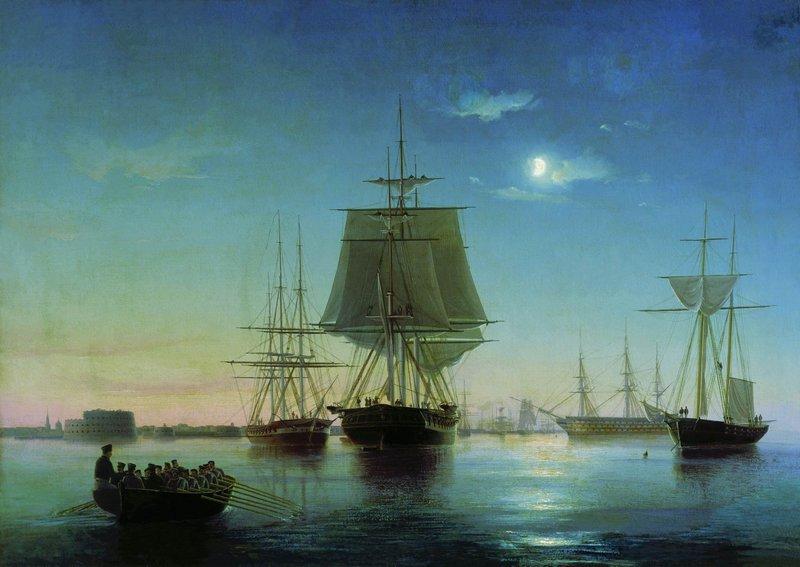
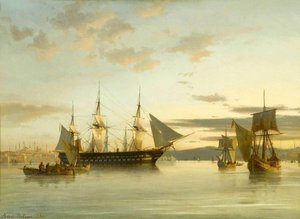
Kronstadt Harbour in the Evening


 Read More
Purchase a high-resolution, enhanced digital image, far superior to the online preview.
Each file is meticulously prepared by our in-house specialists using advanced tools and expert manual retouching. We ensure every image has exceptional clarity, precise color accuracy, and fine detail.
The final file is delivered via email within 72 hours, optimized for immediate use in professional, editorial, and print environments. This is the same quality trusted by top-tier design studios, publishers, and galleries.
Digital Image
Download a high-resolution file for personal display, printing, and creative projects. ( Buy Print Buy Hand Made Painting)
Included in Every Digital Image Order
Expert Digital Delivery, Guaranteed
When you choose ArtsDot.com, you're not just getting an image - you're receiving a professionally enhanced digital artwork, crafted with precision and backed by a satisfaction guarantee. Here's everything that comes with your order, automatically:

Fast Email Delivery
Your high-resolution digital image file will be emailed to you within 72 hours of ordering - ready for immediate use.

AI-Enhanced Digital File
Your artwork is professionally optimized using advanced AI tools and manual editing, ensuring maximum detail, clarity, and color accuracy.

Free Lifetime Re-Delivery
Accidentally deleted or lost your file? No worries - we'll resend it to you anytime, free of charge.

No Import Fees - Ever
Enjoy your artwork instantly with zero customs, duties, or delivery fees - digital downloads are always tax-free.

Color Accuracy Guarantee
We ensure your digital image reflects the original colors as closely as possible using professional tools and color management.

60-Day Satisfaction Guarantee
If you're not satisfied with your digital image, we'll revise it or refund 100% within 60 days - no questions asked.

100% Money-Back Guarantee
Not satisfied? Get a full refund within 60 days of receiving your digital file - no questions asked.

Bulk Order Discounts
Buy 3 images, save 10% - Buy 5, save 15% - Buy 10+, save 20%. Great for creative projects, galleries, and agencies.
Alexei Petrovich Bogoliubov: Bridging Romanticism and Realism Through Maritime Visions
Alexei Petrovich Bogoliubov (1824–1896) stands as a pivotal figure in Russian landscape painting, embodying the transition from Romantic idealism to the burgeoning realism of the mid-nineteenth century. His artistic journey mirrored his life experience—a blend of disciplined military service and profound engagement with the natural world—resulting in canvases that capture both breathtaking grandeur and meticulous observation. Bogoliubov’s oeuvre is characterized by a masterful fusion of stylistic influences, primarily stemming from Ayvazovsky's dramatic seascapes and the Barbizon School’s commitment to plein air painting, yet underpinned by an unwavering dedication to scientific accuracy. This duality cemented his reputation as one of Russia’s foremost marine artists and secured his place within the artistic canon of his era.- Early Life & Military Career: Born in Novgorod Gubernia, Russia, Bogoliubov's formative years were shaped by a family steeped in tradition—his father a retired colonel instilled in him a sense of duty and discipline, while his maternal grandfather, Alexander Radishchev, championed intellectual freedom. This dual influence profoundly impacted Bogoliubov’s worldview and subsequently informed his artistic sensibilities.
- Maritime Voyages & Inspiration: Bogoliubov's naval service provided invaluable exposure to the vast expanse of the oceans and fostered a deep appreciation for maritime landscapes. These voyages ignited his imagination, propelling him toward capturing the sublime beauty of coastal vistas with unparalleled sensitivity—a pursuit that would define his artistic output.
Bogoliubov’s Artistic Style: Romantic Grandeur Meets Precise Detail
Bogoliubov's paintings exemplify a harmonious blend of Romantic and Realist aesthetics. Like Ayvazovsky, he embraced dramatic lighting effects and turbulent seascapes—elements designed to evoke emotion and convey the power of nature. However, unlike many Romantic artists who prioritized expressive subjectivity, Bogoliubov meticulously documented his subjects with painstaking realism. He employed techniques honed through scientific observation, utilizing aerial perspective and accurate tonal gradations to achieve unparalleled visual fidelity. This meticulous approach ensured that his canvases weren’t merely aesthetically pleasing but also intellectually stimulating.- Technique: Bogoliubov favored oil paints on canvas, applying thick impasto strokes to convey texture and dynamism—a hallmark of Barbizon painting. Yet, he meticulously blended colors and employed subtle gradations to simulate atmospheric conditions with remarkable precision.
- Composition: His compositions often featured expansive vistas punctuated by solitary vessels or figures, emphasizing the insignificance of human presence against the immensity of the sea. Bogoliubov skillfully utilized diagonal lines and tonal contrasts to guide the viewer’s eye and heighten the dramatic impact of his scenes.
Iconic Works & Symbolic Significance
Bogoliubov's most celebrated paintings—including “Kronstadt Harbour in the Evening” and “St. Petersburg at Sunset”—are considered masterpieces of Russian landscape art. These canvases capture not only the visual splendor of coastal environments but also convey profound symbolic meanings. The depiction of Kronstadt Harbour reflects Bogoliubov’s fascination with Russia’s maritime heritage and underscores the importance of resilience amidst adversity—themes resonating deeply within the context of the turbulent political climate of his time. Similarly, “St. Petersburg at Sunset” embodies a contemplative mood, capturing the melancholic beauty of twilight and hinting at the passage of time.- Symbolism: Bogoliubov’s paintings frequently employed symbolic imagery—such as solitary ships representing solitude and perseverance—to communicate complex ideas about human experience. These subtle visual cues enriched the viewer's understanding of the artwork beyond its purely aesthetic qualities.
Related Artworks

Artist Biography
A Life Painted by Sea and Sky: The World of Alexei Petrovich Bogoliubov
Alexei Petrovich Bogoliubov, a name resonating with the romantic spirit of 19th-century Russian landscape painting, was an artist whose life mirrored the breadth of his artistic vision. Born in 1824 in the Pomeranie village of Novgorod Gubernia, Russia, into a family steeped in both military tradition and intellectual ferment – his father a retired colonel, his maternal grandfather the celebrated philosopher Alexander Radishchev – Bogoliubov’s path was uniquely poised between discipline and free thought. This duality would profoundly shape not only his life choices but also the very essence of his artistic expression. His early years were marked by formal education at military school, followed by service in the Imperial Russian Navy, a period that carried him across vast oceans and introduced him to diverse cultures. These voyages weren’t merely geographical explorations; they were formative experiences that instilled within him a deep reverence for the sea, a subject that would become central to his oeuvre. It was during this naval career that Bogoliubov began to seriously pursue his artistic inclinations, eventually enrolling at the prestigious Saint Petersburg Academy of Arts in 1849 under the tutelage of Maxim Vorobiev.From Naval Officer to Master of Atmosphere
Bogoliubov’s transition from naval officer to full-time artist was a testament to his unwavering dedication and burgeoning talent. He completed his studies at the Academy in 1853, earning a major gold medal – a prestigious recognition that immediately established him within the Russian art world. His early work already hinted at the style he would become known for: a blend of realism and romanticism, capturing not just the visual appearance of landscapes and seascapes but also their emotional resonance. The influence of Ivan Ayvazovsky, the renowned master of marine painting, was particularly significant during this period. Bogoliubov absorbed Ayvazovsky’s technical prowess in depicting light, water, and atmosphere, yet he quickly developed his own distinctive voice. Following his formal training, Bogoliubov embarked on an extended period of travel throughout Europe, from 1854 to 1860. These years were crucial for his artistic development, exposing him to a wide range of influences. In Rome, he encountered Alexander Ivanov, who encouraged a greater focus on drawing and foundational skills. Düsseldorf provided the opportunity to study under Andreas Achenbach, while Paris introduced him to the Barbizon school – artists like Camille Corot and Charles-François Daubigny whose emphasis on plein air painting and naturalistic representation deeply resonated with Bogoliubov’s own artistic sensibilities.Bridging Realism and Romanticism: The Essence of His Style
Bogoliubov's paintings are characterized by a remarkable ability to capture the mood and atmosphere of a scene, whether it be the turbulent energy of a naval battle or the serene tranquility of a Volga River landscape. He wasn’t simply recording what he saw; he was conveying how it *felt* to be present in that moment. His seascapes are particularly noteworthy for their dramatic lighting effects, often depicting stormy skies and crashing waves with breathtaking realism. Yet, even within these dynamic compositions, there's a sense of poetic beauty, a romantic sensibility that elevates his work beyond mere documentation. He skillfully balanced meticulous detail with a looser, more expressive brushstroke, creating paintings that are both visually compelling and emotionally evocative. While celebrated for his marine scenes, Bogoliubov also produced numerous landscapes depicting the Russian countryside, often focusing on the Volga River – a symbol of national identity and spiritual significance. These works showcase his mastery of color and composition, capturing the vastness and beauty of the Russian landscape with remarkable sensitivity.A Legacy of Influence and Artistic Engagement
Throughout his career, Bogoliubov remained actively engaged with the evolving artistic landscape of Russia. He became closely associated with the *Peredvizhniki* (The Wanderers), a group of realist artists who sought to bring art closer to the people through exhibitions held outside of traditional academic institutions. While he participated in their exhibitions and even served on their board, Bogoliubov maintained a degree of independence, occasionally expressing reservations about the movement’s more overtly social and political agendas. In 1873, he left the Academy in solidarity with his fellow itinerants, demonstrating his commitment to artistic freedom and innovation. As his health began to decline, Bogoliubov settled in Paris around 1873, where his home became a vibrant hub for Russian émigré artists and intellectuals. Figures like Ivan Turgenev, Ilya Repin, and Vasily Polenov frequented his salon, engaging in lively discussions about art, literature, and politics. He continued to paint prolifically until his death in 1896, leaving behind a rich legacy of works that continue to inspire and captivate audiences today. Bogoliubov’s contribution lies not only in the beauty and technical skill of his paintings but also in his ability to bridge the gap between realism and romanticism, creating a uniquely Russian artistic vision that captured the spirit of his time. His work remains a testament to the power of art to evoke emotion, celebrate nature, and reflect the complexities of the human experience.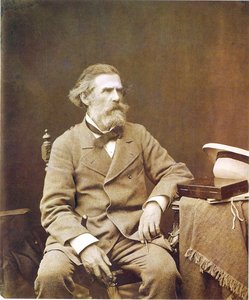
Alexei Petrovich Bogoliubov
1824 - 1896 , Russia
Quick Facts
- Artistic Movement Or Style: Realism, Romanticism
- Artists Or Movements Influenced By This Artist: The Wanderers movement
- Artists Who Influenced This Artist:
- Ivan Ayvazovsky
- Camille Corot
- Charles-François Daubigny
- Date Of Birth: March 16, 1824
- Date Of Death: November 7, 1896
- Full Name: Alexei Petrovich Bogoliubov
- Nationality: Russian
- Place Of Birth: Novgorod Gubernia, Russia

