 Preview
 Send
Send Share
Share
 Details

 Download
 Similars
 X-Ray
X-Ray Diaporama
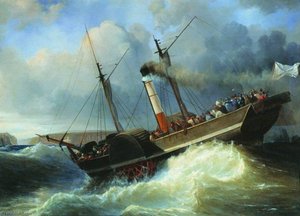
The Kamchatka Frigate


 Read More
Giclée / Art Print
Museum-quality giclée or canvas print with fast production and flexible finish options. ( Buy Hand Made Painting Buy Image)




P118B $10

P118H $10

P118W $10

P438Z $10

P508JH $12

P508YH $12

P805H $10

P805Z $10

P919BZ $10

P919G $10

P919XJ $10

P959ZH $10

P968JZ $12

W106C $8

W218G $10

W218JH $8

W218Y $10

W307PJ $10

W316G $10

W316PJ $8

W316Y $10

W398PJ $8

W4111J $10

W500HY $15

W500JH $15

W692G $12

W849H $8

W940BG $15

W953PJ $8




Pick from our preset sizes that match the artwork's original proportions.

You may enter your own dimensions to fit a specific frame or space. If your selected size does not match the original image's proportions, we will either crop the artwork or extend the image with a mirrored or solid-fill edge. A digital mockup will be sent for your approval before production begins.
Please note that the on-screen preview does not reflect the actual cropping or extension. Only the mockup will accurately show the final composition.
While custom sizes are available, we recommend selecting a dimension from the predefined list to preserve the original proportions.
Worldwide Delivery () in 2 weeks instead of standard 4/5 weeks. (24 August)

Free Worldwide Express Shipping

High-Quality Linen Canvas

Full Shipping Insurance

Customs Tax Refund Guarantee

True Color Matching Guarantee

60-Day Return Policy (Defects Only)

100% Money-Back Guarantee

Bulk Discount Offer
 Glass option is only available in size under 110 CM

The Kamchatka Frigate
Giclée / Art Print
Reproduction Size
-


Total Price
$ 63
Collectible Description
A Symphony of Salt and Storm
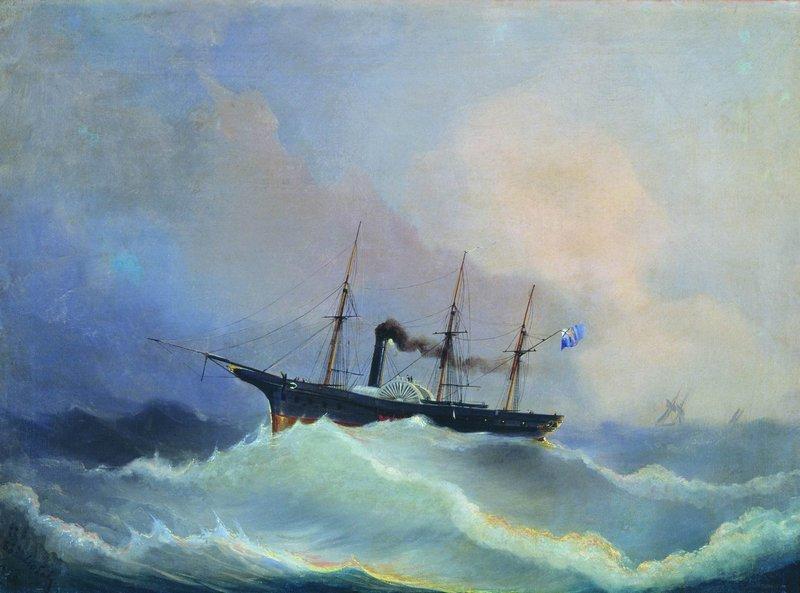
In the vast, churning expanse of the mid-19th century maritime world, few images capture the raw, unbridled tension between human ambition and the indomitable power of nature as effectively as Alexei Petrovich Bogoliubov’s The Kamchatka Frigate. Painted in 1848, this masterful oil on canvas serves as a window into an era of exploration and peril. The viewer is immediately thrust into the heart of a tempest, where the mighty three-masted frigate struggles against the violent upheaval of the ocean. Bogoliubov, drawing from his own formative years in the Imperial Russian Navy, does not merely depict a ship; he orchestrates a drama of survival. The white stripe along the vessel's side flashes through the gloom, providing a stark, rhythmic contrast to the deep, turbulent shadows of the rising swells.
The technique employed here is a testament to the artist's profound command over light and texture. Influenced by the legendary Ivan Ayvazovsky and the atmospheric nuances of the Barbizon School, Bogoliubov utilizes a sophisticated layering of oils to achieve a palpable sense of moisture and movement. One can almost feel the spray of the salt water and the heavy, humid air of the storm. The brushwork is both precise in capturing the structural integrity of the rigging and fluid enough to render the chaotic, frothing crests of the waves. This duality creates a mesmerizing visual rhythm that guides the eye from the frantic activity of the sailors on deck to the distant, ominous horizon, making it an extraordinary centerpiece for any collection focused on maritime realism.
The Human Spirit Amidst the Elements
Beyond the technical brilliance, The Kamchatka Frigate is imbued with a profound symbolic depth. The presence of the sailors, scattered across the tilting deck, introduces a poignant element of human vulnerability. They are small figures against the gargantuan scale of the sea, yet their purposeful movements suggest a disciplined defiance. This interplay between the fragility of man and the monumental strength of the ocean evokes the Romantic era's fascination with the sublime—that overwhelming feeling of awe mixed with terror. Even the inclusion of a clock near the ship's center serves as a subtle memento mori, a reminder of the relentless passage of time and the fleeting nature of existence amidst the eternal motion of the tides.
For the discerning collector or interior designer, this painting offers more than mere decoration; it provides an emotional anchor. Its dramatic palette of deep blues, frothy whites, and earthy tones allows it to integrate seamlessly into sophisticated, classical interiors or serve as a bold, conversational statement in modern spaces. To hang a high-quality reproduction of this work is to invite the spirit of adventure and the grandeur of history into a room. It is a piece that demands contemplation, offering a sense of movement and life that breathes vitality into any gallery or living space, reminding us all of the enduring courage required to navigate the storms of life.
Related Artworks
Artist Biography
A Life Painted by Sea and Sky: The World of Alexei Petrovich Bogoliubov
Alexei Petrovich Bogoliubov, a name resonating with the romantic spirit of 19th-century Russian landscape painting, was an artist whose life mirrored the breadth of his artistic vision. Born in 1824 in the Pomeranie village of Novgorod Gubernia, Russia, into a family steeped in both military tradition and intellectual ferment – his father a retired colonel, his maternal grandfather the celebrated philosopher Alexander Radishchev – Bogoliubov’s path was uniquely poised between discipline and free thought. This duality would profoundly shape not only his life choices but also the very essence of his artistic expression. His early years were marked by formal education at military school, followed by service in the Imperial Russian Navy, a period that carried him across vast oceans and introduced him to diverse cultures. These voyages weren’t merely geographical explorations; they were formative experiences that instilled within him a deep reverence for the sea, a subject that would become central to his oeuvre. It was during this naval career that Bogoliubov began to seriously pursue his artistic inclinations, eventually enrolling at the prestigious Saint Petersburg Academy of Arts in 1849 under the tutelage of Maxim Vorobiev.From Naval Officer to Master of Atmosphere
Bogoliubov’s transition from naval officer to full-time artist was a testament to his unwavering dedication and burgeoning talent. He completed his studies at the Academy in 1853, earning a major gold medal – a prestigious recognition that immediately established him within the Russian art world. His early work already hinted at the style he would become known for: a blend of realism and romanticism, capturing not just the visual appearance of landscapes and seascapes but also their emotional resonance. The influence of Ivan Ayvazovsky, the renowned master of marine painting, was particularly significant during this period. Bogoliubov absorbed Ayvazovsky’s technical prowess in depicting light, water, and atmosphere, yet he quickly developed his own distinctive voice. Following his formal training, Bogoliubov embarked on an extended period of travel throughout Europe, from 1854 to 1860. These years were crucial for his artistic development, exposing him to a wide range of influences. In Rome, he encountered Alexander Ivanov, who encouraged a greater focus on drawing and foundational skills. Düsseldorf provided the opportunity to study under Andreas Achenbach, while Paris introduced him to the Barbizon school – artists like Camille Corot and Charles-François Daubigny whose emphasis on plein air painting and naturalistic representation deeply resonated with Bogoliubov’s own artistic sensibilities.Bridging Realism and Romanticism: The Essence of His Style
Bogoliubov's paintings are characterized by a remarkable ability to capture the mood and atmosphere of a scene, whether it be the turbulent energy of a naval battle or the serene tranquility of a Volga River landscape. He wasn’t simply recording what he saw; he was conveying how it *felt* to be present in that moment. His seascapes are particularly noteworthy for their dramatic lighting effects, often depicting stormy skies and crashing waves with breathtaking realism. Yet, even within these dynamic compositions, there's a sense of poetic beauty, a romantic sensibility that elevates his work beyond mere documentation. He skillfully balanced meticulous detail with a looser, more expressive brushstroke, creating paintings that are both visually compelling and emotionally evocative. While celebrated for his marine scenes, Bogoliubov also produced numerous landscapes depicting the Russian countryside, often focusing on the Volga River – a symbol of national identity and spiritual significance. These works showcase his mastery of color and composition, capturing the vastness and beauty of the Russian landscape with remarkable sensitivity.A Legacy of Influence and Artistic Engagement
Throughout his career, Bogoliubov remained actively engaged with the evolving artistic landscape of Russia. He became closely associated with the *Peredvizhniki* (The Wanderers), a group of realist artists who sought to bring art closer to the people through exhibitions held outside of traditional academic institutions. While he participated in their exhibitions and even served on their board, Bogoliubov maintained a degree of independence, occasionally expressing reservations about the movement’s more overtly social and political agendas. In 1873, he left the Academy in solidarity with his fellow itinerants, demonstrating his commitment to artistic freedom and innovation. As his health began to decline, Bogoliubov settled in Paris around 1873, where his home became a vibrant hub for Russian émigré artists and intellectuals. Figures like Ivan Turgenev, Ilya Repin, and Vasily Polenov frequented his salon, engaging in lively discussions about art, literature, and politics. He continued to paint prolifically until his death in 1896, leaving behind a rich legacy of works that continue to inspire and captivate audiences today. Bogoliubov’s contribution lies not only in the beauty and technical skill of his paintings but also in his ability to bridge the gap between realism and romanticism, creating a uniquely Russian artistic vision that captured the spirit of his time. His work remains a testament to the power of art to evoke emotion, celebrate nature, and reflect the complexities of the human experience.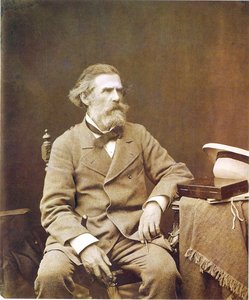
Alexei Petrovich Bogoliubov
1824 - 1896 , Russia
Quick Facts
- Artistic Movement Or Style: Realism, Romanticism
- Artists Or Movements Influenced By This Artist: The Wanderers movement
- Artists Who Influenced This Artist:
- Ivan Ayvazovsky
- Camille Corot
- Charles-François Daubigny
- Date Of Birth: March 16, 1824
- Date Of Death: November 7, 1896
- Full Name: Alexei Petrovich Bogoliubov
- Nationality: Russian
- Place Of Birth: Novgorod Gubernia, Russia
Related Articles
The Allure of the Horizon: A Comprehensive Exploration of Seascape Art Through History & Emotion
Explore the captivating world of seascape art! Discover its history, key artists & movements – from Dutch Masters to Impressionism. Expert insights for collectors and enthusiasts at ArtsDot.
Ivan Bilibin: A Synthesis of Folklore, Modernism & National Identity in Russian Illustration
Explore the enchanting world of Ivan Bilibin, a master Russian illustrator who synthesized folklore, Art Nouveau & national identity. Discover his iconic fairy tale illustrations and legacy with ArtsDot.

Hokusai's Masterpieces: 25 Iconic Prints & Paintings for Art Lovers | ArtsDot
Journey through Katsushika Hokusai’s 25 most iconic artworks, including *The Great Wave*. Explore the ukiyo-e master's history, style & timeless Japanese woodblock prints. Find museum-quality reproductions for your home at ArtsDot.com.
Victor Vasnetsov: Myth, Nationalism & the Revival of Russian Fairy Tale Painting
Explore the captivating world of Victor Vasnetsov, a co-founder of Russian folklorist painting. Discover his iconic works, influence on national identity, and lasting legacy in this expert guide.
Vladimir Makovsky: Realism, Social Commentary & Russian Life in Late 19th-Century Painting
Explore the captivating world of Vladimir Makovsky, a leading Russian realist painter. Discover his insightful depictions of 19th-century life, social commentary & legacy with ArtsDot.