 Preview
 Send
Send Share
Share
 Details

 Download
 Similars
 X-Ray
X-Ray Diaporama
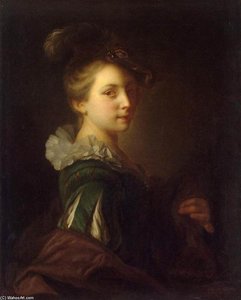
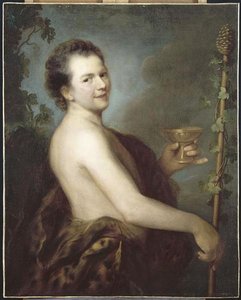
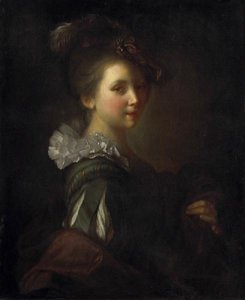
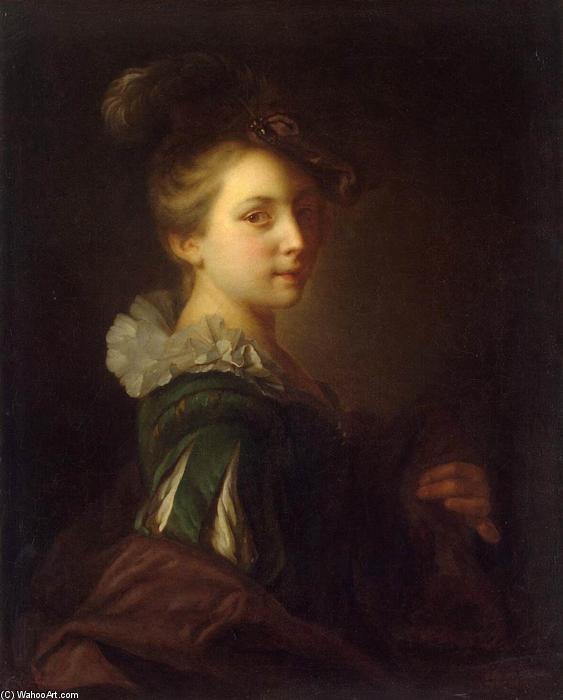
Young Woman in Theatrical Costume
 Acrylic On Canvas
- WallArt
- French Romanticism
 1730
1730 74.0 x 59.0 cm
 Hermitage Museum
 Read More
Hand Made Oil Reproduction
Hand-painted oil on canvas in your size and frame, made to order by our artists. ( Buy Print Buy Image)




P118B $10

P118H $10

P118W $10

P438Z $10

P508JH $12

P508YH $12

P805H $10

P805Z $10

P919BZ $10

P919G $10

P919XJ $10

P959ZH $10

P968JZ $12

W106C $8

W218G $10

W218JH $8

W218Y $10

W307PJ $10

W316G $10

W316PJ $8

W316Y $10

W398PJ $8

W4111J $10

W500HY $15

W500JH $15

W692G $12

W849H $8

W940BG $15

W953PJ $8




Pick from our preset sizes that match the artwork's original proportions.

You may enter your own dimensions to fit a specific frame or space. If your selected size does not match the original image's proportions, we will either crop the artwork or extend the painting with additional hand-painted elements. A digital mockup will be sent for your approval before production begins.
Please note that the on-screen preview does not reflect the actual cropping or extension. Only the mockup will accurately show the final composition.
While custom sizes are available, we recommend selecting a dimension from the predefined list to preserve the original proportions.
After order, ArtsDot.com team will email client for instructions and provide a mockup preview
Worldwide Delivery () in 3/4 weeks instead of standard 5 weeks. (16 August). No compromise on quality.

Free Worldwide Express Shipping

High-Quality Linen Canvas

Full Shipping Insurance

Customs Tax Refund Guarantee

True Color Matching Guarantee

60-Day Return Policy (Defects Only)

100% Money-Back Guarantee

Bulk Discount Offer
 Glass option is only available in size under 110 CM

Young Woman in Theatrical Costume
Reproduction Medium
Reproduction Size
-


Total Price
$ 263
Artwork Description
Young Woman in Theatrical Costume – A Window Into Eighteenth Century Parisian Taste
The painting by Alexis Grimou, “Young Woman in Theatrical Costume,” transcends mere portraiture; it’s a meticulously crafted snapshot of a burgeoning artistic movement—the proto-Bohemian aesthetic—that captivated the intellectual circles of Paris during the early 1730s. Grimou, nicknamed "the French Rembrandt" for his masterful manipulation of light and shadow reminiscent of Rembrandt's oeuvre, wasn’t simply documenting a subject; he was channeling an ethos that prioritized intimacy, psychological depth, and a subtle engagement with contemporary culture. This piece exemplifies the stylistic innovations emerging from the ateliers of Saint-Luc and reflects Grimou’s profound admiration for Dutch masters like Anthony van Dyck and Rembrandt himself—a connection that profoundly shaped his artistic vision.- Subject Matter: The portrait depicts a young woman dressed in opulent theatrical costume, signaling an interest in performance and spectacle – a fascination prevalent amongst artists of the period who sought to elevate their art beyond mere representation.
- Style & Technique: Grimou employed a technique characterized by soft brushstrokes and chiaroscuro—the dramatic interplay between light and dark—creating a luminous effect that illuminates the woman’s face and subtly conveys her inner emotions. This approach distinguishes itself from the more formal portraits of earlier generations, prioritizing expressive nuance over rigid adherence to convention.
- Historical Context: Painted during a time when Parisian society was undergoing significant transformations – marked by an increasing openness to new ideas and artistic influences – Grimou’s work embodies the spirit of intellectual curiosity that defined the era. The theatrical costume itself speaks to the broader cultural preoccupation with drama, illusion, and the exploration of human psychology.
- Color Palette: Grimou utilized a restrained palette dominated by greens and whites—colors associated with freshness, elegance, and purity—creating a harmonious visual experience that underscores the woman's serene demeanor.
- Composition: The artist skillfully arranged elements within the frame to draw attention to the central figure while subtly incorporating background details that enrich the painting’s narrative depth.
Related Artworks
Artist Biography
A Life Illuminated: The World of Alexis Grimou
Alexis Grimou, a name perhaps less instantly recognizable than those of his celebrated contemporaries, nevertheless occupies a vital and fascinating niche in the history of 18th-century French art. Born in Argenteuil in 1678 and passing away in Paris in 1733, Grimou carved out a unique path as a portraitist, earning him the evocative moniker “the French Rembrandt.” This title wasn’t merely bestowed for stylistic imitation; it acknowledged a shared mastery of light and shadow, an ability to penetrate beyond surface appearances and reveal the inner lives of his subjects. Unlike many artists of his era who benefited from formal apprenticeships within established studios, Grimou's artistic journey was largely self-directed, fueled by diligent study and a profound engagement with the works of Dutch masters like Anthony van Dyck and, most significantly, Rembrandt. This independent spirit would come to define not only his technique but also his approach to the art world itself.Forging a Style: Light, Shadow, and Psychological Depth
Grimou’s dedication to the Dutch tradition profoundly shaped his artistic identity. He wasn't simply replicating techniques; he was absorbing a philosophy of painting that prioritized psychological realism and emotional resonance. His canvases are characterized by a warm, rich palette, often employing earth tones and subtle gradations of color. However, it is his masterful use of chiaroscuro – the dramatic interplay of light and shadow – that truly sets him apart. This technique wasn’t merely decorative; it served to sculpt form, heighten drama, and most importantly, illuminate the character of his sitters. He moved beyond mere physical likeness, striving to capture a sense of personality, mood, and even vulnerability in each portrait. His compositions often feel intimate and informal, depicting women engaged in everyday activities – singing, playing musical instruments, or simply lost in thought. These weren’t grand, imposing portraits designed to showcase wealth or status; they were glimpses into private moments, imbued with a sense of genuine human connection. His genre paintings further expanded this exploration of daily life, offering candid observations of ordinary people and their experiences—a departure from the more formal conventions prevalent at the time.Navigating the Artistic Landscape: Academies and Independence
Grimou’s talent was undeniable, leading to his acceptance into the prestigious Royal Academy of Painting and Sculpture in Paris in 1705. However, his tenure there proved short-lived. Disillusioned by what he perceived as a lack of artistic rigor and an abundance of mediocrity among his peers, he resigned from the Academy, demonstrating a fiercely independent streak. This refusal to compromise his artistic vision led him to seek alternative avenues for creative expression, ultimately finding a more congenial environment at the Académie de Saint-Luc in 1709. The Académie de Saint-Luc, known for its more progressive and less restrictive atmosphere, allowed Grimou greater freedom to pursue his own artistic path. This period marked a flourishing of creativity, as he continued to refine his style and explore new thematic possibilities.Lasting Legacy: Influence and Rediscovery
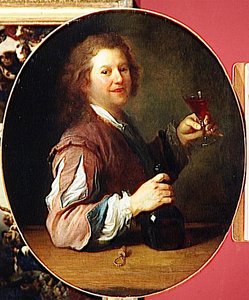
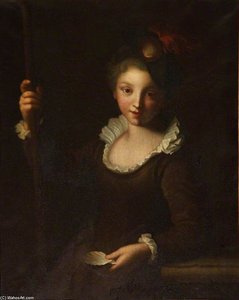
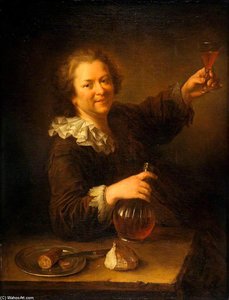
While not achieving the widespread fame of some of his contemporaries during his lifetime, Alexis Grimou’s influence on subsequent generations of French painters is undeniable. Artists like Jean-Honoré Fragonard and Louis-David Greuze were deeply impacted by his emphasis on psychological realism and his ability to imbue portraits with personality and emotion. His work served as a bridge between the formality of Baroque portraiture and the more intimate, emotionally charged style that would come to characterize Rococo painting. Though largely overlooked for many years, Grimou’s art has experienced a resurgence in recent decades, thanks to renewed scholarly interest and a growing appreciation for his unique contribution to French artistic heritage. Paintings such as Young Woman in Theatrical Costume, with its expressive emotion, Young Pilgrim Girl, showcasing delicate handling of light and texture, and the captivating self-portrait Portrait de l'Artiste en Buveur stand as testaments to his skill. Grimou’s legacy lies not only in the beauty of his paintings but also in his unwavering commitment to artistic integrity and his ability to capture the essence of human experience on canvas, solidifying his place as a significant figure in 18th-century French art.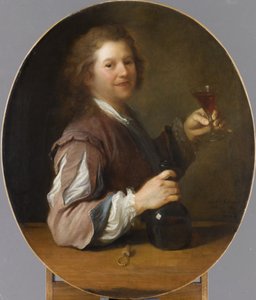
Alexis Grimou
1678 - 1733 , France
Quick Facts
- Artistic Movement Or Style: Baroque, Rococo
- Artists Or Movements Influenced By This Artist:
- Fragonard
- Greuze
- Artists Who Influenced This Artist:
- Rembrandt
- Anthony van Dyck
- Date Of Birth: 1678
- Date Of Death: 1733
- Full Name: Alexis Grimou
- Nationality: French
- Notable Artworks:
- The Flautist
- Self-Portrait as a Drinker
- Young Pilgrim Girl
- A Spanish Minstrel
- Place Of Birth: Argenteuil, France
Related Articles

Rembrandt's Masterpieces: Explore 25 Iconic Paintings & Prints | ArtsDot
Journey through Rembrandt van Rijn's 25 most iconic paintings & etchings. Explore Dutch Golden Age masterpieces, dramatic chiaroscuro, and timeless portraits. Find museum-quality art reproductions to elevate your home decor on ArtsDot.com.

Dutch Baroque Masters: 10 Paintings That Shaped an Era | ArtsDot
Journey through the Golden Age with our guide to the Top 10 Dutch Baroque masterpieces! Explore iconic paintings by Rembrandt, Vermeer & Frans Hals. Find museum-quality art reproductions and elevate your home decor at ArtsDot.com.

Golden Age Reflections: Dutch Baroque Painting & Cultural Innovation
Explore the Dutch Golden Age of painting! Discover key artists like Vermeer & ter Borch, their innovative techniques, and the rich cultural context behind these Baroque masterpieces. Learn about collecting & appreciating this iconic art period.

Rembrandt van Rijn: A Life Illuminated – Innovation, Emotion, and the Dutch Golden Age
Explore the life & art of Rembrandt van Rijn, a Dutch Golden Age master. Discover his innovative techniques, iconic paintings like 'The Night Watch', and enduring legacy. Expert insights for collectors & enthusiasts.

Baroque Masterpieces: 10 Paintings That Defined an Era |
Journey through the drama & grandeur of Baroque art! Explore 10 masterpieces by Caravaggio, Rembrandt, Rubens & more. Discover stunning oil paintings, rich colors & timeless stories. Find museum-quality reproductions at .