 Send
Send Share
Share
 Details

 Download
 Similars
 Diaporama
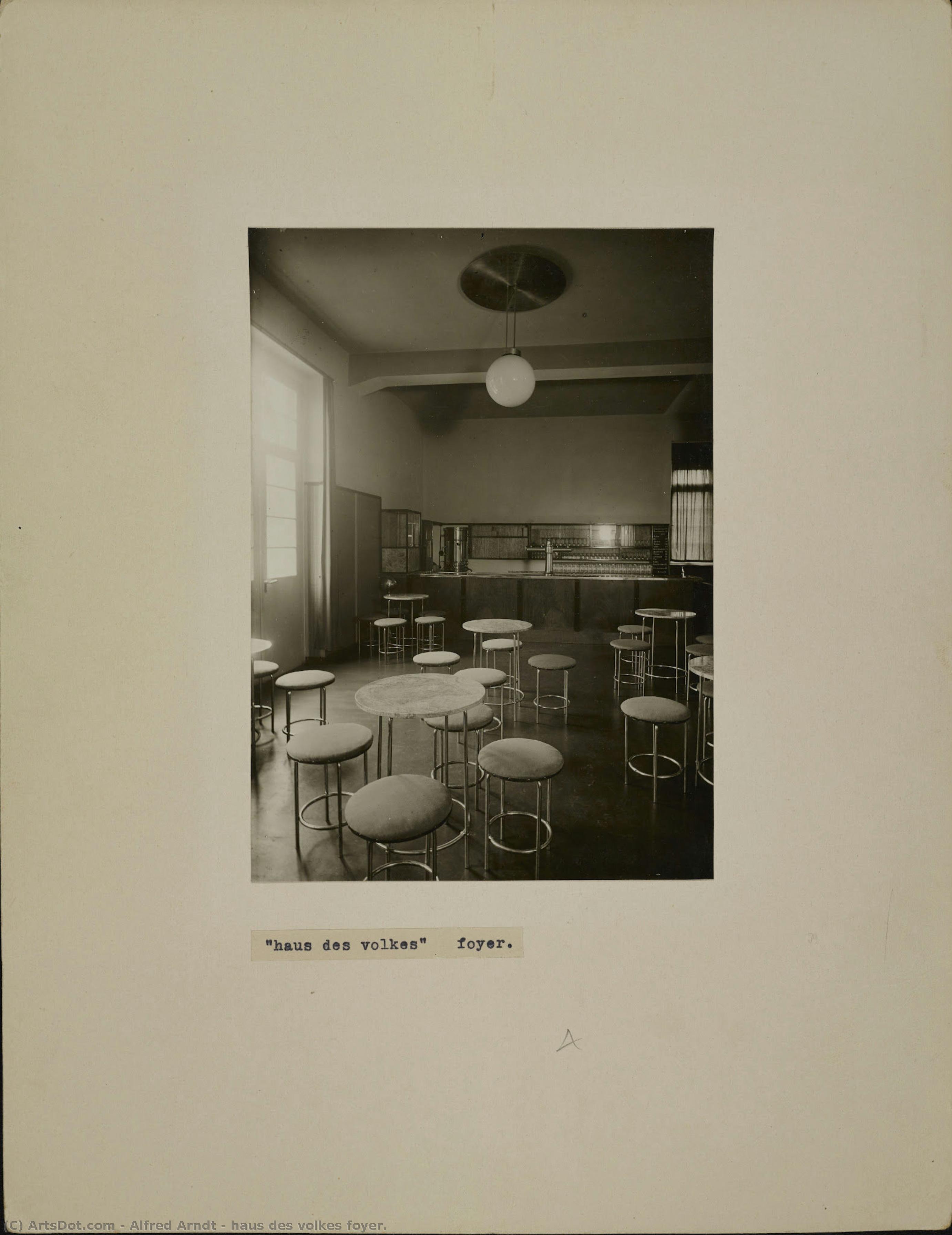
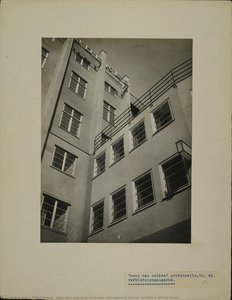
haus des volkes foyer.
 Black and White Photography
- Photo
- Bauhaus
 1929
1929- Modern
 17.0 x 12.0 cm
 Bauhaus Dessau Foundation
 Read More
Giclée / Art Print
Museum-quality giclée or canvas print with fast production and flexible finish options. ( Buy Hand Made Painting Buy Image)




































Pick from our preset sizes that match the artwork's original proportions.

You may enter your own dimensions to fit a specific frame or space. If your selected size does not match the original image's proportions, we will either crop the artwork or extend the image with a mirrored or solid-fill edge. A digital mockup will be sent for your approval before production begins.
Please note that the on-screen preview does not reflect the actual cropping or extension. Only the mockup will accurately show the final composition.
While custom sizes are available, we recommend selecting a dimension from the predefined list to preserve the original proportions.
Worldwide Delivery () in 2 weeks instead of standard 4/5 weeks. (23 August)

Free Worldwide Express Shipping

High-Quality Linen Canvas

Full Shipping Insurance

Customs Tax Refund Guarantee

True Color Matching Guarantee

60-Day Return Policy (Defects Only)

100% Money-Back Guarantee

Bulk Discount Offer
 Glass option is only available in size under 110 CM

haus des volkes foyer.
Giclée / Art Print
Reproduction Size
-


Total Price
$ 63
Collectible Description
A Glimpse into Modernist Serenity
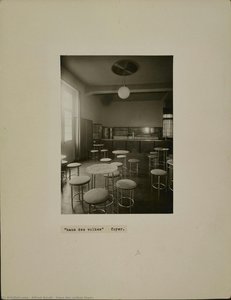
In this evocative black and white photograph from 1929, titled haus des volkes foyer, we are invited into a moment of quiet architectural elegance captured by the German master Alfred Arndt. The image presents a meticulously arranged interior, likely a restaurant or bar setting, where the interplay of light and shadow breathes life into a composition of tables and chairs. There is a profound sense of stillness in the way the furniture is positioned; some chairs linger in the foreground, inviting the viewer to step into the frame, while others recede into the soft depths of the room. This careful arrangement creates a rhythmic flow that guides the eye through the space, transforming a simple dining area into a sophisticated study of geometry and atmosphere.
The photograph serves as more than just a documentation of a physical space; it is a window into the Neues Bauen—New Objectivity—movement that defined an era of German design. Through the monochromatic lens, Arndt strips away the distractions of color to focus on the essential forms and textures of the environment. The stark contrasts between the bright surfaces and the deep, velvety shadows emphasize the structural integrity of the furniture and the spatial depth of the foyer. For the discerning collector or interior designer, this piece offers a masterclass in how minimalist composition can evoke a sense of warmth and invitation, making it an ideal focal point for spaces that value understated luxury and historical depth.
The Legacy of Bauhaus Precision
To understand the soul of this photograph, one must look to the artist’s profound connection to the Bauhaus. Having studied under luminaries such as Paul Klee and worked within the wall painting department alongside Wassily Kandinsky, Alfred Arndt possessed a unique ability to merge architectural precision with artistic expression. This work reflects that rare synthesis, where the functional layout of a public foyer is elevated to the level of fine art. The way the light catches the edges of the tables suggests a meticulous attention to detail, a hallmark of an artist trained in the rigorous traditions of Weimar and Dessau.
The emotional impact of haus des volkes foyer lies in its ability to evoke nostalgia for a lost era of utopian design. There is a palpable sense of "cozy modernity" within the frame—a feeling that while the lines are clean and the arrangement is disciplined, the space remains deeply human and welcoming. For those looking to adorn a contemporary interior with a piece that speaks of intellectual rigor and timeless grace, this reproduction offers an unparalleled opportunity. It brings into a home or gallery not just a photograph, but a fragment of architectural history, celebrating the enduring beauty of the modern movement.
Related Artworks

Artist Biography
early life and education
alfred arndt, a german architect, was born in elbing, germany in 1896. he studied draughtsmanship at a large machine factory in elbing, east prussia, before being conscripted into military duty during world war i. arndt's early artistic endeavors led him to join the wandervogel, a german nature-oriented youth movement, from 1915 to 1918.career and bauhaus affiliation
arndt studied at the staatliches bauhaus in weimar and at the bauhaus dessau from 1921 to 1926. notably, he took classes under renowned artists like paul klee, dora wibiral, and dorothea seeligmüller. his work in the wall painting department under wassily kandinsky from 1922 to 1924–1925 is particularly noteworthy.notable works and collaborations
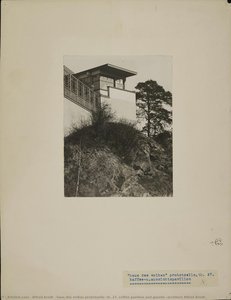
arndt's most significant project was the construction of the haus des volkes (house of the people) in probstzella, thuringia, which he modified in the spirit of neues bauen. this project, commissioned by franz itting, showcases arndt's architectural prowess.teaching and later life
from 1930 to 1931, arndt directed the integrated building and interior design departments at the bauhaus dessau. he taught interior design, illustrative geometry, and perspective from 1931 to 1932. arndt left the bauhaus in 1933 and returned to probstzella with his family, working as an advertising graphic designer and architect.legacy
arndt's work can be seen in various collections, including those at the bauhaus dessau foundation. his legacy is a testament to the enduring influence of the bauhaus movement on modern architecture and design.- view arndt's work on ArtsDot.com
- read more about alfred arndt on wikipedia
- explore the bauhaus dessau foundation collection on ArtsDot.com for more works by bauhaus artists
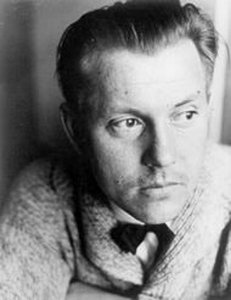
alfred arndt
1896 - 1976 , Germany
Quick Facts
- Artistic Movement Or Style: Pre-Raphaelite
- Artists Or Movements Influenced By This Artist: ['Pre-Raphaelite Brotherhood']
- Artists Who Influenced This Artist:
- William Holman Hunt
- Dante Gabriel Rossetti
- Date Of Birth: June 8, 1829
- Date Of Death: August 13, 1896
- Full Name: John Everett Millais
- Nationality: English
- Notable Artworks:
- Ophelia
- Christ in the House of His Parents
- Place Of Birth: Southampton, England
Related Articles

White on Canvas: 10 Masterpieces & Timeless Elegance for Your Home Decor
Explore 10 iconic white paintings by Monet, Whistler & Rothko! Discover the stories behind these serene masterpieces and their impact on art history. Find museum-quality reproductions for your home decor at .

Monochrome Visions: Exploring the Aesthetic & Historical Significance of Black & White Photography
Explore the rich history & artistic power of black and white photography. From early techniques to iconic masters like Ansel Adams, discover why monochrome continues to captivate art lovers today. Expert insights for collectors.

Dark Masterpieces: 10 Iconic Paintings Dominated by Black Tones |
Explore 10 iconic paintings dominated by black tones, from Rembrandt’s chiaroscuro to Goya's dark expressions. Discover the stories behind these masterpieces & find museum-quality art reproductions for your home at .

The Subtleties of Shade: Exploring Black, White & Gray Abstraction in Modern Interior Design
Explore the power of black, white & gray abstraction in modern interior design. Discover how minimalist art impacts spatial perception & creates sophisticated hotel spaces. Expert insights for designers.
The Gastronomic Stage: Interior Design as Narrative Framework in the Contemporary Restaurant Experience
Transform your restaurant into an unforgettable experience! Explore expert insights on interior design, art integration & creating immersive dining environments. Elevate your brand and captivate guests.