 Preview
 Send
Send Share
Share
 Details

 Download
 Similars
 X-Ray
X-Ray Diaporama
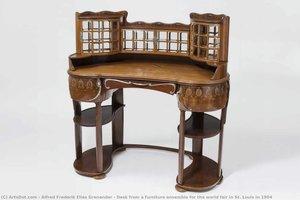
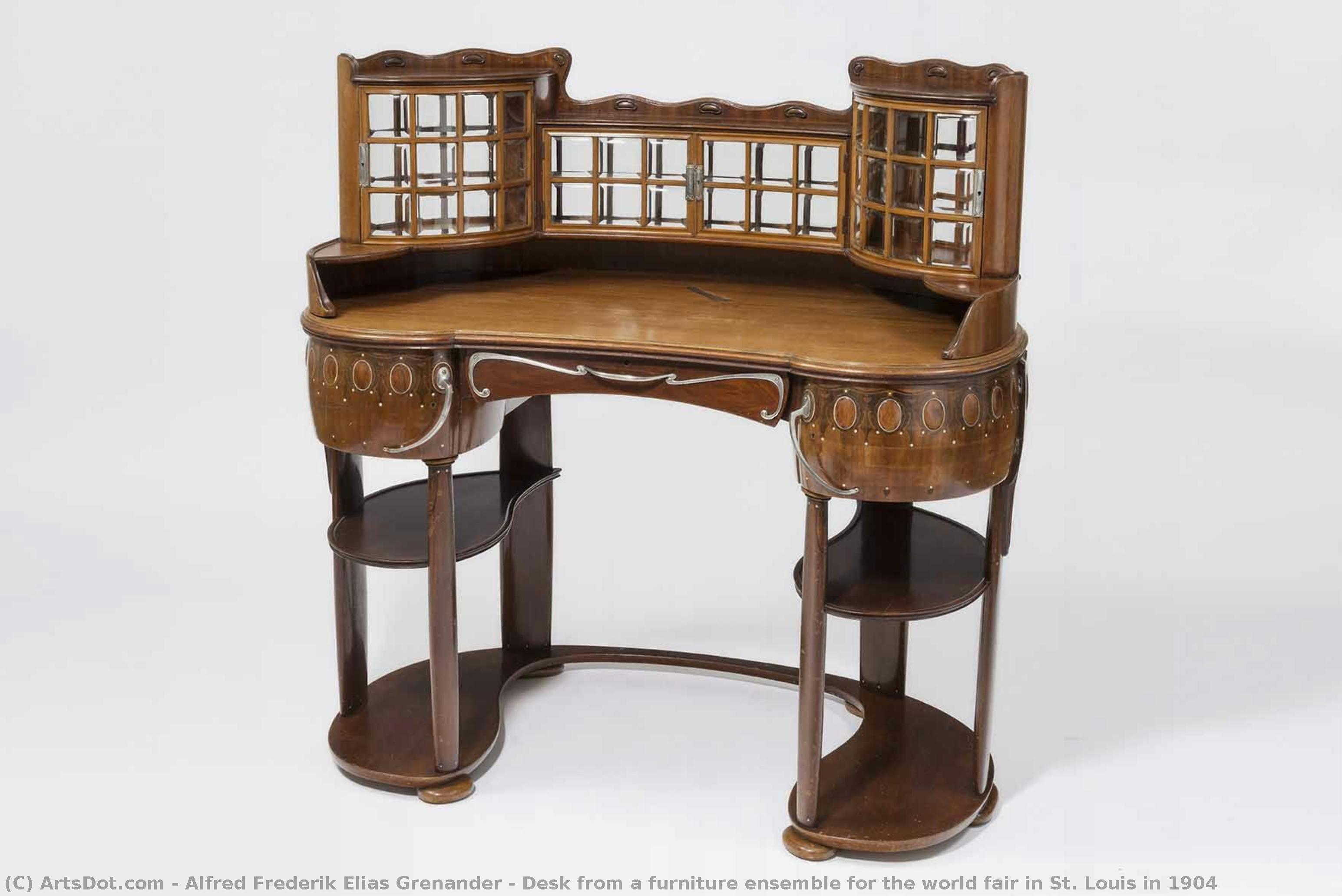
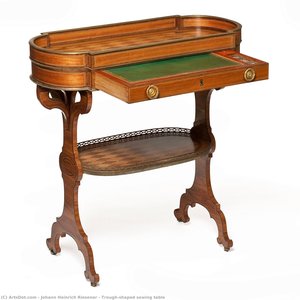
Desk from a furniture ensemble for the world fair in St. Louis in 1904
 Read More
Hand Made Oil Reproduction
Hand-painted oil on canvas in your size and frame, made to order by our artists. ( Buy Print Buy Image)




































Pick from our preset sizes that match the artwork's original proportions.

You may enter your own dimensions to fit a specific frame or space. If your selected size does not match the original image's proportions, we will either crop the artwork or extend the painting with additional hand-painted elements. A digital mockup will be sent for your approval before production begins.
Please note that the on-screen preview does not reflect the actual cropping or extension. Only the mockup will accurately show the final composition.
While custom sizes are available, we recommend selecting a dimension from the predefined list to preserve the original proportions.
After order, ArtsDot.com team will email client for instructions and provide a mockup preview
Worldwide Delivery () in 3/4 weeks instead of standard 5 weeks. (3 September). No compromise on quality.

Free Worldwide Express Shipping

High-Quality Linen Canvas

Full Shipping Insurance

Customs Tax Refund Guarantee

True Color Matching Guarantee

60-Day Return Policy (Defects Only)

100% Money-Back Guarantee

Bulk Discount Offer
 Glass option is only available in size under 110 CM

Desk from a furniture ensemble for the world fair in St. Louis in 1904
Reproduction Medium
Reproduction Size
-


Total Price
$ 263
Related Artworks






Artist Biography
Alfred Frederik Elias Grenander: A Pioneer of Berlin’s U-Bahn
Early Life and Education
Alfred Frederik Elias Grenander was born in Skövde, Sweden, in 1863. He pursued his architectural education at the Swedish Royal Institute of Technology and further honed his skills at the Royal Technical College of Charlottenburg. These formative years laid the foundation for a career that would significantly shape the urban landscape of Berlin.Early Career & Influences
Grenander began his professional journey as a site engineer during the construction of the New Reichstag Building, working under the direction of Paul Wallot. This experience provided invaluable practical knowledge and exposure to large-scale architectural projects. He continued developing his skills in the architectural office of Alfred Messel, absorbing influences that would later inform his own distinctive style.The Berlin U-Bahn: A Defining Project
In 1896, Grenander established his independent practice and soon became deeply involved with the Hochbahngesellschaft, a company founded by Siemens & Halske to construct Berlin’s first elevated railway – what would become known as the U-Bahn. From 1897 until his death in 1931, Grenander dedicated himself to designing and constructing approximately 70 U-Bahn stations. These weren't merely functional structures; they were carefully considered architectural statements within the burgeoning metropolis.Architectural Style & Key Characteristics
Grenander’s designs are characterized by a commitment to modernity and functionality. He favored clean lines, practical layouts, and efficient use of space. While influenced by contemporary trends, his U-Bahn stations developed a unique aesthetic – robust yet elegant, blending seamlessly into the urban fabric. His work exemplifies early 20th-century functionalism, prioritizing purpose without sacrificing visual appeal.Major Achievements & Lasting Legacy
- Construction of approximately 70 U-Bahn stations in Berlin
- Development of a distinctive architectural style for the U-Bahn network
- Contribution to the modernization and expansion of Berlin’s public transportation system
Historical Significance
Alfred Grenander's work is profoundly significant because it represents a pivotal moment in urban planning and architectural design. His U-Bahn stations weren’t just transit hubs; they were integral components of Berlin’s evolving identity, facilitating the city’s growth and connecting its diverse communities. Many of his stations remain in use today, serving as enduring testaments to his vision and engineering prowess. He is considered one of the most important architects of the Berlin U-Bahn, leaving an indelible mark on the cityscape and influencing subsequent generations of urban designers. His designs continue to be admired for their practicality, aesthetic quality, and historical importance.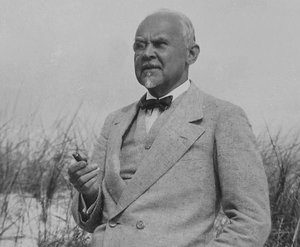
alfred frederik elias grenander
1863 - 1931 , Sweden
Quick Facts
- Birth Date: 1863
- Birth Place: Skövde, Sweden
- Death Date: 1931
- Influenced By: Paul Wallot, Alfred Messel
- Movement: Functionalism, Modern Architecture
- Name: Alfred Frederik Elias Grenander
- Nationality: Swedish
- Notable Works: Berlin U-Bahn stations