

 Preview
 Send
Send Share
Share
 Details

 Download
 Similars
 X-Ray
X-Ray Diaporama
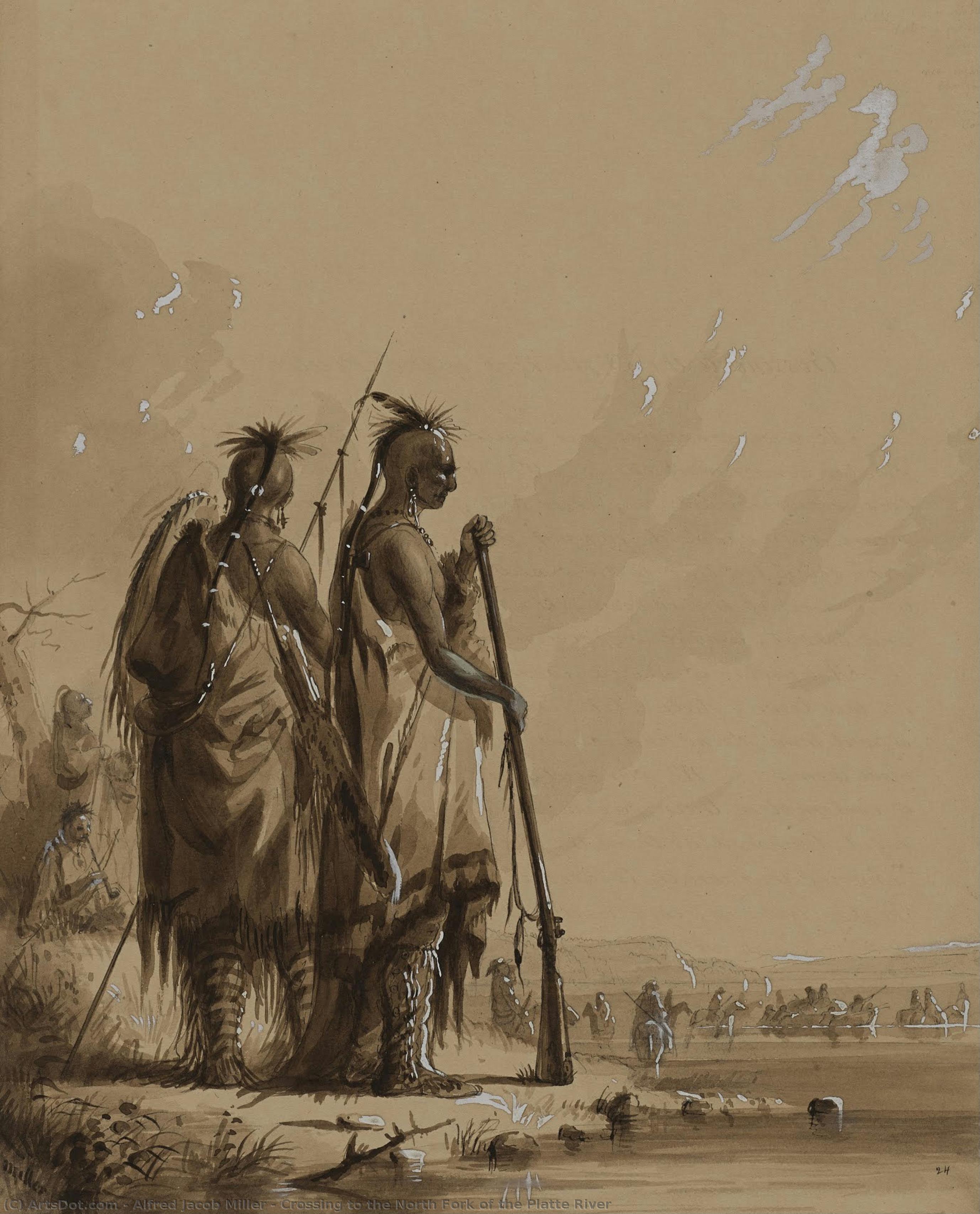
Crossing to the North Fork of the Platte River


 Read More
Purchase a high-resolution, enhanced digital image, far superior to the online preview.
Each file is meticulously prepared by our in-house specialists using advanced tools and expert manual retouching. We ensure every image has exceptional clarity, precise color accuracy, and fine detail.
The final file is delivered via email within 72 hours, optimized for immediate use in professional, editorial, and print environments. This is the same quality trusted by top-tier design studios, publishers, and galleries.
Digital Image
Download a high-resolution file for personal display, printing, and creative projects. ( Buy Print Buy Hand Made Painting)
Included in Every Digital Image Order
Expert Digital Delivery, Guaranteed
When you choose ArtsDot.com, you're not just getting an image - you're receiving a professionally enhanced digital artwork, crafted with precision and backed by a satisfaction guarantee. Here's everything that comes with your order, automatically:

Fast Email Delivery
Your high-resolution digital image file will be emailed to you within 72 hours of ordering - ready for immediate use.

AI-Enhanced Digital File
Your artwork is professionally optimized using advanced AI tools and manual editing, ensuring maximum detail, clarity, and color accuracy.

Free Lifetime Re-Delivery
Accidentally deleted or lost your file? No worries - we'll resend it to you anytime, free of charge.

No Import Fees - Ever
Enjoy your artwork instantly with zero customs, duties, or delivery fees - digital downloads are always tax-free.

Color Accuracy Guarantee
We ensure your digital image reflects the original colors as closely as possible using professional tools and color management.

60-Day Satisfaction Guarantee
If you're not satisfied with your digital image, we'll revise it or refund 100% within 60 days - no questions asked.

100% Money-Back Guarantee
Not satisfied? Get a full refund within 60 days of receiving your digital file - no questions asked.

Bulk Order Discounts
Buy 3 images, save 10% - Buy 5, save 15% - Buy 10+, save 20%. Great for creative projects, galleries, and agencies.
Alfred Jacob Miller’s Vision: Capturing a Vanishing Frontier
Alfred Jacob Miller's "Crossing to the North Fork of the Platte River" isn't merely a painting; it’s a window into a rapidly disappearing world. Painted in 1858-1860, this evocative scene transports us to the heart of the American West during the height of the fur trade era – a time of rugged individualism, burgeoning settlements, and profound interaction between European traders and Native American tribes. Miller, a German-born artist who spent much of his career documenting the lives of these communities, possessed an extraordinary ability to capture both the physical landscape and the nuanced humanity within it. His work stands apart not just for its technical skill but for its deeply empathetic portrayal of a culture on the cusp of transformation.

A Study in Realism and Romanticism
Miller’s style is a compelling blend of realism and romanticism, reflecting the spirit of his subject matter. The meticulous detail with which he renders the landscape – the braided river, the towering rock formations, the sparse vegetation – speaks to an acute observational skill honed during his extensive travels through the West. Yet, there's also a palpable sense of drama and grandeur in the composition, heightened by the dramatic lighting and the figures’ postures that convey both determination and a quiet reverence for nature. The painting utilizes a muted color palette dominated by earthy tones – browns, ochres, and grays – which effectively evokes the harsh beauty of the prairie environment. Miller's masterful use of light and shadow creates depth and atmosphere, drawing the viewer into the scene.
The Story Within the Scene: Native American Life
At first glance, the painting depicts two Native American men – likely members of the Cheyenne or Arapaho tribes – standing on the riverbank. They are armed with rifles and bows, suggesting their role as hunters and protectors of their territory. However, Miller’s intention goes far beyond a simple depiction of hunting practices. He subtly reveals a complex social dynamic through his choice of composition and the figures' expressions. The men aren’t portrayed as savage warriors but rather as thoughtful observers, contemplating the vastness of the river and the challenges of their way of life. The inclusion of other individuals scattered throughout the scene – some closer to the water’s edge, others further back – hints at a larger community gathering, perhaps for a seasonal hunt or a ceremonial event. Miller's detailed rendering of clothing and tools provides valuable insights into the daily routines and cultural practices of these tribes.
Historical Context: The Fur Trade and its Legacy
“Crossing to the North Fork of the Platte River” is inextricably linked to the era of the American fur trade, a pivotal period in the history of the West. During this time, European traders established trading posts along rivers like the Platte, exchanging goods with Native American tribes for furs and other resources. Miller’s journey as an artist was directly tied to this trade, documenting its impact on both the landscape and the lives of those who inhabited it. His work serves as a crucial historical record, offering a rare glimpse into a world that is increasingly difficult to imagine today. The painting reflects the complex relationship between European settlers and Native American tribes – one marked by both cooperation and conflict, exchange and exploitation.
Resources for Further Exploration
Related Artworks
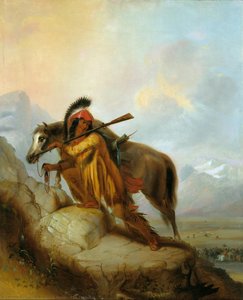
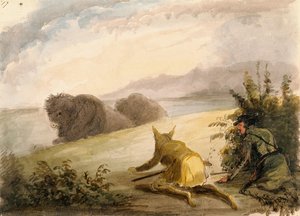
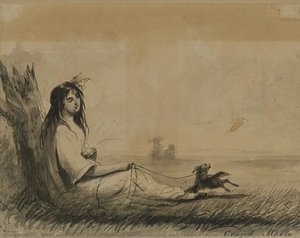
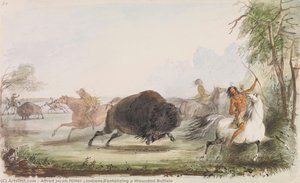
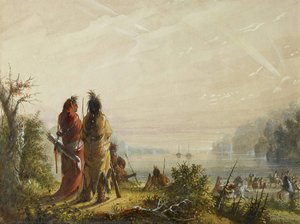
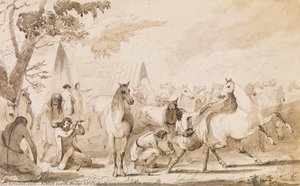
Artist Biography
A Pioneer of the American West
Alfred Jacob Miller, born in Baltimore in 1810, occupies a unique and vital position in the narrative of American art. He wasn’t merely a painter of landscapes or portraits; he was a visual chronicler of a vanishing world – the fur trade era of the Rocky Mountains and the lives of the Native American tribes who inhabited them. His journey to artistic recognition was unconventional, beginning not with formal academic training but with an innate talent nurtured by early exposure to artists like Thomas Sully. While attending John D. Craig’s Academy in Baltimore, Miller's education lacked a dedicated art curriculum, yet this absence perhaps fostered a distinctive style that would later set him apart. A pivotal period followed when he journeyed to Paris in 1832, immersing himself in the rigorous study of life drawing at the École des Beaux-Arts and absorbing the artistic traditions of Europe. This foundational experience honed his observational skills and provided a technical base upon which he would build his uniquely American vision.The Transformative Expedition
Miller’s career took an extraordinary turn in 1837, when fate – or perhaps artistic destiny – intervened in the form of Sir William Drummond Stewart, a Scottish aristocrat with a passion for the untamed West. Stewart commissioned Miller to accompany him on a hunting expedition into the heart of the Rocky Mountains, tasking him with documenting the landscapes and cultures encountered along the way. This wasn’t simply an assignment; it was an immersion into a world few Americans, let alone artists, had ever witnessed. For months, Miller meticulously sketched scenes of Native American life – the Sioux, Crow, Shoshone, and others – capturing their customs, clothing, rituals, and interactions with trappers and traders. He recorded the rugged beauty of the terrain, the drama of hunts, and the quiet moments of daily existence on the frontier. These weren’t romanticized depictions intended to glorify the West; they were honest observations imbued with a sensitivity that distinguished Miller's work from much of his contemporaries'. Upon returning to New Orleans, he transformed these sketches into a series of paintings that would establish his reputation as a significant figure in American art, offering an invaluable glimpse into a world on the cusp of irreversible change.Style and Artistic Legacy
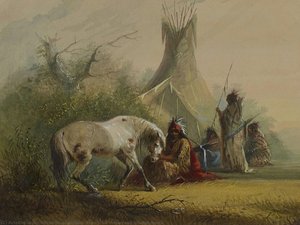
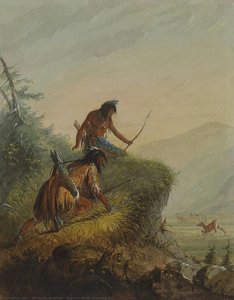
Miller’s artistic style is characterized by a compelling blend of realism and romanticism. He possessed a remarkable ability to render details with precision – the intricate beadwork on Native American garments, the texture of animal hides, the subtle nuances of light across the landscape. Yet, his paintings are far from mere photographic representations. They possess a dramatic flair, an atmospheric quality that evokes the spirit of adventure and the grandeur of the West. He wasn’t afraid to imbue his scenes with a sense of narrative, capturing moments of tension, camaraderie, or quiet contemplation. Works like The Lake Her Lone Bosom Expands to the Sky, Camp Scene (Sioux), Big Bowl (A Crow Chief), and Snake Indians Shooting Elk exemplify this approach – each painting tells a story, inviting the viewer to step into the world Miller so vividly portrayed. His watercolors, in particular, demonstrate a mastery of color and light, creating an ethereal quality that enhances the emotional impact of his scenes. The majority of these significant works now reside within the esteemed collection of the Walters Art Museum in Baltimore, serving as enduring testaments to his artistic vision.Historical Significance and Enduring Appeal
Alfred Jacob Miller’s legacy extends far beyond the realm of art history. He was among the first artists to authentically capture the essence of the American West, providing a visual record of Native American cultures at a time when they were facing unprecedented challenges. His paintings serve as invaluable historical documents, offering insights into the lives and customs of tribes that would soon be dramatically altered by westward expansion. While his work wasn’t without its limitations – reflecting the biases of his era – it remains remarkably sensitive and respectful in its portrayal of Native American people. Today, Miller's art continues to inspire artists and captivate audiences with its beauty, drama, and historical significance. His paintings are not merely representations of a bygone era; they are windows into a world that has largely disappeared, reminding us of the complex and often tragic history of the American West and the importance of preserving cultural heritage. He stands as a testament to the power of art to document, interpret, and ultimately, to remember.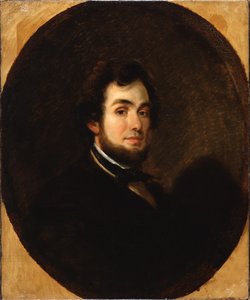
Alfred Jacob Miller
1810 - 1874 , United States of America
Quick Facts
- Artistic Movement Or Style: Realism & Romanticism
- Artists Who Influenced This Artist:
- Thomas Sully
- Horace Vernet
- Date Of Birth: January 2, 1810
- Date Of Death: 1874
- Full Name: Alfred Jacob Miller
- Nationality: American
- Notable Artworks:
- The Lake Her Lone Bosom Expands...
- Camp Scene (Sioux)
- Big Bowl (A Crow Chief)
- Argali - Mountain Sheep
- Snake Indians Shooting Elk
- Shoshone Indian & Pet Horse
- Place Of Birth: Baltimore, USA

