 Preview
 Send
Send Share
Share
 Details

 Download
 Similars
 X-Ray
X-Ray Diaporama
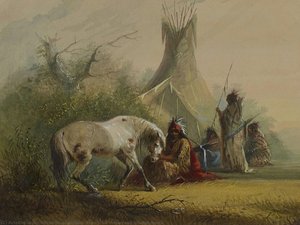
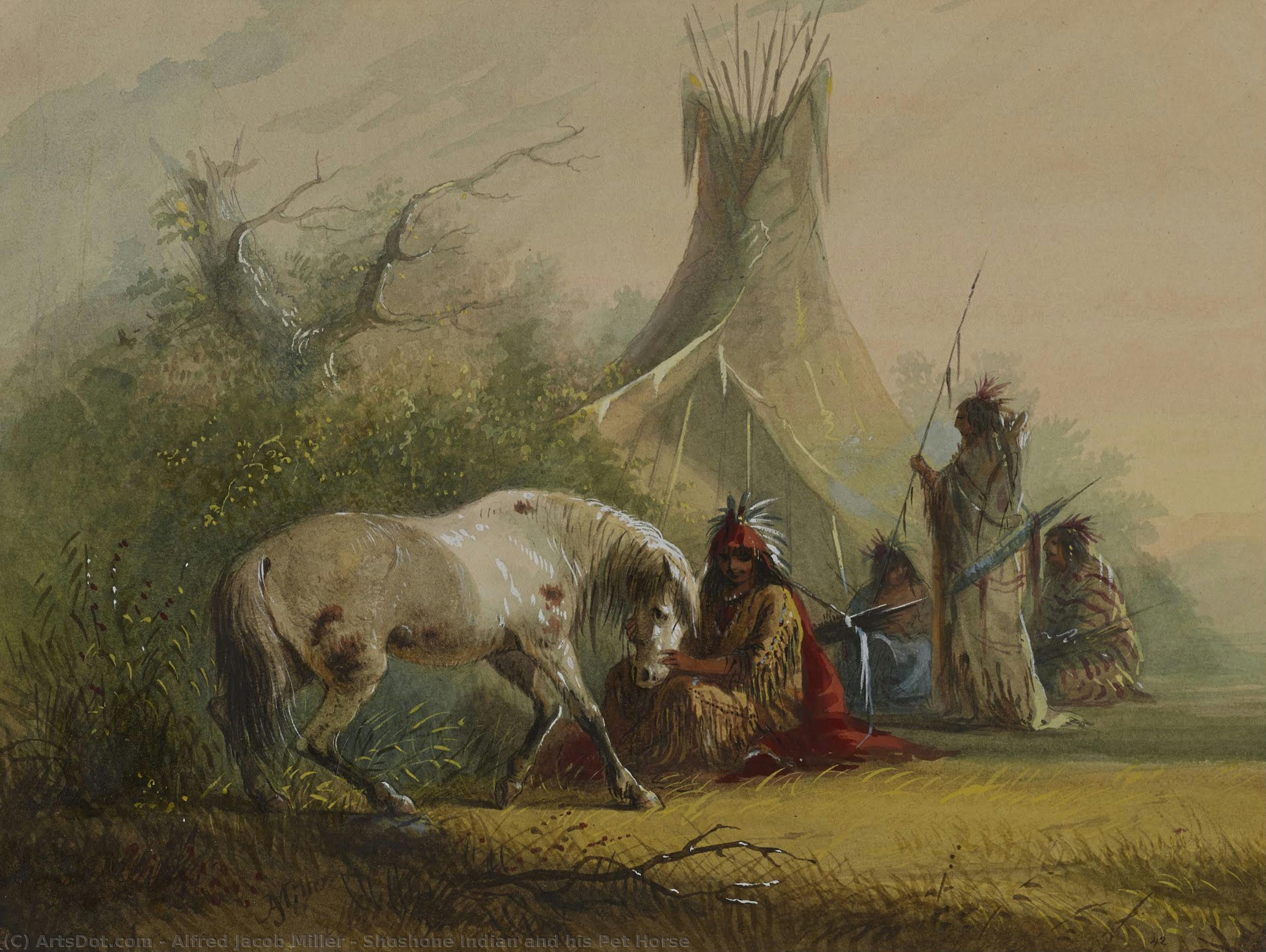
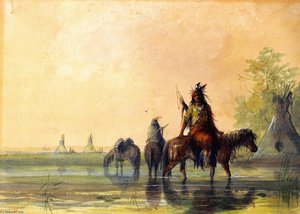
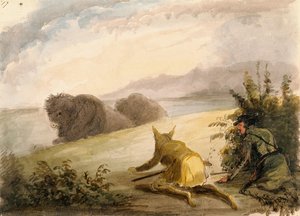
Shoshone Indian and his Pet Horse


 Read More
Hand Made Oil Reproduction
Hand-painted oil on canvas in your size and frame, made to order by our artists. ( Buy Print Buy Image)




P118B $10

P118H $10

P118W $10

P438Z $10

P508JH $12

P508YH $12

P805H $10

P805Z $10

P919BZ $10

P919G $10

P919XJ $10

P959ZH $10

P968JZ $12

W106C $8

W218G $10

W218JH $8

W218Y $10

W307PJ $10

W316G $10

W316PJ $8

W316Y $10

W398PJ $8

W4111J $10

W500HY $15

W500JH $15

W692G $12

W849H $8

W940BG $15

W953PJ $8




Pick from our preset sizes that match the artwork's original proportions.

You may enter your own dimensions to fit a specific frame or space. If your selected size does not match the original image's proportions, we will either crop the artwork or extend the painting with additional hand-painted elements. A digital mockup will be sent for your approval before production begins.
Please note that the on-screen preview does not reflect the actual cropping or extension. Only the mockup will accurately show the final composition.
While custom sizes are available, we recommend selecting a dimension from the predefined list to preserve the original proportions.
After order, ArtsDot.com team will email client for instructions and provide a mockup preview
Worldwide Delivery () in 3/4 weeks instead of standard 5 weeks. (27 August). No compromise on quality.

Free Worldwide Express Shipping

High-Quality Linen Canvas

Full Shipping Insurance

Customs Tax Refund Guarantee

True Color Matching Guarantee

60-Day Return Policy (Defects Only)

100% Money-Back Guarantee

Bulk Discount Offer
 Glass option is only available in size under 110 CM

Shoshone Indian and his Pet Horse
Reproduction Medium
Reproduction Size
-


Total Price
$ 263
Artwork Description
Alfred Jacob Miller’s “Shoshone Indian and His Pet Horse”: A Window Into The American West
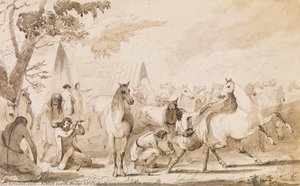
Alfred Jacob Miller's "Shoshone Indian and his Pet Horse," painted circa 1845–1847, stands as a remarkable testament to the burgeoning Romantic fascination with the untamed landscapes and indigenous cultures of America during its formative years. Commissioned by William T. Walters, this watercolor captures a seemingly simple tableau – an elderly Shoshone warrior tenderly caring for his horse – yet it resonates with profound layers of observation, narrative, and subtle symbolic representation that elevate it beyond mere depiction into a powerful statement about the era’s worldview.Subject Matter & Composition
The painting portrays a solitary Shoshone man seated on the ground beside his equine companion. The figure is positioned centrally within the frame, emphasizing intimacy and connection with nature. Surrounding him are two additional individuals – likely members of his tribe – who stand slightly to the right, providing context for the scene’s social dynamics. Scattered birds contribute to the overall atmosphere, adding visual interest and hinting at the vibrancy of the natural environment. Miller meticulously rendered details like the horse's musculature and the warrior’s weathered face, demonstrating a commitment to realism that was characteristic of his artistic approach.Style & Technique: Romantic Realism
Miller skillfully blended elements of Romantic idealism with meticulous observation—a hallmark of what is termed “Romantic Realism.” Like many artists of his time, Miller sought to convey emotion and grandeur while grounding his depictions in accurate representation. The watercolor medium itself lends a luminous quality to the painting, capturing the diffused light of the prairie sun. Miller’s brushstrokes are loose yet controlled, conveying texture and movement without sacrificing clarity. This technique allowed him to effectively communicate both the beauty of the landscape and the dignity of the Shoshone people.Historical Context: The Fur Trade Era & Western Expansion
“Shoshone Indian and His Pet Horse” emerged during a pivotal period in American history – the height of the fur trade era and the accelerating westward expansion. Artists like Miller were tasked with documenting these transformative changes, often reflecting prevailing attitudes toward Native Americans that oscillated between admiration for their resilience and justification for territorial conquest. The painting’s depiction of an elder Shoshone man caring for his horse speaks to a romanticized vision of indigenous life—a reverence for tradition alongside a recognition of the hardships endured by those inhabiting the frontier. Miller's work aligns with broader artistic trends that celebrated heroism, wilderness, and the sublime – concepts deeply intertwined with the burgeoning national identity.Symbolism & Emotional Impact
Beyond its descriptive accuracy, “Shoshone Indian and His Pet Horse” carries symbolic weight. The horse represents strength, companionship, and connection to the land—values central to Shoshone culture. Miller’s portrayal of an aged warrior underscores themes of wisdom, perseverance, and continuity amidst change. The painting evokes a feeling of tranquility and respect for the natural world, inviting viewers to contemplate the beauty and dignity inherent in both human and animal existence. It serves as a poignant reminder of a disappearing way of life—a moment frozen in time that captures the spirit of an era defined by exploration, ambition, and evolving perceptions of America’s relationship with its indigenous inhabitants.Provenance & Legacy
The painting's journey through history began with William T. Walters’ commission in 1858 and continued through subsequent generations, culminating in its bequest to The Walters Art Museum in 1931. Its inclusion in exhibitions like “Alfred Jacob Miller: An Artist on the Oregon Trail” ensured that Miller’s contribution to American art would be recognized and appreciated by a wider audience. Today, reproductions of "Shoshone Indian and His Pet Horse" continue to inspire collectors and designers alike—a testament to Miller's enduring artistic vision and its ability to convey timeless themes of connection, respect, and the sublime beauty of the American West.Related Artworks
![The Medicine Man [no. 2] — Charles Marion Russell, Romanticism](/media/artworks/images-thumb/36/81/3681e761ccb07cc08045052b2f0bba9b.jpg)
Artist Biography
A Pioneer of the American West
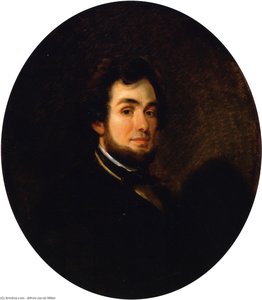
Alfred Jacob Miller, born in Baltimore in 1810, occupies a unique and vital position in the narrative of American art. He wasn’t merely a painter of landscapes or portraits; he was a visual chronicler of a vanishing world – the fur trade era of the Rocky Mountains and the lives of the Native American tribes who inhabited them. His journey to artistic recognition was unconventional, beginning not with formal academic training but with an innate talent nurtured by early exposure to artists like Thomas Sully. While attending John D. Craig’s Academy in Baltimore, Miller's education lacked a dedicated art curriculum, yet this absence perhaps fostered a distinctive style that would later set him apart. A pivotal period followed when he journeyed to Paris in 1832, immersing himself in the rigorous study of life drawing at the École des Beaux-Arts and absorbing the artistic traditions of Europe. This foundational experience honed his observational skills and provided a technical base upon which he would build his uniquely American vision.The Transformative Expedition
Miller’s career took an extraordinary turn in 1837, when fate – or perhaps artistic destiny – intervened in the form of Sir William Drummond Stewart, a Scottish aristocrat with a passion for the untamed West. Stewart commissioned Miller to accompany him on a hunting expedition into the heart of the Rocky Mountains, tasking him with documenting the landscapes and cultures encountered along the way. This wasn’t simply an assignment; it was an immersion into a world few Americans, let alone artists, had ever witnessed. For months, Miller meticulously sketched scenes of Native American life – the Sioux, Crow, Shoshone, and others – capturing their customs, clothing, rituals, and interactions with trappers and traders. He recorded the rugged beauty of the terrain, the drama of hunts, and the quiet moments of daily existence on the frontier. These weren’t romanticized depictions intended to glorify the West; they were honest observations imbued with a sensitivity that distinguished Miller's work from much of his contemporaries'. Upon returning to New Orleans, he transformed these sketches into a series of paintings that would establish his reputation as a significant figure in American art, offering an invaluable glimpse into a world on the cusp of irreversible change.Style and Artistic Legacy
Miller’s artistic style is characterized by a compelling blend of realism and romanticism. He possessed a remarkable ability to render details with precision – the intricate beadwork on Native American garments, the texture of animal hides, the subtle nuances of light across the landscape. Yet, his paintings are far from mere photographic representations. They possess a dramatic flair, an atmospheric quality that evokes the spirit of adventure and the grandeur of the West. He wasn’t afraid to imbue his scenes with a sense of narrative, capturing moments of tension, camaraderie, or quiet contemplation. Works like The Lake Her Lone Bosom Expands to the Sky, Camp Scene (Sioux), Big Bowl (A Crow Chief), and Snake Indians Shooting Elk exemplify this approach – each painting tells a story, inviting the viewer to step into the world Miller so vividly portrayed. His watercolors, in particular, demonstrate a mastery of color and light, creating an ethereal quality that enhances the emotional impact of his scenes. The majority of these significant works now reside within the esteemed collection of the Walters Art Museum in Baltimore, serving as enduring testaments to his artistic vision.Historical Significance and Enduring Appeal
Alfred Jacob Miller’s legacy extends far beyond the realm of art history. He was among the first artists to authentically capture the essence of the American West, providing a visual record of Native American cultures at a time when they were facing unprecedented challenges. His paintings serve as invaluable historical documents, offering insights into the lives and customs of tribes that would soon be dramatically altered by westward expansion. While his work wasn’t without its limitations – reflecting the biases of his era – it remains remarkably sensitive and respectful in its portrayal of Native American people. Today, Miller's art continues to inspire artists and captivate audiences with its beauty, drama, and historical significance. His paintings are not merely representations of a bygone era; they are windows into a world that has largely disappeared, reminding us of the complex and often tragic history of the American West and the importance of preserving cultural heritage. He stands as a testament to the power of art to document, interpret, and ultimately, to remember.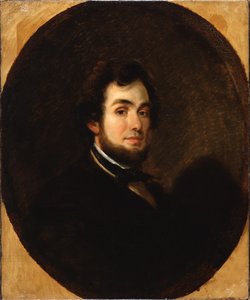
Alfred Jacob Miller
1810 - 1874 , United States of America
Quick Facts
- Artistic Movement Or Style: Realism & Romanticism
- Artists Who Influenced This Artist:
- Thomas Sully
- Horace Vernet
- Date Of Birth: January 2, 1810
- Date Of Death: 1874
- Full Name: Alfred Jacob Miller
- Nationality: American
- Notable Artworks:
- The Lake Her Lone Bosom Expands...
- Camp Scene (Sioux)
- Big Bowl (A Crow Chief)
- Argali - Mountain Sheep
- Snake Indians Shooting Elk
- Shoshone Indian & Pet Horse
- Place Of Birth: Baltimore, USA
Related Articles

Watercolor Wonders: 10 Masterpieces That Redefined Art History | ArtsDot
Journey through 10 legendary watercolor masterpieces by Sargent, Turner & Homer! Explore iconic landscapes, portraits & floral art that redefined history. Find museum-quality reproductions and curated decor ideas at ArtsDot.com.
Alfred Jacob Miller: Chronicling the American West Through Artistic Observation & Narrative
Explore the captivating art of Alfred Jacob Miller, chronicler of the American West. Discover his iconic paintings, techniques & lasting legacy – a valuable addition to any serious collection. Learn more at ArtsDot.

Ephemeral Visions: Exploring the Artistic Legacy & Contemporary Practice of Watercolor Painting
Explore the captivating world of watercolor painting! Discover its rich history, essential techniques, influential artists & collecting tips. A comprehensive guide for art enthusiasts from ArtsDot.

Ephemeral Visions: Exploring the History & Emotional Resonance of Watercolor Painting
Explore the captivating history of watercolor painting, from ancient techniques to modern masters like Kandinsky & Blake. Discover essential artists, collecting tips & the emotional power of this luminous medium. Expert insights for art enthusiasts.
Sir Alfred Munnings' Masterpieces: 25 Paintings That Define Equine Art | ArtsDot
Explore 25 iconic Sir Alfred Munnings paintings! Discover the beauty of British Impressionism, equine art & rural England. Find museum-quality reproductions and elevate your home decor with ArtsDot. Explore the full collection online.