

 Preview
 Send
Send Share
Share
 Details

 Download
 Similars
 X-Ray
X-Ray Diaporama
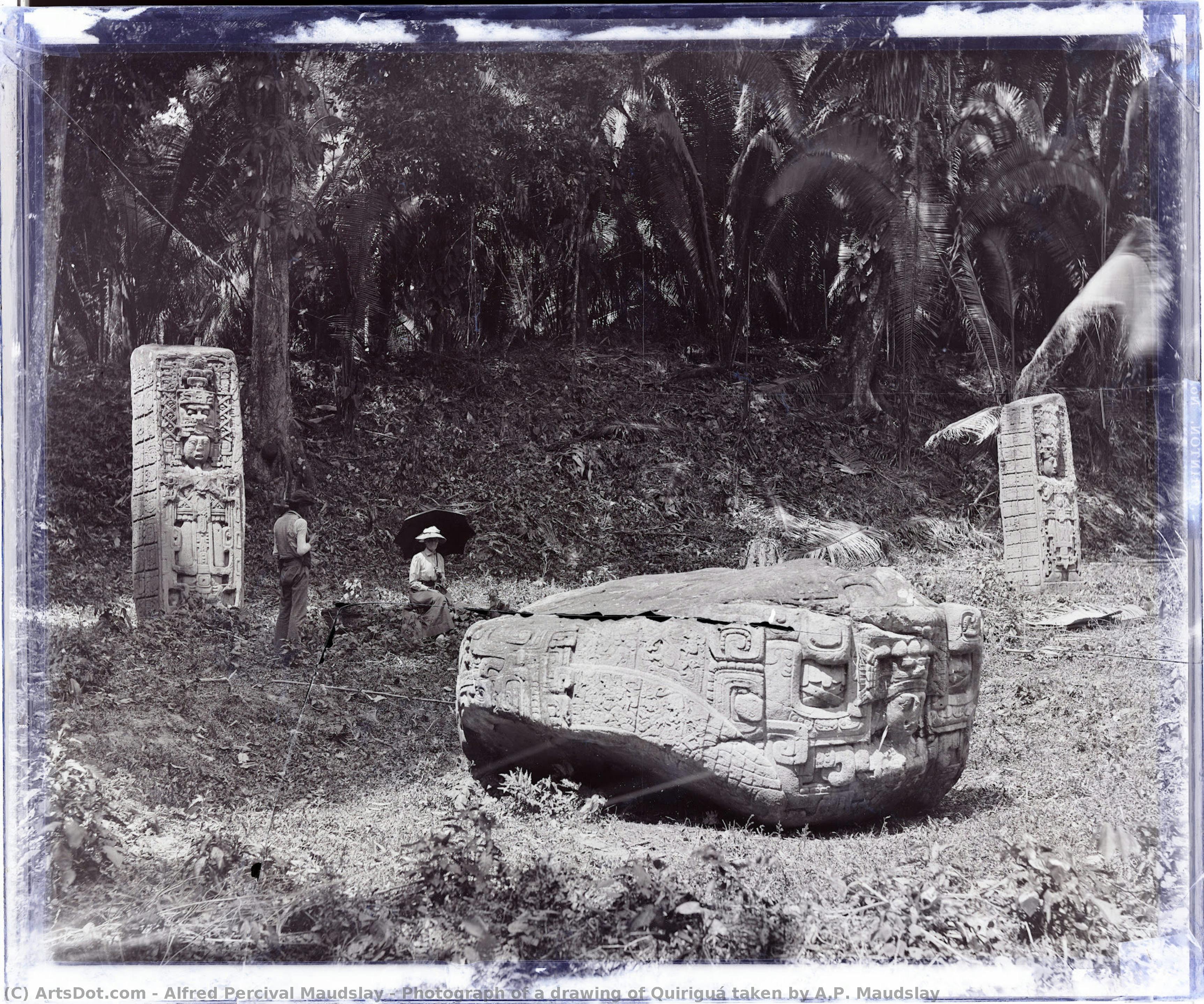
Photograph of a drawing of Quiriguá taken by A.P. Maudslay


 Read More
Purchase a high-resolution, enhanced digital image, far superior to the online preview.
Each file is meticulously prepared by our in-house specialists using advanced tools and expert manual retouching. We ensure every image has exceptional clarity, precise color accuracy, and fine detail.
The final file is delivered via email within 72 hours, optimized for immediate use in professional, editorial, and print environments. This is the same quality trusted by top-tier design studios, publishers, and galleries.
Digital Image
Download a high-resolution file for personal display, printing, and creative projects. ( Buy Print Buy Hand Made Painting)
Included in Every Digital Image Order
Expert Digital Delivery, Guaranteed
When you choose ArtsDot.com, you're not just getting an image - you're receiving a professionally enhanced digital artwork, crafted with precision and backed by a satisfaction guarantee. Here's everything that comes with your order, automatically:

Fast Email Delivery
Your high-resolution digital image file will be emailed to you within 72 hours of ordering - ready for immediate use.

AI-Enhanced Digital File
Your artwork is professionally optimized using advanced AI tools and manual editing, ensuring maximum detail, clarity, and color accuracy.

Free Lifetime Re-Delivery
Accidentally deleted or lost your file? No worries - we'll resend it to you anytime, free of charge.

No Import Fees - Ever
Enjoy your artwork instantly with zero customs, duties, or delivery fees - digital downloads are always tax-free.

Color Accuracy Guarantee
We ensure your digital image reflects the original colors as closely as possible using professional tools and color management.

100-Day Satisfaction Guarantee
If you're not satisfied with your digital image, we'll revise it or refund 100% within 100 days - no questions asked.

100% Money-Back Guarantee
Not satisfied? Get a full refund within 100 days of receiving your digital file - no questions asked.

Bulk Order Discounts
Buy 3 images, save 10% - Buy 5, save 15% - Buy 10+, save 20%. Great for creative projects, galleries, and agencies.
A Glimpse Through Time: The Significance of Maudslay's Quiriguá Photograph
The black and white photograph presented here, a meticulously crafted image by the pioneering archaeologist Alfred Percival Maudslay, is far more than a simple depiction of an ancient Mayan site. It’s a portal – a carefully constructed window into a vanished civilization, offering a rare and intimate view of Quiriguá, Guatemala, in 1894. Maudslay wasn't merely documenting ruins; he was actively engaged in the process of uncovering and interpreting Maya culture, driven by an almost obsessive curiosity and a deep respect for the people who had built these monumental structures. The photograph itself is imbued with a sense of quiet observation, capturing a moment of scholarly engagement amidst the grandeur of the ancient city.
The image depicts a man – undoubtedly Maudslay himself – standing before the towering stepped pyramids and plazas that define Quiriguá. He’s dressed in the attire of his time: a hat shielding him from the sun, an umbrella providing respite from the elements, and a posture suggesting both contemplation and methodical study. His companion, likely a local guide or assistant, is partially visible in the background, adding to the scene's authenticity and hinting at the collaborative nature of Maudslay’s research. The composition isn’t overly dramatic; it’s grounded and realistic, prioritizing clarity and detail over artistic flourish. This deliberate restraint speaks volumes about Maudslay’s approach – he wasn’t interested in romanticizing the past but in presenting a truthful record of his observations.
The Archaeologist's Eye: Technique and Context
Maudslay’s photographic technique was remarkably advanced for its time. He utilized dry plate photography, a relatively new process that demanded precision and careful handling. The resulting image is sharp and detailed, capturing the textures of the stone pyramids, the intricate carvings adorning their surfaces, and even the subtle play of light and shadow across the landscape. Crucially, Maudslay wasn’t simply taking snapshots; he was documenting a systematic archaeological survey. He meticulously recorded measurements, sketched details, and photographed inscriptions – all essential components of his broader research project.
The photograph's historical context is equally important. In the late 19th century, European interest in Central America was burgeoning, fueled by explorers, adventurers, and scholars eager to uncover the secrets of lost civilizations. Maudslay’s work played a pivotal role in this wave of exploration, contributing significantly to our understanding of Maya art, architecture, and history. His detailed documentation provided invaluable insights that would later be used to decipher hieroglyphs and reconstruct the complex social and political structures of the Mayan world.
Decoding Symbolism: The Stones Speak
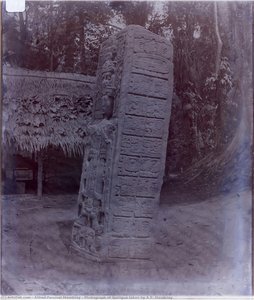
Quiriguá itself is a remarkable site, renowned for its colossal stelae – towering stone monuments carved with elaborate glyphs and depictions of Maya rulers, deities, and mythological scenes. These stelae served as powerful symbols of authority and remembrance, chronicling the lineage of kings and commemorating important events. Maudslay’s photograph offers a glimpse into this symbolic language, allowing us to appreciate the artistry and complexity of Maya iconography.
The pyramids themselves are not merely architectural structures; they represent cosmological concepts – earthly manifestations of the heavens and the underworld. The stepped design, with its ascending terraces, mirrors the journey of the sun and the cyclical nature of time. By capturing this monumental architecture in a single photograph, Maudslay effectively freezes a moment of profound spiritual significance, inviting us to contemplate the beliefs and worldview of the ancient Maya people.
A Legacy of Discovery: Reproduction and Inspiration
Today, Maudslay’s photograph remains a vital historical document and a source of inspiration for artists, designers, and anyone interested in exploring the mysteries of the past. Reproductions of this image offer a tangible connection to a bygone era, allowing us to experience the wonder and excitement of archaeological discovery firsthand. Its stark beauty and evocative composition make it an ideal choice for interior design projects seeking a touch of exoticism and intellectual depth.
When considering a reproduction, pay attention to the quality of the print – seek out archival-grade materials that will ensure the image’s longevity and vibrancy. This photograph is more than just a picture; it's a testament to the enduring power of human curiosity and the profound beauty of ancient civilizations.
Related Artworks
Artist Biography
**early life and education**
alfred percival maudslay, a british colonial administrator and archaeologist, was born on 18 march 1850 in london into a wealthy family. he studied natural sciences at trinity hall, cambridge, obtaining a ba in 1872.**career and travels**
maudslay's early plans for a medical career were deferred as he travelled with his brother, touring central america, mexico, and parts of the united states. this journey sparked an interest in archaeology, which would later define his legacy. after returning home, maudslay again postponed medical school to travel to iceland in 1873. his chronic bronchitis led him to seek a warmer climate, leading to a series of positions in jamaica, trinidad, and eventually, the south pacific.**archaeological contributions**
maudslay's time in the british pacific colonies laid the groundwork for his future archaeological pursuits. he became interested in collecting ethnographic materials, which would eventually contribute to the formation of the university museum of archaeology and ethnology at cambridge. his friend, ornithologist osbert salvin, encouraged maudslay to explore the maya ruins of quiriguá and copán.**notable achievements**
* maudslay was the first to describe the site of yaxchilán. * he explored chichén in the 1880s, taking extensive photographs. * published the first long-form description of chichen itza in his book, biologia centrali-americana. * made a complete translation with annotations of bernal díaz del castillo's historia, which remains the standard english edition.**artistic legacy**
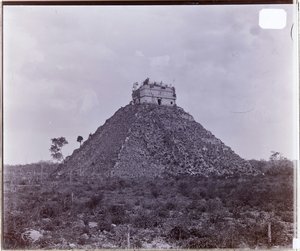
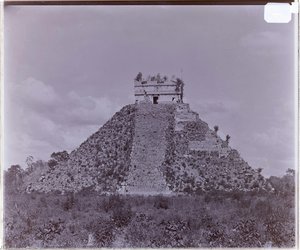
maudslay's photographs and writings have been preserved, offering a unique glimpse into the world of 19th-century archaeology. his work can be found in various museums, including the british museum (london, united kingdom), which houses several of his photographs.- photograph of chichén itzá taken by a.p. maudslay (16 x 21 cm, british museum, photograph)
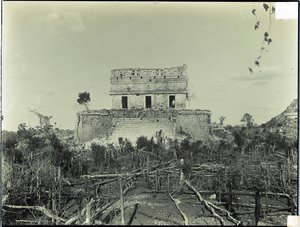
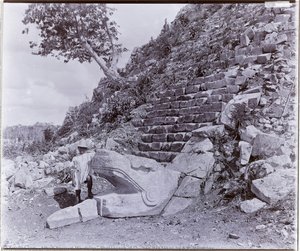
- photograph of chichén itzá taken by a.p. maudsly (25 x 30 cm, british museum, photograph)
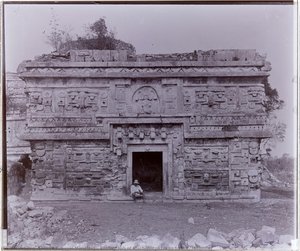
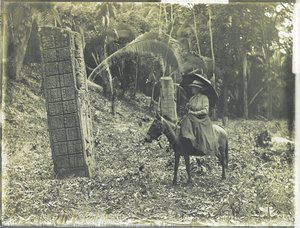
- photograph of copán taken by a.p. maudslay (31 x 25 cm, british museum, photograph)
**conclusion**
alfred percival maudslay's legacy is a testament to the power of curiosity and exploration. from his early days as a colonial administrator to his later years as an archaeologist, maudslay's work continues to inspire and educate.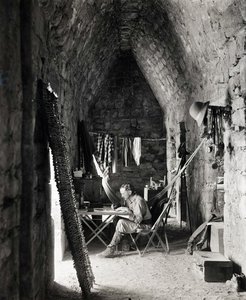
alfred percival maudslay
1850 - 1931 , United Kingdom
Quick Facts
- Artistic Movement Or Style: Archaeology/Photography
- Date Of Birth: 1850
- Date Of Death: 1931
- Full Name: Alfred Percival Maudslay
- Nationality: British
- Notable Artworks: ['Photograph of Chichén Itzá']
- Place Of Birth: London, United Kingdom