 Preview
 Send
Send Share
Share
 Details

 Download
 Similars
 X-Ray
X-Ray Diaporama
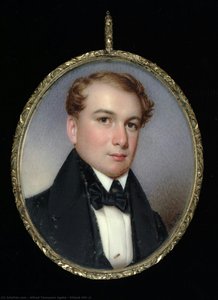
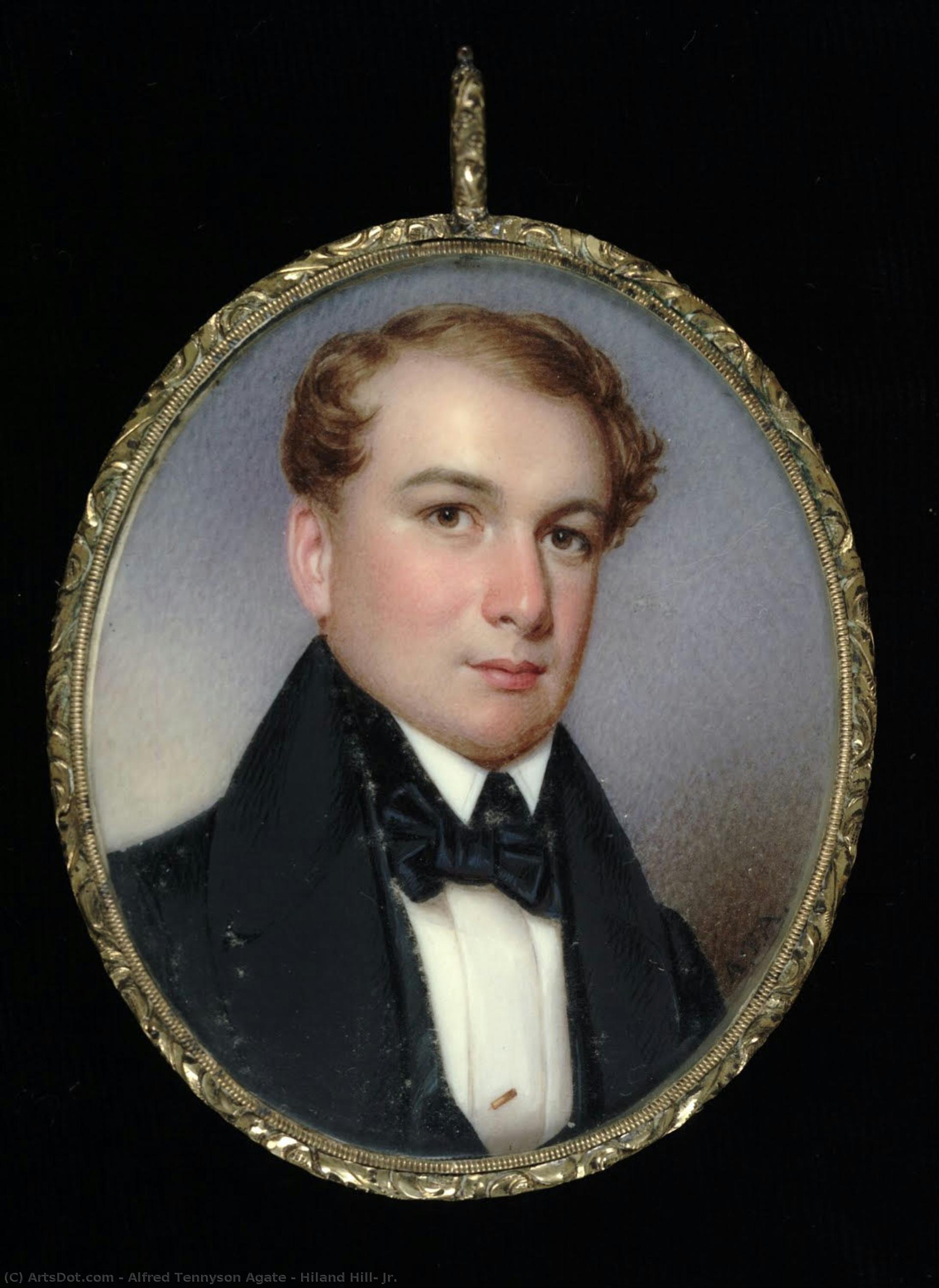
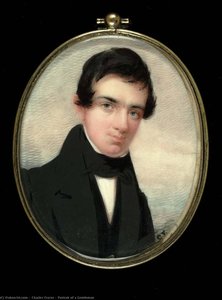
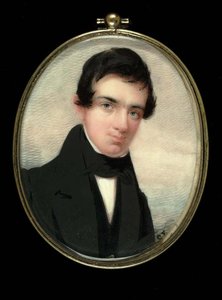
Hiland Hill, Jr.
 Acrylic On Canvas
- WallArt
- Romantic Natural History Illustration
 1836
1836 6.0 x 5.0 cm
 Smithsonian American Art Museum
 Read More
Hand Made Oil Reproduction
Hand-painted oil on canvas in your size and frame, made to order by our artists. ( Buy Print Buy Image)




P118B $10

P118H $10

P118W $10

P438Z $10

P508JH $12

P508YH $12

P805H $10

P805Z $10

P919BZ $10

P919G $10

P919XJ $10

P959ZH $10

P968JZ $12

W106C $8

W218G $10

W218JH $8

W218Y $10

W307PJ $10

W316G $10

W316PJ $8

W316Y $10

W398PJ $8

W4111J $10

W500HY $15

W500JH $15

W692G $12

W849H $8

W940BG $15

W953PJ $8




Pick from our preset sizes that match the artwork's original proportions.

You may enter your own dimensions to fit a specific frame or space. If your selected size does not match the original image's proportions, we will either crop the artwork or extend the painting with additional hand-painted elements. A digital mockup will be sent for your approval before production begins.
Please note that the on-screen preview does not reflect the actual cropping or extension. Only the mockup will accurately show the final composition.
While custom sizes are available, we recommend selecting a dimension from the predefined list to preserve the original proportions.
After order, ArtsDot.com team will email client for instructions and provide a mockup preview
Worldwide Delivery () in 3/4 weeks instead of standard 5 weeks. (20 August). No compromise on quality.

Free Worldwide Express Shipping

High-Quality Linen Canvas

Full Shipping Insurance

Customs Tax Refund Guarantee

True Color Matching Guarantee

60-Day Return Policy (Defects Only)

100% Money-Back Guarantee

Bulk Discount Offer
 Glass option is only available in size under 110 CM

Hiland Hill, Jr.
Reproduction Medium
Reproduction Size
-


Total Price
$ 263
Related Artworks
Artist Biography
The Precision of Nature: The Life and Legacy of Alfred Tennyson Agate
In the grand tapestry of nineteenth-century American art, few threads are as delicate or as scientifically vital as those woven by Alfred Tennyson Agate. Born in 1812 in the quiet landscape of Sparta, New York, Agate emerged during an era when the boundaries between fine art and scientific inquiry were beautifully blurred. His life, though tragically short, was defined by a profound devotion to the natural world, a passion that allowed him to capture the fleeting essence of North American flora and fauna with a precision that remains breathtaking even by modern standards. To look upon Agate’s work is to witness a period of discovery, where every etched line and painted stroke served as a testament to the burgeoning fascination with the wild frontiers of a developing nation.
Agate’s artistic sensibilities were nurtured within a family deeply rooted in creative tradition. His father, Alfred Agate Sr., provided an early foundation of artistic discipline, while his brother, Henry B. Agate, acted as a vital catalyst for his professional growth. This familial support propelled him toward the vibrant art scenes of New York City and eventually to international training abroad. During these formative years, Agate was exposed to the sweeping romanticism of J.M.W. Turner and the delicate watercolor mastery of John James Audubon. These influences did not merely teach him technique; they instilled in him a way of seeing—a method of observing light, texture, and life that would become the hallmark of his scientific illustrations.
A Symbiotic Mastery: The Audubon Collaborations
The most luminous chapter of Agate’s career was undoubtedly his profound collaboration with the legendary ornithologist John James Audubon. This partnership was far more than a mere professional arrangement; it was a monumental artistic and scientific endeavor that sought to document the avian inhabitants of North America with unparalleled fidelity. As Audubon captured the spirit of birds through sweeping watercolors, Agate provided the meticulous engravings that brought these visions to life in print. His ability to translate the soft plumage of a bird or the intricate veins of a leaf into the medium of engraving required a rare level of technical dexterity and an eye for minute detail.
Through these collaborative works, Agate played a pivotal role in creating some of the most significant scientific treatises in American history. His engravings acted as the bridge between raw observation and widespread knowledge, allowing the beauty of the American wilderness to be shared with scholars and enthusiasts across the globe. Beyond his work with Audubon, Agate’s independent pursuits saw him exhibiting at prestigious venues such as the National Academy of Design in New York City. His talent earned him critical acclaim, marking him as a master of the natural history genre who could balance the rigorous demands of scientific accuracy with the aesthetic grace required by the fine arts.
Historical Significance and Artistic Enduring Spirit
Though Alfred Tennyson Agate passed away in 1846 at the young age of thirty-four, his impact on the trajectory of American natural history illustration remains indelible. He belonged to a generation of artists who acted as the eyes of science, documenting a world that was rapidly changing due to westward expansion and industrialization. His work serves as a vital historical record, preserving the likenesses of species and landscapes that have since been transformed by time.
The legacy of Agate is found in the enduring fascination with the intersection of art and science. His contributions can be summarized through several key pillars of his career:
- Scientific Accuracy: His ability to render biological details with enough precision to serve both as art and as a reliable scientific reference.
- Collaborative Excellence: His essential role in the production of Audubon’s groundbreaking ornithological works, which redefined American natural history.
- Stylistic Synthesis: The seamless blending of Romanticism's dramatic light and texture with the disciplined requirements of botanical and zoological illustration.
- Cultural Documentation: Providing a visual archive of the North American wilderness during a period of profound ecological and territorial shift.
Today, Agate is remembered not just as an illustrator, but as a pioneer who helped define the visual language of the American natural world. His work continues to inspire those who find beauty in the minute details of life, reminding us that true art often lies in the faithful observation of the world around us.
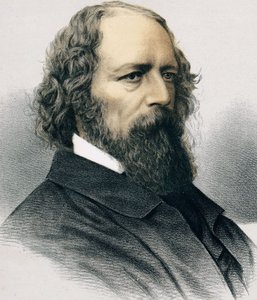
alfred tennyson agate
1812 - 1846 , United States of America
Quick Facts
- Artistic Movement Or Style: Natural history illustration
- Artists Or Movements Influenced By This Artist: Romanticism
- Artists Who Influenced This Artist: John James Audubon
- Date Of Birth: 1812
- Full Name: Alfred Tennyson Agate
- Nationality: American
- Notable Artworks:
- Castor fiber americanus
- Meles labradoria
- Entelea arborescens
- Place Of Birth: Sparta, United States of America
Related Articles
Sir Alfred Munnings' Masterpieces: 25 Paintings That Define Equine Art | ArtsDot
Explore 25 iconic Sir Alfred Munnings paintings! Discover the beauty of British Impressionism, equine art & rural England. Find museum-quality reproductions and elevate your home decor with ArtsDot. Explore the full collection online.
John James Audubon: A Life Immersed in Ornithological Art & the American Wilderness
Explore the life & art of John James Audubon, pioneer of ornithological illustration! Discover his stunning 'Birds of America' watercolors and complex legacy. Hand-painted reproductions available at ArtsDot.
Kay Rasmus Nielsen: A Golden Age Illustrator's Enchanting Legacy of Symbolism & Narrative
Explore the captivating world of Kay Rasmus Nielsen, a celebrated Golden Age illustrator renowned for his Art Nouveau fairy tale art & Disney contributions. Discover his unique style, enduring legacy, and how to collect his enchanting works.

Angelo Chiacchio: A Mid-Century American Illustration Master & the Rise of Commercial Art
Explore the captivating world of Angelo Chiacchio, a master of mid-century American illustration. Discover his evolution, signature style, and lasting impact on commercial art & design. Learn about his legacy at the Museum of American Illustration.
Edmund Dulac: A Master of Golden Age Illustration – Exploring Myth, Symbolism & Art Nouveau Legacy
Explore the captivating world of Edmund Dulac, a master of Golden Age illustration! Discover his enchanting fairy tales, Art Nouveau style, and lasting influence on art & design. Learn about *The Rubaiyat* and more.