 Preview
 Send
Send Share
Share
 Details

 Download
 Similars
 X-Ray
X-Ray Diaporama
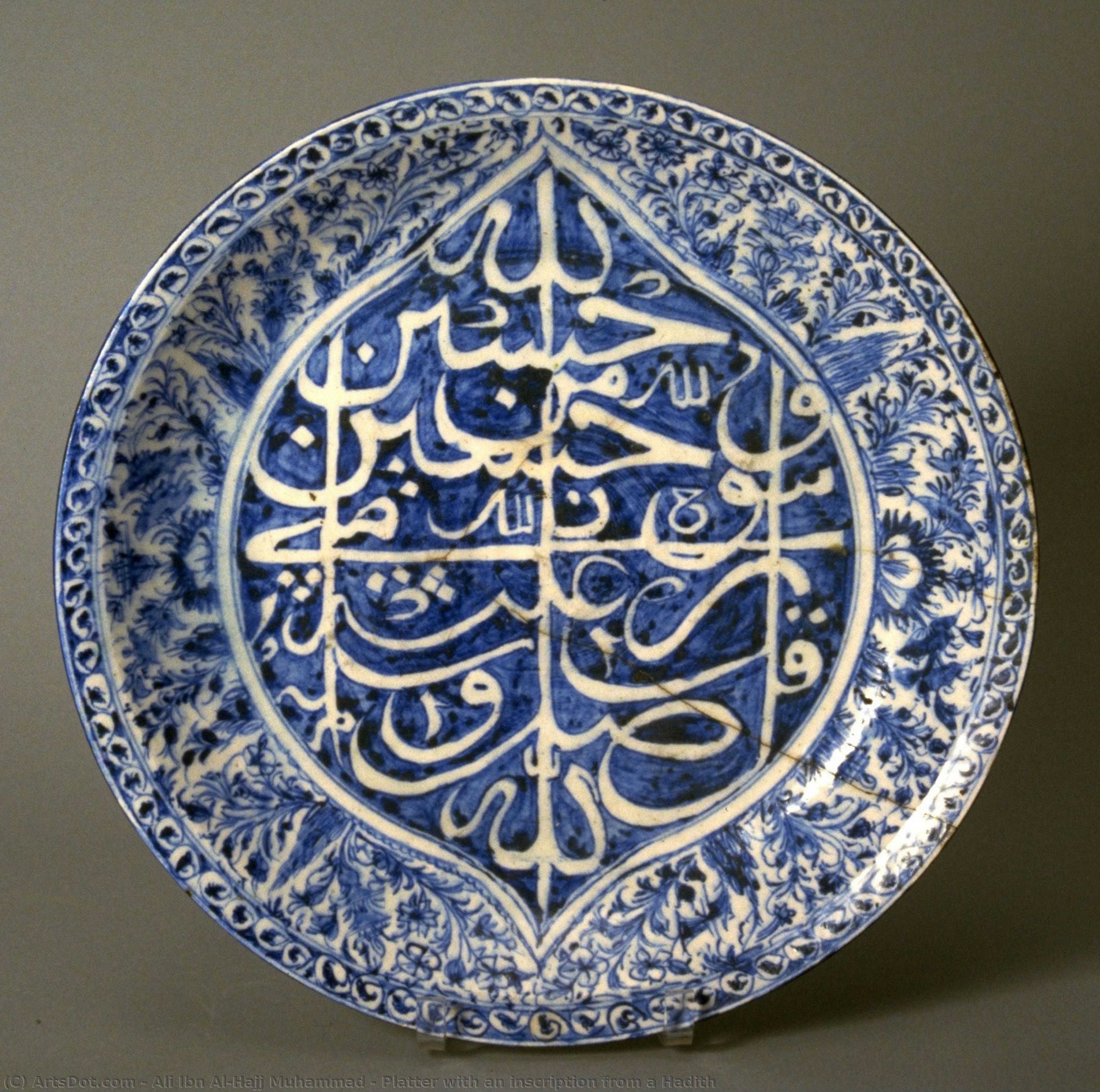
Platter with an inscription from a Hadith


 Read More
Hand Made Oil Reproduction
Hand-painted oil on canvas in your size and frame, made to order by our artists. ( Buy Print Buy Image)




P118B $10

P118H $10

P118W $10

P438Z $10

P508JH $12

P508YH $12

P805H $10

P805Z $10

P919BZ $10

P919G $10

P919XJ $10

P959ZH $10

P968JZ $12

W106C $8

W218G $10

W218JH $8

W218Y $10

W307PJ $10

W316G $10

W316PJ $8

W316Y $10

W398PJ $8

W4111J $10

W500HY $15

W500JH $15

W692G $12

W849H $8

W940BG $15

W953PJ $8




Pick from our preset sizes that match the artwork's original proportions.

You may enter your own dimensions to fit a specific frame or space. If your selected size does not match the original image's proportions, we will either crop the artwork or extend the painting with additional hand-painted elements. A digital mockup will be sent for your approval before production begins.
Please note that the on-screen preview does not reflect the actual cropping or extension. Only the mockup will accurately show the final composition.
While custom sizes are available, we recommend selecting a dimension from the predefined list to preserve the original proportions.
After order, ArtsDot.com team will email client for instructions and provide a mockup preview
Worldwide Delivery () in 3/4 weeks instead of standard 5 weeks. (22 August). No compromise on quality.

Free Worldwide Express Shipping

High-Quality Linen Canvas

Full Shipping Insurance

Customs Tax Refund Guarantee

True Color Matching Guarantee

60-Day Return Policy (Defects Only)

100% Money-Back Guarantee

Bulk Discount Offer
 Glass option is only available in size under 110 CM

Platter with an inscription from a Hadith
Reproduction Medium
Reproduction Size
-


Total Price
$ 263
Artwork Description
A Fragment of Faith Embodied in Ceramic Blue
- This exquisite platter, attributed to Ali ibn al-Hajj Muhammad (1250-1336), offers a glimpse into the artistic sensibilities of Fes during the late medieval period. Crafted from ceramic material—likely glazed blue—the piece transcends mere utilitarian function, becoming a testament to cultural expression and religious devotion.
- The artwork’s style leans heavily toward Islamic decorative traditions, prioritizing geometric patterns and stylized calligraphy alongside subtle organic forms. Cavallini's influence is palpable; he skillfully blended Byzantine artistic conventions with emerging humanist ideals, mirroring the broader artistic currents reshaping Europe at the time.
Technique and Material Considerations
- The ceramic glaze—a vibrant shade of blue—was achieved through a meticulous process involving layering oxides onto the clay surface before firing in a kiln. This technique, common throughout North Africa during the 14th century, demonstrates considerable craftsmanship and reflects the importance placed on achieving luminous color palettes.
- Furthermore, the inscription adorning the plate exemplifies the art of Arabic calligraphy—considered sacred writing—where precise penmanship and careful spacing contribute to visual harmony. The lettering itself is likely executed with meticulous attention to detail, reflecting the reverence for written scripture within Islamic culture.
Historical Context: Byzantium's Legacy and Artistic Innovation
- Ali ibn al-Hajj Muhammad’s work stands firmly rooted in the artistic heritage of Byzantium. The Fourth Crusade’s sack of Constantinople in 1204 dramatically altered the political landscape, fracturing Christendom and accelerating the decline of Byzantine artistic dominance. However, Byzantine stylistic principles—characterized by flattened perspectives and stylized representations—continued to permeate Roman art.
- Pietro Cavallini's embrace of naturalism represents a decisive break from these traditions. He actively sought inspiration from classical sculpture and humanist thought, mirroring the burgeoning Renaissance spirit in Italy. This fusion of influences underscores the dynamic exchange between East and West during this transformative era.
Symbolism and Emotional Resonance
- The blue glaze itself carries symbolic significance within Islamic art—often associated with divinity, purity, and tranquility. It evokes images of celestial realms and reinforces the spiritual intent behind the artwork’s creation.
- Beyond its color symbolism, the inscription from a Hadith (Islamic scripture) speaks to themes of faith, morality, and divine guidance. The deliberate arrangement of lettering conveys respect for religious texts and underscores the importance of contemplation and reflection—elements that resonate deeply with viewers seeking beauty and meaning.
A Reproduction Worthy of Distinction
ArtsDot.com offers exceptional reproductions of this remarkable piece, meticulously crafted to capture its original vibrancy and artistic essence. Utilizing archival inks on premium canvas ensures longevity and faithfully reproduces the subtle nuances of color and texture—allowing collectors and interior designers alike to experience the profound beauty of Islamic art firsthand.Related Artworks

Artist Biography
Pietro Cavallini: Bridging Byzantium and the Dawn of Italian Renaissance
Born around 1250 in Rome, Italy, Pietro Cavallini stands as a pivotal figure in the transition between Byzantine artistic traditions and the burgeoning innovations that would define early Italian painting. While often overshadowed by later masters like Giotto, Cavallini’s work represents a crucial bridge, demonstrating an unprecedented willingness to move beyond the stylized formality of the East and embrace a more naturalistic, human-centered approach – a seed from which the Renaissance itself would sprout. His career spanned roughly three decades, marked by a relentless pursuit of realism and a profound engagement with both classical ideals and the established iconography of his time.
Cavallini’s early training likely involved exposure to Byzantine art, deeply ingrained in Rome's artistic landscape during the 13th century. The city remained under significant Byzantine influence following the Fourth Crusade in 1204, and Roman artists continued to draw heavily on Byzantine models for their frescoes and mosaics. However, Cavallini wasn’t simply a copyist; he possessed an innate ability to dissect and reinterpret these established forms. His initial commissions at San Paolo Fuori le Mura in Rome, undertaken between 1277 and 1290, provide compelling evidence of this process. These works involved the “restoration” of earlier 5th-century Christian frescoes – a common practice aimed at preserving what were perceived as valuable early examples – but Cavallini didn’t merely replicate them; he transformed them, introducing a new level of spatial depth and sculptural quality that was revolutionary for the period.
- The Influence of the Old Testament: The surviving fragments from his Old Testament scenes, particularly those in Santa Cecilia in Trastevere, reveal a fascination with biblical narratives. These frescoes showcase a dramatic shift away from the flat, symbolic representations typical of Byzantine art. Cavallini’s figures possess a remarkable sense of volume and weight, their drapery rendered with an unprecedented attention to detail and folds that suggest three-dimensionality.
- Spatial Innovation: A key characteristic of Cavallini's work is his pioneering use of perspective. While not fully developed in the manner of later Renaissance artists, he demonstrated a nascent understanding of spatial recession, creating a sense of depth and distance within his compositions. This was achieved through careful manipulation of scale, light, and shadow – elements that were largely absent in earlier Byzantine art.
- Classical Affinities: Despite his grounding in Byzantine tradition, Cavallini’s work also reveals an awareness of classical sculpture and architecture. The solidity of his figures, their individualized features, and the graceful curves of their drapery echo the idealized forms of ancient Greek and Roman statues. This engagement with classical antiquity would become a defining feature of the Florentine Renaissance.
The Mosaics of Santa Maria in Trastevere: A Testament to Innovation
Cavallini’s most celebrated achievement is undoubtedly his series of mosaics for Santa Maria in Trastevere, begun in 1291 and completed around 1300. These magnificent panels depict scenes from the life of the Virgin Mary and are considered a landmark in Italian art history. Unlike the stylized figures of earlier Byzantine mosaics, Cavallini’s depictions are remarkably humanistic. His Marys possess individual personalities, their gestures and expressions conveying a range of emotions – tenderness, sorrow, joy, and contemplation.
Crucially, Cavallini significantly reduced the influence of traditional Byzantine facial types and gesture conventions. While vestiges of Byzantine linearity remain in the drapery, there’s a dramatic shift towards rounded modeling and a rejection of the rigid, schematic features that characterized earlier mosaics. The use of light is equally innovative, striking the figures from one direction to sculpt their forms and reveal their contours. This masterful manipulation of light creates a sense of drama and immediacy, drawing the viewer into the scene.
These mosaics represent a radical departure from established artistic norms. They demonstrate Cavallini’s willingness to experiment with new techniques and approaches, laying the groundwork for the more fully realized naturalism that would be championed by Giotto and his successors. The influence of these works can be seen in the subsequent development of Italian painting, particularly in Florence.
Influence and Legacy
Pietro Cavallini’s impact on the course of Italian art is undeniable. He was a key figure in the transition from Byzantine to Renaissance styles, demonstrating an early commitment to naturalism, human emotion, and spatial realism. His work served as a crucial stepping stone for artists like Giotto, who would build upon his innovations and further develop the principles of Western painting.
Giotto di Bondone, considered by many to be the father of Western painting, explicitly acknowledged Cavallini’s influence. Giotto studied Cavallini's work at San Paolo Fuori le Mura and adopted many of his techniques, including the use of perspective and the depiction of human figures with greater realism and emotional depth. Cavallini’s legacy extends beyond Giotto; his innovations helped to shape the artistic landscape of Italy throughout the 14th century.
Despite the tragic loss of many of his works in a fire at San Paolo Fuori le Mura in 1823, copies and descriptions of Cavallini’s frescoes have ensured that his contribution to art history has been recognized. He remains a testament to the power of artistic innovation and the enduring influence of Byzantine traditions on the development of Western painting.
A Final Note: The Context of His Time
It's important to understand Cavallini’s work within the broader context of 13th-century Italy. The period was marked by significant political and social change, including the rise of independent city-states like Florence and Siena. This era fostered a vibrant artistic environment, fueled by patronage from wealthy families, religious institutions, and civic authorities. Cavallini’s career coincided with this flourishing of creativity, allowing him to experiment with new techniques and approaches without facing the same constraints as artists working in more conservative environments.
ali ibn al-hajj muhammad
1250 - 1336 , Morocco
Quick Facts
- Artistic Movement Or Style: Early Renaissance
- Artists Or Movements Influenced By This Artist: ['Florentine painting']
- Artists Who Influenced This Artist:
- Byzantine art
- Giotto di Bondone
- Date Of Birth: c. 1250
- Date Of Death: c. 1336
- Full Name: Pietro Cavallini
- Nationality: Italian
- Notable Artworks:
- Doorway from Moutiers-Saint-Jean
- Frescoes, San Paolo Fuori le Mura
- Mosaics, Santa Maria in Trastevere
- Place Of Birth: Rome, Italy
Related Articles
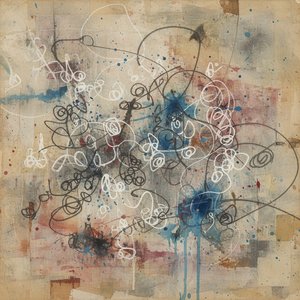
Cy Twombly: Scribbles of Emotion – Deconstructing Post-War Expressionism Through Calligraphy & Abstraction
Explore the captivating world of Cy Twombly with ArtsDot. Discover the emotional depth & artistic significance behind his abstract calligraphy. Expert insights for collectors.