 Preview
 Send
Send Share
Share
 Details

 Download
 Similars
 X-Ray
X-Ray Diaporama
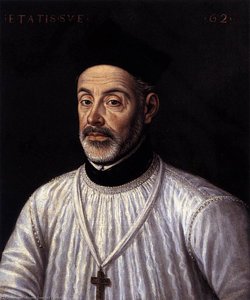
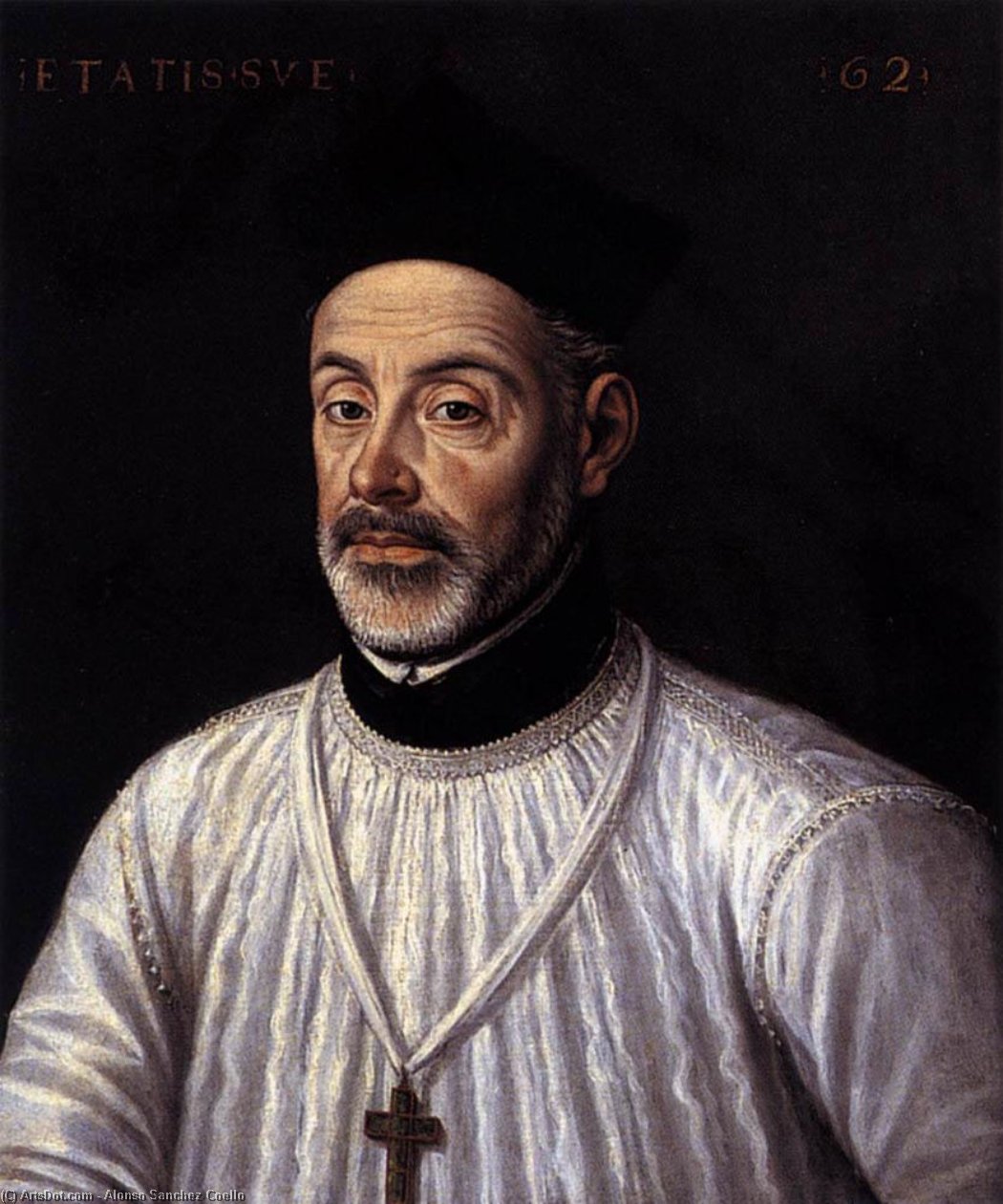
Diego de Covarrubias
 Oil On Canvas
- WallArt
- Renaissance
 1574
1574 61.0 x 50.0 cm
 Museo de El Greco
 Read More
Hand Made Oil Reproduction
Hand-painted oil on canvas in your size and frame, made to order by our artists. ( Buy Print Buy Image)




P118B $10

P118H $10

P118W $10

P438Z $10

P508JH $12

P508YH $12

P805H $10

P805Z $10

P919BZ $10

P919G $10

P919XJ $10

P959ZH $10

P968JZ $12

W106C $8

W218G $10

W218JH $8

W218Y $10

W307PJ $10

W316G $10

W316PJ $8

W316Y $10

W398PJ $8

W4111J $10

W500HY $15

W500JH $15

W692G $12

W849H $8

W940BG $15

W953PJ $8




Pick from our preset sizes that match the artwork's original proportions.

You may enter your own dimensions to fit a specific frame or space. If your selected size does not match the original image's proportions, we will either crop the artwork or extend the painting with additional hand-painted elements. A digital mockup will be sent for your approval before production begins.
Please note that the on-screen preview does not reflect the actual cropping or extension. Only the mockup will accurately show the final composition.
While custom sizes are available, we recommend selecting a dimension from the predefined list to preserve the original proportions.
After order, ArtsDot.com team will email client for instructions and provide a mockup preview
Worldwide Delivery () in 3/4 weeks instead of standard 5 weeks. (17 August). No compromise on quality.

Free Worldwide Express Shipping

High-Quality Linen Canvas

Full Shipping Insurance

Customs Tax Refund Guarantee

True Color Matching Guarantee

60-Day Return Policy (Defects Only)

100% Money-Back Guarantee

Bulk Discount Offer
 Glass option is only available in size under 110 CM

Diego de Covarrubias
Reproduction Medium
Reproduction Size
-


Total Price
$ 263
Artwork Description
Diego de Covarrubias - A Renaissance Portrait of Dignity
Alonso Sánchez Coello’s 1574 portrait of Diego de Covarrubias stands as a testament to the artistic achievements of the Spanish Renaissance, embodying both Flemish objectivity and Venetian sensuality. More than just a likeness, it's an emblem of ecclesiastical authority and piety—a captivating glimpse into the opulent world of Philip II’s court.
- Subject Matter: The painting depicts Diego de Covarrubias, Archbishop of Segovia and Ciudad Rodrigo, a prominent figure within the Catholic Church. His solemn gaze conveys wisdom and composure, reflecting the ideals of Renaissance portraiture.
- Style & Technique: Sánchez Coello skillfully blended Flemish realism with Venetian luminosity. He achieved this through meticulous layering of thin glazes of oil paint—a technique that created a rich, textured surface and imbued the artwork with an ethereal glow.
- Composition: The portrait’s tightly framed composition focuses almost entirely on Covarrubias's head and upper torso, emphasizing frontal perspective and creating an intimate yet formal atmosphere. Dramatic lighting from the left casts strong shadows across his face and clothing, adding depth and volume to the figure.
- Symbolism: Covarrubias’ attire—a white robe adorned with intricate gold embroidery, a black mitre (cap), and a large cross pendant—served as potent symbols of religious piety and ecclesiastical rank. These elements underscore the portrait's significance within its historical context.
The painting’s muted color palette—dominated by browns, creams, blacks, and golds—contributes to its understated elegance. However, it is the artist’s masterful rendering of detail—the wrinkles on Covarrubias’ forehead, the texture of his beard and hair—that truly elevates this artwork. Sánchez Coello's meticulous attention to surface qualities speaks volumes about the Renaissance preoccupation with capturing the essence of human form.
Considered a cornerstone of Spanish art history, Diego de Covarrubias exemplifies the artistic spirit of its time. Its enduring appeal lies in its ability to convey both intellectual contemplation and spiritual devotion—qualities that continue to resonate with viewers today.
Historical Context & Artistic Influences
Painted during Philip II’s reign (1556-1598), Diego de Covarrubias reflects the broader artistic trends of the era. Sánchez Coello drew inspiration from Flemish masters like Jan Bruegel the Elder and Peter Paul Rubens, adopting their emphasis on realism and dramatic lighting. Simultaneously, he absorbed Venetian influences—particularly Titian’s use of rich color palettes and luminous glazing—resulting in a distinctive style that combined objectivity with sensual beauty.
Material & Technique Details
The artwork is executed in oil paint on canvas—a favored medium for portrait painters during the Renaissance. Sánchez Coello employed a painstaking process of layering thin glazes to build up color and depth, achieving remarkable textural richness and luminosity. This technique ensured that every nuance of light and shadow was captured with precision.
Emotional Impact & Legacy
Diego de Covarrubias transcends mere representation; it communicates profound emotions—dignity, piety, and contemplation. Its enduring legacy resides in its role as a seminal work of Renaissance portraiture—a masterpiece that continues to inspire artists and captivate audiences centuries later.
Related Artworks

Artist Biography
Early Life and Training
- Born: Benifaió, Spain (1531)
- Spent childhood near Valencia until his father's death.
- Around 1541/42, moved to Portugal to live with his grandfather, a nobleman in service of the Portuguese monarchs.
- Studied with Anthonis Mor (Antonio Moro) in Flanders around 1550.
- Received patronage from Antoine de Granville, Bishop of Arras, also a patron of Mor.
Career at the Spanish Court
- Worked for the Portuguese royal family and later the court of João Manuel, Prince of Portugal.
- Moved to the Spanish court of Philip II in 1555, recommended by Juana, sister of Philip II.
- Became Court Painter in 1560.
- Married Louisa Reyaltes, daughter of a silversmith, around 1560/61.
- His daughter, Isabel Sánchez, also became a painter and assisted in his workshop.
- Moved with the court to Toledo and settled in Madrid in 1561.
Artistic Style and Influences
- Style: Combined Flemish objectivity with Venetian sensuality.
- Influences: Primarily influenced by Anthonis Mor and Titian.
- Learned precision from Mor.
- Incorporated Venetian gold tones, generous workmanship, and the use of light from Titian.
- Known for portraits marked by ease of pose, dignity, sobriety, and warmth of coloring.
Major Works and Achievements
- Produced both portraits and religious paintings.
- Religious works were conventional but demonstrate an austere style.
- Notable Portraits:
- Philip II Holding a Rosary (1573)
- Portraits of Infanta Isabel Clara Eugenia (1571)
- Series of paintings depicting the children of Philip II.
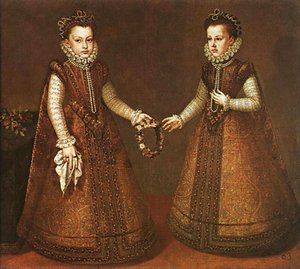
- Double portrait of the infantas Isabella Clara Eugenia and Catalina Micaela (1568–9).
- Painted religious works for El Escorial.
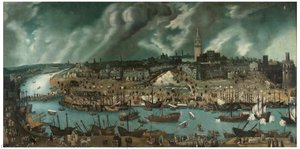
- Produced a topographical view of Seville's port.
Legacy and Historical Significance
- His reputation as a portraitist has been complicated by numerous copies and imitations.
- Considered a significant figure in Spanish Renaissance art, particularly for his court portraits.
- His work influenced later artists, including Velázquez, regarding the depiction of textures like armor and draperies.
- Died in Madrid on August 8, 1588.
Alonso Sánchez Coello
1531 - 1588 , Spain
Quick Facts
- Artistic Movement Or Style: Spanish Renaissance
- Artists Or Movements Influenced By This Artist:
- Juan Pantoja de la Cruz
- Felipe de Liaño
- Artists Who Influenced This Artist:
- Anthonis Mor
- Titian
- Date Of Birth: c. 1531
- Date Of Death: 1588
- Full Name: Alonso Sánchez Coello
- Nationality: Iberian
- Notable Artworks:
- Philip II Holding a Rosary
- Portrait of a Lady
- Anne of Austria
- Don John of Austria
- Catherine of Austria, Queen
- Place Of Birth: Benifaió, Spain
Related Articles

Demandes Commerciales
APS ofrece reproducciones de bellas artes y encargos personalizados desde 2004. Confían en nosotros corporaciones, hoteles y coleccionistas selectos para obras de arte de calidad museística, servicio discreto y soluciones artísticas completas. ¡Póngase en contacto con nosotros para obtener un presupuesto personalizado!

Goya's Masterpieces: Explore 25 Iconic Paintings & Art Prints | ArtsDot
Delve into the world of Francisco Goya with ArtsDot. Explore 25 iconic paintings – from 'The Third of May' to his haunting Black Paintings. Discover the stories, techniques & emotions behind these Spanish masterpieces. Find museum-quality art reproductions for your home at ArtsDot.com!
Rafael de Penagos: A Study in Spanish Portraiture & Artistic Identity
Explore the life & art of Rafael de Penagos, a leading Spanish Art Deco illustrator. Discover his iconic 'Penagos Woman', commercial work, and lasting legacy. Learn about this pivotal figure in 20th-century Spanish art history.

A riguardo di noi
Découvrez notre histoire ! Nous apportons l'art de classe mondiale dans votre vie grâce à une sélection experte, des créations personnalisées et des aperçus gratuits. Approuvé par les particuliers et les entreprises depuis 2000.
Águeda Ruiz de la Prada: A Study of Eclecticism & Emotional Resonance in Contemporary Spanish Painting
Discover the vibrant world of Ágatha Ruiz de la Prada, a leading figure in contemporary Spanish art. Explore her eclectic style, emotional depth & legacy – a must-read for discerning collectors.