 Preview
 Send
Send Share
Share
 Details

 Download
 Similars
 X-Ray
X-Ray Diaporama
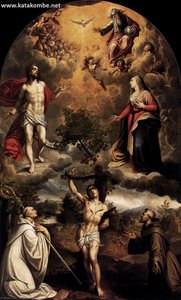
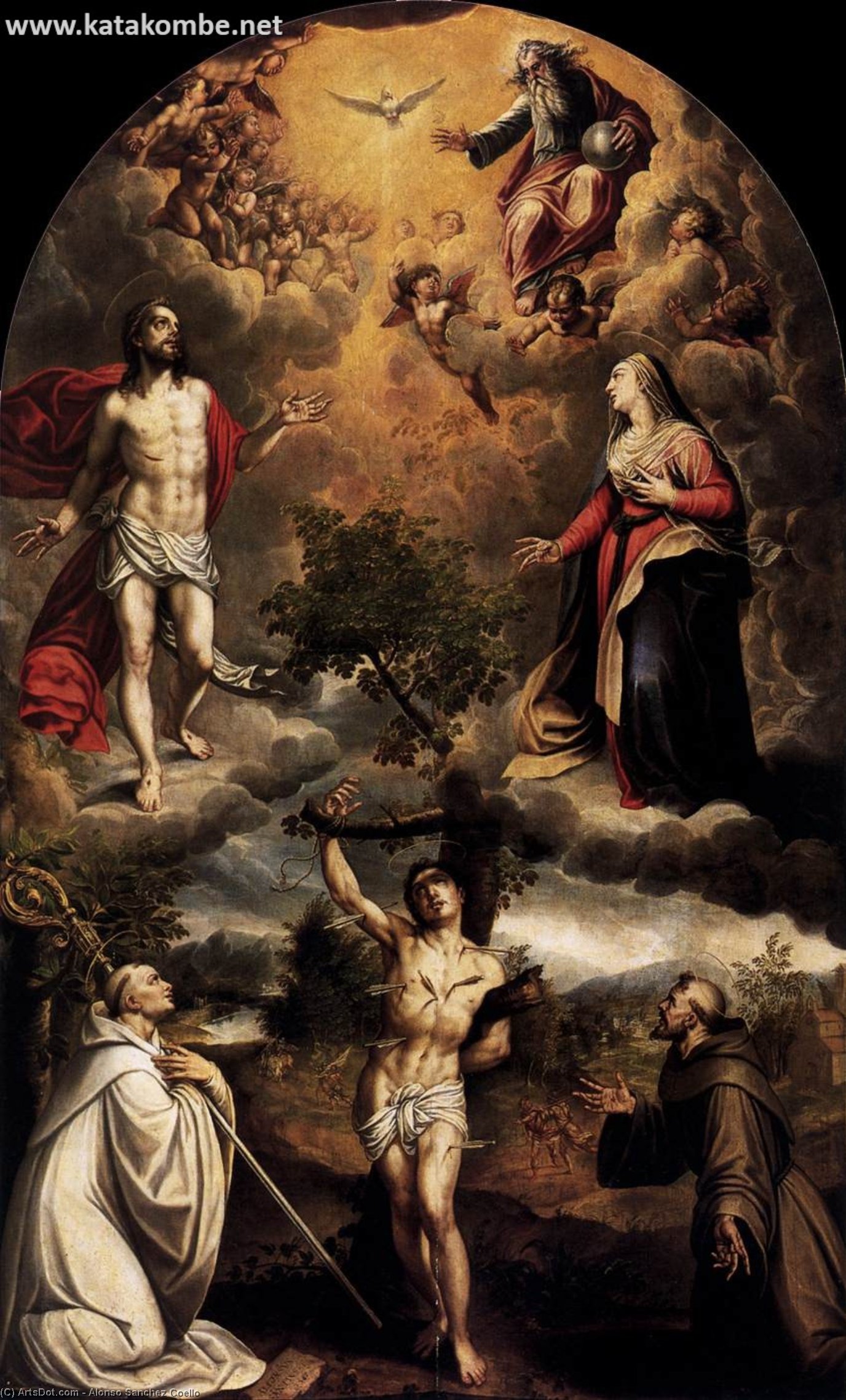
St Sebastian between St Bernard and St Francis
 Acrylic On Canvas
- WallArt
- Baroque Renaissance Painting
 1582
1582 295.0 x 196.0 cm
 Museo del Prado
 Read More
Hand Made Oil Reproduction
Hand-painted oil on canvas in your size and frame, made to order by our artists. ( Buy Print Buy Image)




P118B $10

P118H $10

P118W $10

P438Z $10

P508JH $12

P508YH $12

P805H $10

P805Z $10

P919BZ $10

P919G $10

P919XJ $10

P959ZH $10

P968JZ $12

W106C $8

W218G $10

W218JH $8

W218Y $10

W307PJ $10

W316G $10

W316PJ $8

W316Y $10

W398PJ $8

W4111J $10

W500HY $15

W500JH $15

W692G $12

W849H $8

W940BG $15

W953PJ $8




Pick from our preset sizes that match the artwork's original proportions.

You may enter your own dimensions to fit a specific frame or space. If your selected size does not match the original image's proportions, we will either crop the artwork or extend the painting with additional hand-painted elements. A digital mockup will be sent for your approval before production begins.
Please note that the on-screen preview does not reflect the actual cropping or extension. Only the mockup will accurately show the final composition.
While custom sizes are available, we recommend selecting a dimension from the predefined list to preserve the original proportions.
After order, ArtsDot.com team will email client for instructions and provide a mockup preview
Worldwide Delivery () in 3/4 weeks instead of standard 5 weeks. (17 August). No compromise on quality.

Free Worldwide Express Shipping

High-Quality Linen Canvas

Full Shipping Insurance

Customs Tax Refund Guarantee

True Color Matching Guarantee

60-Day Return Policy (Defects Only)

100% Money-Back Guarantee

Bulk Discount Offer
 Glass option is only available in size under 110 CM

St Sebastian between St Bernard and St Francis
Reproduction Medium
Reproduction Size
-


Total Price
$ 263
Artwork Description
St Sebastian Between St Bernard and St Francis: A Renaissance Dialogue of Faith and Dignity
Alonso Sánchez Coello’s “St Sebastian Between St Bernard and St Francis,” completed in 1582, stands as a testament to the artistic fervor of the Spanish Renaissance—a period marked by papal patronage and an unwavering devotion to religious iconography. More than just a depiction of saints, this monumental painting embodies a complex interplay of stylistic influences and symbolic resonance that continues to captivate viewers centuries later.
Style and Technique: Coello skillfully blended Flemish objectivity with Venetian sensuality—a hallmark of his era—resulting in an image characterized by meticulous detail and luminous color palettes. The artist employed oil paint on panel, a technique favored for its ability to achieve rich textures and subtle gradations of tone. Careful observation of anatomy and drapery demonstrates the influence of Flemish masters like Rubens and Anthony van Dyck, while the Venetian tradition’s emphasis on atmospheric perspective lends depth and luminosity to the scene.
Historical Context: Painted during Philip II's reign—a pivotal moment in European history marked by religious upheaval and imperial ambition—the artwork reflects the anxieties and aspirations of its time. The Habsburg monarchs sought to solidify their dominion through artistic commissions that proclaimed royal piety and reinforced the authority of the Catholic Church. St Sebastian, a martyr venerated for his unwavering faith during Diocletian’s persecution, served as an emblem of spiritual fortitude.
Symbolism: The composition itself is laden with symbolic significance. St Sebastian—representing chastity and resilience—is positioned centrally between St Bernard—a symbol of monastic piety and contemplation—and St Francis—representing humility and compassion. These saints embody the virtues considered essential for Christian life, reflecting the humanist ideals prevalent in the Renaissance.
Emotional Impact: Coello’s masterful rendering captures a profound sense of solemn dignity and spiritual serenity. The muted colors and diffused light contribute to an atmosphere of contemplative reverence, inviting viewers to contemplate themes of suffering endured for righteousness and divine grace. “St Sebastian Between St Bernard and St Francis” remains a powerful reminder of the enduring beauty and moral depth found within Renaissance art.
Additional Research: For more information on Alonso Sánchez Coello and his artistic legacy, explore resources like Wikipedia (Wikipedia) and the Museo Nacional del Prado (Museo Nacional del Prado).
Related Artworks
Artist Biography
Early Life and Training
- Born: Benifaió, Spain (1531)
- Spent childhood near Valencia until his father's death.
- Around 1541/42, moved to Portugal to live with his grandfather, a nobleman in service of the Portuguese monarchs.
- Studied with Anthonis Mor (Antonio Moro) in Flanders around 1550.
- Received patronage from Antoine de Granville, Bishop of Arras, also a patron of Mor.
Career at the Spanish Court
- Worked for the Portuguese royal family and later the court of João Manuel, Prince of Portugal.
- Moved to the Spanish court of Philip II in 1555, recommended by Juana, sister of Philip II.
- Became Court Painter in 1560.
- Married Louisa Reyaltes, daughter of a silversmith, around 1560/61.
- His daughter, Isabel Sánchez, also became a painter and assisted in his workshop.
- Moved with the court to Toledo and settled in Madrid in 1561.
Artistic Style and Influences
- Style: Combined Flemish objectivity with Venetian sensuality.
- Influences: Primarily influenced by Anthonis Mor and Titian.
- Learned precision from Mor.
- Incorporated Venetian gold tones, generous workmanship, and the use of light from Titian.
- Known for portraits marked by ease of pose, dignity, sobriety, and warmth of coloring.
Major Works and Achievements
- Produced both portraits and religious paintings.
- Religious works were conventional but demonstrate an austere style.
- Notable Portraits:
- Philip II Holding a Rosary (1573)
- Portraits of Infanta Isabel Clara Eugenia (1571)
- Series of paintings depicting the children of Philip II.
- Double portrait of the infantas Isabella Clara Eugenia and Catalina Micaela (1568–9).
- Painted religious works for El Escorial.
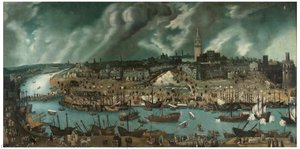
- Produced a topographical view of Seville's port.
Legacy and Historical Significance
- His reputation as a portraitist has been complicated by numerous copies and imitations.
- Considered a significant figure in Spanish Renaissance art, particularly for his court portraits.
- His work influenced later artists, including Velázquez, regarding the depiction of textures like armor and draperies.
- Died in Madrid on August 8, 1588.
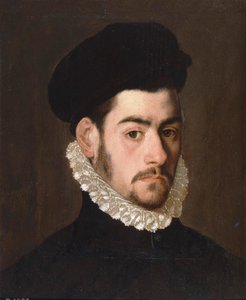
Alonso Sánchez Coello
1531 - 1588 , Spain
Quick Facts
- Artistic Movement Or Style: Spanish Renaissance
- Artists Or Movements Influenced By This Artist:
- Juan Pantoja de la Cruz
- Felipe de Liaño
- Artists Who Influenced This Artist:
- Anthonis Mor
- Titian
- Date Of Birth: c. 1531
- Date Of Death: 1588
- Full Name: Alonso Sánchez Coello
- Nationality: Iberian
- Notable Artworks:
- Philip II Holding a Rosary
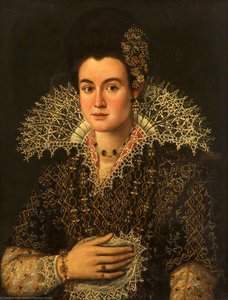
- Portrait of a Lady
- Anne of Austria
- Don John of Austria
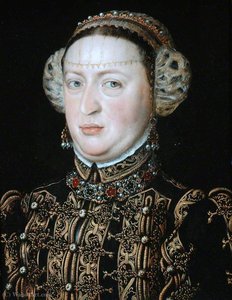
- Catherine of Austria, Queen
- Place Of Birth: Benifaió, Spain
Related Articles

El Greco's Masterpieces: Explore 25 Iconic Paintings & Spiritual Visions | ArtsDot
Journey through El Greco's 25 most iconic paintings! Explore the spiritual depth & dramatic beauty of this Spanish Renaissance master. Discover art history, techniques & find museum-quality reproductions for your home at ArtsDot.com.

The Golden Age Reforged: Dramatic Realism & Religious Zeal in Spanish Baroque Art
Explore the dramatic world of Spanish Baroque art! Discover masters like Zurbarán & the powerful influence of religious zeal on painting techniques – a guide for collectors and enthusiasts.
Prado Masterpieces: Explore 25 Iconic Artworks & Bring Spanish Beauty Home
Journey through 25 Prado Museum masterpieces! Explore Velázquez, Goya & El Greco's iconic Spanish art. Discover the stories behind these timeless paintings and find museum-quality reproductions for your home at ArtsDot.com.
Francisco de Zurbarán: Mysticism, Realism & the Golden Age of Spanish Painting
Explore the captivating world of Francisco de Zurbarán, a master of Spanish Baroque painting. Discover his dramatic tenebrism, religious masterpieces like 'La Porciúncula,' and lasting influence on art history.
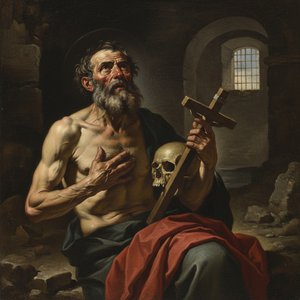
Jusepe de Ribera: Dramatic Realism & Spiritual Intensity in the Spanish Golden Age
Explore the powerful Baroque paintings of Jusepe de Ribera, master of tenebrism and dramatic realism. Discover his spiritual intensity, influence on Spanish art, and considerations for collectors. Expert insights at ArtsDot.