Early Life & Influences: From Valencia to Naples
Spanish Baroque is a strand of Baroque architecture that evolved in Spain, its provinces, and former colonies. == History == The development of the style passed through three phases. Between 1680 and 1720, the Churriguera popularized Guarini's blen...
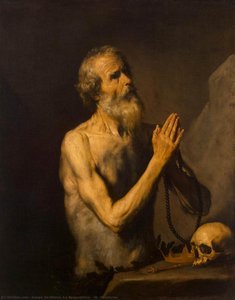
Jusepe de Ribera, known as Lo Spagnoletto – “the Little Spaniard” – was a figure whose artistic trajectory defied easy categorization, embodying a fascinating blend of Valencian roots and Neapolitan fervor. Born in 1591 in Játiva, Spain, his early training remains shrouded in some mystery, though it’s believed he initially studied under Francisco Ribalta, a master of tenebrism who would profoundly shape his initial approach to painting. However, the pull of Italy proved irresistible. By 1612, Ribera had established himself in Rome, immersing himself in the vibrant artistic milieu and absorbing the influence of Caravaggio’s revolutionary naturalism. This period was formative; he quickly gained recognition for his bold realism and dramatic compositions, yet a restless spirit led him south to Naples around 1616, a city that would become both his adopted home and the crucible of his mature style.
Naples in the early 17th century was a complex and compelling environment – a Spanish viceroyalty teeming with religious fervor, social unrest, and a burgeoning artistic community. It was here, amidst the stark realities of life and death, that Ribera’s unique voice began to fully emerge. He married Caterina Azzolino, daughter of a local painter, establishing deep ties within the Neapolitan art world. The city's atmosphere – its intense spirituality, its raw emotionality, and its proximity to both the grandeur of Rome and the exotic allure of the East – would indelibly shape his artistic vision.
The Master of Tenebrism: Ribera’s Signature Style
Tenebrism, from Italian tenebroso ('dark, gloomy, mysterious'), also occasionally called dramatic illumination, is a style of painting using especially pronounced chiaroscuro, where there are violent contrasts of light and dark, and where darkness be...
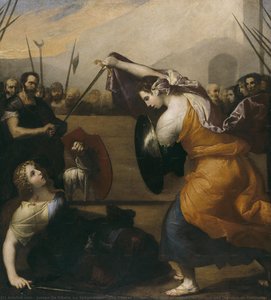
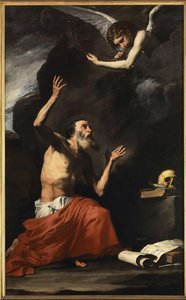
Ribera is perhaps best remembered as a master of tenebrism, a dramatic technique characterized by stark contrasts between light and shadow. While not its inventor – Caravaggio pioneered the style – Ribera elevated it to an extraordinary level, employing it not merely for aesthetic effect but as a powerful means of conveying emotional intensity and spiritual depth. His canvases are often plunged into deep darkness, punctuated by intense beams of light that illuminate key figures and actions, drawing the viewer’s eye with almost theatrical force. This wasn't simply about creating visual drama; it was about revealing truth through contrast – the struggle between good and evil, faith and doubt, life and death.
Unlike some of his contemporaries who favored a more polished finish, Ribera often left visible brushstrokes on his canvases, adding to the sense of immediacy and realism. His figures are not idealized; they are rendered with unflinching honesty, their faces etched with suffering, their bodies marked by the ravages of time and hardship. This commitment to naturalism, combined with his masterful use of light and shadow, created a uniquely powerful visual language that resonated deeply with audiences.
Religious Devotion & Dramatic Narratives in His Paintings
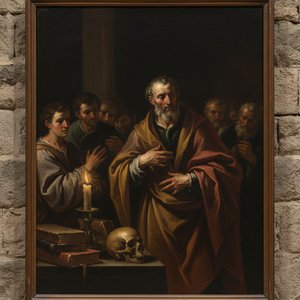
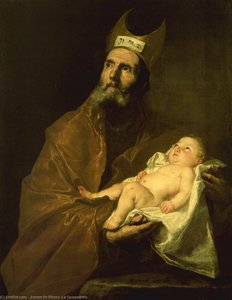 St. Simeon with a child
Experience Ribera's dramatic 'St. Simeon with a Child.' This Baroque masterpiece showcases tenebrism & profound emotion, depicting a pivotal biblical moment.
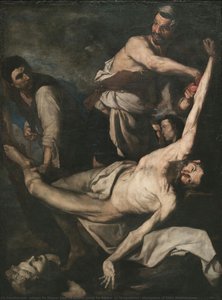
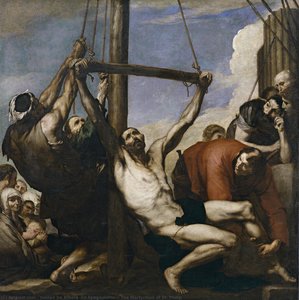
The vast majority of Ribera’s oeuvre is devoted to religious subjects – scenes from the Bible, lives of the saints, and depictions of martyrdom. However, his approach was far from conventional. He eschewed saccharine sentimentality, instead presenting these narratives with a raw emotionality that often bordered on brutality. His paintings of saints being flayed or crucified are not intended to be comforting; they are meant to shock and provoke, forcing the viewer to confront the realities of faith and sacrifice.
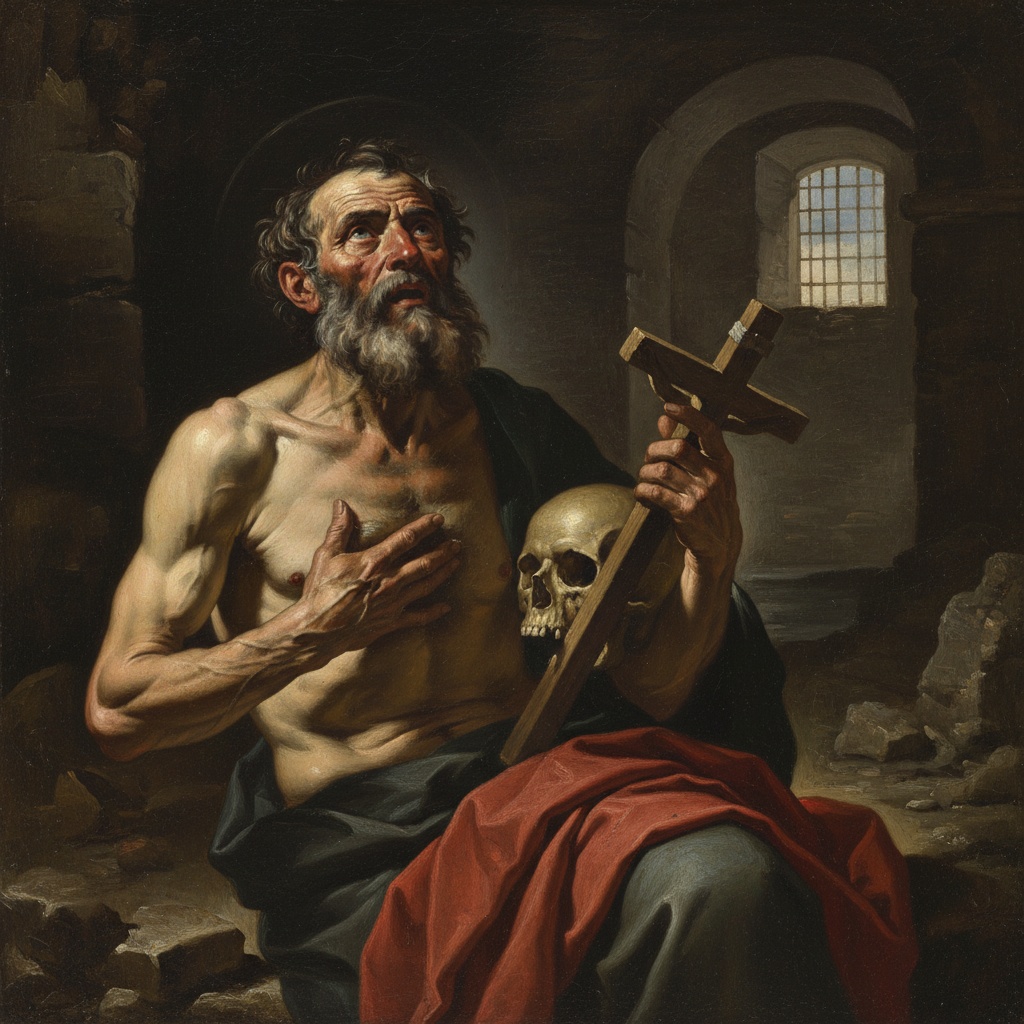
Consider his Vision of St. Francis of Assisi, a masterpiece that exemplifies his signature style. The saint is depicted in a state of ecstatic contemplation, bathed in an ethereal light while surrounded by darkness. The intensity of his spiritual experience is palpable, conveyed through the expressive gestures and anguished expression on his face. Similarly, works like St. Peter showcase a profound spirituality captured through dramatic lighting and intense realism. These are not simply depictions of religious events; they are explorations of the human condition – the struggle with doubt, the search for meaning, and the ultimate triumph of faith.
Ribera's Influence on Spanish Baroque Art and Beyond
Jusepe de Ribera’s impact on Spanish Baroque art was profound. He became a central figure in the Neapolitan school, attracting numerous pupils who emulated his style and spread his influence throughout Italy and beyond. Artists like Francisco Salzillo and Luca Giordano were deeply indebted to his techniques and compositional strategies. His emphasis on realism, dramatic lighting, and emotional intensity helped define the aesthetic of Spanish Baroque painting, alongside contemporaries such as Velázquez and Zurbarán.
Beyond Spain, Ribera’s work resonated with artists across Europe. His influence can be seen in the paintings of Dutch masters like Rembrandt and Gerrit van Honthorst, who adopted his tenebrist style to create their own uniquely powerful works. He bridged a gap between Italian Caravaggism and the developing national styles of Northern Europe, leaving an indelible mark on the course of art history.
Key Works: A Closer Look at 'Vision of St. Francis' and Other Masterpieces
Beyond Vision of St. Francis, Ribera’s catalogue boasts a wealth of compelling works. St. Simeon with a Child is another powerful example of his dramatic style, depicting the saint in a moment of profound contemplation. His series of depictions of the Apostles – each rendered as an individual character grappling with their own doubts and fears – are particularly noteworthy for their psychological depth. He also produced a number of striking portraits, often of beggars and workers, elevating these humble subjects to the level of artistic significance.
His paintings weren’t merely exercises in technical skill; they were imbued with a deep sense of humanity and compassion. Ribera had an uncanny ability to capture the inner lives of his subjects, revealing their vulnerabilities and struggles with unflinching honesty. This commitment to realism, combined with his masterful use of light and shadow, created works that continue to resonate with audiences today.
Collecting Ribera Today: Considerations for the Elite Collector
Acquiring a work by Jusepe de Ribera is an investment in a true masterpiece – a testament to the power of Baroque art and the enduring legacy of one of Spain’s greatest painters. However, given his historical significance and limited output, works by Ribera are rare and command significant prices. Collectors should prioritize authenticity, provenance, and condition.
Expert appraisal is crucial when considering a purchase. Thorough research into the painting's history – its previous owners, exhibition records, and scholarly publications – is essential to verify its authenticity. Furthermore, careful examination of the canvas’s condition is paramount, as restoration work can significantly impact value. At ArtsDot, we offer expert art consultation services to guide discerning collectors through every step of the acquisition process, ensuring a secure and rewarding investment in a timeless work of art. We provide access to high-quality reproductions for those seeking to appreciate Ribera’s genius, alongside bespoke framing options tailored to your individual style.