

 Preview
 Send
Send Share
Share
 Details

 Download
 Similars
 X-Ray
X-Ray Diaporama
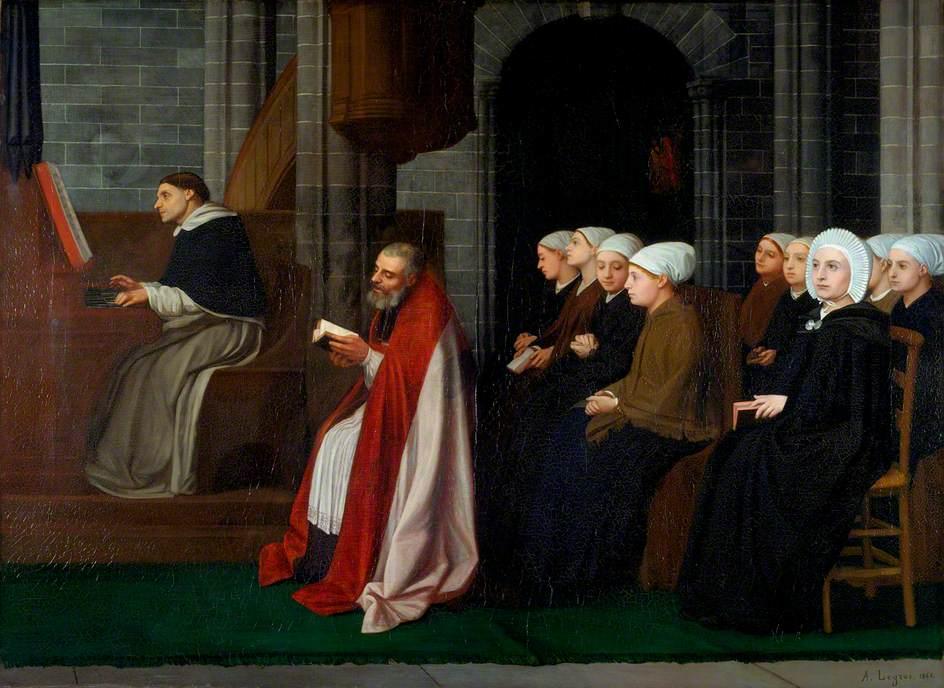
A May Service for Young Women


 Read More
Purchase a high-resolution, enhanced digital image, far superior to the online preview.
Each file is meticulously prepared by our in-house specialists using advanced tools and expert manual retouching. We ensure every image has exceptional clarity, precise color accuracy, and fine detail.
The final file is delivered via email within 72 hours, optimized for immediate use in professional, editorial, and print environments. This is the same quality trusted by top-tier design studios, publishers, and galleries.
Digital Image
Download a high-resolution file for personal display, printing, and creative projects. ( Buy Print Buy Hand Made Painting)
Included in Every Digital Image Order
Expert Digital Delivery, Guaranteed
When you choose ArtsDot.com, you're not just getting an image - you're receiving a professionally enhanced digital artwork, crafted with precision and backed by a satisfaction guarantee. Here's everything that comes with your order, automatically:

Fast Email Delivery
Your high-resolution digital image file will be emailed to you within 72 hours of ordering - ready for immediate use.

AI-Enhanced Digital File
Your artwork is professionally optimized using advanced AI tools and manual editing, ensuring maximum detail, clarity, and color accuracy.

Free Lifetime Re-Delivery
Accidentally deleted or lost your file? No worries - we'll resend it to you anytime, free of charge.

No Import Fees - Ever
Enjoy your artwork instantly with zero customs, duties, or delivery fees - digital downloads are always tax-free.

Color Accuracy Guarantee
We ensure your digital image reflects the original colors as closely as possible using professional tools and color management.

60-Day Satisfaction Guarantee
If you're not satisfied with your digital image, we'll revise it or refund 100% within 60 days - no questions asked.

100% Money-Back Guarantee
Not satisfied? Get a full refund within 60 days of receiving your digital file - no questions asked.

Bulk Order Discounts
Buy 3 images, save 10% - Buy 5, save 15% - Buy 10+, save 20%. Great for creative projects, galleries, and agencies.
Collectible Description
The Quiet Reverie of Faith: Exploring Alphonse Legros’s “A May Service for Young Women”
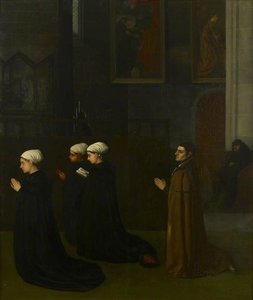
Alphonse Legros's "A May Service for Young Women" (1868) isn't merely a depiction of a religious ceremony; it’s a carefully constructed tableau of solemnity, introspection, and the quiet dignity of faith. Painted during a period of significant artistic transition – bridging Realism with nascent Impressionism – Legros masterfully captures a moment suspended in time within the hushed atmosphere of a late 19th-century church. The painting immediately draws the viewer into its world, not through dramatic gesture or vibrant color, but through an almost unnerving stillness and a profound sense of shared devotion.
A Window into Victorian Religious Life
To fully appreciate "A May Service for Young Women," it’s crucial to understand the context of 1868 Britain. The painting reflects a deeply ingrained religious sensibility within Victorian society, where faith permeated daily life and public spaces like churches were central to community identity. The subject itself – a “May Service” – held particular significance, commemorating Mary, the mother of Jesus, and celebrating her role in Christian belief. The scene depicts a gathering of young women, dressed in somber black robes, engaged in prayer and contemplation. Their posture is remarkably restrained, their faces largely averted, suggesting an inward focus on their spiritual experience. The presence of the elderly priest, his white surplice and red stole signifying his authority, anchors the scene with tradition and established faith.
Technique and Composition: A Masterclass in Subtlety
Legros’s technical skill is evident in the meticulous detail he applies to every element of the composition. The church interior is rendered with a remarkable sense of realism, from the worn stone walls to the carefully arranged chairs. He employs a muted palette dominated by earthy tones – browns, greys, and ochres – creating an atmosphere of subdued light and shadow. This deliberate restraint allows the figures to emerge subtly from their surroundings, emphasizing their quiet contemplation. The composition is deliberately balanced, with the priest positioned centrally, drawing the eye while the young women are arranged in a semi-circle around him. Notice how Legros uses subtle variations in lighting to highlight key figures – particularly the young woman on the right, whose face offers a fleeting glimpse of curiosity and perhaps even a touch of youthful rebellion against the prevailing solemnity.
Symbolism and Emotional Resonance
Beyond its realistic depiction, “A May Service for Young Women” is rich in symbolic meaning. The black robes worn by the young women represent their youth and vulnerability, while their averted gazes suggest a desire to connect with something beyond the material world. The organist, a young monk, embodies youthful devotion and service. The painting’s emotional impact isn't one of overt drama but rather a quiet sense of reverence and shared experience. It evokes a feeling of melancholy beauty—a poignant reminder of faith, tradition, and the enduring power of community. Legros doesn't offer easy answers or grand pronouncements; instead, he invites us to contemplate the complexities of belief and the subtle nuances of human emotion.
A Timeless Masterpiece: Reproductions and Beyond
Reproductions of “A May Service for Young Women” capture much of the original’s atmosphere and detail. Whether adorning a study, hallway, or contemplative space, this painting offers a touch of Victorian elegance and spiritual depth. Consider framing it in a classic style to complement its historical context, or exploring larger-scale reproductions for a more immersive experience. Legros's ability to convey profound emotion through understated realism ensures that "A May Service for Young Women" remains a captivating work of art for generations to come.
Related Artworks

Artist Biography
A Life Bridging Nations: The Artistic Journey of Alphonse Legros
Alphonse Legros, born in Dijon, France, in 1837, was an artist whose life and work embodied a fascinating intersection of artistic movements and national identities. His path wasn’t one of immediate acclaim but rather a gradual unfolding of talent nurtured by dedicated study and a willingness to embrace evolving aesthetic ideals. From humble beginnings as the son of an accountant in Véronnes, young Alphonse found early inspiration in the rural landscapes surrounding his family, scenes that would later permeate much of his artistic output. His initial training began at the Dijon art school, apprenticed to a house decorator, a grounding experience that instilled a practical understanding of materials and form. This was followed by a period as a journeyman wall-painter in Lyon, honing his skills while contributing to larger decorative projects. These formative years weren’t merely about technical proficiency; they were about absorbing the world around him – the textures of rural life, the play of light on stone, the dignity of everyday labor—elements that would become hallmarks of his mature style.From Realism to Etching Revival: Artistic Development and Influences
Legros’s arrival in Paris in 1851 marked a turning point. He immersed himself in the vibrant artistic milieu, studying with Charles-Antoine Cambon, a scene painter, and attending the prestigious drawing school of Lecoq de Boisbaudran, where he encountered fellow artists like Auguste Rodin and Jules Dalou. This period saw his first forays into the Salon system, gaining recognition for portraits that caught the eye of influential figures like Champfleury, who championed the Realist movement led by Gustave Courbet. Legros’s early work, such as *L'Angelus* (1859), demonstrated a commitment to depicting scenes from everyday life with honesty and emotional depth. However, it was his exploration of etching that truly set him apart. He essentially taught himself this technique, captivated by its potential for capturing subtle nuances of tone and texture. This dedication would eventually lead him to become a pivotal figure in the British etching revival. In 1863, encouraged by James McNeill Whistler, Legros relocated to England, a decision that profoundly shaped his career. He quickly established himself as an influential teacher, first at the South Kensington School of Art and later as Slade Professor at University College London, nurturing generations of artists in the art of etching.A Master of Multiple Mediums: Painting, Sculpture, and Medals
While Legros is often celebrated for his etchings, to define him solely by this medium would be a disservice to his multifaceted talent. He was equally adept as a painter and sculptor, and also created notable medals. His paintings frequently depicted scenes of religious devotion—interior church views with kneeling figures, capturing the quiet intensity of faith—and portraits that revealed a keen psychological insight into his subjects. These works are characterized by a restrained palette, meticulous detail, and a sense of solemnity. He wasn’t interested in grand narratives or flamboyant displays; instead, he focused on the intimate moments of human experience. His sculptural work, though less prolific than his paintings and etchings, demonstrated a similar commitment to realism and emotional depth. Furthermore, Legros's skill extended to the art of medal-making, producing pieces that were admired for their craftsmanship and artistic merit. He approached each medium with a dedication to technical mastery and a desire to convey profound meaning.Legacy and Historical Significance
Alphonse Legros died in Watford in 1911, leaving behind a rich legacy as both an artist and educator. His influence on the British art scene was considerable, particularly through his teaching at the Slade School of Art, where he instilled a rigorous approach to drawing and etching in countless students. He championed traditional artistic values—the importance of draftsmanship, careful observation, and technical skill—while also embracing new ideas and techniques. Legros’s work stands as a testament to the power of quiet contemplation and the enduring appeal of Realist aesthetics. His paintings and etchings can be found in prominent museums such as the Ashmolean Museum in Oxford and the Tate Gallery in London, ensuring that his artistic vision continues to inspire and captivate audiences today. He represents a bridge between French and British art traditions, embodying a commitment to both technical excellence and emotional honesty—qualities that continue to resonate with viewers and artists alike. His dedication to fostering artistic talent cemented his place as a pivotal figure in the development of modern British art.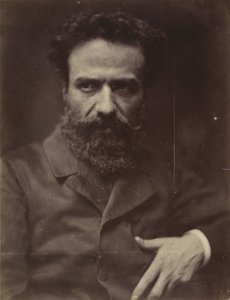
Alphonse Legros
1837 - 1911 , France
Quick Facts
- Artistic Movement Or Style: Realism
- Artists Or Movements Influenced By This Artist: ['Slade School artists']
- Artists Who Influenced This Artist:
- Gustave Courbet
- Charles-Antoine Cambon
- Date Of Birth: May 8, 1837
- Date Of Death: December 8, 1911
- Full Name: Alphonse Legros
- Nationality: French-British
- Notable Artworks:
- L'Angelus
- Interior with kneeling figures
- Rehearsing the service
- Cupid and Psyche
- The Tinker
- Place Of Birth: Dijon, France

