

 Preview
 Send
Send Share
Share
 Details

 Download
 Similars
 X-Ray
X-Ray Diaporama
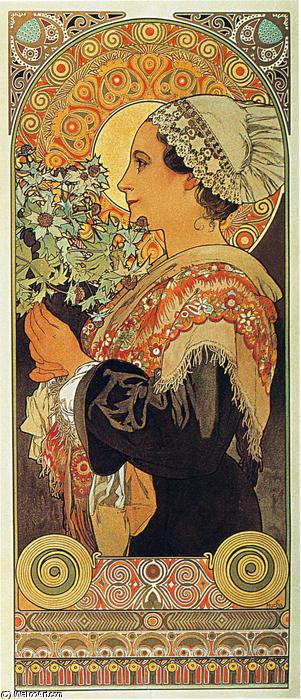
Thistle from the Sands

 Read More
Purchase a high-resolution, enhanced digital image, far superior to the online preview.
Each file is meticulously prepared by our in-house specialists using advanced tools and expert manual retouching. We ensure every image has exceptional clarity, precise color accuracy, and fine detail.
The final file is delivered via email within 72 hours, optimized for immediate use in professional, editorial, and print environments. This is the same quality trusted by top-tier design studios, publishers, and galleries.
Digital Image
Download a high-resolution file for personal display, printing, and creative projects. ( Buy Print Buy Hand Made Painting)
Included in Every Digital Image Order
Expert Digital Delivery, Guaranteed
When you choose ArtsDot.com, you're not just getting an image - you're receiving a professionally enhanced digital artwork, crafted with precision and backed by a satisfaction guarantee. Here's everything that comes with your order, automatically:

Fast Email Delivery
Your high-resolution digital image file will be emailed to you within 72 hours of ordering - ready for immediate use.

AI-Enhanced Digital File
Your artwork is professionally optimized using advanced AI tools and manual editing, ensuring maximum detail, clarity, and color accuracy.

Free Lifetime Re-Delivery
Accidentally deleted or lost your file? No worries - we'll resend it to you anytime, free of charge.

No Import Fees - Ever
Enjoy your artwork instantly with zero customs, duties, or delivery fees - digital downloads are always tax-free.

Color Accuracy Guarantee
We ensure your digital image reflects the original colors as closely as possible using professional tools and color management.

60-Day Satisfaction Guarantee
If you're not satisfied with your digital image, we'll revise it or refund 100% within 60 days - no questions asked.

100% Money-Back Guarantee
Not satisfied? Get a full refund within 60 days of receiving your digital file - no questions asked.

Bulk Order Discounts
Buy 3 images, save 10% - Buy 5, save 15% - Buy 10+, save 20%. Great for creative projects, galleries, and agencies.
Collectible Description
A Whisper of Bohemia: Alphonse Maria Mucha’s Thistle from the Sands
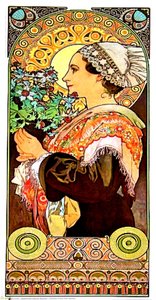
The scent of thyme drifts through the atelier as I gaze upon “Thistle from the Sands,” a monumental canvas by Alphonse Maria Mucha, currently residing in the Musée Beaux Arts de Nantes. More than just pigment on linen; it's an embodiment of Art Nouveau idealism—a testament to Prague’s artistic spirit and Mucha’s singular vision. Completed in 1903, this piece transcends mere decorative representation, delving into layers of symbolism that continue to fascinate scholars and inspire contemporary artists alike.The Style: Fluidity Defined
Mucha's signature style is instantly recognizable—a deliberate rejection of academic rigidity in favor of organic forms and undulating lines. “Thistle from the Sands” exemplifies this ethos perfectly. The dominant motif, a woman draped in scarlet silk, dominates the composition, her gown swirling with an almost palpable grace. These flowing draperies aren’t merely aesthetically pleasing; they represent liberation—a departure from Victorian constraints and an embrace of feminine beauty unbound by societal expectations. Mucha meticulously crafted these lines using tempera paint on canvas, achieving a remarkable luminosity that captures the essence of Art Nouveau's fascination with light and color. The artist skillfully blended hues to create depth and texture, mirroring the natural world around him—specifically, the arid landscape depicted in muted ochres and browns.Historical Context: Prague at the Dawn of Modernity
The painting emerged during a pivotal moment in Czech history – the Slavonic Uprising of 1897-98. This nationalist fervor fueled Mucha’s artistic endeavors, prompting him to fuse traditional Bohemian folklore with the avant-garde principles of Art Nouveau. The thistle itself—a prickly flower symbolizing resilience and perseverance—serves as a poignant reminder of Czech identity amidst Austro-Hungarian rule. It's a deliberate contrast between fragility and strength, mirroring the nation’s struggle for independence. Mucha drew inspiration from artists like Gustave Moreau and Pierre-Auguste Renoir, absorbing their techniques and stylistic sensibilities to forge his own distinctive path.Symbolism: Blossoms of Idealized Femininity
Beyond its formal qualities, “Thistle from the Sands” is rich in symbolic meaning. The woman’s scarlet dress symbolizes passion and vitality—a vibrant hue chosen to convey optimism and confidence. Surrounding her are delicate orange blossoms, representing joy and enlightenment. These flowers aren't merely decorative; they symbolize spiritual aspiration—the pursuit of beauty and truth as guiding forces in life. Mucha’s meticulous attention to detail underscores the importance of symbolism within Art Nouveau aesthetics. Every element contributes to a larger narrative, inviting contemplation and fostering emotional resonance.Emotional Impact: A Moment Frozen in Time
Standing before this canvas is akin to stepping back into a bygone era—a realm of romantic idealism and artistic experimentation. The painting evokes feelings of serenity, elegance, and wonder. It captures the spirit of Art Nouveau’s belief in the transformative power of beauty—its conviction that art could elevate human consciousness and inspire noble aspirations. “Thistle from the Sands” remains an enduring masterpiece, demonstrating Mucha's unparalleled ability to translate artistic vision into tangible form. Its luminous colors and graceful lines continue to captivate audiences today, cementing its place as a cornerstone of Art Nouveau heritage.Related Artworks

Artist Biography
Early Life and Education
- Born: July 15, 1860, in Ivanačice, Moravia (now part of the Czech Republic)
- Showed artistic talent from a young age.
- Studied at the Academy of Fine Arts in Prague but became disillusioned with traditional approaches.
- Moved to Paris in 1887 to pursue his own style.
Artistic Style and Notable Works
- Known for distinctive Art Nouveau style characterized by flowing lines, organic forms, and a sense of movement.
- Influenced by artists like Pierre-Auguste Renoir and Gustave Moreau.
- Notable Works:
- The Slavonic Uprising - Showcases blending traditional Czech motifs with modern Art Nouveau elements.
- Salon des Cent
- Paintings inspired by works like The Daughters of Tespio by Gustave Moreau, and La Ribambelle des Gobelins by Piero Dorazio.
- Illustrations based on Young Farmers Breaking Flax by Sir Hubert von Herkomer.
- Frequently featured idealized women in flowing robes surrounded by lush flowers.
Career Highlights and Major Commissions
- Sarah Bernhardt Collaboration: Created posters and designs for the actress Sarah Bernhardt, starting with the poster for Gismonda (1894), which launched his career.
- Universal Exhibition in Paris (1900): His Art Nouveau style gained international recognition at this exhibition. He decorated the Bosnia and Herzegovina Pavilion and collaborated on the Austrian Pavilion.
- Charles Richard Crane Patronage: Received support from Charles Richard Crane, which enabled him to create the monumental series The Slav Epic (1912-30).
- Post-Independence Czechoslovakia: Designed postage stamps, banknotes, and government documents for newly independent Czechoslovakia.
Influences and Legacy
- Influenced by Czech artistic traditions and modern European art movements.
- His unique style paved the way for future generations of artists in Art Nouveau and Secessionism.
- Inspired other artists like Eva Prokopcová.
- Legacy extends beyond his artwork to influence design and aesthetics.
Later Life and Death
- Married Maruska (Marie/Maria) Chytilová in 1906.
- Visited the United States from 1906-1910, where their daughter Jaroslava was born.
- Died on July 14, 1939, in Prague, Czechoslovakia.
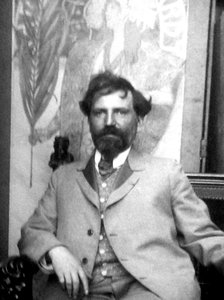
Alphonse Mucha
1860 - 1939 , Czech Republic
Quick Facts
- Artistic Movement Or Style: Art Nouveau
- Artists Or Movements Influenced By This Artist: ['Eva Prokopcová']
- Artists Who Influenced This Artist:
- Pierre-Auguste Renoir
- Gustave Moreau
- Dante Gabriel Rossetti
- Date Of Birth: July 15, 1860
- Date Of Death: 1939
- Full Name: Alphonse Maria Mucha
- Nationality: Czech
- Notable Artworks:
- Slavic Uprising
- Salon des Cent
- The Daughters of Tespio
- La Ribambelle des Gobelins
- Young Farmers Breaking Flax
- Place Of Birth: Brno, Czech Republic

