 Preview
 Send
Send Share
Share
 Details

 Download
 Similars
 X-Ray
X-Ray Diaporama
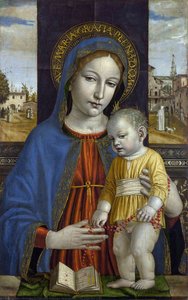
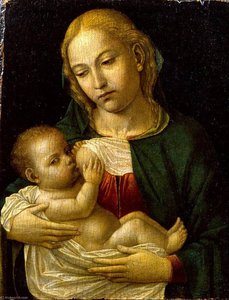
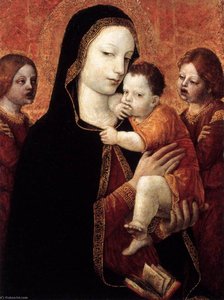
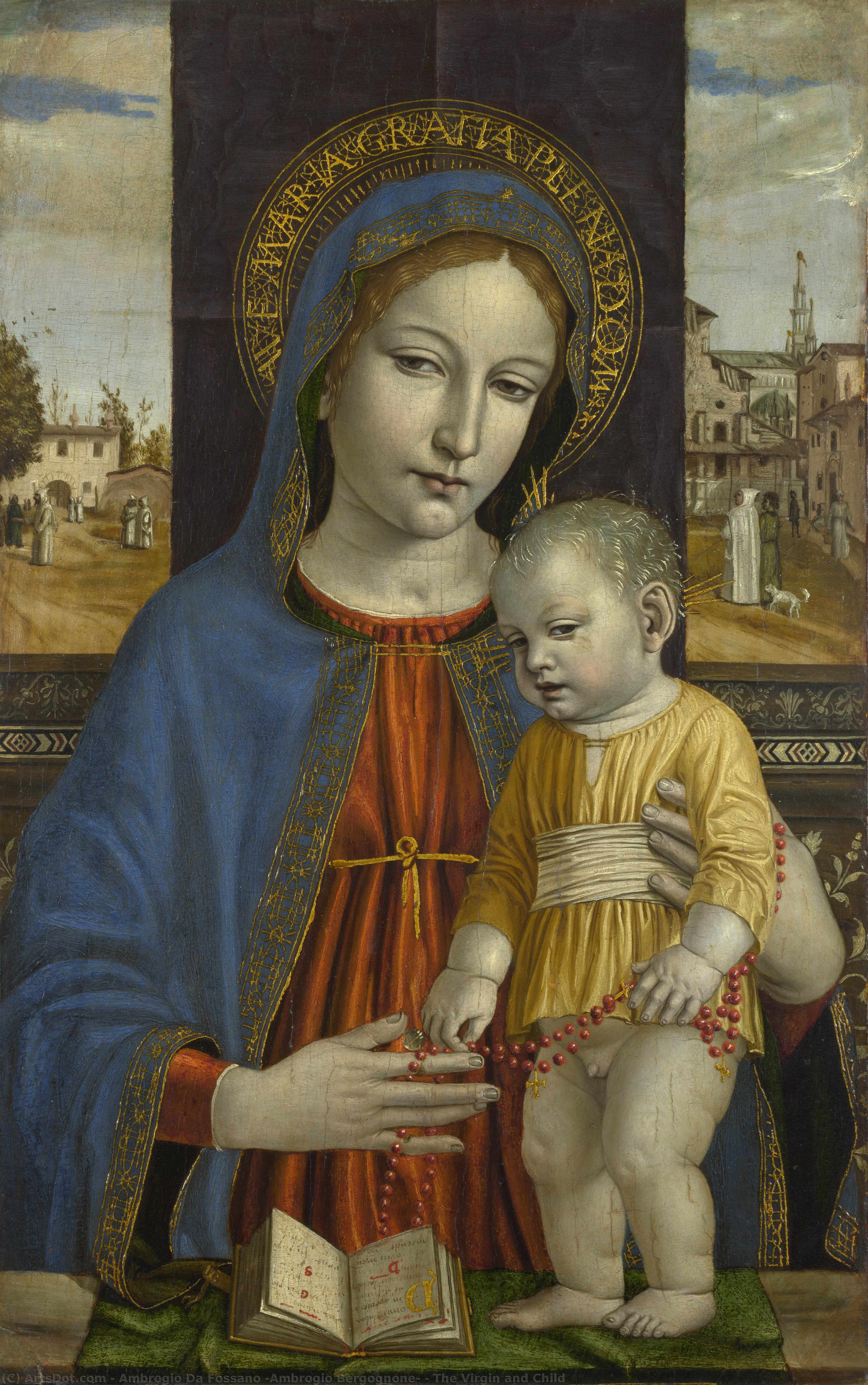
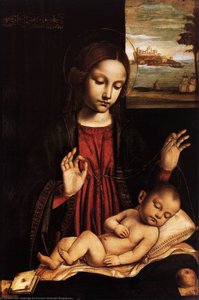
The Virgin and Child


 Read More
Hand Made Oil Reproduction
Hand-painted oil on canvas in your size and frame, made to order by our artists. ( Buy Print Buy Image)




P118B $10

P118H $10

P118W $10

P438Z $10

P508JH $12

P508YH $12

P805H $10

P805Z $10

P919BZ $10

P919G $10

P919XJ $10

P959ZH $10

P968JZ $12

W106C $8

W218G $10

W218JH $8

W218Y $10

W307PJ $10

W316G $10

W316PJ $8

W316Y $10

W398PJ $8

W4111J $10

W500HY $15

W500JH $15

W692G $12

W849H $8

W940BG $15

W953PJ $8




Pick from our preset sizes that match the artwork's original proportions.

You may enter your own dimensions to fit a specific frame or space. If your selected size does not match the original image's proportions, we will either crop the artwork or extend the painting with additional hand-painted elements. A digital mockup will be sent for your approval before production begins.
Please note that the on-screen preview does not reflect the actual cropping or extension. Only the mockup will accurately show the final composition.
While custom sizes are available, we recommend selecting a dimension from the predefined list to preserve the original proportions.
After order, ArtsDot.com team will email client for instructions and provide a mockup preview
Worldwide Delivery () in 3/4 weeks instead of standard 5 weeks. (17 August). No compromise on quality.

Free Worldwide Express Shipping

High-Quality Linen Canvas

Full Shipping Insurance

Customs Tax Refund Guarantee

True Color Matching Guarantee

60-Day Return Policy (Defects Only)

100% Money-Back Guarantee

Bulk Discount Offer
 Glass option is only available in size under 110 CM

The Virgin and Child
Reproduction Medium
Reproduction Size
-


Total Price
$ 263
Artwork Description
A Tender Embrace: Ambrogio Bergognone's "The Virgin and Child"
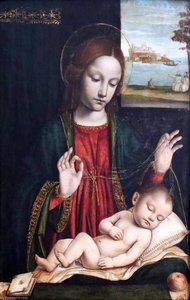
Within the rich tapestry of the Lombard Renaissance, Ambrogio Bergognone emerges as a master of serene devotion, his paintings imbued with a quiet grace that resonates across centuries. This particular work, “The Virgin and Child,” painted around 1490, exemplifies Bergognone’s signature style—a harmonious blend of delicate observation and profound spiritual feeling. The scene depicts the quintessential image of motherhood: the Virgin Mary cradling her infant son, Jesus, in a tender embrace. It's not a dramatic or overtly emotional portrayal; rather, it is an intimate moment captured with remarkable sensitivity, inviting contemplation and quiet reverence.
The Artistic Landscape of Late 15th-Century Lombardy
To fully appreciate Bergognone’s “The Virgin and Child,” one must understand the artistic climate in which it was created. The late 15th century saw Lombardy, a region encompassing parts of modern Italy, flourishing as a center of art and culture. While Leonardo da Vinci's revolutionary techniques were beginning to reshape the artistic landscape elsewhere, Bergognone’s work remained rooted in earlier traditions, drawing inspiration from masters like Vincenzo Foppa and Bernardino Zenale. This isn't to suggest a lack of innovation; rather, Bergognone carved his own path by emphasizing piety and emotional restraint within a framework of established artistic conventions. He worked extensively at the Certosa di Pavia, a magnificent Carthusian monastery complex, collaborating closely with his brother Bernardino on monumental projects that defined the artistic ideals of their time. This painting likely served as a devotional piece, intended to inspire contemplation and prayer.
Symbolism Woven into Color and Form
Beyond its immediate beauty, “The Virgin and Child” is rich in symbolic meaning. The vibrant blue of Mary’s dress—a color traditionally associated with the heavens and divine grace—contrasts beautifully with the gold trimming, signifying her royal status as Queen of Heaven. The baby Jesus, held securely in his mother's arms, represents both innocence and divinity. Notice how Bergognone subtly uses light to highlight their faces, drawing our attention to their expressions of love and tenderness. While the background figures and buildings are somewhat indistinct, they contribute to a sense of depth and atmosphere, suggesting a bustling yet reverent environment. The overall composition is carefully balanced, creating a feeling of harmony and stability—a visual representation of the unwavering faith that underpinned Renaissance art.
A Legacy of Serene Piety
Ambrogio Bergognone’s artistic legacy rests on his ability to convey profound spiritual meaning through understated elegance. He wasn't striving for dramatic innovation or groundbreaking experimentation; instead, he sought to capture the essence of faith and devotion with quiet mastery. “The Virgin and Child” stands as a testament to this approach—a timeless image that continues to inspire awe and reverence in viewers today. Owning a hand-painted reproduction of this masterpiece allows one to bring into their home not only a beautiful work of art, but also a tangible connection to the artistic and spiritual heritage of the Lombard Renaissance.
Related Artworks
![Virgin And Child With Saint Joseph And Donor [centre Panel Of The Withypool Triptych] — Antonio Solario (lo Zingaro), High Renaissance](/media/artworks/images/thumbnails/27/fb/27fb91bb373a4b548d046019bf697de5.jpg)
Artist Biography
The Serene Spirit of the Lombard Renaissance
In the golden age of the Italian Renaissance, few artists captured the quietude of devotion as profoundly as Ambrogio Bergognone, born Ambrogio da Fossano. A master whose brushwork breathed life into the spiritual landscapes of Lombardy, his name remains a testament to an era defined by both monumental ambition and intimate piety. While the precise details of his early years remain partially veiled by the mists of history, his artistic identity is inextricably linked to the fertile cultural soil of Northern Italy. Emerging from the traditions of the late 15th century, Bergognone developed a style that eschewed the dramatic turbulence found in other regions, opting instead for a luminous, contemplative grace that invited the viewer into a state of silent prayer.
The foundations of his technique were likely laid under the watchful eyes of masters such as Vincenzo Foppa and Bernardino Zenale. These influences instilled in him a deep respect for the Lombard tradition—a style characterized by a subtle use of light, a soft approach to form, and an extraordinary attention to the tactile reality of fabrics and landscapes. As he matured, his work began to reflect a unique synthesis of these inherited lessons and a personal quest for emotional clarity. His ability to render the divine not as something distant and terrifying, but as something present and tender, became the hallmark of his burgeoning career.
A Legacy Carved in Stone and Pigment
Perhaps no site serves as a more magnificent testament to Bergognone’s genius than the Certosa di Pavia. This monastic complex, a jewel of Renaissance architecture, provided the stage for some of his most ambitious collaborative endeavors. Working alongside his brother Bernardino and other luminaries like Bartolomeo Pola, he contributed to the creation of breathtakingly intricate decorations that transformed the space into a celestial vision on earth. His involvement in the monumental choir stall ensemble and the delicate frescoes within the basilica showcases a versatility that bridged the gap between large-scale architectural decoration and the fine, meticulous detail required for devotional panels.
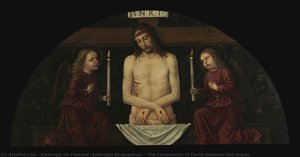
His mastery is particularly evident when examining his religious compositions, where he often explored themes of compassion and divine presence. In works such as The Compassion of Christ between two angels, one can observe his unparalleled ability to use subtle tonal gradations to evoke a sense of profound melancholy and holiness. His paintings do not merely depict biblical events; they inhabit them. Through the careful arrangement of figures and the soft, atmospheric light that seems to emanates from within the canvas itself, Bergognone achieved a level of sfumato and emotional depth that resonated deeply with the spiritual sensibilities of his patrons, including the influential Ludovico Sforza.
The Enduring Resonance of a Master
As the tides of the Renaissance shifted toward the more complex and muscular styles of the High Renaissance, Bergognone’s commitment to a serene, devotional aesthetic ensured his place in the pantheon of great Lombard painters. His later years, spent navigating the shifting political landscapes of Milan, saw him continuing to secure prestigious commissions that allowed him to refine his expressive capabilities. Even as compositions became more sophisticated, the core of his work remained anchored in a profound sense of peace and a meticulous devotion to detail.
Today, the significance of Ambrogio Bergognone lies in his ability to act as a bridge between the structured traditions of the early Renaissance and the emotive potential of the centuries that followed. His oeuvre serves as a vital window into the soul of the Lombard Renaissance, offering a glimpse into a world where art was the ultimate vessel for the divine. To study his work is to experience a rare form of visual stillness, a reminder of the power of art to transcend time and touch the eternal through the simple, masterful rendering of light, shadow, and grace.
ambrogio da fossano (ambrogio bergognone)
1453 - 1523 , Italy
Quick Facts
- Artistic Movement Or Style: Renaissance Lombard Art
- Artists Or Movements Influenced By This Artist: ['Leonardo da Vinci']
- Artists Who Influenced This Artist:
- Vincenzo Foppa
- Bernardino Zenale
- Date Of Birth: c. 1470s
- Date Of Death: 1523/1524
- Full Name: Ambrogio Bergognone
- Nationality: Italian
- Notable Artworks:
- Madonna del Velo
- Christ Risen
- Place Of Birth: Fossano, Piedmont
Related Articles
Sacred Narratives Embodied: A Comprehensive Exploration of Religious Iconography in Art History
Explore the rich history of religious iconography in art! Discover symbolism, movements & masterpieces from Byzantine to Renaissance periods. Expert insights for collectors and enthusiasts at ArtsDot.
Sacred Narratives on Canvas: Exploring Religious Painting Through History
Explore the rich history of religious painting with ArtsDot.com! Discover iconic artworks, symbolism & techniques from antiquity to the Renaissance. Enhance your art appreciation today.
Fra Angelico's Masterpieces: 25 Renaissance Paintings for Your Home | ArtsDot
Explore 25 breathtaking masterpieces by Fra Angelico, a Renaissance master. Discover the stories behind his iconic frescoes, Annunciations & religious art. Find museum-quality reproductions and elevate your home decor with ArtsDot.com.

Sacred Visions: Exploring Faith & Devotion in Religious Art Across Cultures
Explore the rich history of religious art across cultures! Discover symbolism, Renaissance masterpieces & the power of color in devotional works. Expert insights for collectors and enthusiasts.
Sacred Narratives on Canvas: Exploring Religious Scenes & Their Enduring Influence
Explore the rich history of religious art from Giotto to the Renaissance masters with ArtsDot. Discover symbolism, techniques & enduring legacies. Museum-quality reproductions available.