 Preview
 Send
Send Share
Share
 Details

 Download
 Similars
 X-Ray
X-Ray Diaporama
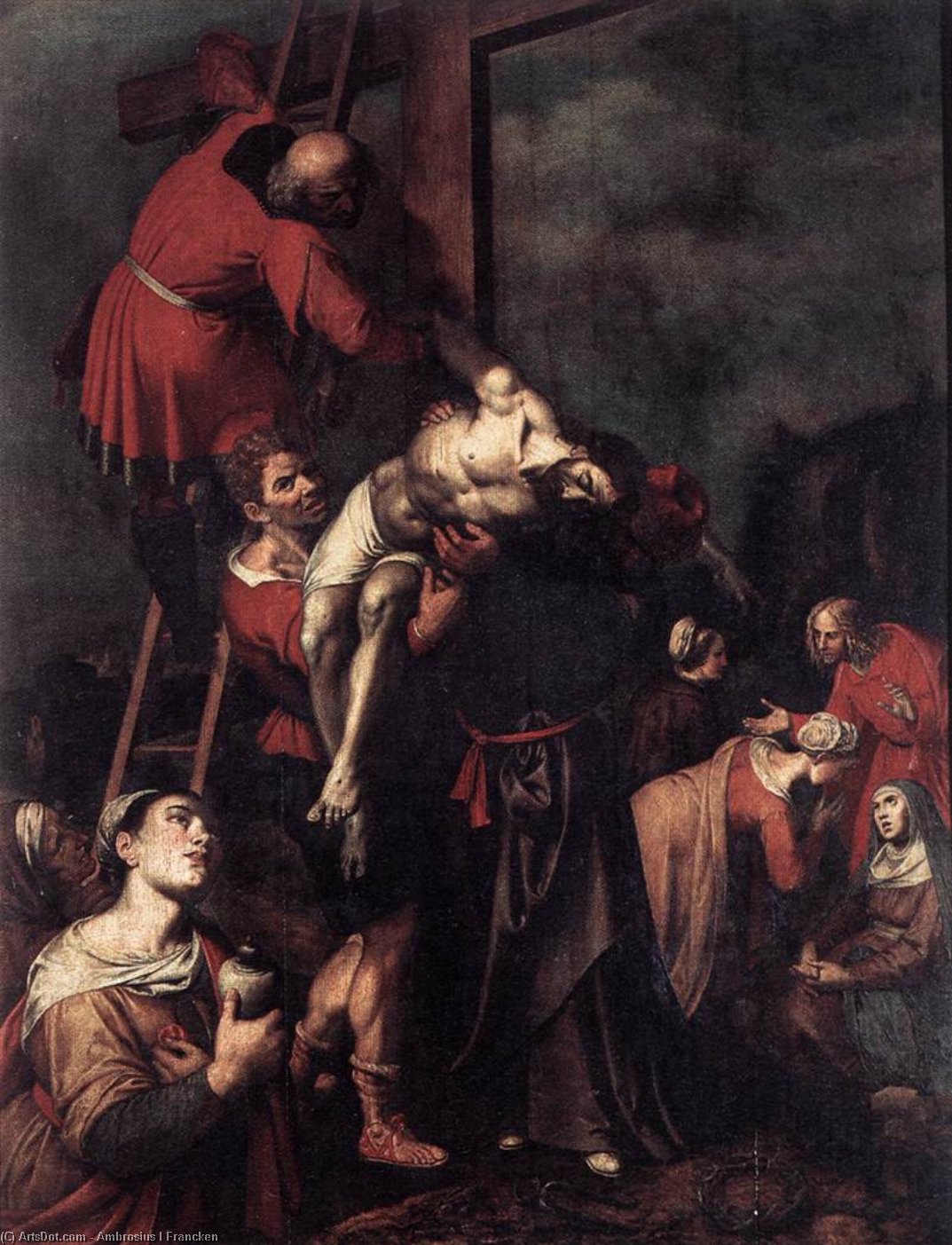
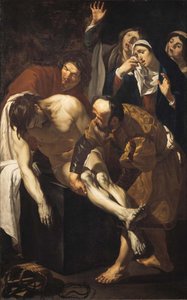
Descent from the Cross
 Acrylic On Canvas
- WallArt
- Baroque Mannerism
 1580
1580 122.0 x 95.0 cm
 Onze-Lieve Vrouwekathedraal
 Read More
Hand Made Oil Reproduction
Hand-painted oil on canvas in your size and frame, made to order by our artists. ( Buy Print Buy Image)




P118B $10

P118H $10

P118W $10

P438Z $10

P508JH $12

P508YH $12

P805H $10

P805Z $10

P919BZ $10

P919G $10

P919XJ $10

P959ZH $10

P968JZ $12

W106C $8

W218G $10

W218JH $8

W218Y $10

W307PJ $10

W316G $10

W316PJ $8

W316Y $10

W398PJ $8

W4111J $10

W500HY $15

W500JH $15

W692G $12

W849H $8

W940BG $15

W953PJ $8




Pick from our preset sizes that match the artwork's original proportions.

You may enter your own dimensions to fit a specific frame or space. If your selected size does not match the original image's proportions, we will either crop the artwork or extend the painting with additional hand-painted elements. A digital mockup will be sent for your approval before production begins.
Please note that the on-screen preview does not reflect the actual cropping or extension. Only the mockup will accurately show the final composition.
While custom sizes are available, we recommend selecting a dimension from the predefined list to preserve the original proportions.
After order, ArtsDot.com team will email client for instructions and provide a mockup preview
Worldwide Delivery () in 3/4 weeks instead of standard 5 weeks. (22 August). No compromise on quality.

Free Worldwide Express Shipping

High-Quality Linen Canvas

Full Shipping Insurance

Customs Tax Refund Guarantee

True Color Matching Guarantee

60-Day Return Policy (Defects Only)

100% Money-Back Guarantee

Bulk Discount Offer
 Glass option is only available in size under 110 CM

Descent from the Cross
Reproduction Medium
Reproduction Size
-


Total Price
$ 263
Artwork Description
A Moment of Profound Sorrow: The Descent from the Cross by Ambrosius Francken I
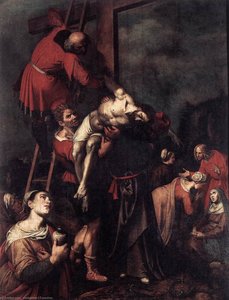
Ambrosius Francken I’s “Descent from the Cross,” painted around 1580, isn't merely a depiction of a pivotal biblical event; it’s a visceral exploration of grief, human vulnerability, and the weight of sacrifice. Emerging from the turbulent milieu of late Mannerism in Antwerp, this painting transcends simple religious illustration to become a deeply emotive work that resonates with viewers centuries later. The scene unfolds within a carefully constructed space – a modest courtyard bathed in muted light, suggesting both earthly confinement and spiritual significance. Francken masterfully employs a restrained palette of browns, ochres, and deep blues, creating an atmosphere of somber contemplation rather than dramatic spectacle. This deliberate choice underscores the painting’s focus on the emotional core of the event, prioritizing feeling over flamboyant display.
- Compositional Drama: The arrangement of figures is meticulously considered. Christ, depicted with a remarkable degree of anatomical realism for the period, is lowered from the cross by Joseph of Arimathea and Nicodemus – their faces etched with sorrow and exhaustion. The positioning emphasizes the physical burden of carrying the lifeless body, highlighting the humanity of these rescuers.
- Subtle Details: Notice the intricate folds in the drapery, rendered with a delicate touch that adds to the sense of realism and texture. The expressions on the faces of those present are remarkably nuanced, conveying a range of emotions from despair to quiet reverence.
The Context of Faith and Turmoil
To fully appreciate “Descent from the Cross,” it’s crucial to understand the historical context in which it was created. The late 16th century witnessed a period of intense religious upheaval across Europe, marked by the Protestant Reformation and the Counter-Reformation. Antwerp, a major center for art production, found itself caught between these competing forces. Ambrosius Francken I, like many artists of his time, navigated this complex landscape, producing works that reflected both artistic innovation and the prevailing religious currents. The painting’s somber tone aligns with the Counter-Reformation's emphasis on piety and emotional engagement with faith – a deliberate shift away from the more opulent and celebratory imagery favored during the Renaissance.
Francken’s background further illuminates the work’s significance. He was part of a prominent artistic family—his father, Nicolaes Francken, was also a painter, and his brothers, Frans and Hieronymus, were equally renowned. This familial legacy undoubtedly influenced his artistic development, but Ambrosius forged his own distinctive style characterized by a profound sensitivity to human emotion.
Symbolism and the Human Condition
Beyond its religious subject matter, “Descent from the Cross” offers a powerful meditation on the human condition. The scene speaks to themes of mortality, suffering, and redemption. The presence of the young child lying at the base of the cross – a detail often overlooked – adds another layer of complexity, suggesting innocence lost and the enduring consequences of violence. The figures themselves represent not just biblical characters but archetypes of compassion and sacrifice. The artist’s choice to depict them with realistic features and expressions underscores their shared humanity, inviting viewers to connect with the scene on an emotional level.
Furthermore, Francken's decision to focus on the *act* of lowering Christ from the cross—the physical labor involved—rather than a traditional depiction of the event is noteworthy. This shift emphasizes the tangible reality of suffering and the human effort required to bear witness to it. It’s a subtle yet profound commentary on the responsibilities inherent in faith.
A Timeless Masterpiece – Reproduction Possibilities
ArtsDot offers high-quality, hand-painted reproductions of Ambrosius Francken I's “Descent from the Cross,” capturing the painting’s rich detail and emotional depth. Available in a range of sizes and framing options, our reproductions provide an authentic representation of this iconic work of art for your home or office. Whether you are an art enthusiast, collector, or simply seeking to add a touch of timeless beauty to your space, a ArtsDot reproduction is the perfect way to experience the power and poignancy of “Descent from the Cross.”
Related Artworks

Artist Biography
A Life Amidst Turmoil: The World of Ambrosius Francken I
Born in Herentals, Belgium, around 1544, Ambrosius Francken I emerged into a world already steeped in artistic tradition and poised on the brink of profound religious and political upheaval. His father, Nicolaes Francken, a painter himself, recognized and nurtured his son’s talent, initiating him into the family craft before relocating to the bustling artistic hub of Antwerp. This move proved pivotal, immersing young Ambrosius in an environment teeming with innovation and stylistic experimentation. The Francken family was destined to become synonymous with Flemish art during this era; Ambrosius's brothers, Frans Francken I and Hieronymus Francken I, also achieved considerable renown as painters, solidifying the family’s central role in the region’s artistic landscape. Ambrosius initially honed his skills under his father’s guidance, but he soon sought further refinement, becoming a pupil of Frans Floris, a leading figure in Antwerp Mannerism. This apprenticeship instilled in him the characteristic elongated figures, dynamic compositions, and dramatic narratives that would define his own distinctive style.Navigating Faith and Patronage
Francken’s early career unfolded against a backdrop of escalating religious tensions in the Low Countries. Around 1569, he found employment at the Bishop's residence in Tournai, followed by a sojourn to Fontainebleau in 1570 – experiences that undoubtedly broadened his artistic horizons and exposed him to new influences. Upon returning to Antwerp circa 1573, he formally established himself as a master within the Guild of Saint Luke, marking a significant step in his professional journey. However, this period was far from stable. The rise of Calvinism ignited iconoclasm – the systematic destruction of religious images – in 1581, dramatically impacting artistic commissions and forcing artists to adapt to a changing world. Francken himself appears to have navigated these turbulent waters with a degree of pragmatism. Initially believed to have embraced Calvinism, he was even elected dean of the Guild in 1582. Yet, following Antwerp’s return to Catholic control, he publicly reaffirmed his faith and astutely capitalized on the burgeoning demand for new altarpieces to replace those lost during the iconoclastic fury. This adaptability speaks volumes about his character and his understanding of the delicate balance between artistic expression and political expediency.Mannerist Visions and Religious Narratives
Ambrosius Francken I’s artistic style is firmly rooted in late Mannerism, a movement characterized by its elegance, sophistication, and often dramatic intensity. His paintings are populated with elongated figures engaged in dynamic compositions, meticulously rendered to convey powerful narratives. He primarily focused on religious subjects and historical allegories, becoming particularly renowned for his large-scale altarpieces commissioned by churches throughout Antwerp. These works were not merely decorative; they served as potent visual statements of faith, intended to inspire devotion and reaffirm Catholic doctrine in the wake of the iconoclastic disturbances. The influence of Marten de Vos is readily apparent in Francken’s opulent draping of robes and intricate attention to detail. He also occasionally collaborated with Abraham Govaerts, adding *staffage* – minor figures or details – within his landscapes, enriching the overall composition. Perhaps one of his most notable commissions was the triptych created for the Guild of Barbers and Surgeons in 1590. The panel depicting the miracles of Saints Cosmas and Damian is particularly striking, portraying a surgical procedure with remarkable naturalism—a departure from earlier idealized representations.A Legacy Forged in Faith and Innovation
The significance of Francken’s work extends beyond its aesthetic qualities; it played a crucial role in the artistic landscape of the Counter-Reformation. His altarpieces were instrumental in reasserting Catholic imagery and devotion, helping to heal the wounds inflicted by the iconoclastic period. His compositions, featuring muscular figures inspired by classical prototypes, exerted considerable influence on other artists of his time, shaping the direction of Flemish painting for generations to come. Interestingly, during a period of Calvinist affiliation (roughly 1579-1585), Francken created a series of engravings titled “The Fate of Mankind,” which offered a scathing critique of the Catholic clergy—a testament to his willingness to engage with contemporary political and religious debates through his art. He also served as a teacher, passing on his knowledge and skills to Hieronymus Francken II, the son of his brother Frans Francken I, ensuring the continuation of the artistic legacy within the family. Ambrosius Francken I died in Antwerp in 1618, leaving behind a substantial body of work that reflects the complexities of his era and solidifies his place as an important figure in Flemish Mannerist painting—a painter who navigated faith, politics, and artistry with remarkable skill and vision.Major Works
- The Miracles of Saints Cosmas and Damian (1590): A triptych panel for the Guild of Barbers and Surgeons, notable for its realistic depiction of surgical procedures.
- Altarpieces for Antwerp Churches: Numerous large-scale altarpieces created to replace those destroyed during the iconoclasm, showcasing his mastery of religious narrative.
- The Fate of Mankind (c. 1579-1585): A series of engravings offering a critical commentary on the Catholic clergy during his Calvinist period.
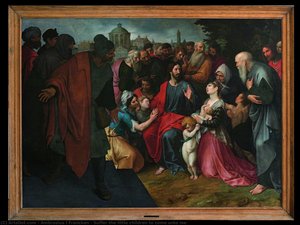
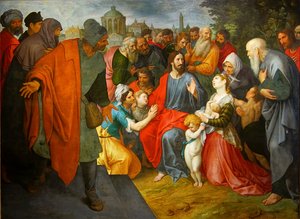
- Suffer the little children to come unto me: Depicts Jesus with children, showcasing Francken’s skill in portraying emotional and religious scenes.
Ambrosius Francken I
1545 - 1618 , Belgium
Quick Facts
- Artistic Movement Or Style: Mannerism
- Artists Or Movements Influenced By This Artist: ['Counter-Reformation art']
- Artists Who Influenced This Artist:
- Frans Floris
- Marten de Vos
- Date Of Birth: 1544
- Date Of Death: 1618
- Full Name: Ambrosius Francken I
- Nationality: Flemish
- Notable Artworks:
- Miracles of Saints Cosmas
- Descent from the Cross
- Suffer little children...
- Place Of Birth: Herentals, Belgium
Related Articles

Baroque Masterpieces: 10 Paintings That Defined an Era |
Journey through the drama & grandeur of Baroque art! Explore 10 masterpieces by Caravaggio, Rembrandt, Rubens & more. Discover stunning oil paintings, rich colors & timeless stories. Find museum-quality reproductions at .

Baroque Drama: Bringing Opulence & Emotion into Contemporary Interiors
Explore the opulent world of Baroque interior design! Discover key elements, modern applications & how to bring dramatic elegance into your home with 's authentic reproductions.

The Dramatic Flourish: Exploring the Baroque Movement's Enduring Legacy in Art History
Explore the dramatic world of Baroque art! Discover iconic artists like Caravaggio & Rubens, defining techniques, and its lasting impact on art history. Expert insights for collectors & enthusiasts at ArtsDot.

The Visceral Stage: Exploring Dramatic Narratives & Emotional Intensity in Baroque Art
Explore the dramatic world of Baroque art! Discover iconic masters like Caravaggio & Rembrandt, their techniques, and the movement's lasting impact. Expert insights for collectors & enthusiasts at ArtsDot.

Theatricality & Triumph: Baroque Drama in Painting & Sculpture
Explore the dramatic world of Baroque art! Discover its history, defining characteristics, & lasting influence on painting & sculpture. Expert insights into Caravaggio, Zurbarán, and Bernini – plus high-quality reproductions at ArtsDot.