 Preview
 Send
Send Share
Share
 Details

 Download
 Similars
 X-Ray
X-Ray Diaporama
untitled (1471)

 Read More
Hand Made Oil Reproduction
Hand-painted oil on canvas in your size and frame, made to order by our artists. ( Buy Print Buy Image)




P118B $10

P118H $10

P118W $10

P438Z $10

P508JH $12

P508YH $12

P805H $10

P805Z $10

P919BZ $10

P919G $10

P919XJ $10

P959ZH $10

P968JZ $12

W106C $8

W218G $10

W218JH $8

W218Y $10

W307PJ $10

W316G $10

W316PJ $8

W316Y $10

W398PJ $8

W4111J $10

W500HY $15

W500JH $15

W692G $12

W849H $8

W940BG $15

W953PJ $8




Pick from our preset sizes that match the artwork's original proportions.

You may enter your own dimensions to fit a specific frame or space. If your selected size does not match the original image's proportions, we will either crop the artwork or extend the painting with additional hand-painted elements. A digital mockup will be sent for your approval before production begins.
Please note that the on-screen preview does not reflect the actual cropping or extension. Only the mockup will accurately show the final composition.
While custom sizes are available, we recommend selecting a dimension from the predefined list to preserve the original proportions.
After order, ArtsDot.com team will email client for instructions and provide a mockup preview
Worldwide Delivery () in 3/4 weeks instead of standard 5 weeks. (17 August). No compromise on quality.

Free Worldwide Express Shipping

High-Quality Linen Canvas

Full Shipping Insurance

Customs Tax Refund Guarantee

True Color Matching Guarantee

60-Day Return Policy (Defects Only)

100% Money-Back Guarantee

Bulk Discount Offer
 Glass option is only available in size under 110 CM

untitled (1471)
Reproduction Medium
Reproduction Size
-


Total Price
$ 263
Artwork Description
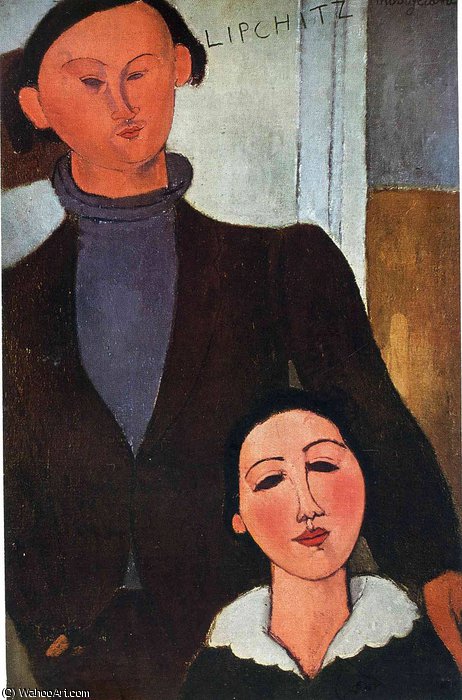
The Enigmatic Gaze: Unpacking Amedeo Modigliani's "Untitled (1471)"
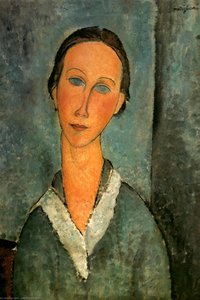
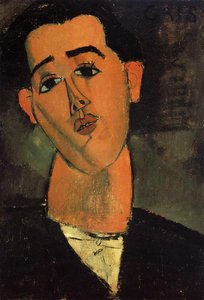
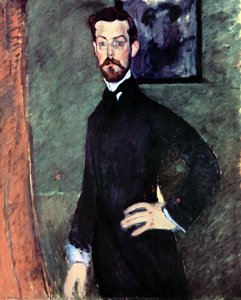
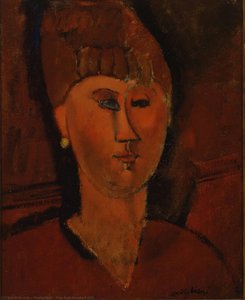
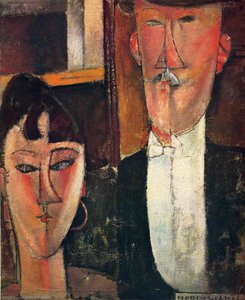
Amedeo Modigliani’s “Untitled (1471),” a captivating portrait of a man and woman locked in an unspoken exchange, is more than just a depiction of two figures; it’s a profound meditation on connection, longing, and the inherent melancholy that permeated the artist's life. Painted around 1921, shortly before his untimely death at the age of 35, this work embodies the core tenets of Modigliani’s distinctive style – elongated forms, piercing eyes, and an atmosphere of quiet intensity. The painting immediately draws the viewer in with its carefully constructed composition: a man and woman stand side-by-side, their gazes directed towards something just beyond the frame, creating a sense of shared observation yet also individual introspection.
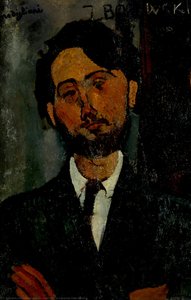
The man, rendered with Modigliani’s signature elongated neck and subtly almond-shaped eyes, exudes an air of contemplative seriousness. His posture is formal, accentuated by the tie he wears – a detail that hints at a societal expectation of decorum, perhaps contrasting with the emotional depth of his expression. Across from him, the woman possesses a captivating vulnerability. Her mouth is slightly open, as if caught mid-sentence or in a moment of profound thought, and her eyes hold a mixture of curiosity and gentle sadness. The interplay between these two figures – their averted gaze suggesting both intimacy and distance – forms the heart of the painting’s power.
A Study in Style: Modigliani's Unique Artistic Language
Modigliani’s artistic language was deeply rooted in his personal experiences and a rejection of academic conventions. He drew inspiration from African sculpture, Byzantine art, and the works of artists like Paul Gauguin and Odilon Redon, incorporating elements of abstraction and distortion into his portraits. The elongated forms characteristic of Modigliani's figures are not merely stylistic flourishes; they represent an attempt to capture the essence of a subject’s inner life – their emotional state, their vulnerability, their inherent humanity. Notice how he simplifies features, reducing them to their essential lines and planes, creating a sense of timelessness and universality.
Technically, “Untitled (1471)” is executed in oil on canvas, utilizing a technique that blends smooth, polished surfaces with areas of visible brushstrokes. This juxtaposition creates a dynamic tension between the figure’s physicality and the artist's hand. The muted color palette – dominated by browns, ochres, and subtle blues – contributes to the painting’s somber mood, further emphasizing the subjects’ emotional weight. The lighting is soft and diffused, casting gentle shadows that accentuate the contours of their faces and bodies.
Historical Context & A Life Etched in Longing
Understanding Modigliani's life provides crucial context for interpreting his art. Born into a Jewish family in Livorno, Italy, he faced numerous hardships throughout his youth – illness, financial instability, and the constant struggle to find acceptance within the Parisian artistic community. His personal relationships were often fraught with difficulty, marked by unrequited love and profound loneliness. This sense of longing permeates much of his work, particularly evident in portraits like “Untitled (1471).”
The painting’s creation coincided with a period of intense creativity for Modigliani, yet also one of increasing personal turmoil. He was deeply involved with Jeanne Charbonnière, a wealthy American socialite who became his muse and confidante, but their relationship was marked by jealousy, instability, and ultimately, tragedy. It's believed that the scene depicted – the shared gaze, the unspoken connection – reflects this complex dynamic, capturing a fleeting moment of intimacy amidst a backdrop of emotional uncertainty.
Symbolism & Emotional Resonance
While the precise subject of their attention remains ambiguous, “Untitled (1471)” is rich in symbolic potential. The averted gaze suggests a shared secret, a mutual understanding that transcends words. The woman’s open mouth could represent an invitation to dialogue, while the man's intense stare hints at contemplation or perhaps even a degree of melancholy. The painting speaks to the universal human experience of connection, longing, and the search for meaning in a world often characterized by isolation. It is this potent combination of vulnerability, introspection, and quiet intensity that continues to captivate viewers today, solidifying Modigliani’s place as one of the most poignant figures in 20th-century art.
Related Artworks
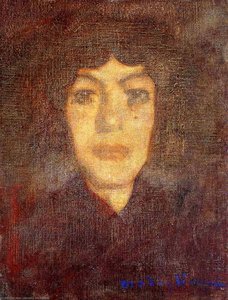
Artist Biography
A Life Etched in Longing: The World of Amedeo Modigliani
Amedeo Clemente Modigliani, a name synonymous with haunting beauty and melancholic grace, remains one of the most beloved and tragically romantic figures of early 20th-century art. Born in Livorno, Italy, in 1884 into a family steeped in Sephardic Jewish heritage, his life was marked by both profound artistic vision and persistent hardship. Frequent illness shadowed his youth – pleurisy and typhoid fever became unwelcome companions – perhaps instilling within him a sensitivity to fragility that would permeate his work. Though born into relative comfort, the family’s financial fortunes waned, adding another layer of complexity to the young Modigliani's formative years. It was a childhood punctuated by intellectual stimulation, thanks to his mother and grandfather who introduced him to the works of Nietzsche, Baudelaire, and Lautréamont, laying the groundwork for an artistic sensibility that would reject conventional norms.
The pull of Paris proved irresistible, and in 1906, Modigliani embarked on a journey that would define his career. The city was then a crucible of artistic innovation, teeming with revolutionary ideas and challenging conventions. He immersed himself in the vibrant art scene, encountering giants like Pablo Picasso and Constantin Brâncuși, figures who profoundly shaped his aesthetic trajectory. Initially drawn to the burgeoning Cubist movement, Modigliani quickly found its rigid geometry too constricting for his expressive needs. His artistic spirit yearned for something more lyrical, more deeply rooted in human emotion. He began a period of intense experimentation, absorbing influences from African sculpture – particularly its elongated forms and simplified features – and the archaic grace of Italian Renaissance art.
The Sculpted Soul: Style and Innovation
Modigliani’s signature style emerged as a unique synthesis of these diverse inspirations. His portraits, arguably his most celebrated works, are instantly recognizable for their elongated faces and necks, almond-shaped eyes devoid of pupils, and an overall sense of serene melancholy. These were not merely likenesses; they were explorations of the inner life, capturing a profound psychological depth in each subject. He stripped away extraneous detail, focusing on essential forms to convey emotion with remarkable economy. His nudes, often controversial during his lifetime, possess a similar quality – a quiet dignity and vulnerability that transcends mere physical representation. The figures are not overtly sensual but rather imbued with a sense of timeless beauty and existential longing.
Beyond painting, Modigliani also dedicated himself to sculpture, creating a series of highly stylized heads and torsos. These sculptures, influenced by African art and Brâncuși’s reductive forms, further demonstrate his commitment to simplifying form and emphasizing essential qualities. Though he exhibited these works briefly with the Section d'Or group in 1912, they were met with harsh criticism and largely withdrawn from public view. This rejection deeply affected Modigliani, contributing to a period of artistic self-doubt and financial hardship.
A Life Marked by Shadows
Modigliani’s personal life was as turbulent as his artistic journey. He struggled with poverty and addiction throughout much of his career, often relying on the generosity of friends and patrons. His relationship with Jeanne Hébuterne, a young artist herself, became the central emotional anchor in his life. They shared a deep love and mutual artistic understanding, but their happiness was tragically short-lived. The pressures of poverty, Modigliani’s declining health, and Jeanne's pregnancy created an unbearable strain. In 1920, devastated by the birth of their daughter and overwhelmed by despair, Jeanne took her own life. Just days later, Modigliani succumbed to tubercular meningitis at the age of only 35.
Legacy of a Lost Generation
Despite facing little recognition during his lifetime, Amedeo Modigliani’s work experienced a dramatic surge in popularity after his death. His paintings and sculptures began to command increasingly high prices, and his distinctive style exerted a profound influence on subsequent generations of artists. He became an icon of the bohemian spirit, embodying the struggles and triumphs of a lost generation grappling with modernity and existential questions.
Today, Modigliani’s works are held in prestigious museums around the world, including the Osaka City Museum of Modern Art, the Musée d'Art Moderne de la Ville de Paris, and numerous private collections. His portraits continue to captivate viewers with their haunting beauty and emotional resonance, serving as a poignant reminder of a life lived on the edge – a life etched in longing, passion, and an unwavering commitment to artistic truth.
Notable Works
- Nude Bust (35 x 26 cm): A quintessential example of Modigliani’s elongated forms and expressive style, showcasing his mastery of the human figure.
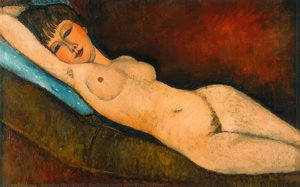
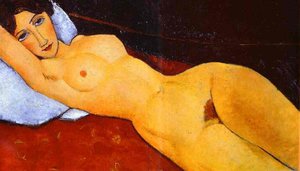
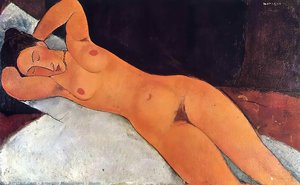
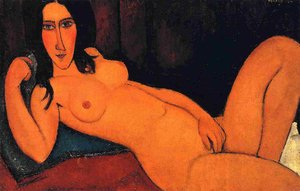
- Reclining Nude with Loose Hair: Demonstrates his ability to capture the essence of femininity with a delicate balance of sensuality and vulnerability.
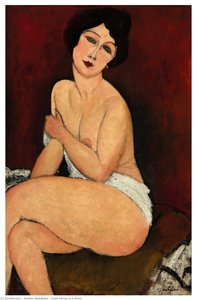
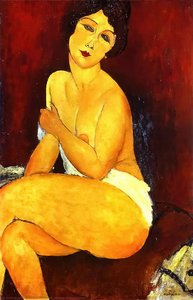
- Seated Female Nude (92 x 60 cm): A powerful depiction of the female form, characterized by its simplified shapes and serene composure.
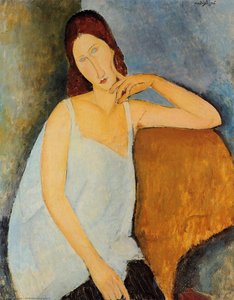
- Portrait of Jeanne Hebuterne: Numerous portraits capturing his lover and muse, revealing a poignant emotional depth and intimate connection.
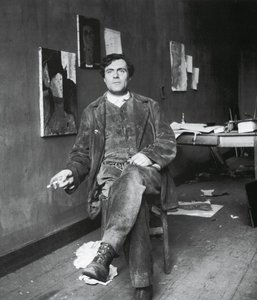
Amedeo Clemente Modigliani
1884 - 1920 , Italy
Quick Facts
- Artistic Movement Or Style: Expressionism
- Artists Or Movements Influenced By This Artist:
- Expressionism
- Modernism
- Artists Who Influenced This Artist:
- Picasso
- Brâncuși
- African sculpture
- Date Of Birth: July 12, 1884
- Date Of Death: January 24, 1920
- Full Name: Amedeo Clemente Modigliani
- Nationality: Italian
- Notable Artworks:
- Nude Bust
- Reclining Nude
- Seated Female Nude
- Portrait of Jeanne Hebuterne
- Place Of Birth: Livorno, Italy
Related Articles
Modigliani's Masterpieces: 25 Iconic Paintings & Sculptures | ArtsDot
Explore 25 iconic artworks by Amedeo Modigliani, from his haunting portraits to captivating sculptures. Discover the stories behind these masterpieces of early 20th-century art & find museum-quality reproductions at ArtsDot.com.
Cubist Expressionism's 10 Defining Masterpieces | Art for Your Home
Explore 10 defining Cubist Expressionism masterpieces by Picasso, Braque & more. Discover the stories behind these bold, geometric paintings and bring museum-quality art to your home with ArtsDot.com. Explore the full collection online.
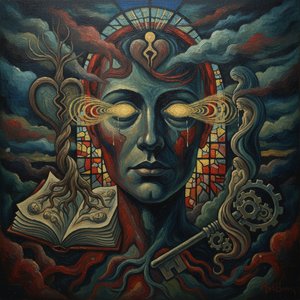
Unlocking Emotion: A Beginner's Guide to the Raw Power of Symbolic Expressionism Art
Discover the raw emotion of Symbolic Expressionism. Our expert guide explores how masters like Munch use color and form to convey inner feelings, offering inspiration for collectors looking to bring powerful, soulful art into their modern homes.
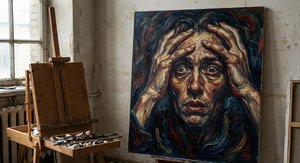
Figurative Expressionism: Emotional Intensity & Subjective Reality in 20th-Century Art
Explore the powerful world of Figurative Expressionism with ArtsDot. Discover key artists like Kirchner & Beckmann, understand its emotional depth, and learn how to collect this influential 20th-century art movement.
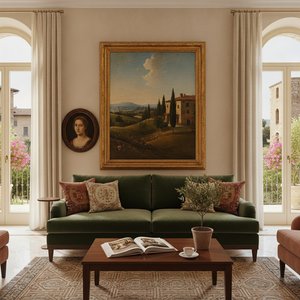
The Art of Italian Living: Transform Your Home with Timeless Landscapes and Renaissance Masterpieces
Elevate your home with the timeless romance of Italy. Discover expert-curated, hand-painted Italian landscapes and Renaissance-inspired masterpieces. From bespoke oil reproductions to custom portraits from photos, transform your space with elegance and artistic passion.