 Preview
 Send
Send Share
Share
 Details

 Download
 Similars
 X-Ray
X-Ray Diaporama
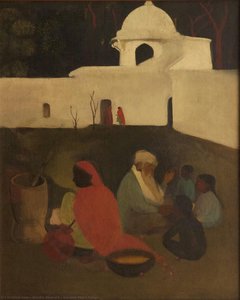
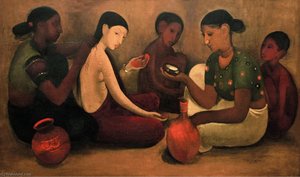
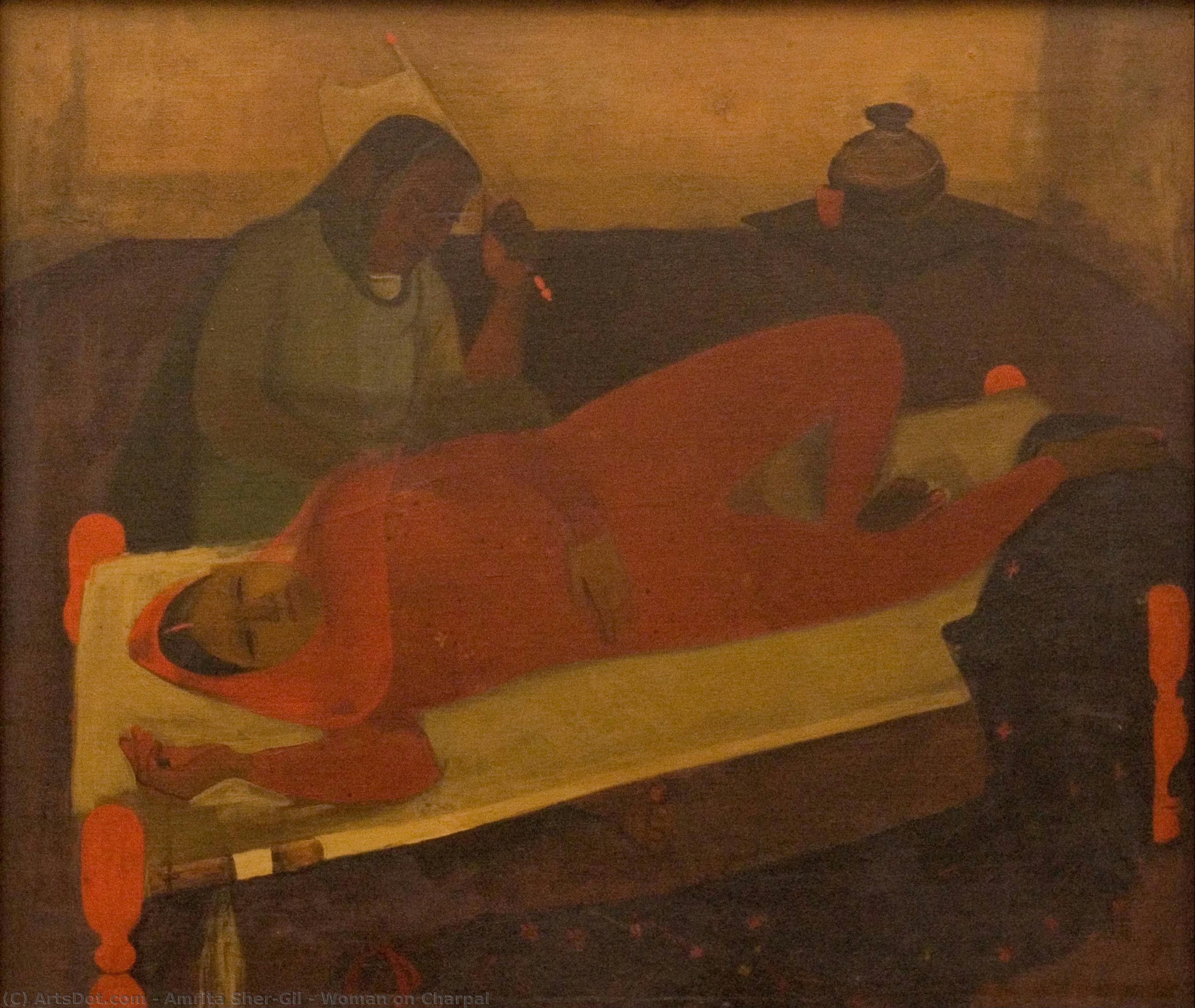
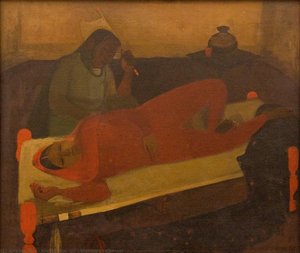
Woman on Charpai
 Acrylic On Canvas
- WallArt
- Post-Impressionism
 1938
1938 850.0 x 724.0 cm
 National Gallery of Modern Art
 Read More
Hand Made Oil Reproduction
Hand-painted oil on canvas in your size and frame, made to order by our artists. ( Buy Print Buy Image)




P118B $10

P118H $10

P118W $10

P438Z $10

P508JH $12

P508YH $12

P805H $10

P805Z $10

P919BZ $10

P919G $10

P919XJ $10

P959ZH $10

P968JZ $12

W106C $8

W218G $10

W218JH $8

W218Y $10

W307PJ $10

W316G $10

W316PJ $8

W316Y $10

W398PJ $8

W4111J $10

W500HY $15

W500JH $15

W692G $12

W849H $8

W940BG $15

W953PJ $8




Pick from our preset sizes that match the artwork's original proportions.

You may enter your own dimensions to fit a specific frame or space. If your selected size does not match the original image's proportions, we will either crop the artwork or extend the painting with additional hand-painted elements. A digital mockup will be sent for your approval before production begins.
Please note that the on-screen preview does not reflect the actual cropping or extension. Only the mockup will accurately show the final composition.
While custom sizes are available, we recommend selecting a dimension from the predefined list to preserve the original proportions.
After order, ArtsDot.com team will email client for instructions and provide a mockup preview
Worldwide Delivery () in 3/4 weeks instead of standard 5 weeks. (16 August). No compromise on quality.

Free Worldwide Express Shipping

High-Quality Linen Canvas

Full Shipping Insurance

Customs Tax Refund Guarantee

True Color Matching Guarantee

60-Day Return Policy (Defects Only)

100% Money-Back Guarantee

Bulk Discount Offer
 Glass option is only available in size under 110 CM

Woman on Charpai
Reproduction Medium
Reproduction Size
-


Total Price
$ 288
Artwork Description
The Enigmatic Figure of Amrita Sher-Gil’s *Woman on Charpai*
Amrita Sher-Gil's 1940 painting, *Woman on Charpai*, isn’t merely a depiction of a domestic scene; it’s a profound meditation on femininity, desire, and the evolving identity of India in the early 20th century. Painted during a pivotal period of transition for the artist – she had returned to her homeland after years of artistic training in Europe – the work embodies a fascinating synthesis of Western influences and deeply rooted Indian traditions. Sher-Gil, already recognized for her bold approach to portraying women with an unprecedented frankness and psychological depth, here presents a scene both familiar and subtly subversive. The painting captures a moment of quiet repose within a traditional Indian household, yet it’s imbued with a palpable sense of unspoken tension and burgeoning sensuality.
The central figure, draped in a vibrant red sari – a color universally associated with passion and fertility in India – reclines gracefully on a *charpai*, a woven straw bed that speaks to the enduring comfort and practicality of rural life. Her posture is languid, almost defiant, suggesting a quiet assertion of her presence within this domestic sphere. Her gaze is averted, hinting at an inner world of thoughts and emotions, while the attendant, positioned slightly off-center, observes her with a mixture of attentiveness and perhaps a touch of resignation. The composition itself—the diagonal sweep of the woman’s body across the canvas—creates a dynamic tension that draws the viewer's eye and invites interpretation.
A Fusion of Styles: Post-Impressionism Meets Indian Miniature
Sher-Gil masterfully blends elements of post-impressionist painting with the stylized aesthetic of traditional Indian miniature art. The flattened perspective, reminiscent of works by Gauguin, lends a sense of immediacy and emotional intensity to the scene. The use of bold colors – the fiery red of the sari contrasting against the earthy tones of the background – is characteristic of both movements. However, Sher-Gil departs from purely Western conventions by incorporating elements borrowed from Indian miniature painting: the elongated figures, the expressive faces, and the narrative quality embedded within the composition. The inclusion of a small pot and a hand fan subtly references domestic rituals and the daily routines of rural life.
Her technique is equally compelling. Sher-Gil employs layered brushstrokes to build up texture and depth, creating a rich surface that invites close examination. The visible marks of her hand are not concealed but rather celebrated, adding to the painting’s sense of immediacy and authenticity. The skillful rendering of fabric—the folds of the sari, the texture of the *charpai*—demonstrates her technical mastery and her keen eye for detail.
Symbolism and Emotional Resonance
Beyond its formal elements, *Woman on Charpai* is laden with symbolic meaning. The red sari, as mentioned earlier, represents desire and passion, but it also signifies the woman’s marital status and her role within the family. The attendant's posture—a slight frown, a distant gaze—suggests a complex relationship of service and perhaps even unspoken longing. The painting captures a fleeting moment of anticipation, a pregnant pause before action, hinting at a story that remains largely unsaid. It’s a portrait not just of a woman, but of an entire cultural context – the shifting dynamics between tradition and modernity, between public and private, between observer and observed.
Sher-Gil's work stands as a testament to her ability to capture the complexities of human experience with remarkable sensitivity and insight. *Woman on Charpai* is more than just a beautiful painting; it’s a window into a bygone era, a poignant reflection on the lives of women in India, and a powerful statement about the enduring legacy of artistic innovation.
Related Artworks

Artist Biography
A Life Bridging Worlds: The Story of Amrita Sher-Gil
Amrita Sher-Gil, a name synonymous with the dawn of modern Indian art, was an artist whose brief but incandescent career left an indelible mark on the cultural landscape. Born in Budapest in 1913 to a fascinatingly diverse parentage – Umrao Singh Sher-Gil Majithia, a Sikh aristocrat and scholar, and Marie Antoinette Gottesmann, a Hungarian Jewish opera singer – her life was destined to be one of compelling contrasts. This unique heritage instilled within her a sensibility that would profoundly shape her artistic vision, allowing her to navigate the complexities of identity and belonging with remarkable depth. From an early age, Amrita displayed a precocious talent for painting, receiving formal lessons at eight years old. Her childhood in Budapest exposed her to the rich tapestry of European art and culture, while summers spent in India ignited a burgeoning fascination with its vibrant traditions and social realities. The guidance of her uncle, Ervin Baktay, an Indologist, proved pivotal; he recognized her potential and provided critical feedback, laying a strong foundation for her artistic development.From Parisian Studios to the Indian Soul
Amrita’s formal training led her to Paris in 1929, where she enrolled at the Académie de la Grande Chaumière under Pierre Vaillent and Lucien Simon, later attending the École des Beaux-Arts. Immersed in the bohemian atmosphere of the city, she absorbed the influences of European modernism, particularly the works of Paul Cézanne and Paul Gauguin. However, a profound shift occurred upon her return to India in 1934. This wasn’t merely a geographical relocation; it was an artistic homecoming. Inspired by the grandeur of Mughal paintings, the delicate lyricism of Pahari miniatures, and the ancient frescoes of Ajanta, Amrita began to explore Indian subjects with newfound fervor. She sought to capture the essence of everyday life – the quiet dignity of rural communities, the intimate moments shared between women, the raw beauty of the Indian landscape. This marked a turning point in her artistic journey, as she consciously moved away from purely Western styles and embarked on a quest to forge a uniquely Indian visual language.A Distinctive Style: Color, Form, and Psychological Depth
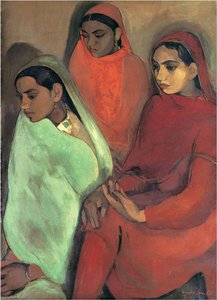
Amrita Sher-Gil’s style is instantly recognizable for its bold use of color, simplified forms, and expressive figures. She possessed an extraordinary ability to convey psychological depth in her portraits, capturing not just the physical likeness of her subjects but also their inner lives, their hopes, and their struggles. Her paintings are characterized by a sense of quiet intensity, a melancholic beauty that resonates with viewers even today. Works like “Young Girls” (1932), which garnered international acclaim – winning a gold medal and election as an associate of the Grand Salon in Paris – demonstrate her mastery of composition and color. “Self Portrait (7)” and "Sleep" further showcase her evolving artistic vision, revealing a willingness to experiment with form and explore themes of identity and sensuality. She didn’t merely depict what she saw; she imbued her paintings with emotion, creating works that are both visually stunning and deeply moving.Legacy and Lasting Impact
Amrita Sher-Gil's tragically short life – she died in 1941 at the age of 28 – belies the immense impact she had on Indian art. She is rightfully regarded as a pioneer of modern Indian painting, bridging Western artistic techniques with indigenous traditions and paving the way for future generations of artists. Her work subtly critiqued social inequalities and explored themes of identity, gender, and class in colonial India, making her an artist ahead of her time. Today, her paintings are among the most valuable by Indian women painters, a testament to their historical significance and artistic merit. Beyond her technical skill, Amrita Sher-Gil’s legacy lies in her ability to capture the soul of India – its beauty, its complexity, and its enduring spirit. Her personal letters, revealing complex relationships including same-sex affairs, offer further insight into the artist's life and perspective, adding another layer to the understanding of this remarkable woman and her art. She remains an icon, a symbol of artistic innovation and cultural fusion, whose work continues to inspire and captivate audiences around the world.Major Works
- Young Girls (1932): A pivotal early work that brought her international recognition.
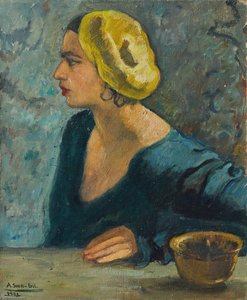
- Self Portrait (7): Demonstrates her evolving style and exploration of identity.
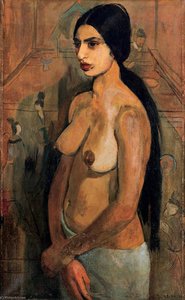
- Sleep (1933): A poignant nude portrait reflecting her unique artistic vision.
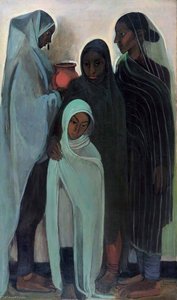
- Village Scene (1936-37): Captures the essence of rural Indian life with remarkable sensitivity.
- Three Women (1934): A powerful depiction of female companionship and resilience.
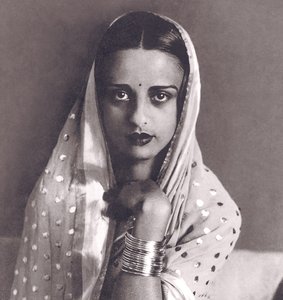
Amrita Sher-Gil
1913 - 1941 , Slovakia
Quick Facts
- Artistic Movement Or Style: Modern Indian art, Avant-garde
- Artists Or Movements Influenced By This Artist: Modern Indian artists
- Artists Who Influenced This Artist:
- Paul Cézanne
- Paul Gauguin
- Date Of Birth: January 30, 1913
- Date Of Death: December 5, 1941
- Full Name: Amrita Sher-Gil
- Nationality: Hungarian-Indian
- Notable Artworks:
- Young Girls
- Self Portrait (7)
- Sleep
- Place Of Birth: Budapest, Slovakia
Related Articles
Raja Ravi Varma: Bridging Tradition & Modernity in 19th-Century Indian Art
Explore the life & art of Raja Ravi Varma, a pioneer who fused European techniques with Indian iconography. Discover his iconic paintings, lasting legacy, and influence on modern Indian art at ArtsDot.
Post-Impressionism's 10 Defining Masterpieces: Art for Your Home |
Journey through Post-Impressionism's 10 defining masterpieces – Van Gogh, Monet & more. Explore iconic paintings, art history & find museum-quality reproductions for your home at . Discover all masterpieces online!
Beyond Impressionism: Exploring Emotional Depth & Formal Innovation in Post-Impressionist Art
Explore the profound emotional depth & formal innovations of Post-Impressionism with our expert guide. Discover Cézanne, Van Gogh, Gauguin & more. Learn about art history, collecting, and investing in this pivotal movement.
Beyond Light & Color: Impressionism vs. Post-Impressionism for the Discerning Collector
Explore the nuances of Impressionism & Post-Impressionism with . Expert insights for collectors on style, investment, and acquiring museum-quality reproductions.
Beyond Impressionism: Exploring the Emotional Depth of Post-Impressionist Painting
Explore the profound emotional depth & innovative techniques of Post-Impressionism with ArtsDot. Discover Cézanne, Van Gogh, Gauguin & more – and their lasting impact on modern art.