 Preview
 Send
Send Share
Share
 Details

 Download
 Similars
 X-Ray
X-Ray Diaporama
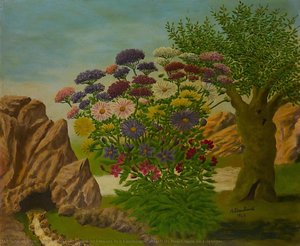
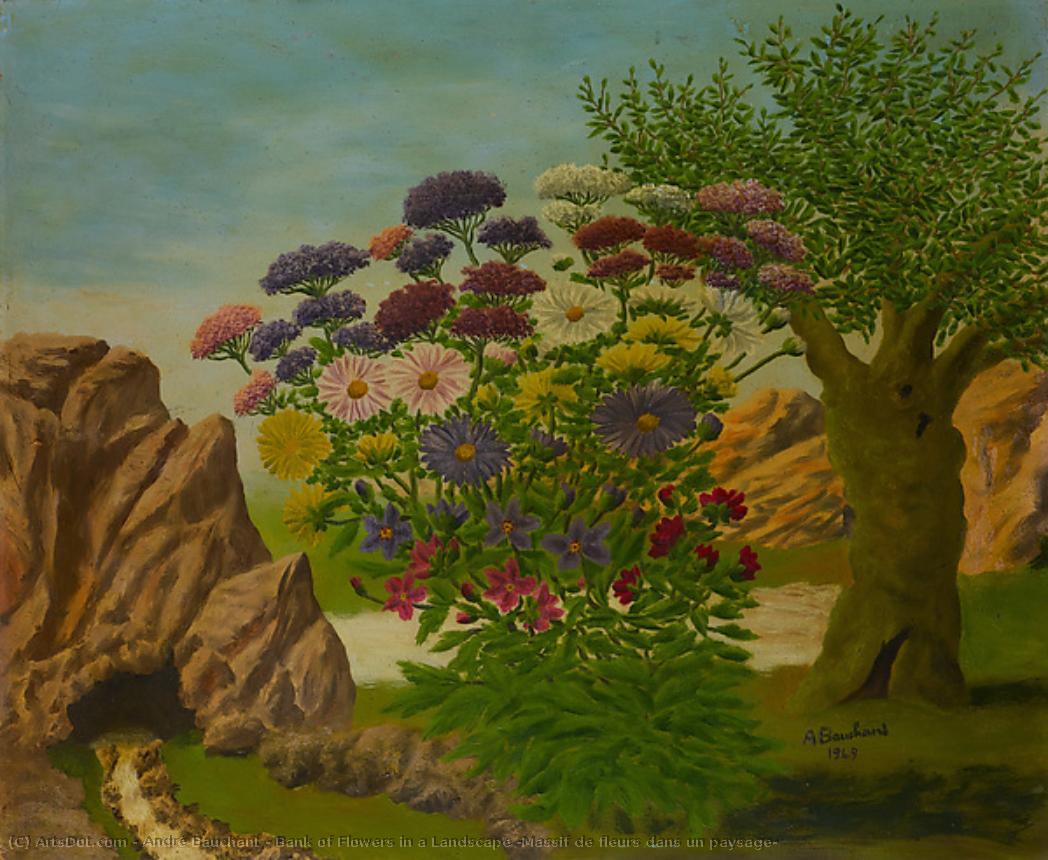
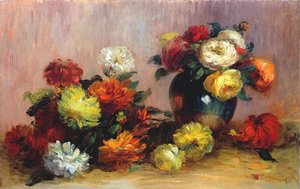
Bank of Flowers in a Landscape (Massif de fleurs dans un paysage)


 Read More
Giclée / Art Print
Museum-quality giclée or canvas print with fast production and flexible finish options. ( Buy Hand Made Painting Buy Image)




































Pick from our preset sizes that match the artwork's original proportions.

You may enter your own dimensions to fit a specific frame or space. If your selected size does not match the original image's proportions, we will either crop the artwork or extend the image with a mirrored or solid-fill edge. A digital mockup will be sent for your approval before production begins.
Please note that the on-screen preview does not reflect the actual cropping or extension. Only the mockup will accurately show the final composition.
While custom sizes are available, we recommend selecting a dimension from the predefined list to preserve the original proportions.
Worldwide Delivery () in 2 weeks instead of standard 4/5 weeks. (1 September)

Free Worldwide Express Shipping

High-Quality Linen Canvas

Full Shipping Insurance

Customs Tax Refund Guarantee

True Color Matching Guarantee

60-Day Return Policy (Defects Only)

100% Money-Back Guarantee

Bulk Discount Offer
 Glass option is only available in size under 110 CM

Bank of Flowers in a Landscape (Massif de fleurs dans un paysage)
Giclée / Art Print
Reproduction Size
-


Total Price
$ 63
Related Artworks
Artist Biography
A Poetic Vision of Myth and Landscape
André Bauchant stands as a singular, luminous figure within the realm of French naïve art, a painter who achieved profound artistic renown without ever having sought formal academic training. Born on April 24, 1873, in Château-Renault, Indre-et-Loire, his early life was deeply rooted in the rhythms of the earth. As the son of a gardener, Bauchant spent his formative years immersed in the meticulous observation of nature, an experience that would later instill within his work a profound appreciation for botanical detail and the quiet majesty of the landscape. Before he ever picked up a brush to pursue fame, he was a man of the soil, operating a family nursery and finding purpose in the cultivation of life.
The trajectory of his life shifted irrevocably under the shadow of World War I. Drafted into the army, Bauchant found himself far from the tranquil gardens of his youth, yet it was during this period of conflict that his latent artistic inclinations began to surface. His service as a mapmaker allowed him to hone a precise and disciplined approach to drawing, a skill that would become the foundation of his visual language. When he returned to civilian life in 1919, he faced the heartbreaking reality of seeing his family’s nursery destroyed. This loss prompted a relocation to Auzouer-en-Touraine, where working on local farms provided the fertile ground for a new kind of growth: his emergence as a dedicated painter.
The Awakening of a Naïve Master
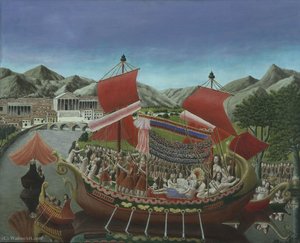
Bauchant’s true artistic awakening arrived in 1921 at the Salon d'Automne, a pivotal moment that introduced his monumental work, Ulysses and the Sirens, to the wider art world. Alongside contemporaries such as Henri Rousseau and Camille Bombois, Bauchant helped define a movement that celebrated the raw, unadusted beauty of the "naïve" style. His work possessed a unique ability to bridge the gap between the humble reality of rural life and the grand, sweeping narratives of human history. This duality became his hallmark, as he moved seamlessly from depicting lush, vibrant floral still lifes to recreating the epic struggles of biblical and mythological legends.
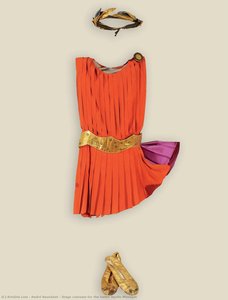
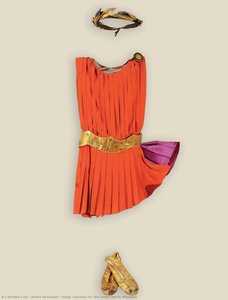
The recognition Bauchant received was nothing short of extraordinary, drawing the attention of some of the most influential figures of the twentieth-century avant-garde. The legendary architect Le Corbusier became an ardent admirer and collector, even co-authoring an article about the artist for the journal L'Esprit Nouveau. This endorsement cemented Bauchant’s place within the modern movement, proving that his "primitive" aesthetic held deep intellectual and structural resonance. Furthermore, the great impresario Diaghilev recognized the theatrical potential in Bauchant’s compositions, commissioning him to design sets and costumes for Stravinsky’s Apollo Musagète, a testament to the artist's ability to translate myth into visual spectacle.
Legacy of Color and Symbolism
As his career matured, Bauchant’s subject matter evolved from the grandiosity of epic myths toward more intimate, yet equally symbolic, explorations of nature. His later works often featured landscapes imbued with a quiet, spiritual resonance, where figures moved through sun-drenched meadows or alongside tranquil waters. He favored unglazed colors and a meticulous attention to detail that allowed every petal and leaf to vibrate with life. Through the lens of his unique perspective, the natural world became a stage for the eternal, where a simple bank of flowers could carry the same weight as a classical fresco.
The historical significance of André Bauchant lies in his ability to transcend the boundaries of his self-taught origins to touch upon the universal. His influence reached far beyond the borders of France, with his works featured in major exhibitions across Europe and even in prominent American museums like the Museum of Modern Art in New York. Today, he is remembered not merely as a painter of landscapes, but as a poet of the canvas, an artist who could find the divine within the garden and the epic within the everyday. His legacy remains a testament to the power of observation, memory, and the enduring allure of myth.
andré bauchant
1873 - 1958
Quick Facts
- Artistic Movement Or Style: Naive Painter
- Artists Or Movements Influenced By This Artist: ['Fauvism']
- Artists Who Influenced This Artist:
- Le Corbusier
- Henri Rousseau
- Date Of Birth: April 24, 1873
- Date Of Death: August 12, 1958
- Full Name: André Bauchant
- Nationality: French
- Notable Artworks:
- Les amoureux auprès des fleurs
- Les chasseurs dans les bois de la Blutière
- Place Of Birth: Château-Renault, Indre-et-Loire
Related Articles
Impressionistic Landscapes: 10 Masterpieces That Changed Art & Decor
Journey into the heart of Impressionism! Explore 10 masterpieces by Monet, Renoir & Degas that revolutionized landscape art. Discover their stories, techniques & find museum-quality reproductions to elevate your home decor on ArtsDot.com.
Impressionist Landscapes: 10 Masterpieces for Your Home | ArtsDot
Journey through 10 iconic Impressionist landscapes by Monet, Renoir & Degas. Explore the history, techniques & emotions behind these masterpieces. Find museum-quality reproductions for your home at ArtsDot.com – where art comes to life! Discover all masterpieces on ArtsDot.com
Echoes of Arcadia: Nostalgia & Transformation in Vintage Landscape Art
Explore the evocative world of vintage landscape art! Discover the history, artists & emotional power behind masterpieces from the Hudson River School & beyond. Expert insights for collectors & enthusiasts.
Beyond the Horizon: A Curated Guide to Integrating Post-Impressionist Landscapes into Modern Interiors
Transform your home with the emotive power of Post-Impressionist landscapes. Discover expert tips on selecting hand-painted oil reproductions to create a soulful, vibrant interior that reflects your unique style and connection to nature.

Evocations of Place: A Historical Journey Through Landscape Art
Explore the rich history of landscape art with ArtsDot. Discover renowned artists, movements like Impressionism & Romanticism, and expert guidance for collecting timeless pieces. Find your perfect serene escape today!