 Preview
 Send
Send Share
Share
 Details

 Download
 Similars
 X-Ray
X-Ray Diaporama
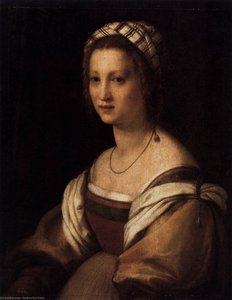
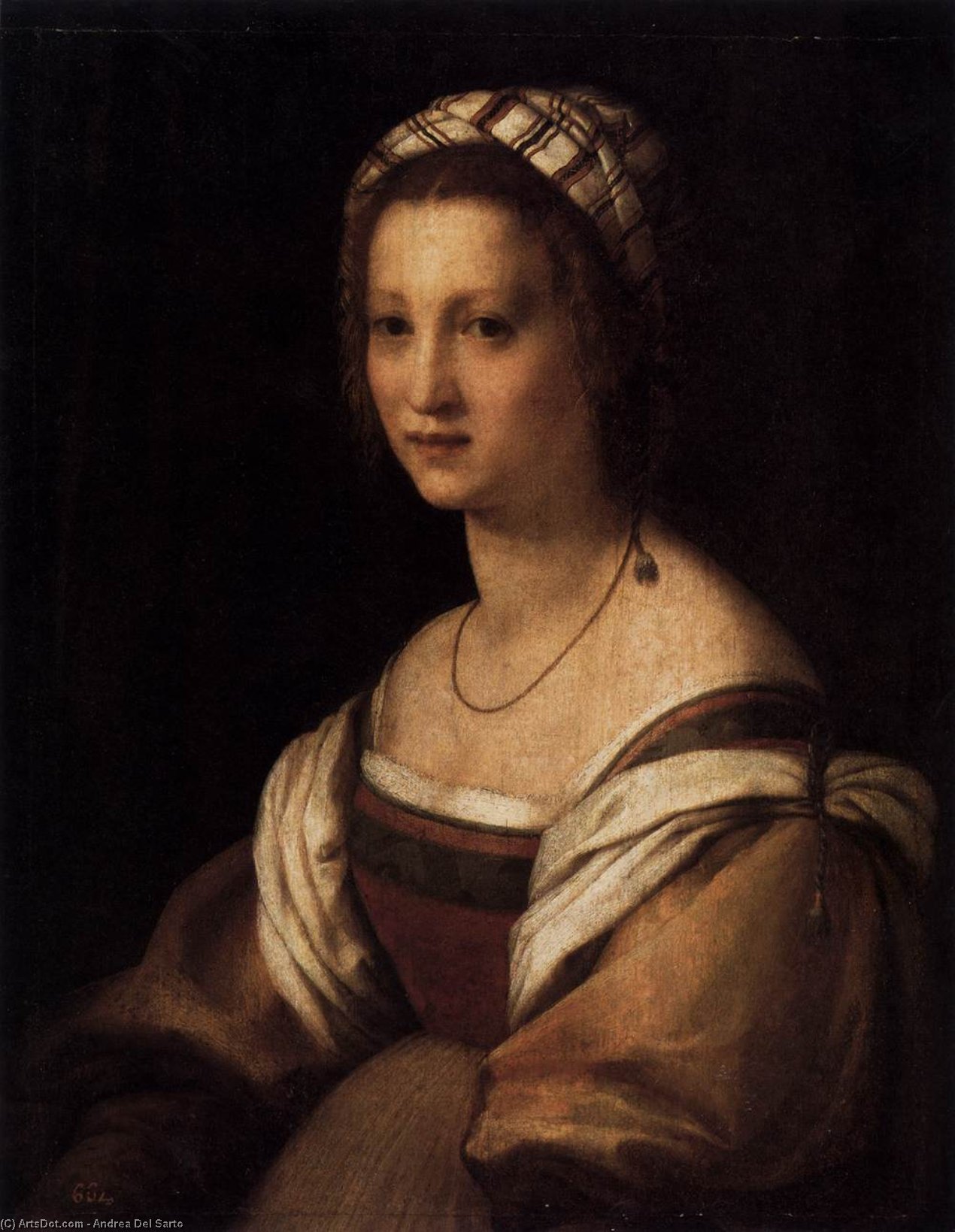
Portrait of the Artist's Wife
 Oil On Panel
- Italian High Renaissance
 1513
1513 73.0 x 56.0 cm
 Museo del Prado
 Read More
Hand Made Oil Reproduction
Hand-painted oil on canvas in your size and frame, made to order by our artists. ( Buy Print Buy Image)




P118B $10

P118H $10

P118W $10

P438Z $10

P508JH $12

P508YH $12

P805H $10

P805Z $10

P919BZ $10

P919G $10

P919XJ $10

P959ZH $10

P968JZ $12

W106C $8

W218G $10

W218JH $8

W218Y $10

W307PJ $10

W316G $10

W316PJ $8

W316Y $10

W398PJ $8

W4111J $10

W500HY $15

W500JH $15

W692G $12

W849H $8

W940BG $15

W953PJ $8




Pick from our preset sizes that match the artwork's original proportions.

You may enter your own dimensions to fit a specific frame or space. If your selected size does not match the original image's proportions, we will either crop the artwork or extend the painting with additional hand-painted elements. A digital mockup will be sent for your approval before production begins.
Please note that the on-screen preview does not reflect the actual cropping or extension. Only the mockup will accurately show the final composition.
While custom sizes are available, we recommend selecting a dimension from the predefined list to preserve the original proportions.
After order, ArtsDot.com team will email client for instructions and provide a mockup preview
Worldwide Delivery () in 3/4 weeks instead of standard 5 weeks. (16 August). No compromise on quality.

Free Worldwide Express Shipping

High-Quality Linen Canvas

Full Shipping Insurance

Customs Tax Refund Guarantee

True Color Matching Guarantee

60-Day Return Policy (Defects Only)

100% Money-Back Guarantee

Bulk Discount Offer
 Glass option is only available in size under 110 CM

Portrait of the Artist's Wife
Reproduction Medium
Reproduction Size
-


Total Price
$ 263
Artwork Description
A Window Into Domestic Tranquility: Andrea Del Sarto’s Portrait of the Artist's Wife
The Museo del Prado in Madrid houses one of the most celebrated portraits of the Renaissance, Andrea del Sarto’s “Portrait of the Artist’s Wife,” painted in 1513. More than just a depiction of a woman—Sofonisba Anguissola’s wife—the painting embodies the ideals of humanist art and offers a profound glimpse into the domestic life of Florentine nobility during a period marked by intellectual ferment and artistic innovation. Del Sarto, considered one of the masters of grisaille fresco technique, approached this commission with meticulous care. Unlike vibrant color palettes favored by contemporaries like Raphael or Michelangelo, he opted for monochrome painting—a deliberate choice that underscores the importance of form and texture over superficial visual appeal. This technique, perfected by artists like Piero della Francesca and Giovanni Battista Baldelli, involved applying thin layers of pigment onto primed wood panels, creating an illusion of depth through subtle gradations of tone. The artist skillfully rendered the woman’s skin with meticulous detail, capturing the nuances of light and shadow to achieve a remarkable sense of realism—a hallmark of Renaissance portraiture. The composition itself is deceptively simple yet powerfully expressive. Anguissola sits calmly in a chair draped in dark fabric, her gaze directed towards the viewer with an air of quiet confidence. The checkered headband she wears serves as a subtle visual motif, echoing patterns found throughout Florentine interiors and symbolizing order and stability—values central to humanist thought. Del Sarto’s masterful use of chiaroscuro—the dramatic interplay between light and dark—further enhances the painting's emotional impact. Light illuminates Anguissola’s face and hands, highlighting her beauty and conveying a sense of serenity, while shadows envelop the background, creating an atmosphere of intimacy and seclusion. Beyond its technical brilliance, “Portrait of Sofonisba Anguissola” resonates with symbolic significance. It represents not merely a likeness but also an idealized vision of feminine virtue—a concept championed by humanist philosophers like Pico della Mirandola who argued for the inherent dignity and potential of human beings, regardless of gender. The painting’s stillness speaks to the Renaissance preoccupation with contemplation and inner harmony—a reaction against the turbulent political landscape of Italy at the time. It stands as a testament to Del Sarto's ability to capture not only physical appearance but also psychological character—a feat that continues to captivate audiences centuries later.- Artist: Andrea del Sarto
- Year Painted: 1513
- Medium: Oil on Panel
- Location: Museo del Prado, Madrid, Spain
Related Artworks
Artist Biography
early life and training
andrea del sarto, a prominent figure in italian high renaissance, was born on july 16, 1486, in gualfonda, near florence. his early life led him to become an apprentice to an orfèvre, followed by training under the painter and wood sculptor gian barile. later, he worked with piero di cosimo and raffaellino del garbo.artistic career
andrea's collaboration with franciabigio led to their first joint project, the baptism of christ, for the scalzo congregation in florence. this marked the beginning of a long series of monochromatic frescoes in grisaille. as time passed, andrea developed his unique style, eventually joining the arte dei medici e degli speziali in 1508.notable works and commissions
- the holy family, a painting commissioned by zanobi strozzi for the chapel at his villa of rovezzano, now housed in the pinacoteca of the gallerie nazionali di arte antica (palazzo barberini) in rome, italy.
- cenacolo di andrea del sarto, a fresco covering over 40 square meters, depicting jesus and his disciples during the last supper, located at the museo del cenacolo di andrea del sarto in florence.
- storie di miracoli di san filippo benizzi, a series of frescoes for the loggia dei servi di maria, showcasing his early skill with monochromatic grisaille.
legacy and influence
despite being overshadowed by contemporaries like leonardo da vinci, michelangelo, and raphael, andrea del sarto's work is characterized by its unique blend of high renaissance and mannerism. his legacy can be seen in the numerous artworks he left behind, each a testament to his skill as a painter, decorator, portraitist, and colorist. view more works by andrea del sarto on ArtsDot: [https://ArtsDot.com/@/andrea del sarto](https://ArtsDot.com/@/andrea-del-sarto) explore the pinacoteca of the gallerie nazionali di arte antica (palazzo barberini) on ArtsDot: /en/art/show/art-d3afwr-en/ read more about andrea del sarto's life and works on wikipedia: [https://fr.wikipedia.org/wiki/andrea_del_sarto](https://fr.wikipedia.org/wiki/andrea_del_sarto)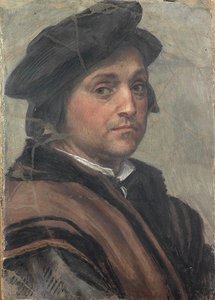
Andrea del Sarto
1486 - 1530 , Italy
Quick Facts
- Artistic Movement Or Style: High Renaissance & Mannerism
- Artists Or Movements Influenced By This Artist: ['Giorgio Vasari']
- Artists Who Influenced This Artist:
- Leonardo da Vinci
- Raphael
- Gian Barile
- Date Of Birth: July 16, 1486
- Date Of Death: September 29, 1530
- Full Name: Andrea d'Agnolo di Francesco di Luca
- Nationality: Italian
- Notable Artworks:
- The Last Supper
- Holy Family
- Saint John the Baptist
- Place Of Birth: Florence, Italy
Related Articles
Andrea del Sarto: Florentine Grace, Technical Mastery & Artistic Ambition
Explore the life & art of Andrea del Sarto, a Florentine Renaissance master renowned for harmonious compositions & technical brilliance. Discover his frescoes, portraits, and lasting influence on art history.
The Subtleties of Shade: Exploring Monochrome's Enduring Power in Art History & Contemporary Practice
Explore the captivating world of monochrome painting! Discover its rich history, from Renaissance chiaroscuro to contemporary minimalism. Uncover the emotional power and artistic techniques behind this enduring art form.
Monochrome Masters: 10 Artworks That Define Color Intensity |
Explore 10 iconic monochrome artworks – from Yves Klein to Rothko – that masterfully showcase color intensity. Discover the stories behind these timeless paintings & find museum-quality reproductions for your home at .

Monochrome Visions: Exploring the Aesthetic & Historical Significance of Black & White Photography
Explore the rich history & artistic power of black and white photography. From early techniques to iconic masters like Ansel Adams, discover why monochrome continues to captivate art lovers today. Expert insights for collectors.
Prado Masterpieces: Explore 25 Iconic Artworks & Bring Spanish Beauty Home
Journey through 25 Prado Museum masterpieces! Explore Velázquez, Goya & El Greco's iconic Spanish art. Discover the stories behind these timeless paintings and find museum-quality reproductions for your home at ArtsDot.com.