 Preview
 Send
Send Share
Share
 Details

 Download
 Similars
 X-Ray
X-Ray Diaporama
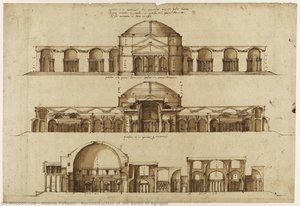
Reconstruction of the Baths of Agrippa


 Read More
Hand Made Oil Reproduction
Hand-painted oil on canvas in your size and frame, made to order by our artists. ( Buy Print Buy Image)




P118B $10

P118H $10

P118W $10

P438Z $10

P508JH $12

P508YH $12

P805H $10

P805Z $10

P919BZ $10

P919G $10

P919XJ $10

P959ZH $10

P968JZ $12

W106C $8

W218G $10

W218JH $8

W218Y $10

W307PJ $10

W316G $10

W316PJ $8

W316Y $10

W398PJ $8

W4111J $10

W500HY $15

W500JH $15

W692G $12

W849H $8

W940BG $15

W953PJ $8




Pick from our preset sizes that match the artwork's original proportions.

You may enter your own dimensions to fit a specific frame or space. If your selected size does not match the original image's proportions, we will either crop the artwork or extend the painting with additional hand-painted elements. A digital mockup will be sent for your approval before production begins.
Please note that the on-screen preview does not reflect the actual cropping or extension. Only the mockup will accurately show the final composition.
While custom sizes are available, we recommend selecting a dimension from the predefined list to preserve the original proportions.
After order, ArtsDot.com team will email client for instructions and provide a mockup preview
Worldwide Delivery () in 3/4 weeks instead of standard 5 weeks. (16 August). No compromise on quality.

Free Worldwide Express Shipping

High-Quality Linen Canvas

Full Shipping Insurance

Customs Tax Refund Guarantee

True Color Matching Guarantee

60-Day Return Policy (Defects Only)

100% Money-Back Guarantee

Bulk Discount Offer
 Glass option is only available in size under 110 CM

Reconstruction of the Baths of Agrippa
Reproduction Medium
Reproduction Size
-


Total Price
$ 263
Artwork Description
Reconstruction of the Baths of Agrippa: A Monumental Vision of Roman Elegance
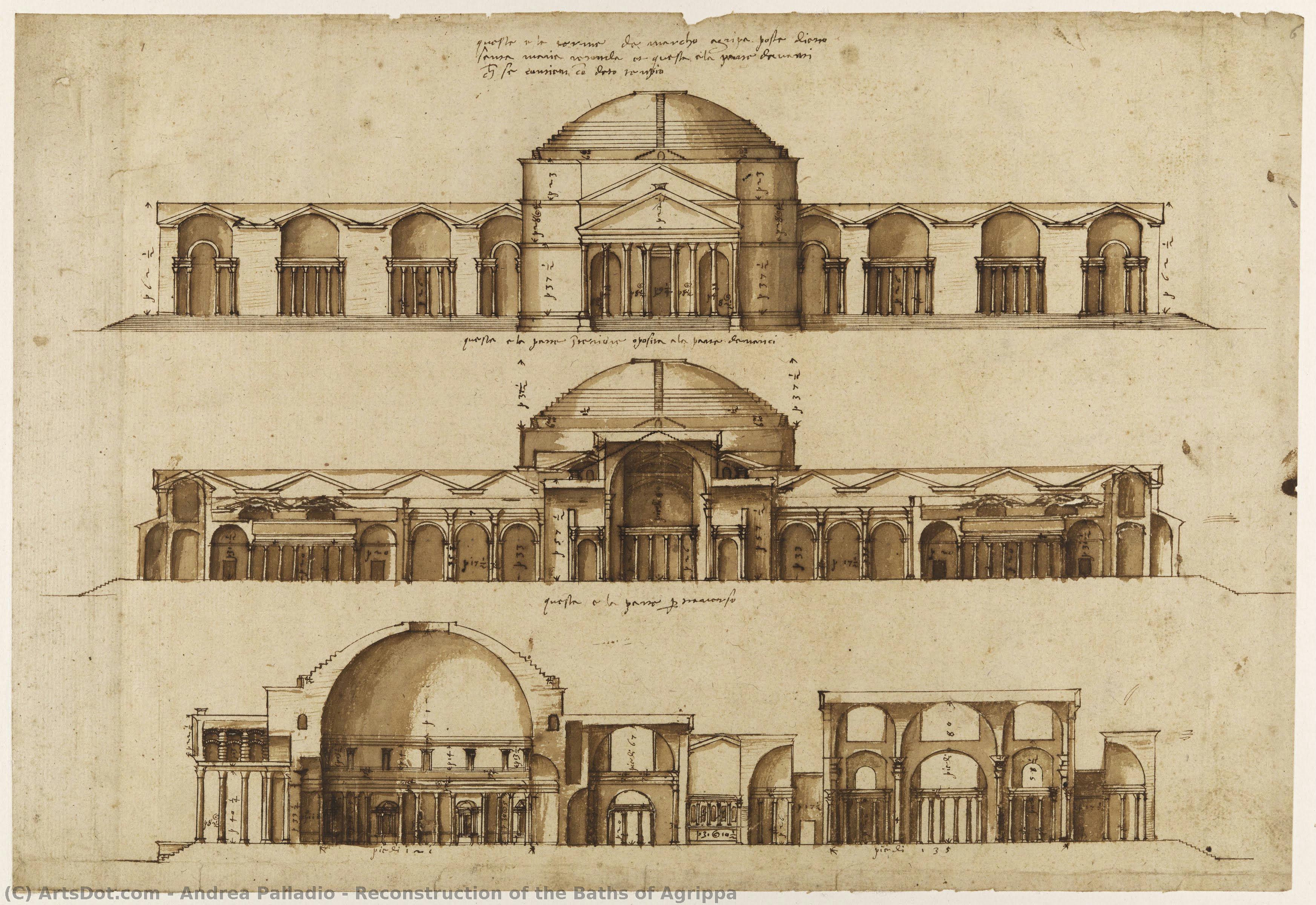
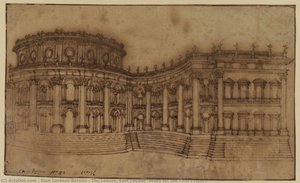
The drawing before us offers an astonishing glimpse into the architectural ambition of Andrea Palladio, capturing not merely the physical structure but also the spirit of classical design. Executed in 1560, this meticulous plan—a cornerstone of Palladio’s oeuvre—represents more than just a building; it embodies the ideals of harmony, proportion, and rational order that defined Renaissance Italy. The image itself is presented as three horizontal panels, each meticulously detailing a different elevation or section of the Baths of Agrippa complex, demonstrating Palladio's dedication to precision and capturing the grandeur of Roman engineering.Architectural Precision: Palladian Technique
Palladio’s masterful draughtsmanship—primarily utilizing pen and ink on paper—is immediately apparent. Extensive hatching and crosshatching dominate the composition, skillfully conveying shading and establishing a palpable sense of three-dimensionality. Lines are predominantly dark brown or black, creating dramatic depth and reinforcing perspective, guiding the viewer's eye across the intricate geometric forms of arches, columns, and the monumental dome. The careful rendering of textures—particularly the aged paper surface—adds to the drawing’s authenticity, transporting us back to the Renaissance workshop where Palladio wrestled with capturing the essence of Roman architectural principles. Note the deliberate placement of Latin annotations within each panel; these serve as crucial contextual clues, highlighting Palladio's scholarly engagement with Vitruvius and his unwavering commitment to reviving classical ideals.The Baths: Symbolism of Imperial Power
Beyond its technical brilliance, the Baths of Agrippa holds profound symbolic significance. Constructed by Marcus Vipsanius Agrippa—Augustus’s loyal ally—during the reign of Augustus, it represented a triumph of Roman engineering and artistic innovation. As Dio recounts, Agrippa undertook three ambitious projects simultaneously: the Domus Aurea (the Golden House), the Pantheon, and the Baths of Agrippa. The Baths were conceived as a space for leisure, social interaction, and physical rejuvenation—a microcosm of imperial power and sophistication. The inclusion of monumental sculpture, notably Lysippus’s Apoxyomenos, underscored this ambition, elevating the complex to the status of an artistic masterpiece. Furthermore, Palladio's design mirrored the grandeur of earlier Roman baths, demonstrating his understanding of architectural history and his desire to emulate the best achievements of antiquity.Influence and Legacy: Palladianism's Enduring Impact
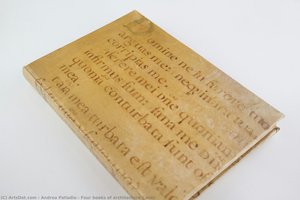
Andrea Palladio’s influence extended far beyond the immediate context of Rome and Vicenza. His groundbreaking treatise, *I quattro libri dell’architettura* (The Four Books of Architecture), published in 1570, codified his architectural principles—symmetry, proportion, and harmony—establishing them as benchmarks for generations of architects to come. Palladio's style resonated across Europe, inspiring figures like Inigo Jones in England and Thomas Jefferson in America, shaping the aesthetic landscape of the Baroque and Neoclassical eras. The Baths of Agrippa itself stands as a testament to this enduring legacy—a tangible embodiment of Palladio’s vision for creating buildings that elevate the human spirit and celebrate the beauty of classical form.Related Artworks


Artist Biography
Early Life and Training
- Born: Andrea di Pietro della Gondola, November 30, 1508, Padua, Italy
- Died: August 19, 1580
- Origin: Venetian Republic
- Early experiences as a stonecutter in the workshop of Bartolomeo Cavazza da Sossano.
- Moved to Vicenza and worked as a stonemason, creating monuments and decorative sculptures influenced by Michele Sanmicheli's mannerist style.
- Apprenticeship provided foundational skills in construction and sculpture.
Influence of Gian Giorgio Trissino and Early Architectural Development
- Significant mentorship under humanist poet and scholar Gian Giorgio Trissino from 1538-1539.
- Trissino introduced Palladio to classical literature, arts, and sciences, fostering an appreciation for Vitruvius's architectural principles.
- First opportunity to study ancient architecture in Rome under Trissino’s guidance.
- Named "Palladio" by Trissino, alluding to the Greek goddess Pallas Athena and a character in Trissino's play.
The Barbaro Brothers and the Development of Palladian Style
- Patronage of Cardinal Daniele Barbaro and Marcantonio Barbaro significantly shaped Palladio’s career.
- Further study of classical architecture in Rome, 1554.
- Became "proto della serenissima" (chief architect of the Republic of Venice).
- Development of his distinctive architectural style based on Roman and Greek principles.
- Emphasis on symmetry, proportion, and harmony inspired by Vitruvius.
Major Works and Architectural Contributions
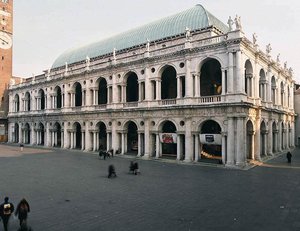
- Basilica Palladiana (Vicenza): Notable for its integration of Gothic structure with classical elements. Construction spanned decades and continued after his death.
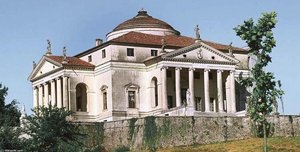
- Villa Rotonda (near Vicenza): A quintessential example of Palladian architecture, featuring a symmetrical plan and four porticos facing the cardinal directions.
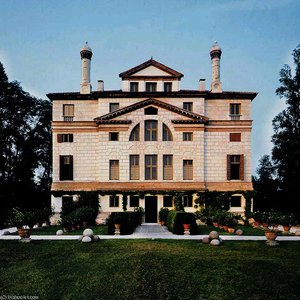
- Villa Foscari (near Venice): Celebrated for its elegant simplicity and harmonious proportions.
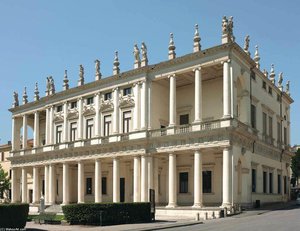
- Palazzo Chiericati (Vicenza): Demonstrates Palladio’s mastery of classical facades and interior design.
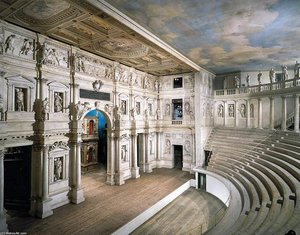
- Teatro Olimpico (Vicenza): An innovative early example of a permanent enclosed theater, featuring illusionistic scenery.
Legacy and Historical Significance
- Authored I quattro libri dell'architettura ("The Four Books of Architecture"), published in 1570, which codified his architectural principles and became highly influential across Europe.
- Palladianism: His style profoundly influenced architecture for centuries, inspiring architects like Inigo Jones in England and Thomas Jefferson in America.
- UNESCO World Heritage Sites: The City of Vicenza and the Palladian Villas of the Veneto are recognized as a UNESCO World Heritage Site, acknowledging the exceptional architectural legacy.
- Considered one of the most influential architects in Western history due to his innovative designs and enduring impact on architectural theory and practice.
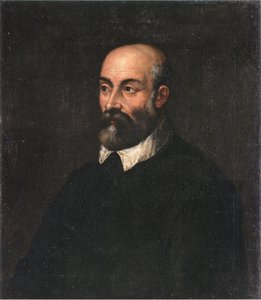
Andrea Palladio
1508 - 1580 , Italy
Quick Facts
- Artistic Movement Or Style: Renaissance architecture
- Artists Or Movements Influenced By This Artist:
- Camillo Mariani
- Giovanni Battista Zelotti
- Jacopo Sansovino
- Artists Who Influenced This Artist:
- Vitruvius
- Michele Sanmicheli
- Date Of Birth: November 30, 1508
- Date Of Death: August 19, 1580
- Full Name: Andrea Palladio
- Nationality: Italian
- Notable Artworks:
- Reconstruction of Baths of Agrippa
- Palazzo Chiericati
- Villa Foscari
- View of the ''scaenae frons''
- Place Of Birth: Padua, Italy
Related Articles
The Nuances of Graphite: Exploring Emotional Depth & Technical Mastery in Pencil Drawing
Explore the captivating world of graphite drawing! Discover its rich history, master essential techniques like chiaroscuro, and learn how artists evoke emotion through this timeless medium. Expert insights for art enthusiasts.

The Enduring Power of Line: Exploring Themes & Techniques in Drawing Across Art History
Explore the rich history of drawing! Discover key techniques like linear perspective & iconic artists from the Renaissance to modern times. Enhance your art appreciation with ArtsDot.
Frederick Bridgman: Anatomical Mastery & the Evolution of Figure Drawing Instruction
Explore the anatomical mastery of George B. Bridgman & his revolutionary figure drawing techniques. Discover how his methods transformed art instruction and continue to inspire artists today. Learn more at ArtsDot.
Bartolomeo Pinelli: Neoclassical Linearity & Roman Topography of Memory
Explore the captivating world of Bartolomeo Pinelli, a master Italian engraver renowned for his evocative Roman scenes & historical narratives. Discover his art and legacy with ArtsDot.
British Museum Masterpieces: Explore 25 Iconic Artworks & Decor Inspiration
Journey through 25 iconic artworks at the British Museum, London! Explore masterpieces from Egyptian sculptures to Renaissance paintings & uncover their stories. Find museum-quality art reproductions and curated decor ideas on ArtsDot.com.