The Rise of Academic Art & Bridgman’s Early Influences
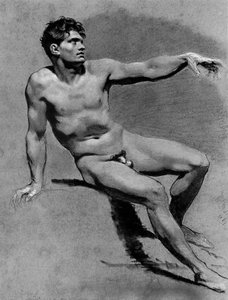 Academic Male Nude
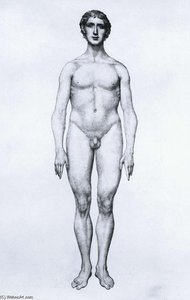
Explore Pierre-Paul Prudhon’s Academic Male Nude – a striking charcoal study of classical beauty & anatomical precision. A masterful example of Neoclassical realism.
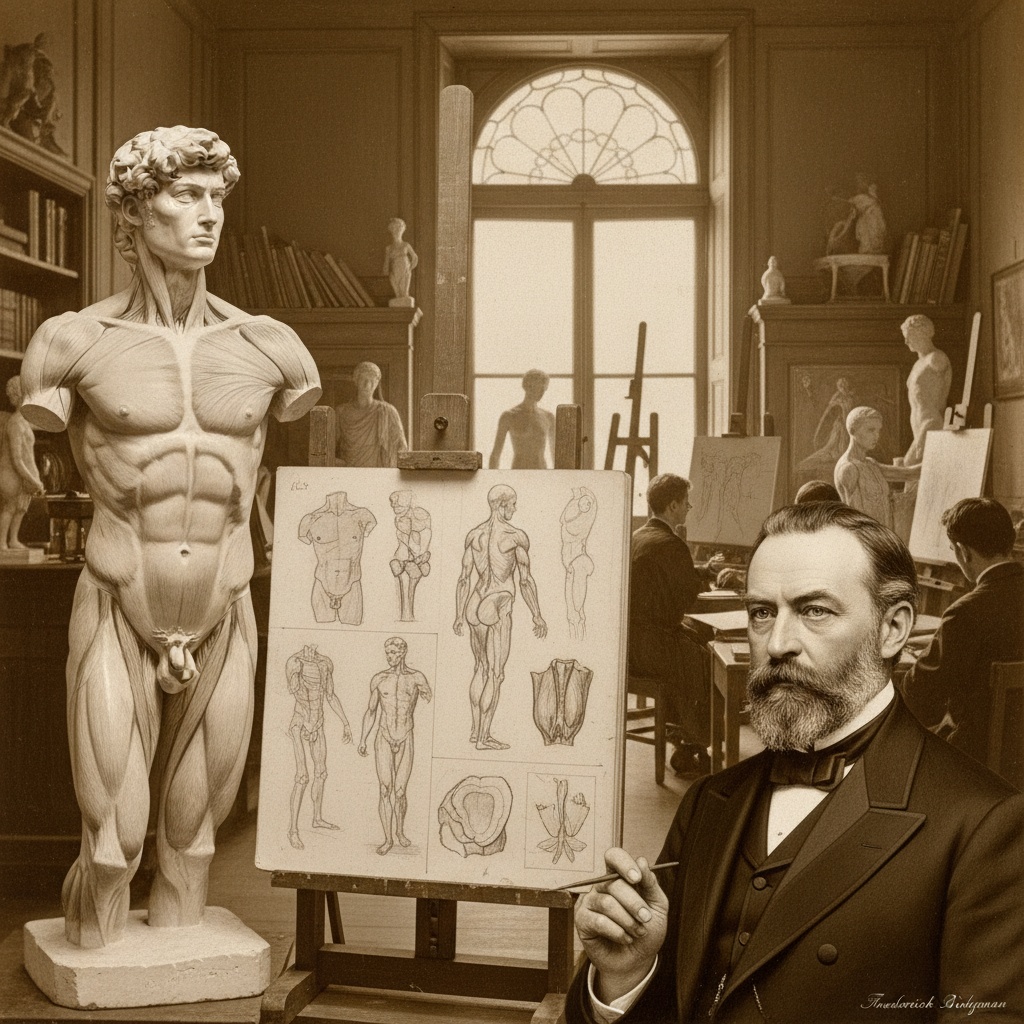
The late 19th and early 20th centuries witnessed a fascinating tension between the established traditions of academic art and the burgeoning forces of modernism. To understand George Brant Bridgman, however, one must first appreciate the world from which he emerged – a world steeped in the ideals of classical beauty, anatomical precision, and rigorous training. Academic art, born from the Renaissance academies of Italy, prioritized emulation of masterworks and a systematic approach to artistic skill. This wasn’t merely about copying; it was about understanding the underlying principles that governed form, light, and composition. Bridgman didn't exist in isolation; he was a product of this system, inheriting its dedication to anatomical study but ultimately forging his own path within it. The influence of artists like Pierre-Paul Prudhon, whose “Academic Male Nude” exemplifies the Neoclassical pursuit of idealized form, is palpable in Bridgman’s early work. Prudhon's charcoal studies, with their meticulous attention to muscle structure and subtle gradations of tone, represent a lineage that Bridgman would both honor and revolutionize. The emphasis on life drawing as fundamental—the direct observation of the human body—was paramount, and it was within this context that Bridgman’s unique pedagogical approach began to take shape.
Bridgman's Constructive Anatomy: A Revolutionary Approach
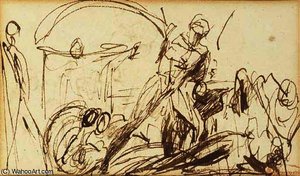
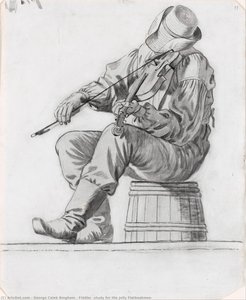
While many instructors focused on surface appearances, Bridgman sought a deeper understanding – a “constructive” anatomy that revealed the underlying structure of the human form. His seminal work, *Constructive Anatomy*, published in 1920 (and still widely available today), wasn’t simply another textbook filled with anatomical diagrams. It was a guide to *thinking* about the body as a series of interconnected masses, forces, and movements. Bridgman rejected the idea of passively copying outlines; instead, he advocated for building the figure from its skeletal foundation, then layering on muscle groups, understanding how they interacted and influenced each other in motion. This approach wasn’t merely theoretical. Bridgman's drawings themselves—dynamic sketches capturing figures in various poses—demonstrated his method in action. He broke down complex forms into simpler geometric shapes, allowing students to visualize the underlying structure before rendering details. This emphasis on simplification and dynamic analysis set him apart from many of his contemporaries.
Key Principles of Bridgman’s Method – Wedging, Rhythm, and Form
At the heart of Bridgman's technique lay several core principles. “Wedging,” perhaps the most distinctive element, involved visualizing the body as a series of interlocking wedges—forms that pushed and pulled against each other, creating tension and dynamism. This wasn’t about literal wedges but rather a conceptual framework for understanding how weight distribution and movement affected the figure's overall structure. Equally important was “rhythm,” the sense of flow and continuity within the form. Bridgman encouraged students to see the body as a unified whole, with lines that curved and flowed seamlessly from one part to another. He believed that mastering rhythm was essential for creating figures that felt alive and natural. Finally, his emphasis on *form*—the three-dimensional quality of the figure—was crucial. He wasn’t interested in flat representations; he wanted artists to understand how light interacted with the body's surfaces, revealing its volume and depth. This required a deep understanding of anatomy, perspective, and chiaroscuro.
Beyond the Textbook: Bridgman as an Educator at the Art Students League
George B. Bridgman wasn’t just a brilliant theorist; he was also a legendary instructor. For nearly fifty years, he taught at the Art Students League of New York, shaping the minds of generations of artists. His classroom was famously demanding—students were expected to work tirelessly, constantly sketching and analyzing the human form. Accounts from former students paint a picture of a rigorous but inspiring teacher who wasn’t afraid to offer blunt criticism. As Jerry Weiss recounts, Bridgman would often wipe away a student's drawing with his chamois cloth, then quickly redraw it himself, demonstrating the correct approach. While seemingly harsh, this direct intervention was intended to accelerate learning and instill a deep understanding of anatomical principles. He wasn’t interested in fostering individual styles; he wanted every artist to master the fundamentals before exploring their own creative vision. His influence extended far beyond the League, with his books becoming essential resources for artists around the world.
The Enduring Legacy & Contemporary Relevance of Bridgman’s Techniques
Even today, nearly a century after the publication of *Constructive Anatomy*, Bridgman's methods remain remarkably relevant. His emphasis on understanding the underlying structure of the human form continues to resonate with artists across various disciplines—from illustrators and sculptors to comic book creators and character designers. The principles of wedging, rhythm, and form are timeless, providing a solid foundation for creating believable and dynamic figures. While digital tools have transformed the art world, Bridgman’s core concepts remain essential. Artists like John Singer Sargent, whose “Figure Studies of a Male Youth” showcase a similar dedication to anatomical precision and expressive line work, demonstrate that the pursuit of mastery is independent of medium. Bridgman's legacy isn’t simply about replicating his style; it’s about embracing his approach—a commitment to rigorous study, dynamic analysis, and a deep understanding of the human form. His books continue to be studied by aspiring artists worldwide, proving that the principles of constructive anatomy are as vital today as they were in the early 20th century.
Exploring Bridgman's Work Through Notable Examples & Comparisons
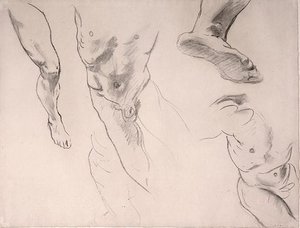 Figure studies of a male youth
Exquisite Figure Studies by John Singer Sargent. Captivating nude studies of a male youth – explore this masterful drawing's form & detail. #Sargent #nudeart #drawing
To truly appreciate Bridgman’s impact, it’s helpful to examine his work alongside that of his contemporaries and successors. Comparing his dynamic sketches with the more idealized forms found in academic art reveals his unique approach—a focus on movement, tension, and underlying structure. While artists like William-Adolphe Bouguereau prioritized surface beauty and classical perfection, Bridgman sought a deeper understanding of the body’s mechanics. Similarly, contrasting his work with Sargent's figure studies highlights their shared dedication to anatomical accuracy but also reveals distinct stylistic differences—Sargent’s emphasis on painterly brushwork versus Bridgman’s focus on linear clarity. Ultimately, Bridgman’s legacy lies in his ability to demystify the human form, providing artists with a practical and accessible method for mastering figure drawing. His books and techniques continue to inspire and empower artists today, ensuring that his influence will endure for generations to come.