 Preview
 Send
Send Share
Share
 Details

 Download
 Similars
 X-Ray
X-Ray Diaporama
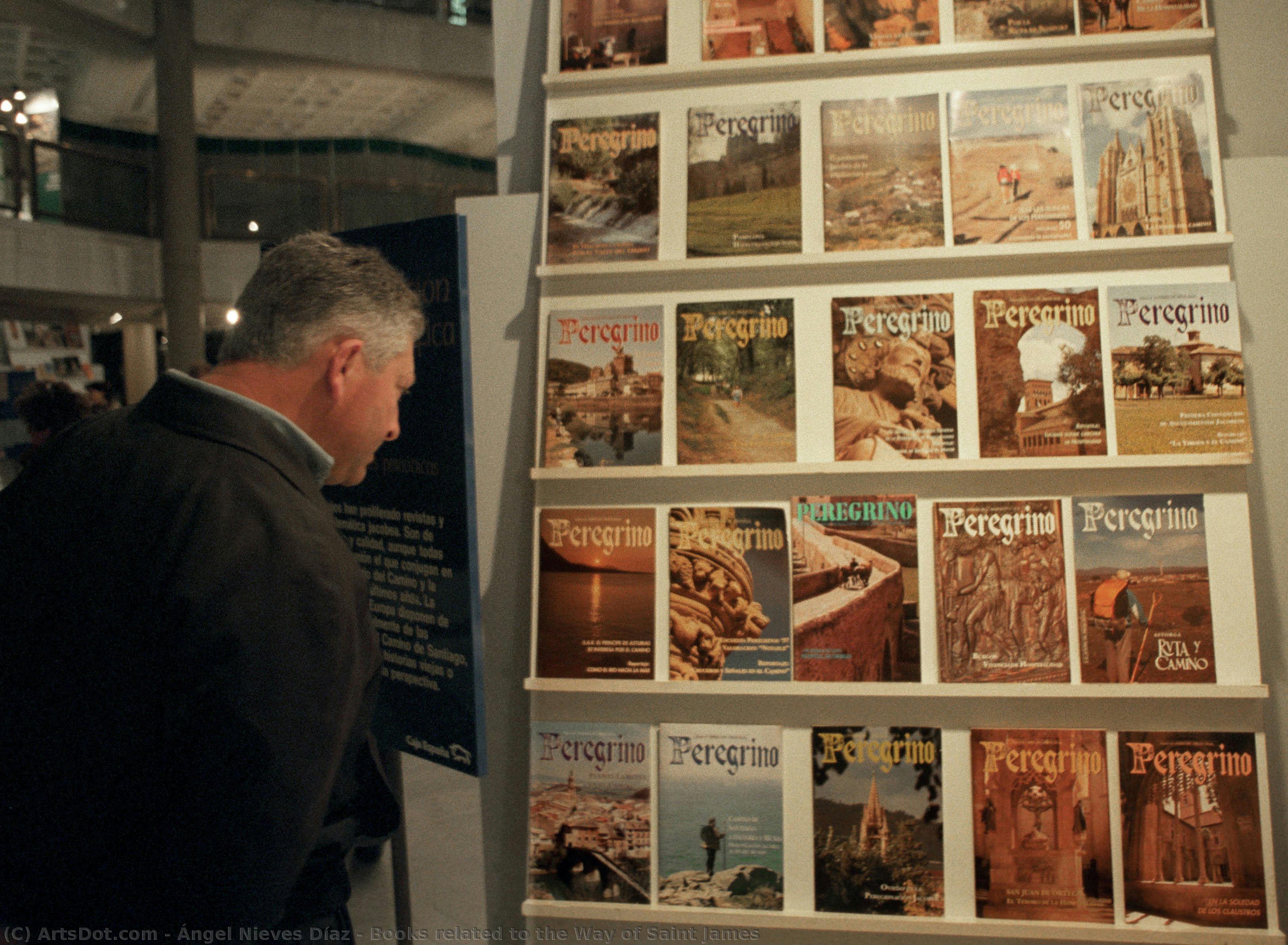
Books related to the Way of Saint James


 Read More
Giclée / Art Print
Museum-quality giclée or canvas print with fast production and flexible finish options. ( Buy Hand Made Painting Buy Image)




P118B $10

P118H $10

P118W $10

P438Z $10

P508JH $12

P508YH $12

P805H $10

P805Z $10

P919BZ $10

P919G $10

P919XJ $10

P959ZH $10

P968JZ $12

W106C $8

W218G $10

W218JH $8

W218Y $10

W307PJ $10

W316G $10

W316PJ $8

W316Y $10

W398PJ $8

W4111J $10

W500HY $15

W500JH $15

W692G $12

W849H $8

W940BG $15

W953PJ $8




Pick from our preset sizes that match the artwork's original proportions.

You may enter your own dimensions to fit a specific frame or space. If your selected size does not match the original image's proportions, we will either crop the artwork or extend the image with a mirrored or solid-fill edge. A digital mockup will be sent for your approval before production begins.
Please note that the on-screen preview does not reflect the actual cropping or extension. Only the mockup will accurately show the final composition.
While custom sizes are available, we recommend selecting a dimension from the predefined list to preserve the original proportions.
Worldwide Delivery () in 2 weeks instead of standard 4/5 weeks. (4 September)

Free Worldwide Express Shipping

High-Quality Linen Canvas

Full Shipping Insurance

Customs Tax Refund Guarantee

True Color Matching Guarantee

60-Day Return Policy (Defects Only)

100% Money-Back Guarantee

Bulk Discount Offer
 Glass option is only available in size under 110 CM

Books related to the Way of Saint James
Giclée / Art Print
Reproduction Size
-


Total Price
$ 63
A Silent Dialogue of Paper and Spirit
In the quietude of "Books related to the Way of Saint James," the viewer is invited into a sanctuary of contemplation, where the weight of history rests upon the spines of carefully arranged volumes. Painted in 1999 by the evocative Puerto Rican artist Ángel Nieves Díaz, this work transcends a mere still life of library shelves to become a meditation on pilgrimage and the preservation of sacred knowledge. The composition presents a diverse collection of books, some standing tall in disciplined rows while others lie horizontally, suggesting a moment of interrupted study or the natural accumulation of wisdom over centuries. Each book, varying in size, hue, and orientation, contributes to a rhythmic visual texture that draws the eye through a labyrinth of parchment and leather.
The technique employed by Díaz breathes life into the inanimate, utilizing light and shadow to create a profound sense of depth and presence. Through masterful brushwork, the artist captures the tactile reality of the collection—the weathered edges of aged paper, the subtle sheen of bindings, and the way light dances across the foreground elements before receding into the mysterious depths of the shelves. This interplay of light does more than define form; it imbues the scene with a spiritual luminosity, echoing the enlightenment sought by those who walk the historic Camino de Santiago. The arrangement feels both organic and intentional, as if each volume holds a specific station in a larger, cosmic narrative of faith and discovery.
Beyond its aesthetic charm, the painting serves as a powerful symbol of the intellectual and spiritual journey. The reference to the Way of Saint James connects the physical act of reading to the metaphorical pilgrimage of the soul. Just as a traveler traverses rugged landscapes to find meaning, the seeker of knowledge navigates the layers of text and history contained within these pages. For the collector or interior designer, this piece offers more than just decoration; it provides an anchor of intellectual depth and serene atmosphere. It is a work that commands attention in a study, a library, or a sophisticated living space, acting as a window into a world where time slows down, allowing for the profound reflection that only great art can inspire.
Related Artworks
Artist Biography
Joan Mitchell: A Life Painted in Color and Emotion
Born in Chicago in 1925, Joan Mitchell’s journey to becoming a significant figure in post-war American Abstract Expressionism was shaped by a childhood steeped in artistic appreciation. Raised in a household that valued music, literature, and the visual arts—regular visits to museums and symphonies were commonplace—Mitchell developed an early fascination with color and form. This foundation proved crucial as she embarked on her artistic career, initially studying painting at the School of the Art Institute of Chicago, graduating in 1947. A pivotal year for her was the subsequent travel fellowship that took her to France, a period during which her work underwent a dramatic shift towards abstraction. Far from replicating European styles, Mitchell embraced a distinctly personal approach, drawing inspiration from her own experiences and emotions rather than traditional subject matter.
Returning to New York in 1949, she quickly integrated herself into the vibrant “New School” of painters and poets, finding kinship with artists like Jackson Pollock and Mark Rothko. Her early work was characterized by a raw energy and a willingness to experiment with materials and techniques. A defining moment arrived in 1951 when her paintings were included in the prestigious “9th Street Show,” organized by Betty Parsons, which served as a launching pad for many emerging Abstract Expressionists. This exhibition brought her considerable attention and established her reputation within the burgeoning art scene.
Mitchell’s style evolved significantly over her career, moving beyond purely gestural abstraction to incorporate elements of landscape and memory. She was deeply influenced by the natural world—particularly the American Southwest—and translated its rugged beauty, intense light, and vastness onto canvas. Her paintings are not simply representations of landscapes; they are visceral expressions of feeling, imbued with a sense of movement, energy, and emotional intensity. She often described her process as “painting from within,” allowing her subconscious to guide her brushstrokes and color choices. The use of bold, layered colors—often juxtaposed in unexpected ways—became a hallmark of her work, creating dynamic compositions that pulsate with life.
The Influence of Place and Personal Experience
Mitchell’s connection to the landscape was far more profound than mere aesthetic appreciation; it was deeply intertwined with her personal experiences. Her travels throughout the United States, particularly her explorations of the Southwest, profoundly shaped her artistic vision. The stark beauty of the desert—its dramatic light, vast expanses, and rugged terrain—became a recurring subject in her paintings. She sought to capture not just the visual appearance of these places but also their emotional resonance – the sense of solitude, vulnerability, and awe that they evoked.
Furthermore, Mitchell’s life experiences—including her childhood memories, her travels, and her personal relationships—served as a rich source of inspiration. She often drew upon poetry, music, and literature to inform her artistic process, translating these influences into color, texture, and composition. Her paintings are imbued with a sense of memory and nostalgia, reflecting the complex interplay between past and present.
Technique and Materials
Joan Mitchell’s technique was characterized by a layered approach, utilizing both brushstrokes and washes to build up rich surfaces of color. She frequently employed a palette knife to apply thick impasto layers, creating textural contrasts and adding depth to her paintings. Her use of color was particularly innovative—she rarely adhered to traditional color harmonies but instead experimented with unexpected juxtapositions, often using complementary colors in close proximity to create visual tension.
Mitchell worked primarily in oil on canvas, but she also explored other media, including pastel and printmaking. She was known for her meticulous preparation of surfaces—she would often prime her canvases multiple times to achieve the desired texture and luminosity. Her commitment to craftsmanship is evident in the quality of her brushwork and the careful attention to detail that she brought to every painting.
Legacy and Recognition
Despite facing significant challenges as a female artist in a male-dominated field, Joan Mitchell achieved widespread recognition during her lifetime. Her work was exhibited extensively in museums and galleries around the world, and she received numerous awards and commissions. Her paintings are now held in major collections including the Museum of Modern Art (MoMA) in New York, the National Gallery of Art in Washington D.C., and the Tate Modern in London.
Joan Mitchell’s influence on subsequent generations of artists is undeniable. Her willingness to embrace abstraction, her innovative use of color, and her deeply personal approach to painting have inspired countless artists to explore new ways of expressing themselves. She remains a vital figure in the history of American art, celebrated for her bold vision, her emotional intensity, and her enduring legacy.
Della Wells: A Life Woven with Folklore and Resilience
Born in Milwaukee, Wisconsin, in 1951, Della Wells’ artistic journey began not within formal institutions but through a deeply personal process of storytelling. As a child, she created elaborate narratives and characters, fueled by her mother's tales of growing up in North Carolina during the 1920s and 30s—stories that offered an escape from the realities of her family’s struggles. This early imaginative practice became the foundation for her distinctive style of collage art, a medium she embraced with unwavering dedication.
Wells' work is profoundly rooted in folklore and memory. She incorporates elements of her own family history—including stories about civil rights struggles and the resilience of African American communities—into her compositions. Her collages are not simply assemblages of found objects; they are carefully constructed narratives, imbued with symbolism and emotional resonance. She frequently uses materials such as newspaper clippings, fabric scraps, and vintage photographs to create layered images that evoke a sense of time and place.
Wells’ artistic practice is characterized by a remarkable self-sufficiency. She is a self-taught artist who has honed her skills through years of experimentation and observation. Her work has been exhibited in prestigious venues such as Andrew Edlin Gallery, the Museum of Wisconsin Art, and the Portrait Society Gallery at the Outsider Art Fair in New York. Her pieces have garnered critical acclaim and are held in prominent collections, including the Milwaukee Institute of Art and Design.
Bill Viola: The Pioneer of Video Art
Born in 1951 in London, England, Bill Viola emerged as a pivotal figure in the development of video art. His early life was marked by sensitivity and a tendency towards fainting, experiences that profoundly shaped his artistic vision. He studied drawing at Eastbourne College for Art and Design and later psychology and painting at The University of Wales, laying the groundwork for his exploration of human experience through innovative media.
Viola’s career began in the 1970s with a focus on mural painting, a period he considered his apprenticeship. He then moved to the Caribbean island of Grenada and spent seven years immersed in landscape and color studies, eventually gaining recognition within the New York art scene. His breakthrough came with the creation of large-scale videotape installations that enveloped viewers in immersive environments—total works of art designed to evoke profound emotional responses.
Viola’s work often explores themes of birth, death, consciousness, and spirituality. He utilizes state-of-the-art technology to create mesmerizing visual experiences, seamlessly blending image and sound to transport the viewer beyond the realm of the ordinary. His collaborations with figures such as Peter Sellars and Esa-Pekka Salonen have further cemented his legacy as a visionary artist who has expanded the possibilities of video art.

ángel nieves díaz
1951 - 2006 , Puerto Rico
Quick Facts
- Artistic Movement Or Style: Abstract Expressionism
- Artists Or Movements Influenced By This Artist:
- Pollock
- Abstract Expressionism
- Artists Who Influenced This Artist:
- Picasso
- Klee
- Date Of Birth: February 12, 1925
- Date Of Death: 1992
- Full Name: Joan Mitchell
- Nationality: American
- Notable Artworks:
- Winter Dark
- Red Rock
- Blue Hills
- Place Of Birth: Chicago, USA
Related Articles
The Intimate Gaze: Study & Intellectual Pursuit in Western Art
Explore the fascinating history of study and intellectual pursuit in Western art! Discover Renaissance scholars, iconic portraits like Holbein's Erasmus, and Leonardo’s studies – a journey through humanist ideals & artistic mastery. Learn more at ArtsDot.
From Canvas to Celluloid: Exploring Movie & Comic Book Inspirations at
Explore the captivating connection between art & pop culture at ! Discover high-quality reproductions of iconic movie, comic book & fine art pieces. Custom creations available!
Roy Lichtenstein's Masterpieces: 25 Iconic Pop Artworks for Your Home | ArtsDot
Explore Roy Lichtenstein's 25 most iconic Pop Art masterpieces! Discover the stories behind 'Drowning Girl', 'Look Mickey' & more. Find museum-quality reproductions and elevate your home decor with ArtsDot. Explore the full collection online.
Edmund Dulac: A Master of Golden Age Illustration – Exploring Myth, Symbolism & Art Nouveau Legacy
Explore the captivating world of Edmund Dulac, a master of Golden Age illustration! Discover his enchanting fairy tales, Art Nouveau style, and lasting influence on art & design. Learn about *The Rubaiyat* and more.
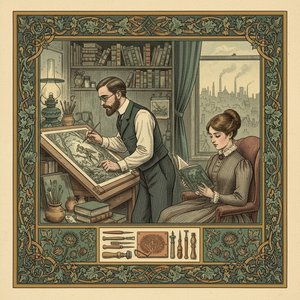
The Refined Aesthetic of Victorian Illustration: A Study in Narrative & Technique
Explore the captivating world of Victorian illustration! Discover Pre-Raphaelite influences, key artists like Rossetti & Stephens, and the era's rich narrative detail. A deep dive for art enthusiasts.