 Preview
 Send
Send Share
Share
 Details

 Download
 Similars
 X-Ray
X-Ray Diaporama
 Stats
StatsPortrait of Johann Joachim Winckelmann
 Neo-Classicism
 1764
1764 97.0 x 71.0 cm
 Read More
Hand Made Oil Reproduction
Hand-painted oil on canvas in your size and frame, made to order by our artists. ( Switch to Print Switch to Digital Image)




































Pick from our preset sizes that match the artwork's original proportions.

You may enter your own dimensions to fit a specific frame or space. If your selected size does not match the original image's proportions, we will either crop the artwork or extend the painting with additional hand-painted elements. A digital mockup will be sent for your approval before production begins.
Please note that the on-screen preview does not reflect the actual cropping or extension. Only the mockup will accurately show the final composition.
While custom sizes are available, we recommend selecting a dimension from the predefined list to preserve the original proportions.
After order, ArtsDot.com team will email client for instructions and provide a mockup preview
Worldwide Delivery () in 3/4 weeks instead of standard 5 weeks. (9 September). No compromise on quality.

Free Worldwide Express Shipping

High-Quality Linen Canvas

Full Shipping Insurance

Customs Tax Refund Guarantee

True Color Matching Guarantee

100-Day Return Policy (Defects Only)

100% Money-Back Guarantee

Bulk Discount Offer
 Glass option is only available in size under 110 CM

Portrait of Johann Joachim Winckelmann
Reproduction Medium
Reproduction Size
-


Total Price
$ 263
Unveiling the Subject
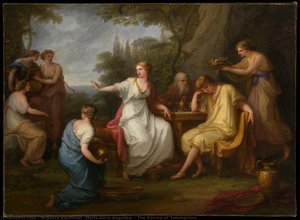
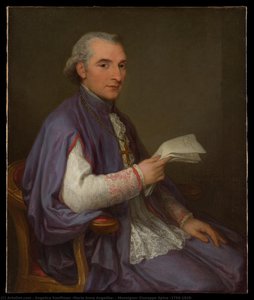
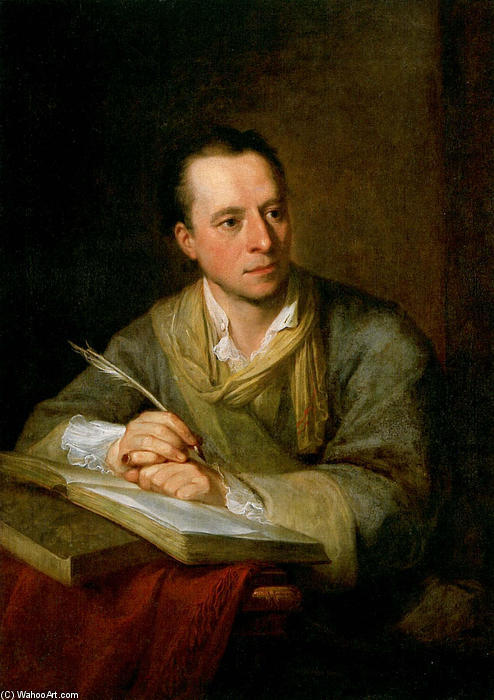
Johann Joachim Winckelmann was a prominent figure in the 18th century, known for his contributions to art history and archaeology. The painting depicts him seated at a desk, surrounded by books and a cup, exuding an air of focus and concentration. Kauffmann's use of light and shadow adds depth and dimension to the composition, drawing the viewer's eye to the subject's introspective expression. Key aspects of the painting include:- The meticulous attention to detail in Winckelmann's attire and the surrounding objects
- The subtle play of light on the subject's face and hands, creating a sense of warmth and intimacy
- The overall atmosphere of serenity and contemplation, inviting the viewer to step into the subject's private world
The enduring appeal of Kauffmann's Portrait of Johann Joachim Winckelmann lies in its masterful blend of artistic technique and historical significance. As a testament to the artist's skill and craftsmanship, this painting continues to inspire and educate art lovers to this day. For more information on Angelica Kauffmann and her works, visit https://ArtsDot.com or explore the resources available on Wikipedia, including the page dedicated to Angelica Kauffmann.
Related Artworks

Artist Biography
A Visionary of the Neoclassical Age
In the vibrant, intellectually charged atmosphere of the eighteenth century, few figures commanded as much respect and grace as Angelica Kauffmann. Born Maria Anna Angelika Kauffmann on October 30, 1741, in Chur, Switzerland, her life was a masterful composition of cultural fluency and artistic ambition. A child prodigy who possessed both musical talent and a precocious command of four languages—German, Italian, French, and English—she moved through the great artistic hubs of Europe with an ease that belied her years. Her early training, overseen by her father, the skilled muralist Joseph Johann Kauffmann, laid the foundation for a career that would transcend the limitations often imposed upon women of her era. By the age of twelve, she was already attracting the attention of noble patrons and clergy, her burgeoning talent acting as a beacon in the competitive art worlds of Italy and England.
Kauffmann’s journey was one of constant movement and profound connection. As she transitioned from her Swiss roots to the bustling streets of London and the classical splendor of Rome, her work began to reflect a deep engagement with the Enlightenment ideals of order, clarity, and classical virtue. Her arrival in London marked a transformative chapter; her debut at the Society of Artists in 1765 signaled the emergence of a professional force that would soon reshape the British art scene. It was during this period that she forged an enduring bond with Sir Joshua Reynolds, a relationship built on mutual artistic respect and shared experimentation with the Neoclassical style. Through her eyes, the ancient legends of Greece and Rome were not merely relics of the past but living, breathing narratives capable of expressing contemporary human emotion.
Mastery of Form and Narrative
The brilliance of Kauffmann’s oeuvre lies in her ability to navigate diverse genres with equal virtuosity. While she was a highly sought-after portraitist, capturing the elegance and social standing of the European elite, it was her history paintings that secured her place in the pantheon of great masters. These works, often centered on classical, literary, or religious themes, utilized soft light and balanced compositions to evoke a sense of timelessness. Whether depicting the stoic virtue of Cornelia Africana or the intimate dignity found in her family portraits, she possessed a unique gift for imbuing her subjects with a serene, psychological depth that resonated with the Neoclassical preference for idealized beauty.
Beyond the canvas, Kauffmann was a pioneer of decorative art, bringing her sophisticated aesthetic to murals and large-scale designs. Her technical skill allowed her to manipulate texture and light, as seen in the delicate rendering of fabrics or the atmospheric landscapes that often served as backdrops to her figures. This versatility ensured that her influence was felt not just in galleries, but in the very fabric of aristocratic interior design. Her ability to blend the monumental scale of history painting with the refined intimacy of portraiture allowed her to speak to both the intellectual and the emotional sensibilities of her audience.
Legacy and Historical Significance
The historical importance of Angelica Kauffmann extends far beyond her individual achievements; she was a trailblazer who shattered the glass ceilings of the eighteenth-century art establishment. In 1768, she achieved the extraordinary distinction of being named one of the two female founding members of the Royal Academy of Art in London, alongside Mary Moser. This milestone was a profound victory for women in the arts, proving that female intellect and technical prowess could hold their own within the most prestigious institutions of the age.
Today, her legacy is preserved in the world's most venerable museums, from the Tate Britain and the Uffizi to the Metropolitan Museum of Art. Her work remains a vital touchstone for understanding the Neoclassical movement—a period defined by a return to classical simplicity and a reverence for antiquity. As we look upon her portraits and historical scenes, we see more than just beautiful images; we see the enduring spirit of an artist who navigated a changing world with unparalleled grace, leaving behind a visual testament to the power of human creativity and the triumph of the artistic will.
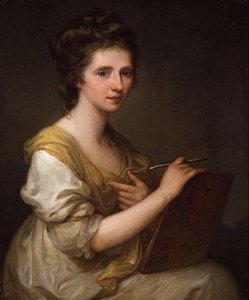
angelica kauffmann (maria anna angelika)
1741 - 1807
Quick Facts
- Artistic Movement Or Style: Neoclassical Painting
- Artists Or Movements Influenced By This Artist: ['Robert Adam']
- Artists Who Influenced This Artist: ['Johann Joseph Kauffmann']
- Date Of Birth: October 30, 1741
- Date Of Death: 1807
- Full Name: Maria Anna Angelika Kauffmann
- Nationality: Swiss
- Notable Artworks:
- The Child Pyrrhos imploring King Glaucus
- Portrait of Teresa Bandettini-Landucci
- Hebe
- Place Of Birth: Chur, Switzerland
Related Articles

Angelica Kauffmann: Neoclassical Visionary & Shaping Artistic Identity
Explore the life & art of Angelica Kauffmann, a pioneering Neoclassical painter. Discover her influence on the Royal Academy, portraiture techniques, and legacy as a champion for women artists in 18th-century Europe.
Timeless Resonance: Exploring Classic Vibe in Art – A Historical & Aesthetic Analysis
Explore the rich history & enduring aesthetic of Classicism art! Discover key movements, iconic artists like Raphael & David, and its lasting influence on Western art. Deepen your appreciation today.
The Enduring Legacy of Classicism: Principles, Evolution & Influence in Western Art
Explore the enduring legacy of Classicism in Western art! Discover its historical context, key principles, iconic masterpieces & lasting influence. Learn about Renaissance and Neoclassical movements with ArtsDot.
The Enduring Legacy of Classical Style: Form, Narrative & Influence in Art
Explore the enduring legacy of classical art – from ancient Greece & Rome to Neoclassicism. Discover key artists, philosophical roots & build a timeless collection with ArtsDot's expert guidance.
Neo-Classicism's Greatest Hits: 10 Masterpieces for Your Home |
Journey through Neo-Classicism's finest! Explore 10 iconic masterpieces by David, Ingres & Canova. Discover art history, techniques & timeless beauty – perfect for inspiring your home decor. Find museum-quality reproductions at