The Foundations of Classical Ideals: Ancient Greece & Rome
Ancient Greek art is the visual and applied arts, as well as the architecture, produced by the Hellenes or Greek peoples from the start of the Iron Age to the Hellenistic period, ending with Roman conquest of Greece at the Battle of Corinth in 146 BC...
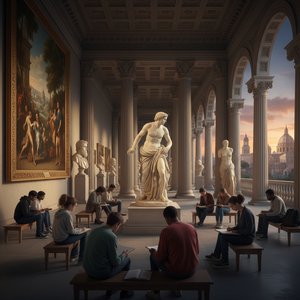
The story of Western art is, in many ways, a continuous conversation with the past—a dialogue initiated most profoundly by the civilizations of ancient Greece and Rome. To understand the enduring appeal of classical style isn’t merely to appreciate aesthetic beauty; it's to grasp a fundamental set of principles concerning human form, proportion, narrative, and the very purpose of art itself. The early Mycenaean cultures laid groundwork with their vase paintings and monumental architecture, hinting at an emerging focus on heroic figures and symbolic representation. However, it was in Classical Greece—particularly during the 5th and 4th centuries BCE—that these nascent ideas blossomed into a fully realized aesthetic. Sculptors sought not simply to replicate the human body but to *idealize* it, striving for perfection through meticulous observation of anatomy and a deep understanding of mathematical ratios like the golden ratio. This pursuit wasn’t about realism in the modern sense; rather, it was an attempt to capture an essential truth—a timeless beauty that transcended individual imperfections. The emphasis on balance, harmony, and clarity became hallmarks of Greek art, influencing everything from pottery decoration to temple design. Roman art, while heavily indebted to its Greek predecessor, added a distinct element: a focus on practicality and civic duty. Portraiture, for example, moved beyond idealized forms to capture the individual characteristics of prominent citizens, serving as both historical records and symbols of power. The architectural innovations—the arch, the dome, concrete—demonstrated a mastery of engineering that allowed for grander, more imposing structures designed to celebrate the empire’s authority.
Idealism Embodied: Philosophical Roots of Classical Art
Idealism in philosophy, also known as philosophical idealism or metaphysical idealism, is the set of metaphysical perspectives asserting that, most fundamentally, reality is equivalent to mind, spirit, or consciousness; that reality or truth is entir...
The artistic choices of ancient Greece and Rome weren't made in a vacuum. They were deeply intertwined with prevailing philosophical currents, most notably the concept of idealism. As understood by thinkers like Plato, idealism posits that reality is fundamentally mental—that true knowledge resides not in the physical world but in the realm of ideas. This belief profoundly shaped artistic representation. Artists weren’t simply depicting what they *saw*; they were striving to capture the perfect forms that existed in this higher realm of consciousness. The human body, for instance, wasn't merely a collection of muscles and bones; it was a vessel for expressing these ideal qualities—beauty, strength, virtue. Indian philosophical traditions, such as Vedanta and Shaiva Pratyabhijña, also explored similar notions of an all-pervading consciousness as the ultimate reality, further demonstrating the universality of this quest for underlying truth. This emphasis on mental constructs explains why classical art often prioritizes form over color or emotional expression. The goal wasn’t to evoke a specific feeling but to present a timeless archetype—a symbol of universal values that resonated with viewers on a deeper level. This pursuit of ideal forms extended beyond sculpture and painting into literature, theatre, and even political thought.
Neoclassicism's Revival: Rediscovering Antiquity in the 18th Century
Neoclassicism, also spelled Neo-classicism, emerged as a Western cultural movement in the decorative and visual arts, literature, theatre, music, and architecture that drew inspiration from the art and culture of classical antiquity. Neoclassicism wa...
Fast forward to the 18th century, and we find a renewed fascination with classical antiquity—a movement known as Neoclassicism. Born in Rome amidst the rediscovery of Pompeii and Herculaneum, Neoclassicism wasn’t simply a stylistic imitation; it was a conscious rejection of the ornate Rococo style that had dominated European art for much of the previous century. The writings of Johann Joachim Winckelmann, who championed Greek art as the pinnacle of aesthetic achievement, played a pivotal role in shaping this revival. His emphasis on “noble simplicity and calm grandeur” resonated with an Enlightenment audience increasingly disillusioned with aristocratic excess and seeking a more rational, ordered world. The Grand Tour—a customary journey undertaken by young European aristocrats—became a crucial catalyst for spreading these ideals. Returning from Italy with newly rediscovered Greco-Roman models, artists began to incorporate classical principles into their own work. Symmetry, balance, and clarity replaced the asymmetry and frivolity of Rococo. Public structures were designed to evoke the grandeur of ancient temples, symbolizing civic pride and moral virtue. This wasn’t merely an artistic trend; it was a cultural expression of Enlightenment values—a belief in reason, order, and the power of human intellect.
Key Artists and Masterpieces Defining the Classical Tradition
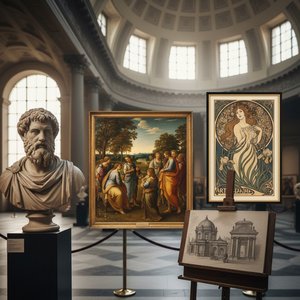
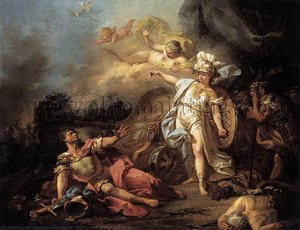
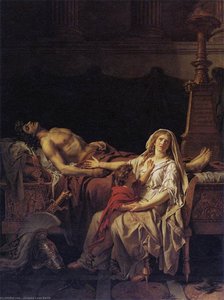
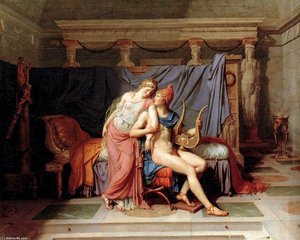
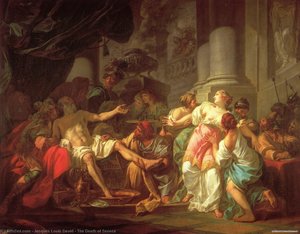
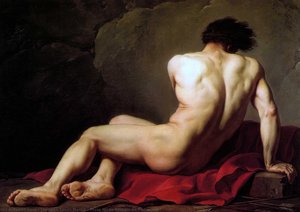
The Neoclassical period produced a constellation of remarkable artists who embodied these ideals. Jacques-Louis David, perhaps the most prominent figure, infused his paintings with a sense of drama, heroism, and civic duty. Works like “Oath of the Horatii” became emblems of sacrifice and patriotism, perfectly aligned with the political upheavals of the French Revolution. David’s meticulous attention to detail, precise draftsmanship, and use of classical motifs set a new standard for academic painting. Other key figures included Niccolò Amastini, whose serene cameos exemplified the elegance and refinement of Italian Neoclassicism, and John William Godward, a Victorian artist famed for his beautiful depictions of women in classical settings. Beyond these painters, sculptors like Antonio Canova revived the art of marble carving, creating works that captured both anatomical precision and emotional restraint. Masterpieces such as “Psyche Revived by Cupid’s Kiss” demonstrate a masterful understanding of form and texture, evoking a sense of timeless beauty. These artists weren't simply copying ancient models; they were reinterpreting them through the lens of their own time, creating works that resonated with contemporary audiences while remaining true to the spirit of classical ideals.
The Enduring Influence: Classicism’s Legacy on Subsequent Movements
The influence of classicism didn't end with Neoclassicism. It continued to permeate Western art for centuries, shaping everything from Romanticism and Realism to Modernism. While Romantic artists rejected the strict rationality of Neoclassicism in favor of emotional expression and individualism, they often drew inspiration from classical mythology and literature. Realist painters, while focused on depicting everyday life, still employed classical principles of composition and form. Even abstract artists like Picasso acknowledged the debt they owed to classical sculpture—particularly its emphasis on geometric shapes and balanced proportions. The underlying principles of classicism—harmony, balance, clarity—remain relevant today, informing contemporary design, architecture, and even advertising. The enduring appeal lies in its ability to transcend specific historical contexts and speak to universal human values. It’s a testament to the power of art to capture not just what *is* but what *ought to be*—a timeless vision of beauty, order, and perfection.
Collecting Classical Art: Building a Timeless Portfolio
For the discerning collector, acquiring classical art represents more than simply owning beautiful objects; it’s investing in a legacy—a connection to centuries of artistic tradition. Whether you're drawn to original sculptures from antiquity or meticulously crafted reproductions, there are numerous avenues for building a timeless portfolio. ArtsDot.com offers a curated selection of handmade oil paintings and museum-quality prints, allowing collectors to experience the beauty of classical art firsthand. Our skilled artists employ traditional techniques—sketching, layering, drying, and finishing—to create reproductions that capture the authentic textures and brushstrokes of the originals. Before shipping, customers receive a preview photo for approval, ensuring complete satisfaction. Beyond reproductions, ArtsDot also offers custom portrait commissions in the style of classical masters, allowing you to personalize your collection with unique artworks. Consider focusing on key artists—David, Canova, Amastini—or exploring specific themes—mythology, portraiture, historical scenes. Building a cohesive collection requires careful research and an understanding of artistic movements. Our team of art consultants is available to provide personalized guidance, helping you navigate the market and build a portfolio that reflects your individual taste and investment goals.