The Foundations of Form: Ancient Greece & the Idealized Human
Ancient Greek art is the visual and applied arts, as well as the architecture, produced by the Hellenes or Greek peoples from the start of the Iron Age to the Hellenistic period, ending with Roman conquest of Greece at the Battle of Corinth in 146 BC...
The story of Western art is, in many ways, a continuous conversation with antiquity – a dialogue initiated by the ancient Greeks. From roughly 750 BCE to the Roman conquest in 146 BCE, Greek artists embarked on an unprecedented exploration of human form and narrative. What distinguishes this period isn’t merely technical skill, but a fundamental shift in perspective: a move towards representing the world not as it *is*, but as it *could be*. This pursuit of idealized beauty wasn't about simple aesthetics; it was deeply intertwined with philosophical ideals of harmony, proportion, and civic virtue. Sculptors like Phidias, though few original works survive directly attributed to him, established canons of bodily perfection that would resonate for centuries. The Doryphoros (Spear-Bearer) by Polykleitos exemplifies this – a mathematical equation rendered in marble, embodying the concept of symmetria*, a balanced and harmonious relationship between all parts of the body. The focus on largely nude male figures wasn’t an expression of mere physicality but a celebration of human potential, intellectual prowess, and athletic achievement. Painting, though less preserved – surviving primarily through vase depictions and later Roman copies – also prioritized narrative clarity and graceful form. The black-figure and red-figure techniques demonstrate not only artistic mastery in depicting scenes from mythology and daily life but also an evolving understanding of perspective and composition.
Roman Echoes: Adaptation, Innovation, and the Preservation of Classical Style
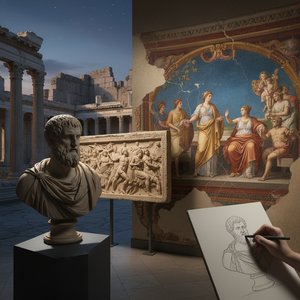
The Roman encounter with Greek art wasn’t one of simple imitation, but rather a dynamic process of adaptation and innovation. Following their expansion across the Mediterranean, Romans were captivated by Greek artistry, often commissioning copies of celebrated sculptures and paintings. However, they weren't content to merely replicate; they infused Greek forms with a distinctly Roman sensibility – a greater emphasis on realism in portraiture, for example, capturing individual features and conveying personality rather than striving for an idealized archetype. Roman architecture also built upon Greek foundations, but introduced groundbreaking techniques like concrete, allowing for the construction of monumental structures such as the Pantheon and vast public baths. The Romans were masterful engineers and pragmatists; their art served a purpose – to glorify the empire, commemorate victories, and project power. Crucially, it was through Roman copies and preservation efforts that much of Greek artistic knowledge survived the intervening centuries. Without these adaptations, the Renaissance rediscovery would have been far more limited.
Renaissance Revival: Rediscovering Antiquity & the Birth of New Masters
Renaissance art (1350 – 1620) is the painting, sculpture, and decorative arts of the period of European history known as the Renaissance, which emerged as a distinct style in Italy in about AD 1400, in parallel with developments which occurred in phi...
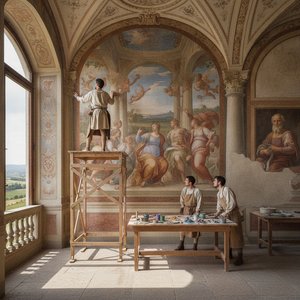
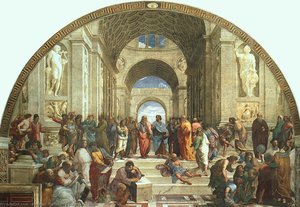
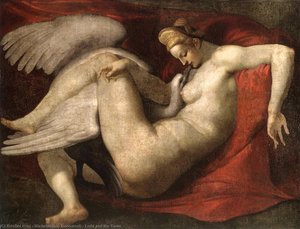
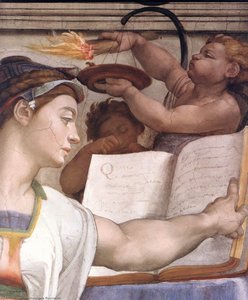
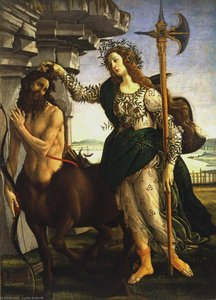
The 14th to 16th centuries witnessed a profound cultural shift in Europe – the Renaissance, meaning “rebirth.” This period marked a conscious return to the classical ideals of Greece and Rome, fueled by rediscovered texts, archaeological finds, and a renewed interest in humanism. Artists like Raphael, Leonardo da Vinci, and Michelangelo didn’t simply copy ancient forms; they synthesized them with contemporary scientific knowledge and Northern European artistic traditions. Raphael's “The School of Athens,” for instance, is not merely a depiction of classical philosophers but a carefully constructed composition that embodies Renaissance ideals of order, harmony, and intellectual pursuit. The fresco technique, perfected during this era, allowed for large-scale narrative paintings directly onto walls – a testament to the ambition and technical skill of Renaissance artists. Michelangelo’s work in the Sistine Chapel, particularly the *Ignudo* figures, showcases an unparalleled understanding of anatomy and a dramatic use of light and shadow. Botticelli's “Primavera” exemplifies the era’s fascination with classical mythology and allegorical symbolism, rendered with delicate grace and vibrant color.
Techniques Across Time: Fresco, Oil Painting, and the Pursuit of Realism
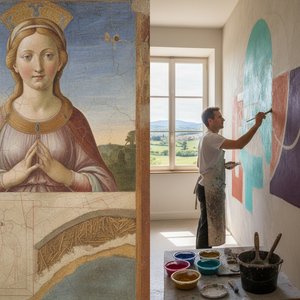
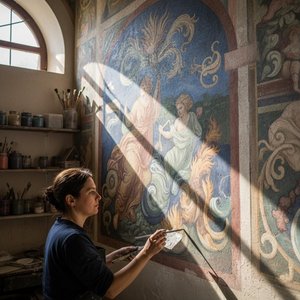
The pursuit of realism has been a driving force in art history, and this quest is inextricably linked to evolving painting techniques. Fresco, employed extensively by ancient Roman artists and later perfected during the Renaissance, involves applying pigment to wet plaster, creating durable and luminous murals. However, fresco’s limitations – requiring rapid execution and precise planning – led to the development of oil painting in Northern Europe. Oil paint allowed for greater detail, richer colors, and more nuanced blending, enabling artists to create incredibly lifelike depictions. The layering process, drying times, and use of varnishes contributed to the longevity and depth of oil paintings. The “Enduring Legacy of Oil on Canvas” demonstrates how this technique revolutionized artistic expression, allowing for subtle gradations of light and shadow, complex textures, and a level of realism previously unattainable. This shift wasn’t merely technical; it fundamentally altered the way artists approached their subjects, enabling them to capture not just form but also emotion and atmosphere.
Enduring Themes: Mythology, Allegory, and the Human Condition in Classic Art
Beyond technique, certain themes have consistently resonated throughout classical art. Mythology provided a rich source of narratives – tales of gods, heroes, and monsters that explored fundamental human questions about love, loss, fate, and morality. These stories weren’t simply decorative; they served as allegories for contemporary political events, philosophical ideas, or moral lessons. Allegory itself became a powerful tool for artists to convey complex meanings through symbolic representations – personifications of virtues, vices, or abstract concepts. The human condition – the joys, sorrows, triumphs, and failures of life – also remained central. From the idealized figures of Greek sculpture to the emotionally charged portraits of the Renaissance, artists sought to capture the essence of what it means to be human. This exploration continues to captivate audiences today, reminding us of our shared history and universal experiences.
From Studio to Museum: The Legacy and Continued Influence of Classical Art
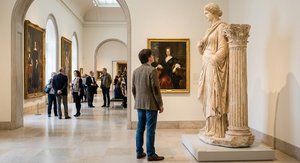
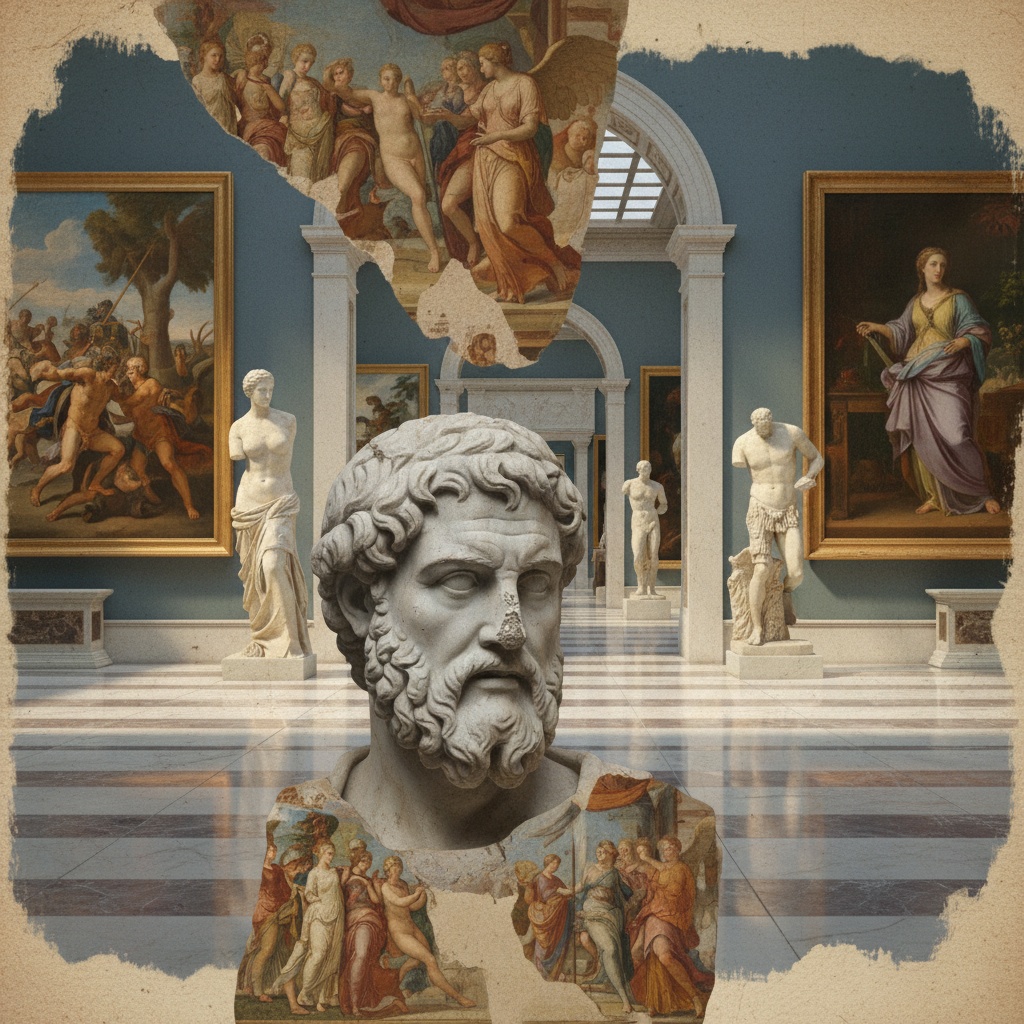
The journey of classical art from ancient studios to modern museums is a testament to its enduring power. Through centuries of preservation, adaptation, and rediscovery, these works have shaped artistic traditions across the globe. Today, institutions like the Kunsthistorisches Museum in Vienna and the Musée des beaux-arts de Chambéry offer invaluable opportunities to experience masterpieces firsthand, providing context and insight into their historical significance. The study of art history itself emerged as a way to document and interpret this rich legacy, evolving from early descriptive accounts to sophisticated analyses informed by philosophy, politics, and cultural theory. At ArtsDot, we are committed to making these timeless works accessible to everyone through high-quality reproductions – handmade oil paintings and museum-quality prints that capture the beauty and essence of classical art. Whether you’re a seasoned collector or simply beginning your artistic journey, exploring the echoes of antiquity offers a profound connection to our shared cultural heritage. Consider commissioning a custom reproduction of your favorite masterpiece or embarking on an art consultation with our experts to discover new works that resonate with your personal style.