 Send
Send Share
Share
 Details

 Download
 Similars
 Diaporama
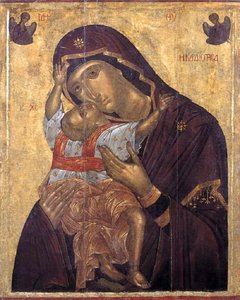
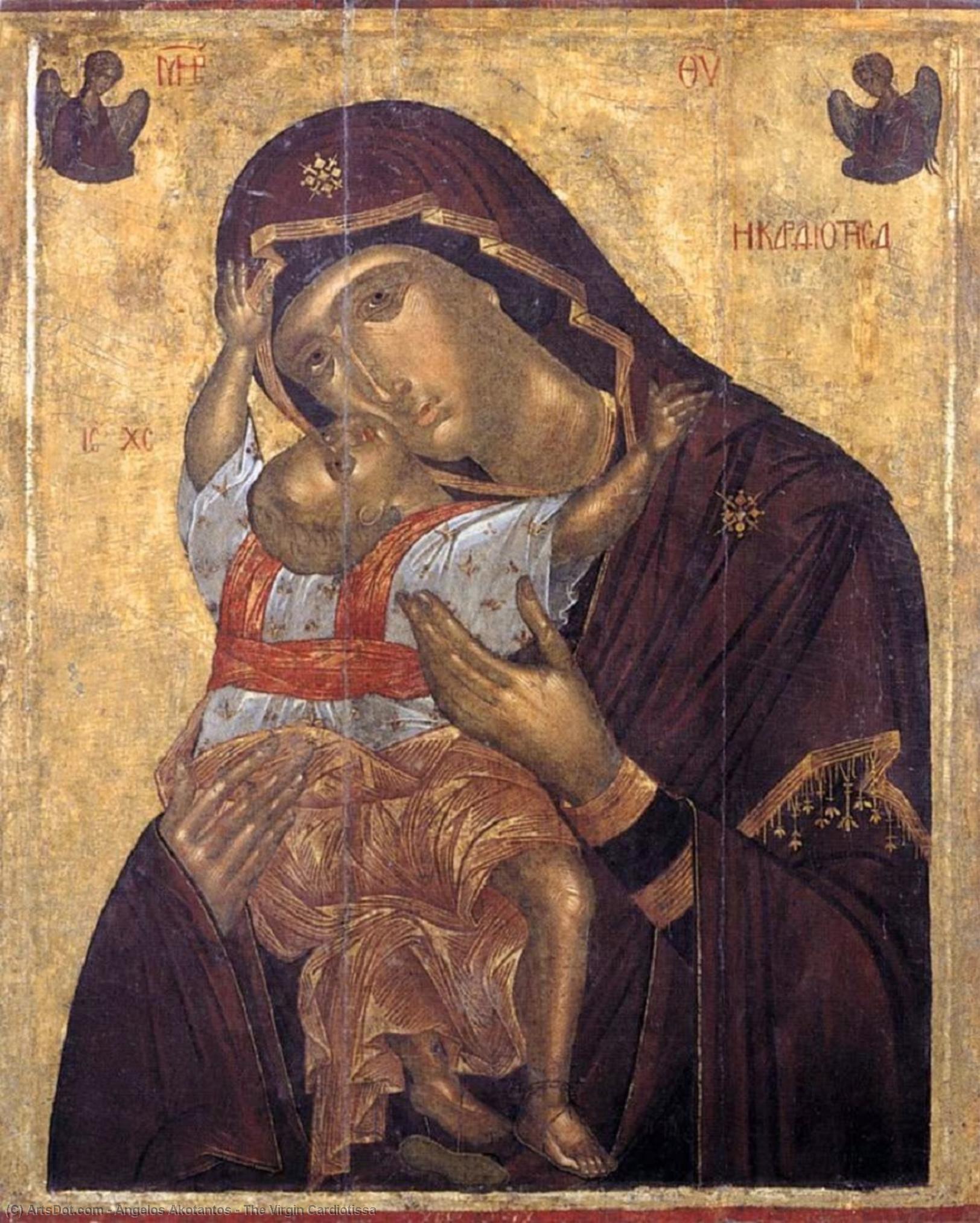
The Virgin Cardiotissa
 Gold Leaf
- Sculpture
- Crete Byzantine School
 1400
1400 121.0 x 96.0 cm
 Byzantine and Christian Museum
 Read More
Hand Made Oil Reproduction
Hand-painted oil on canvas in your size and frame, made to order by our artists. ( Buy Print Buy Image)




































Pick from our preset sizes that match the artwork's original proportions.

You may enter your own dimensions to fit a specific frame or space. If your selected size does not match the original image's proportions, we will either crop the artwork or extend the painting with additional hand-painted elements. A digital mockup will be sent for your approval before production begins.
Please note that the on-screen preview does not reflect the actual cropping or extension. Only the mockup will accurately show the final composition.
While custom sizes are available, we recommend selecting a dimension from the predefined list to preserve the original proportions.
After order, ArtsDot.com team will email client for instructions and provide a mockup preview
Worldwide Delivery () in 3/4 weeks instead of standard 5 weeks. (17 August). No compromise on quality.

Free Worldwide Express Shipping

High-Quality Linen Canvas

Full Shipping Insurance

Customs Tax Refund Guarantee

True Color Matching Guarantee

60-Day Return Policy (Defects Only)

100% Money-Back Guarantee

Bulk Discount Offer
 Glass option is only available in size under 110 CM

The Virgin Cardiotissa
Reproduction Medium
Reproduction Size
-


Total Price
$ 263
Artwork Description
A Pioneer of Cretan Icon Painting: Angelos Akotantos and “The Virgin Cardiotissa”
Angelos Akotantos (1390-1450) stands as a pivotal figure in the artistic landscape of Crete during its turbulent transition from Byzantine dominion to Venetian rule. His legacy resides primarily in his mastery of hagiography – the art of depicting saints and religious figures – specifically Cretan icon painting, establishing it as a distinct school that would endure for centuries.
Born in Crete around 1390, Akotantos’s life unfolded amidst the uncertainties of a crumbling empire. He honed his craft in Heraklion (Candia), a city strategically positioned under Venetian influence, fostering an environment where artistic innovation thrived alongside established traditions. Information about his personal life is scarce, gleaned largely from his will dated 1436, meticulously preserved in the State Archives of Venice – a testament to his enduring reputation within scholarly circles.
Stylistic Fusion: Byzantine Roots and Venetian Echoes
Akotantos’s artistic style represents an extraordinary convergence of Byzantine techniques with emerging Venetian influences. This unique blend reflects Crete's position as a crossroads of cultures during the fifteenth century, where artistic sensibilities intersected across geographical boundaries. He achieved renown for his meticulous attention to detail, utilizing vibrant hues—particularly gold leaf—to imbue his canvases with luminosity and grandeur.
Unlike many contemporary artists who sought refuge in Constantinople after its fall in 1453, Akotantos remained on Crete, bolstering the island’s burgeoning artistic community. The Venetian archives provide invaluable insight into his life and work, documenting his prolific output of icons – approximately fifteen extant examples bear his signature “cheir Angelou” (“by the hand of Angelos”), signifying both authorship and a commitment to upholding Byzantine artistic standards.
“The Virgin Cardiotissa”: Symbolism and Artistic Innovation
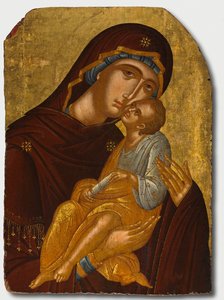
“The Virgin Cardiotissa,” painted around 1400, exemplifies Akotantos’s distinctive approach. The image depicts the Virgin Mary cradling her infant Jesus, a motif deeply rooted in Byzantine iconography symbolizing compassion and divine mercy—the “Heart of God.” Intricate drapery folds and subtle shading contribute to a palpable sense of serenity, while the generous application of gold leaf elevates the composition, reflecting Venetian artistic sensibilities.
Beyond the central figures, Akotantos incorporates secondary characters – two attendants positioned at the upper left corner and another figure on the right—adding depth and narrative complexity. A bird perched atop the Virgin’s robe serves as a visual emblem of hope and spiritual ascension. These elements coalesce into a harmonious artistic whole, demonstrating Akotantos's mastery of composition and his ability to convey profound religious emotion.
The painting’s enduring appeal lies not only in its technical brilliance but also in its embodiment of Cretan artistic identity during a period of significant cultural transformation. “The Virgin Cardiotissa” stands as a cornerstone of the Cretan School, securing Akotantos's place among the most influential icon painters of his era and ensuring that his masterpiece continues to inspire admiration for generations to come.
Related Artworks
Artist Biography
Angelos Akotantos: A Pioneer of Cretan Icon Painting
Life and Origins
- Born in Crete, Greece around 1390, Angelos Akotantos emerged as a significant figure during a period of transition for Byzantine art.
- He lived and worked primarily in Heraklion (then known as Candia), which was under the rule of the Republic of Venice at the time.
- Information about his life is largely derived from his will, dated 1436, preserved in the State Archives of Venice.
- He died around 1450, leaving behind a legacy that would shape the future of Cretan painting.
Artistic Development and Style
- Akotantos was a highly skilled hagiographer – an icon painter specializing in religious imagery.
- His style represents a fascinating blend of traditional Byzantine techniques with emerging Venetian influences, reflecting Crete’s unique cultural position.
- He is renowned for his meticulous attention to detail, vibrant use of color (particularly gold), and expressive figures.
- A defining characteristic of his work is the practice of signing his icons with the phrase “χειρ αγγέλου” (“by hand of Angelos”), a groundbreaking act for the time.
Major Works and Themes
- Approximately 50 works are attributed to Akotantos, with around 30 being securely signed.
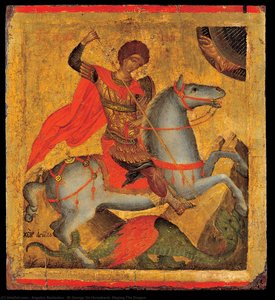
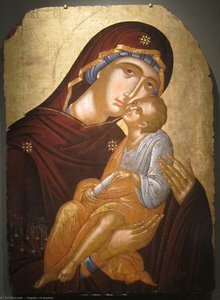
- Common themes in his iconography include depictions of the Virgin Mary (such as *The Virgin Cardiotissa*), saints – notably Saint Phanourios often shown slaying a dragon similar to Saint George – and scenes from the lives of Christ and other biblical figures.
- His icons were highly sought after, supplying churches and monasteries not only in Crete but also on islands like Patmos and Rhodes.
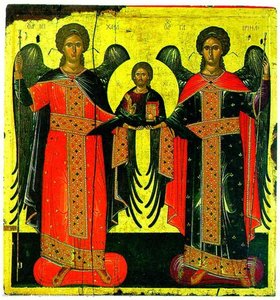
- Examples include *Icon of the Mother of God and Infant Christ*, *St George on Horseback, Slaying The Dragon* and *The Congregation of the Archangels*.
Historical Significance and Influence
- Akotantos is considered a key figure in the transition of Byzantine art from Constantinople to Crete following the city’s fall in 1453.
- He effectively established what became known as the Cretan School of icon painting, which flourished for centuries afterward.
- His innovative approach to signing his work set a precedent for other artists and contributed to a growing sense of artistic individuality.
- He influenced subsequent generations of Cretan painters, including Nikolaos Tzafouris, who further developed the stylistic characteristics established by Akotantos.
- His work represents a vital link between the Byzantine tradition and the evolving artistic landscape of Renaissance Europe.
Legacy
- Angelos Akotantos’s icons continue to be revered for their beauty, spiritual depth, and historical importance.
- His contributions helped preserve Byzantine artistic traditions during a period of significant upheaval.
- He remains a celebrated figure in Greek art history, embodying the creative spirit of Venetian Crete.
Angelos Akotantos
1390 - 1450 , Greece
Quick Facts
- Birth Date: 1390
- Birth Place: Crete, Greece
- Death Date: 1450
- Movement: Byzantine-Cretan School
- Name: Angelos Akotantos
- Nationality: Greek
- Notable Works:
- Icon of the Mother of God and Infant Christ
- St George on Horseback, Slaying The Dragon
- The Virgin Cardiotissa
- The Congregation of the Archangels
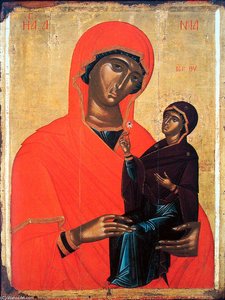
- Saint Anne With The Virgin
Related Articles

Giotto's Masterpieces: 25 Renaissance Artworks for Your Home | ArtsDot
Explore 25 breathtaking artworks by Giotto di Bondone, a Renaissance master. Discover the stories behind iconic frescoes & paintings like the Scrovegni Chapel cycle. Find museum-quality Giotto reproductions and elevate your home decor with ArtsDot.com.
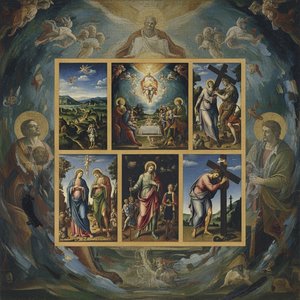
El Greco's Masterpieces: Explore 25 Iconic Paintings & Spiritual Visions | ArtsDot
Journey through El Greco's 25 most iconic paintings! Explore the spiritual depth & dramatic beauty of this Spanish Renaissance master. Discover art history, techniques & find museum-quality reproductions for your home at ArtsDot.com.
Alte Pinakothek's Masterpieces: 25 Iconic Paintings for Art Lovers | ArtsDot
Journey through Alte Pinakothek's 25 most iconic paintings! Explore masterpieces by Dürer, Rembrandt & Rubens. Discover art history, techniques & find museum-quality reproductions for your home at ArtsDot.com.
National Gallery of Art's Masterpieces: 25 Iconic Paintings for Your Home Decor
Explore 25 iconic artworks from Washington DC's National Gallery of Art! Discover masterpieces by Cézanne, Matisse & Picasso. Find museum-quality art reproductions and elevate your home decor with timeless paintings. Explore the full collection online at ArtsDot.com.

Prado Masterpieces: Explore 25 Iconic Artworks & Bring Spanish Beauty Home
Journey through 25 Prado Museum masterpieces! Explore Velázquez, Goya & El Greco's iconic Spanish art. Discover the stories behind these timeless paintings and find museum-quality reproductions for your home at ArtsDot.com.