Preview
 Send
Send Share
Share
 Details

 Download
 Similars
 X-Ray
X-Ray Diaporama
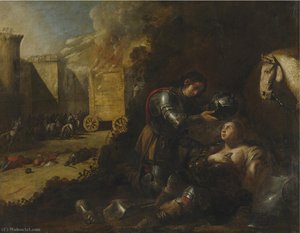
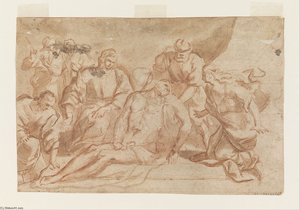
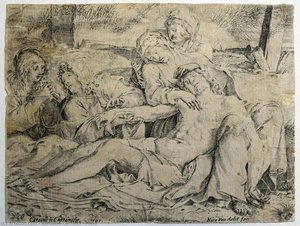
Entombment Of Christ
 Read More
Hand Made Oil Reproduction
Hand-painted oil on canvas in your size and frame, made to order by our artists. ( Buy Print Buy Image)




































Pick from our preset sizes that match the artwork's original proportions.

You may enter your own dimensions to fit a specific frame or space. If your selected size does not match the original image's proportions, we will either crop the artwork or extend the painting with additional hand-painted elements. A digital mockup will be sent for your approval before production begins.
Please note that the on-screen preview does not reflect the actual cropping or extension. Only the mockup will accurately show the final composition.
While custom sizes are available, we recommend selecting a dimension from the predefined list to preserve the original proportions.
After order, ArtsDot.com team will email client for instructions and provide a mockup preview
Worldwide Delivery () in 3/4 weeks instead of standard 5 weeks. (17 August). No compromise on quality.

Free Worldwide Express Shipping

High-Quality Linen Canvas

Full Shipping Insurance

Customs Tax Refund Guarantee

True Color Matching Guarantee

60-Day Return Policy (Defects Only)

100% Money-Back Guarantee

Bulk Discount Offer
 Glass option is only available in size under 110 CM

Entombment Of Christ
Reproduction Medium
Reproduction Size
-


Total Price
$ 263
Related Artworks
Artist Biography
Hendrick Andriessen: The Silent Narrator of Vanitas
Hendrick Andriessen, known to the world as Mancken Heyn – a name that hints at a physical challenge he faced – was a remarkably subtle and observant painter who emerged from the bustling artistic landscape of Antwerp in the early 17th century. Born in 1607, his life remains shrouded in a gentle mist of uncertainty, yet his enduring legacy lies within the poignant still lifes he crafted: haunting meditations on mortality, fleeting beauty, and the inevitable passage of time. While not as widely celebrated as some of his contemporaries – Rembrandt, Jan Lievens, or Mathieu Le Nain – Andriessen’s work possesses a quiet power, inviting viewers to contemplate their own existence with a contemplative gaze.Early Life and Artistic Training
The precise details of Hendrick Andriessen's early life are scarce, adding to the mystique surrounding his artistic journey. He was baptized on October 23rd, 1607, in Antwerp – a city renowned for its vibrant art scene during this period. It’s believed he suffered from a limp, hence the moniker “Mancken Heyn,” which likely impacted his social standing and perhaps even influenced his artistic focus. While records of his formal training are incomplete, it is generally accepted that he began his apprenticeship in 1637-38 with the Guild of Saint Luke in Antwerp. His early influences were undoubtedly shaped by the prevailing trends of the time – the burgeoning influence of Caravaggism, particularly its dramatic use of light and shadow, and the established Dutch and Flemish traditions of still life painting. He studied under Joris van Schooten and, crucially, spent a period learning from Rembrandt’s teacher, Pieter Lastman, in Amsterdam, absorbing the techniques of composition and characterization that would later inform his own work. This exposure to both the Northern and Southern artistic currents is evident in the subtle blending of styles within his oeuvre.The Language of Vanitas
Andriessen’s most distinctive contribution to art history lies in his mastery of the *vanitas* genre – a visual meditation on mortality, decay, and the transience of earthly pleasures. His still lifes are not merely arrangements of objects; they are carefully constructed narratives designed to provoke reflection. He meticulously chose each element – a skull, a wilting flower, a tarnished goblet, a partially consumed loaf of bread – to symbolize aspects of human existence: death, vanity, and the futility of worldly pursuits. Unlike some earlier *vanitas* painters who employed overtly morbid imagery, Andriessen’s approach is remarkably restrained and nuanced. The objects are presented with an almost melancholic beauty, suggesting not a celebration of death but rather a gentle reminder of its inevitability. His use of light and shadow further enhances this effect, creating a sense of intimacy and drawing the viewer into the scene. The compositions themselves are often tightly cropped, focusing on individual objects and intensifying their symbolic weight.Style and Technique
Andriessen’s style is characterized by its quiet elegance and understated realism. He possessed a remarkable ability to render textures with astonishing detail – the smooth surface of porcelain, the delicate petals of a flower, the rough grain of wood. His brushwork is generally smooth and controlled, avoiding dramatic flourishes or overly expressive gestures. He favored a muted color palette, dominated by browns, grays, and ochres, which contributes to the somber mood of his paintings. While influenced by Caravaggism in his use of chiaroscuro – the dramatic contrast between light and dark – Andriessen’s approach is more subtle and refined than that of Caravaggio himself. His compositions are often asymmetrical, creating a sense of visual tension and drawing the eye to specific points within the scene.Legacy and Historical Significance
Despite his relatively small body of work, Hendrick Andriessen's paintings hold a significant place in art history. He is recognized as one of the key figures in the development of *vanitas* still life painting, demonstrating a unique sensitivity to the genre’s themes and techniques. His works offer a poignant glimpse into the mindset of 17th-century Europe, where death was a constant presence and the pursuit of earthly pleasures was tempered by an awareness of mortality. The enduring appeal of Andriessen's paintings lies in their ability to resonate with viewers across centuries – prompting us to contemplate our own lives and the fleeting nature of time. His subtle narratives, rendered with remarkable skill and sensitivity, continue to invite quiet reflection and a deeper understanding of the human condition. The mystery surrounding his life only adds to the allure of this enigmatic artist, solidifying his position as a silent narrator of *vanitas* – a testament to the beauty and fragility of existence.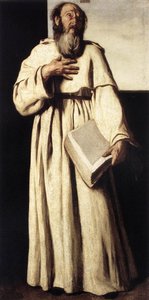
aniello falcone
1607 - 1665 , Italy
Quick Facts
- Artistic Movement Or Style: Vanitas still lifes, smoker still lifes
- Artists Or Movements Influenced By This Artist: ['Utrecht Caravaggisti']
- Artists Who Influenced This Artist:
- Pieter Lastman
- Caravaggio
- Date Of Birth: 1607
- Date Of Death: 1655
- Full Name: Hendrick Andriessen”, known as Mancken Heyn
- Nationality: Flemish
- Notable Artworks:
- Saint Jerome Writing
- The Flagellation of Christ
- Susanna and the Elders
- Place Of Birth: Antwerp, Belgium