 Preview
 Send
Send Share
Share
 Details

 Download
 Similars
 X-Ray
X-Ray Diaporama
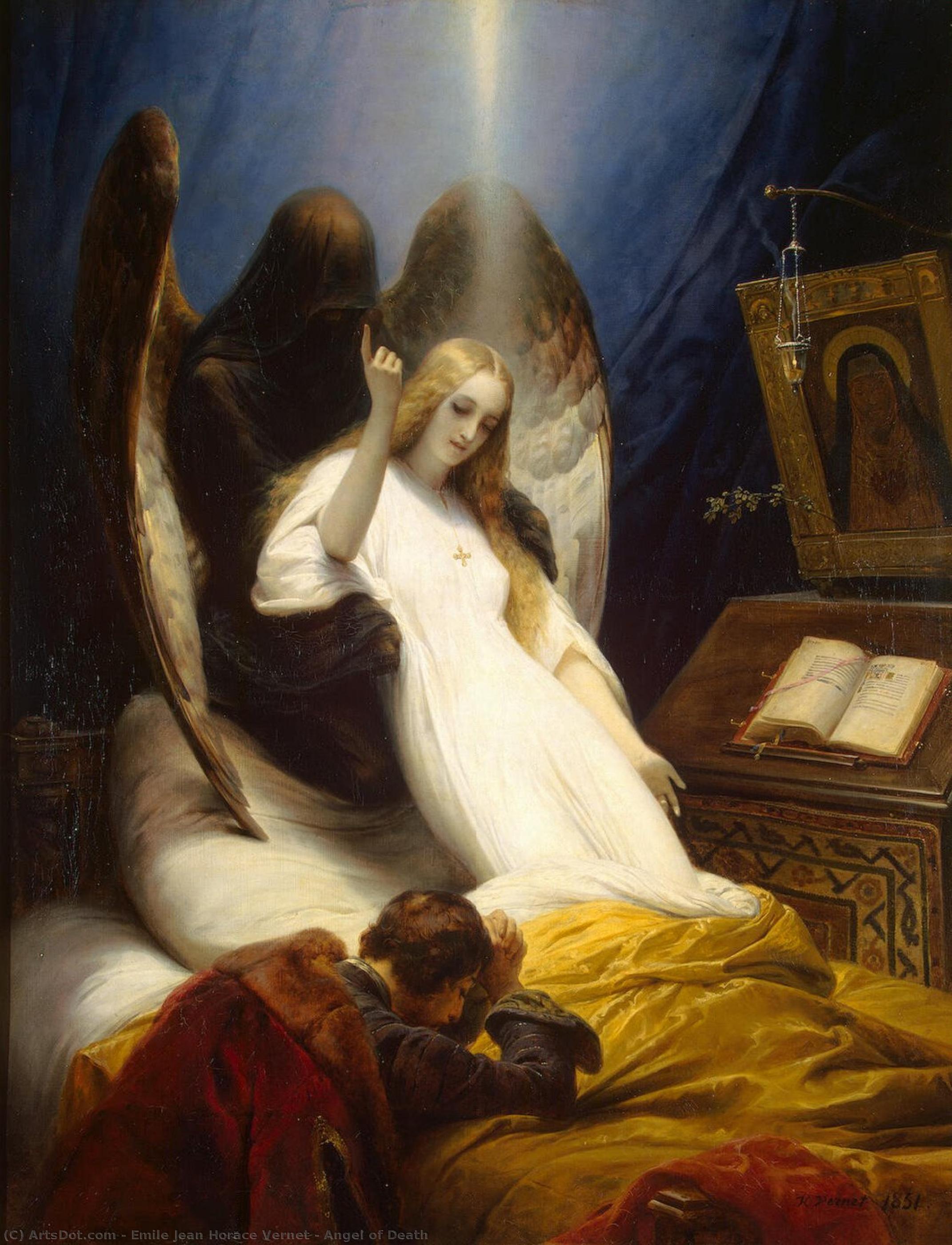
Angel of Death
 Oil On Canvas
- WallArt
- Romanticism
 1851
1851 146.0 x 113.0 cm
 Hermitage Museum
 Read More
Hand Made Oil Reproduction
Hand-painted oil on canvas in your size and frame, made to order by our artists. ( Buy Print Buy Image)




P118B $10

P118H $10

P118W $10

P438Z $10

P508JH $12

P508YH $12

P805H $10

P805Z $10

P919BZ $10

P919G $10

P919XJ $10

P959ZH $10

P968JZ $12

W106C $8

W218G $10

W218JH $8

W218Y $10

W307PJ $10

W316G $10

W316PJ $8

W316Y $10

W398PJ $8

W4111J $10

W500HY $15

W500JH $15

W692G $12

W849H $8

W940BG $15

W953PJ $8




Pick from our preset sizes that match the artwork's original proportions.

You may enter your own dimensions to fit a specific frame or space. If your selected size does not match the original image's proportions, we will either crop the artwork or extend the painting with additional hand-painted elements. A digital mockup will be sent for your approval before production begins.
Please note that the on-screen preview does not reflect the actual cropping or extension. Only the mockup will accurately show the final composition.
While custom sizes are available, we recommend selecting a dimension from the predefined list to preserve the original proportions.
After order, ArtsDot.com team will email client for instructions and provide a mockup preview
Worldwide Delivery () in 3/4 weeks instead of standard 5 weeks. (16 August). No compromise on quality.

Free Worldwide Express Shipping

High-Quality Linen Canvas

Full Shipping Insurance

Customs Tax Refund Guarantee

True Color Matching Guarantee

60-Day Return Policy (Defects Only)

100% Money-Back Guarantee

Bulk Discount Offer
 Glass option is only available in size under 110 CM

Angel of Death
Reproduction Medium
Reproduction Size
-


Total Price
$ 288
Artwork Description
The Haunting Beauty of Vernet’s Angel of Death
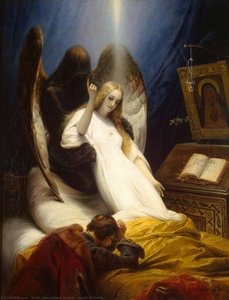
Émile Jean-Horace Vernet's “Angel of Death,” painted in 1851, isn’t merely a depiction of mortality; it’s an immersive experience of grief, spirituality, and the poignant beauty found within loss. This monumental oil on canvas, measuring nearly 1.5 by 1.2 meters, housed now within the esteemed Hermitage Museum in St. Petersburg, Russia, transcends its subject matter to become a profound meditation on human existence. Vernet, a master of Romanticism deeply influenced by his lineage – tracing back through Claude Joseph Vernet and Carle Vernet – expertly captures a scene steeped in both sorrow and an unsettling serenity.
The painting immediately commands attention with its dramatic lighting, emanating from an unseen source above the central figures. This chiaroscuro effect—the stark contrast between light and shadow—heightens the emotional intensity, casting the woman lying prone in a pool of darkness while simultaneously illuminating the angel’s outstretched hand. The composition itself is meticulously structured around a pyramidal form, drawing the eye upwards to the angel, symbolizing divine intervention and perhaps, a fragile hope amidst despair. The inclusion of two books at the base – one open, the other closed – subtly introduces themes of knowledge, wisdom, and the potential for spiritual understanding even in the face of death.
A Romantic Vision: Style and Technique
Vernet’s style is undeniably Romantic, characterized by a fervent emotionalism and an embrace of dramatic realism. He eschewed the idealized forms favored by Neoclassicism, opting instead for a more immediate and visceral portrayal of human experience. The brushwork is remarkably detailed, particularly in rendering the textures of the bedclothes, the angel’s feathered wings, and the folds of the man's garments—a testament to Vernet’s meticulous observation and technical skill. The color palette leans towards muted tones – deep blues, browns, and grays – punctuated by flashes of white and gold, creating a sense of both solemnity and ethereal beauty. The artist skillfully employs atmospheric perspective, blurring details in the background to create a feeling of depth and distance, further immersing the viewer within the scene.
Notably, Vernet’s work reflects his contemporary context – the Bourbon Restoration period in France. He was celebrated for his historical battle paintings commissioned by the Duc d'Orleans, demonstrating remarkable speed and accuracy. This background informs a certain directness in the portrayal of human emotion, mirroring the social realities of the time. The painting’s scale itself is significant, demanding attention and inviting contemplation – a deliberate choice that underscores its thematic weight.
Symbolism and Narrative Depth
Beyond the immediate depiction of death and mourning, “Angel of Death” is rich in symbolic meaning. The angel, with his outstretched hand, represents both protection and judgment—a benevolent guide leading the woman towards an unknown fate. The man kneeling beside her embodies grief and helplessness, a poignant reminder of human vulnerability. The books serve as potent symbols: the open book suggests divine wisdom or scripture, while the closed one hints at unanswered questions and the mysteries surrounding mortality. Some scholars interpret the scene as a representation of the soul’s journey through death and into the afterlife – a transition marked by both sorrow and acceptance.
The presence of two figures in the background—witnesses to this profound moment—adds another layer of complexity, suggesting that death is not merely an individual experience but one shared by humanity. It’s a scene designed to provoke reflection on our own mortality and the enduring power of human connection in the face of loss.
A Legacy of Emotional Resonance
“Angel of Death” remains a powerfully evocative work, captivating viewers with its dramatic intensity and profound emotional resonance. Vernet’s masterful command of light, composition, and symbolism has secured its place as a cornerstone of Romantic art. Reproductions of this iconic painting continue to inspire admiration and offer a glimpse into the complexities of human experience—a timeless meditation on life, death, and the enduring search for meaning. For those seeking a high-quality reproduction or further exploration of Vernet’s oeuvre, visit ArtsDot.com.
Related Artworks

Artist Biography
Émile Jean-Horace Vernet: A Life in Paint
Early Life and Family Legacy
Émile Jean-Horace Vernet was born on June 30, 1789, in Paris, France – remarkably, within the Louvre Palace while his parents resided there during the French Revolution. He came from a distinguished artistic lineage; his father was Carle Vernet, also a renowned painter, and his grandfather was Claude Joseph Vernet, celebrated for his marine landscapes. This familial background profoundly shaped his early exposure to art and laid the foundation for his own career.Artistic Development and Early Influences
Vernet quickly developed a preference for depicting contemporary life rather than adhering to the high-minded seriousness of academic Classicism. He rejected idealized representations, favoring a more realistic and vernacular style. During Napoleon Bonaparte’s reign, he began portraying French soldiers with a newfound familiarity, diverging from the grand, Davidian approach. Early works like “The Taking of an Entrenched Camp” showcased his developing character and directness. His artistic development was also influenced by observing the realities of war and military life firsthand.Rise to Prominence During the Restoration
The Bourbon Restoration brought Vernet significant recognition. He secured a series of commissions from the Duc d'Orleans (the future King Louis-Philippe) for battle paintings. Critics were impressed by his speed and accuracy, noting that his works combined historical detail with compelling landscapes. His “Four Battles” series – including “The Battle of Jemappes,” “The Battle of Montmirail,” “The Battle of Hanau,” and “The Battle of Valmy” – established him as a leading battle painter of the era.Director of the French Academy in Rome
Vernet’s talent and reputation led to his appointment as director of the French Academy in Rome from 1829 to 1835. This period allowed him to study classical art and architecture, further refining his skills and broadening his artistic horizons. However, he remained committed to representing contemporary subjects upon his return to France.Patronage Under Louis-Philippe and the Second Empire
King Louis-Philippe became a prolific patron of Vernet, commissioning him to decorate the entire Constantine room at the Palace of Versailles within three years. These paintings depicted French colonization in Algeria, portraying scenes of military conquest and “civilizing” efforts. After the Revolution of 1848, Napoléon III also became a supporter, continuing Vernet’s commissions during the Second Empire. He continued to depict heroic representations of the French army, maintaining his commitment to realism.The Crimean War and Later Years
Vernet accompanied the French army during the Crimean War, producing paintings such as “The Battle of the Alma.” While not as well-received as his earlier works, these pieces demonstrated his dedication to documenting contemporary events. He famously refused a request to remove an unpopular general from one of his paintings, stating his commitment to historical truth.Major Achievements and Historical Significance
- Vernet’s realistic depictions of soldiers and battle scenes revolutionized military painting in France.
- His work provides valuable insights into 19th-century French society, politics, and colonial endeavors.
- He skillfully blended historical accuracy with artistic flair, creating compelling and visually striking compositions.
- His paintings served as powerful propaganda tools, shaping public perception of the French army and its campaigns.
Legacy
Émile Jean-Horace Vernet died in Paris on January 17, 1863. His work continues to be studied and admired for its historical significance and artistic merit. He is also a curious footnote in popular culture as the alleged relative of Sherlock Holmes (according to Arthur Conan Doyle’s story “The Adventure of the Greek Interpreter”). Vernet's legacy lies in his ability to capture the spirit of 19th-century France through vivid, realistic, and often dramatic depictions of war, colonialism, and everyday life.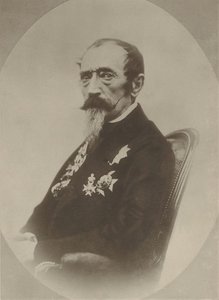
emile jean horace vernet
1789 - 1863
Quick Facts
- Birth Date: 1789
- Death Date: 1863
- Influenced By:
- Carle Vernet
- Claude Joseph Vernet
- Movement:
- Romanticism
- Orientalism
- Name: Émile Jean-Horace Vernet
- Nationality: French
- Notable Works:
- The Battle of Valmy
- Polish Prometheus
- The Artist's Studio
- Angel of Death
Related Articles
Émile Jean Horace Vernet: Romantic Realism & Depicting 19th-Century Life
Explore the life & art of Émile Jean Horace Vernet, a master of Romantic Realism. Discover his captivating battle scenes, portraits, and Orientalist works – a window into 19th-century France. Learn about his techniques & enduring legacy.
Celestial Messengers: Angels in Painting – A Historical & Artistic Exploration
Explore the captivating history of angels in painting! Discover symbolism, iconic Renaissance & Byzantine masterpieces, and renowned artists. Expert insights for art lovers & collectors at ArtsDot.
Celestial Messengers: A Comprehensive Exploration of Angelic Representation in Art History
Explore the captivating history of angels in art! Discover symbolism, iconic Renaissance masterpieces & renowned artists. Expert insights for art lovers & collectors at ArtsDot.
Romantic Realism's Finest: 10 Masterpieces for Your Home | ArtsDot
Explore 10 defining masterpieces of Romantic Realism! Discover Courbet, Millet & Daumier's powerful paintings—capturing emotion and social realities. Find museum-quality reproductions for your home at ArtsDot.com.

Paul Huet: Capturing the Essence of French Romanticism Through Light and Landscape
Explore the captivating world of Paul Huet (1803-1869), a master of French Romantic landscape painting. Discover his influence on Barbizon & Impressionism, and browse high-quality reproductions at ArtsDot.