The Dawn of Romantic Landscape: Huet’s Early Influences
Paul Huet (French pronunciation: [pɔl ɥɛ]; 3 October 1803 – 8 January 1869) was a French painter and printmaker born in Paris. He studied under Gros and Guerin. He met the English painter Richard Parkes Bonington in the studio of Gros, where he studi...
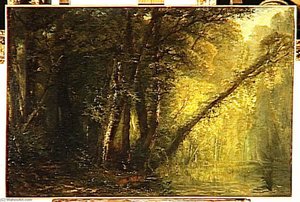
Paul Huet, a name perhaps less immediately recognizable than Delacroix or Courbet, occupies a pivotal position within the narrative of 19th-century French art. Born in Paris in 1803, his artistic journey began within the established framework of academic training – studies under Gros and Guerin provided him with a solid foundation in classical technique. However, it was an encounter with Richard Parkes Bonington that proved truly transformative. Bonington, a precocious talent who embraced direct observation of nature, steered Huet away from the rigid formalism of neoclassicism and towards a more emotive, experiential approach to landscape. This wasn’t merely a stylistic shift; it represented a fundamental change in Huet's artistic philosophy – a yearning to capture not just *what* was seen, but *how* it felt to be immersed within the natural world.
The Salon of 1824 served as another crucial catalyst. The exhibition of British landscape paintings—particularly those of John Constable—revealed a new path for Huet. He famously remarked on the freshness and verdant realism he encountered, qualities conspicuously absent from the prevailing French aesthetic. This revelation sparked a desire to depict nature without artifice, eschewing “blackness, crudity or mannerism” in favor of luminous skies, atmospheric perspective, and an authentic representation of light and shadow. Huet’s early works, though still bearing traces of academic precision, began to hint at the poetic sensibility that would define his mature style.
Rejecting Neoclassicism: A Shift Towards Nature and Emotion
Romanticism (Romantisme in French) was a literary and artistic movement that appeared in France in the late 18th century, largely in reaction against the formality and strict rules of the official style of neo-classicism. It reached its peak in the ...
The rejection of neoclassicism wasn't simply an aesthetic choice for Huet; it was a response to a broader cultural shift. The aftermath of the Napoleonic era fostered a growing disillusionment with grand historical narratives and idealized forms. A new emphasis on individual experience, emotional intensity, and the sublime power of nature took hold—the hallmarks of the Romantic movement. Huet’s embrace of landscape painting aligned perfectly with this burgeoning sensibility. He sought to evoke feelings of tranquility, awe, and even melancholy through his depictions of rural scenes.
This departure wasn't without its critics. Étienne-Jean Delécluze, a prominent art critic, dismissed Huet as merely an imitator of the English masters, accusing him of neglecting design in favor of superficial realism. However, Huet’s unwavering commitment to his vision—his belief that true artistic expression lay in capturing the ephemeral beauty of nature—allowed him to persevere. He wasn't simply copying Constable or Turner; he was translating their principles into a distinctly French idiom, infused with his own unique sensibility and poetic spirit.
Huet's Signature Style: Watercolors, Oil Paintings, and the Pursuit of Atmosphere
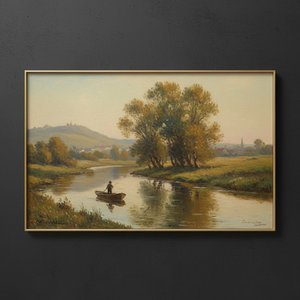
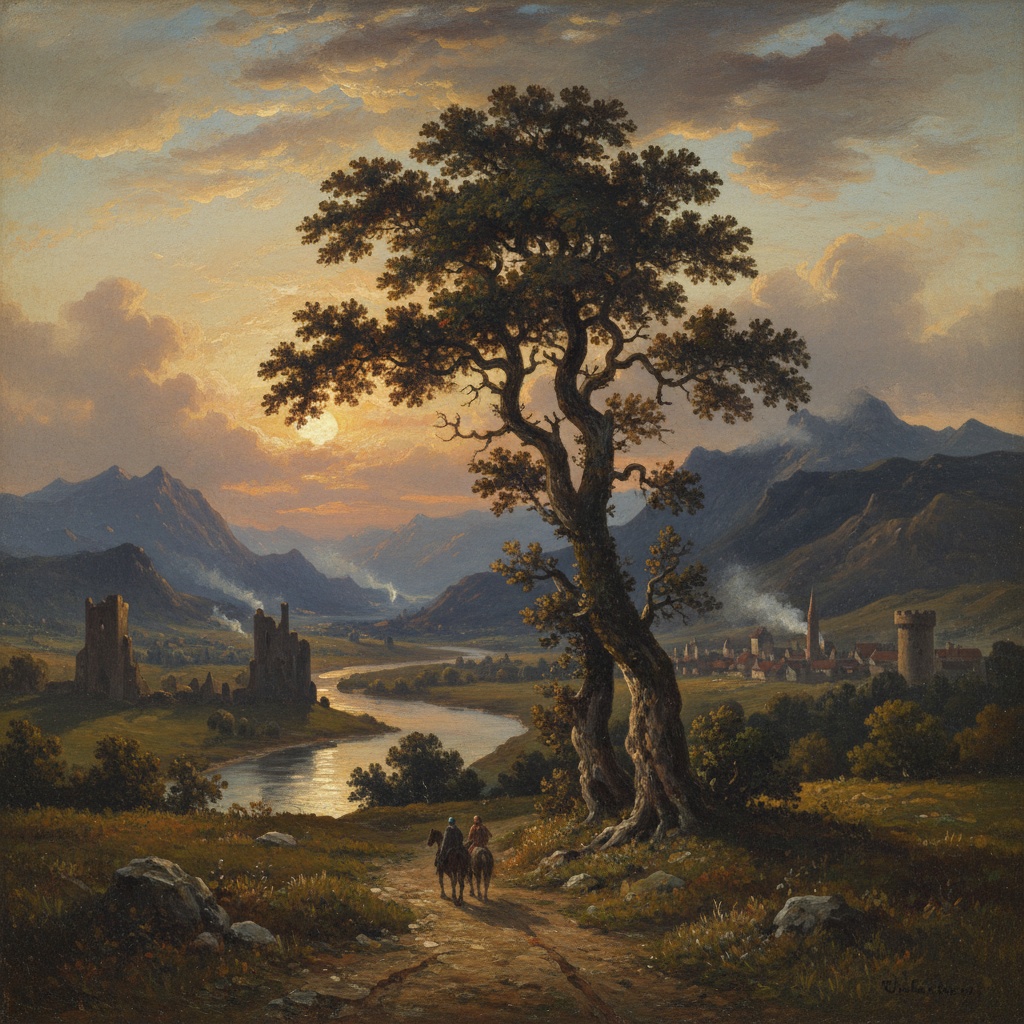
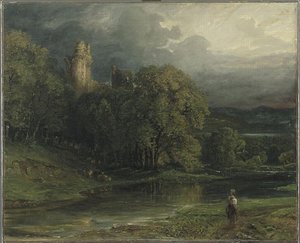 EFFET DU SOIR
Admire 'Effet du Soir' by Paul Huet – a captivating Romantic landscape painting. Explore the evocative beauty of 19th-century French art. Discover exquisite watercolors & oil paintings.
Huet’s mastery extended across both watercolor and oil painting. He was unusual for his time in utilizing watercolor not just as a preparatory medium but as a finished art form in its own right. His watercolors possess an extraordinary luminosity and delicacy, capturing fleeting moments of light and atmosphere with remarkable precision. These works often served as studies for larger oil paintings, but they stand alone as compelling examples of Romantic sensibility.
His oil paintings, however, are where his signature style truly flourished. Huet’s technique involved a careful layering of tones to create depth and atmospheric perspective. He employed loose brushwork to suggest movement and texture, imbuing his landscapes with a sense of vitality and spontaneity. He was particularly adept at capturing the effects of light—the golden glow of sunset, the soft haze of morning mist, the dramatic shadows cast by storm clouds. This pursuit of atmosphere wasn’t merely about visual accuracy; it was about conveying the emotional resonance of the natural world.
Barbizon Connections & The Precursors to Impressionism
The Barbizon school (French: école de Barbizon, pronounced [ekɔl də baʁbizɔ̃]) is the name given to oil painters and others who were part of an art movement advancing Realism in art, which arose in the context of the dominant Romantic Movement of the...
While Huet didn't formally belong to the Barbizon School, his artistic trajectory intersected with that of these pioneering landscape painters. He frequented the Forest of Fontainebleau alongside artists like Théodore Rousseau and Jean-François Millet, sharing a common interest in direct observation of nature and a rejection of academic conventions. The Barbizon painters’ emphasis on tonal qualities, loose brushwork, and realistic depictions of rural life laid the groundwork for the Impressionist movement.
Huet's influence on these artists is undeniable. His vivid depiction of natural forms, his willingness to experiment with color and light, and his commitment to plein air sketching all foreshadowed the innovations of Monet, Renoir, and Pissarro. He served as a bridge between Romanticism and Impressionism, demonstrating that landscape painting could be both emotionally expressive and scientifically accurate. His work provided a crucial link in the evolution of modern art.
Key Works by Paul Huet: ‘Cheval Normand’, ‘Effet du Soir’, and Beyond
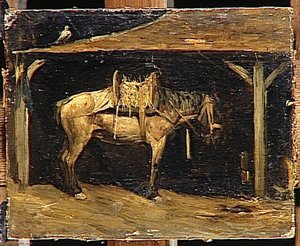 CHEVAL NORMAND
Discover 'Cheval Normand' by Paul Huet (1803-1869), a Romantic landscape painting. Explore this evocative oil on canvas, influenced by Barbizon & Impressionism. Hand-painted reproductions available.
Several key works exemplify Huet’s artistic achievements. ‘Cheval Normand’, an evocative oil on canvas, showcases his mastery of light and atmosphere, depicting a powerful horse within the rugged beauty of the Norman countryside. The painting is imbued with a sense of movement and vitality, capturing the essence of rural life. ‘Effet du Soir’ (Effect of Evening) demonstrates his exceptional skill in watercolor, portraying a serene landscape bathed in the golden hues of twilight. The delicate washes of color create a luminous atmosphere that evokes feelings of tranquility and contemplation.
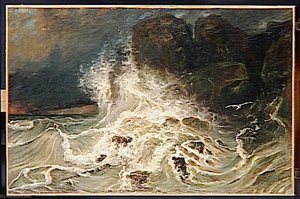
Other notable works include ‘A Wooded Landscape with a Woman Washing Laundry at a Stream’, a pencil sketch revealing his textured realism and attention to detail, and ‘The Flood of Saint-Cloud,’ which captures the dramatic power of nature. These paintings, along with numerous others, demonstrate Huet’s versatility as an artist and his unwavering commitment to capturing the beauty and emotional resonance of the French countryside.
The Enduring Legacy of a Romantic Visionary
Paul Huet may not be a household name, but his contribution to 19th-century art is significant. He played a crucial role in bridging the gap between Romanticism and Impressionism, paving the way for a new generation of artists who embraced direct observation of nature and sought to capture the ephemeral beauty of light and atmosphere. His influence can be seen in the works of countless painters who followed in his footsteps.
Today, Huet’s paintings are celebrated for their poetic sensibility, technical mastery, and emotional depth. They offer a glimpse into a world where nature was not merely a subject to be depicted but an experience to be felt—a testament to the enduring power of Romantic vision. At ArtsDot.com, we are proud to offer high-quality reproductions of Huet’s masterpieces, allowing art enthusiasts to bring his captivating landscapes into their own homes and appreciate the beauty of his work for generations to come.