 Preview
 Send
Send Share
Share
 Details

 Download
 Similars
 X-Ray
X-Ray Diaporama
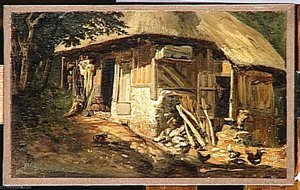
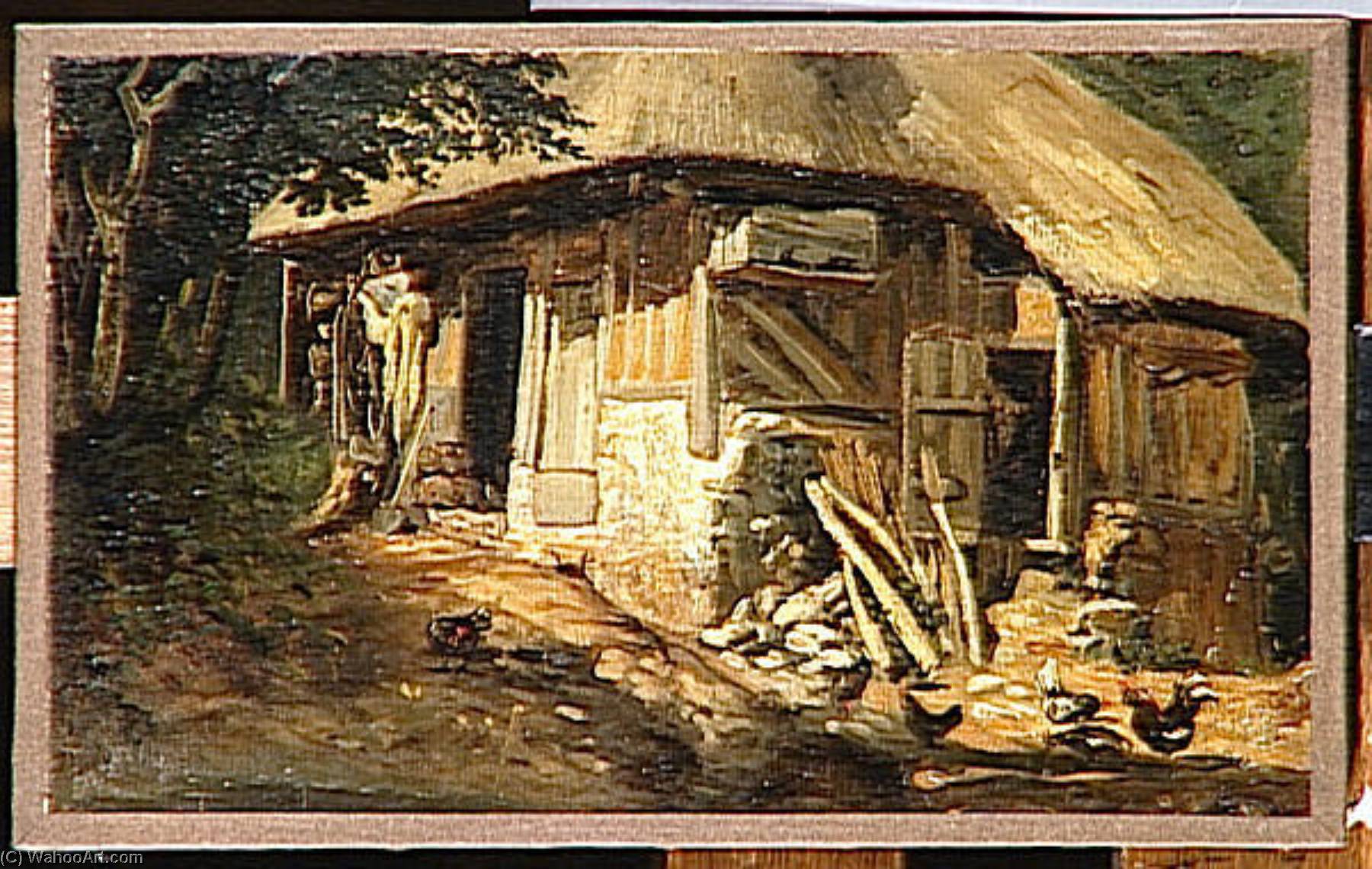
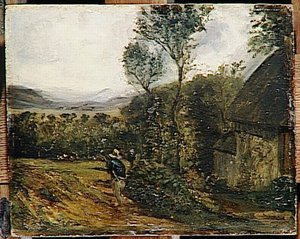
CHAUMIERE NORMANDE


 Read More
Hand Made Oil Reproduction
Hand-painted oil on canvas in your size and frame, made to order by our artists. ( Buy Print Buy Image)




P118B $10

P118H $10

P118W $10

P438Z $10

P508JH $12

P508YH $12

P805H $10

P805Z $10

P919BZ $10

P919G $10

P919XJ $10

P959ZH $10

P968JZ $12

W106C $8

W218G $10

W218JH $8

W218Y $10

W307PJ $10

W316G $10

W316PJ $8

W316Y $10

W398PJ $8

W4111J $10

W500HY $15

W500JH $15

W692G $12

W849H $8

W940BG $15

W953PJ $8




Pick from our preset sizes that match the artwork's original proportions.

You may enter your own dimensions to fit a specific frame or space. If your selected size does not match the original image's proportions, we will either crop the artwork or extend the painting with additional hand-painted elements. A digital mockup will be sent for your approval before production begins.
Please note that the on-screen preview does not reflect the actual cropping or extension. Only the mockup will accurately show the final composition.
While custom sizes are available, we recommend selecting a dimension from the predefined list to preserve the original proportions.
After order, ArtsDot.com team will email client for instructions and provide a mockup preview
Worldwide Delivery () in 3/4 weeks instead of standard 5 weeks. (16 August). No compromise on quality.

Free Worldwide Express Shipping

High-Quality Linen Canvas

Full Shipping Insurance

Customs Tax Refund Guarantee

True Color Matching Guarantee

60-Day Return Policy (Defects Only)

100% Money-Back Guarantee

Bulk Discount Offer
 Glass option is only available in size under 110 CM

CHAUMIERE NORMANDE
Reproduction Medium
Reproduction Size
-


Total Price
$ 263
Artwork Description
A Norman Reverie: Paul Huet’s “Chaumière Normande”
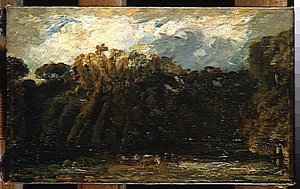
Paul Huet's "Chaumière Normande" isn’t merely a depiction of a farmhouse; it’s a carefully constructed evocation of rural tranquility, steeped in the Romantic sensibility that defined mid-19th century French art. Painted around 1861 and currently residing within the hallowed halls of the Louvre, this oil on canvas transports us to the heart of Normandy, offering a glimpse into a world where simplicity and connection with nature reigned supreme. Huet, a pivotal figure often overshadowed yet profoundly influential on both the Barbizon School and the nascent Impressionists, sought not just to represent a scene but to capture its very essence – the light, the atmosphere, the feeling of belonging within this timeless landscape.
The painting immediately draws the eye with its warm, diffused lighting. It’s an afternoon sun, perhaps just as twilight begins to gather, casting long shadows and highlighting the textured surfaces of the building and surrounding foliage. The palette is deliberately earthy – browns, greens, ochres, and creams—creating a sense of groundedness and authenticity. Huet masterfully employs broken brushstrokes, particularly evident on the thatched roof and weathered stone walls, lending a tactile quality to the scene that invites us to almost reach out and touch the rough-hewn timbers. This deliberate roughness contrasts beautifully with the smoother application of paint used for the fields and sky, demonstrating Huet’s keen observation of surface textures.
The Influence of English Romanticism
Huet's artistic journey was deeply shaped by his encounter with British landscape painting in the early 1820s. Inspired by artists like Constable and Turner, he deliberately rejected the rigid formality of Neoclassicism, embracing a looser, more expressive style that prioritized capturing the fleeting effects of light and atmosphere. This influence is strikingly evident in “Chaumière Normande.” Like his British counterparts, Huet wasn’t interested in precise detail or idealized beauty; instead, he sought to convey the *feeling* of being present within this rural setting – the warmth of the sun, the scent of the earth, the quiet rhythm of country life. The composition itself mirrors this approach: it's not a meticulously planned arrangement but rather an organic unfolding of elements, guided by the artist’s intuitive response to the scene before him.
Symbolism and Emotional Resonance
Beyond its picturesque beauty, “Chaumière Normande” resonates with deeper symbolic meaning. The humble farmhouse itself represents a connection to tradition, community, and the enduring values of rural life. The scattering of chickens – a common sight in Normandy—adds a touch of domesticity and reinforces this sense of belonging. The path leading towards the house invites us into the scene, suggesting a journey of discovery and a desire for simplicity. Huet’s use of watercolor techniques, often combined with oil paint, further enhances the painting's emotional impact, creating a luminous quality that evokes feelings of peace, nostalgia, and a longing for a simpler time. The overall effect is one of profound serenity – a reminder of the beauty and restorative power of nature.
A Legacy in French Landscape Painting
Paul Huet’s “Chaumière Normande” stands as a testament to his artistic vision and his pivotal role in shaping the course of French landscape painting. His dedication to observing and capturing the nuances of light, texture, and atmosphere paved the way for subsequent generations of artists, including the Barbizon School and the Impressionists. Reproductions of this captivating work offer a window into a bygone era, inviting us to contemplate the enduring appeal of rural life and the timeless beauty of the French countryside. It’s a painting that speaks not just to the eye but also to the heart, reminding us of the profound connection between humanity and the natural world.
Related Artworks
Artist Biography
Paul Huet: A Pioneer of Romantic Landscape
Paul Huet (1803-1869) stands as a pivotal, yet often understated, figure in 19th-century French art – a landscape painter who profoundly influenced both the Barbizon School and the nascent Impressionists. Born in Paris amidst a burgeoning artistic climate, Huet’s journey was one of relentless observation, a deep connection to nature, and a deliberate rejection of prevailing neoclassical trends. His work wasn't merely depictions of scenery; it was an attempt to capture the very essence of light, atmosphere, and the fleeting beauty of the natural world, a pursuit that cemented his place as a key innovator in French painting.Early Influences and Artistic Training
Huet’s artistic development began with a grounding in traditional techniques. He received early instruction from Jaques-Louis David's former pupil, Jean-Julien Deltil, followed by studies at the École des Beaux-Arts under Pierre Guérin and Antoine-Jean Gros. Crucially, his path intersected with that of Richard Parkes Bonington, a fellow student at Gros’s studio. This encounter proved transformative. Bonington’s approach to plein-air painting – working directly from nature – captivated Huet, leading him to abandon the rigid formality of Neoclassicism and embrace a more spontaneous and observational style. The British landscape paintings exhibited in the Salon of 1824 served as a revelation; John Constable's ability to render freshness and verdant beauty without resorting to dark shadows or artificiality deeply resonated with Huet, shaping his own artistic philosophy. He famously described Constable’s work as “the first time perhaps that one felt the freshness, that one saw a luxuriant, verdant nature, without blackness, crudity or mannerism.”The Barbizon Style and Dutch Masters
Huet's style evolved through a fascinating synthesis of influences. He initially emulated Bonington’s watercolor technique, but his artistic sensibilities extended far beyond mere imitation. He drew inspiration from the atmospheric landscapes of Dutch masters like Jacob van Ruysdael and Meindert Hobbema, particularly their masterful use of light and color to convey mood and atmosphere. This admiration for the Old Masters informed his own approach, resulting in paintings that possessed a quiet dignity and a remarkable sense of realism—not photographic, but deeply felt. His work during this period was characterized by a deliberate rejection of academic conventions, favoring loose brushwork, vibrant colors, and an emphasis on capturing the immediate impression of nature.Salon Recognition and Political Involvement
Huet’s artistic career gained momentum with his debut at the Salon in 1827, where one of his eight submitted paintings was accepted. He continued to exhibit regularly at the Salon throughout the 1830s and 40s, steadily building a reputation among critics and collectors. Eugène Delacroix, a fellow artist and close friend, championed Huet’s work, recognizing its unique qualities. However, Étienne-Jean Delécluze offered a more critical perspective, viewing Huet as overly devoted to Constable and Turner, sometimes neglecting fundamental design principles. Beyond his artistic pursuits, Huet was an active participant in the July Revolution of 1830 and subsequently involved in republican politics, reflecting the turbulent social and political climate of France at the time. His commitment to these ideals earned him recognition from King Louis-Philippe, who awarded him a pair of Sèvres porcelain vases in 1844, and a gold medal at the Salon of 1848.Legacy and Artistic Significance
Paul Huet’s impact on French landscape painting is considerable. His innovative use of watercolor—not just for sketching but as a primary medium for finished works—demonstrated its potential to achieve remarkable depth and richness, often resembling oil paintings. He was an early adopter of plein-air painting, prioritizing direct observation of nature over studio work. More importantly, Huet’s emphasis on capturing the fleeting effects of light and atmosphere profoundly influenced the Barbizon School and later the Impressionists. Artists like Théodore Rousseau and Jean-François Millet, who sought to paint directly from nature with a focus on rural life and landscapes, owe a debt to Huet's pioneering approach. His work stands as a testament to the power of observation, the beauty of simplicity, and the enduring appeal of capturing the essence of the natural world. He died in Paris in 1869, leaving behind a substantial body of work that continues to captivate viewers with its evocative atmosphere and profound connection to nature.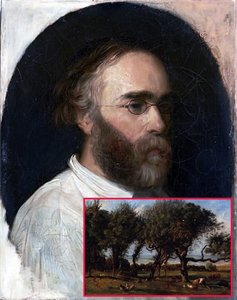
Paul Huet
1803 - 1869 , France
Quick Facts
- Artistic Movement Or Style: Romantic Landscape
- Artists Or Movements Influenced By This Artist:
- Barbizon School
- Impressionists
- Artists Who Influenced This Artist:
- Rembrandt
- John Constable
- Eugène Delacroix
- Date Of Birth: 1803-10-03
- Date Of Death: 1869-01-08
- Full Name: Paul Huet
- Nationality: French
- Notable Artworks:
- A Villa Near Rome
- Effet du Soir
- Sous bois avec un étang
- Place Of Birth: Paris, France
Related Articles
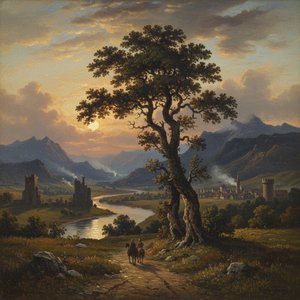
Paul Huet: Capturing the Essence of French Romanticism Through Light and Landscape
Explore the captivating world of Paul Huet (1803-1869), a master of French Romantic landscape painting. Discover his influence on Barbizon & Impressionism, and browse high-quality reproductions at ArtsDot.

Cézanne's Masterpieces: 25 Iconic Artworks to Transform Your Space
Journey through 25 iconic artworks by Paul Cézanne – a master of Impressionism and Post-Impressionism. Explore his landscapes, still lifes, and the stories behind these timeless masterpieces. Discover museum-quality reproductions & curated decor at ArtsDot.com.

Romantic Landscapes: 10 Masterpieces for Your Home | ArtsDot
Journey through 10 Romantic landscape masterpieces by Friedrich, Turner & Cole. Explore emotional art, sublime nature scenes & iconic 19th-century paintings. Find museum-quality reproductions for your home at ArtsDot.com – discover the full collection online!
Paul Klee's Masterpieces: Explore 25 Iconic Paintings & Prints | ArtsDot
Journey through Paul Klee's 25 most iconic paintings & prints. Explore his abstract style, Bauhaus influence, and vibrant color palettes. Find museum-quality art reproductions & decor ideas at ArtsDot.com. Discover all masterpieces online.

Beyond the Horizon: 10 Landscape Masterpieces for Your Home Decor
Journey through 10 breathtaking landscape paintings by Monet, Van Gogh & more! Explore iconic artworks, artistic techniques & find inspiration for your home decor. Museum-quality reproductions at ArtsDot.com. Discover all masterpieces on ArtsDot.com