The Forest of Fontainebleau: A Sanctuary for the Soulful Brush
To understand the heartbeat of nineteenth-century landscape painting, one must first wander through the ancient, mist-laden groves of the Forest of Fontainebleau. Long before the vibrant, sun-drenched palettes of Monet or Renoir captured the world's imagination, a group of visionary artists sought refuge within these very woods. They were not looking for the grand, theatrical vistas of the Romantic era, but rather something far more intimate and profound: the quiet, breathing truth of the earth itself. This sanctuary became the cradle of the Barbizon School, a movement that whispered rather than shouted, inviting the viewer to find divinity in the mossy bark of an oak and the soft decay of autumn leaves.
For the weary soul seeking respite from the encrousting industrialization of France, Fontainebleau offered a spiritual retreat. The artists gathered here were not merely documenting scenery; they were engaging in a silent dialogue with nature. In the dappled shadows cast by dense canopies, they discovered a new way of seeing—one that prioritized the subtle textures of the forest floor and the rhythmic interplay of light and shadow. This period marked a departure from the rigid, studio-bound traditions of the past, establishing a sanctuary where the brush could follow the organic flow of the natural world.
Beyond the Studio: The Dawn of Plein Air and Naturalism
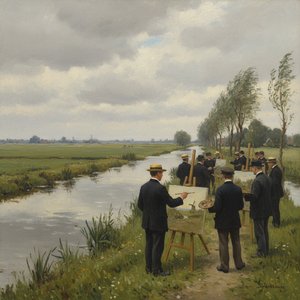
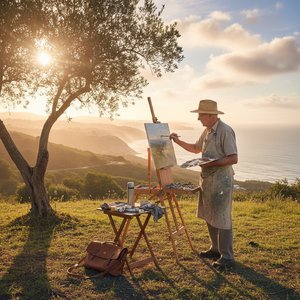
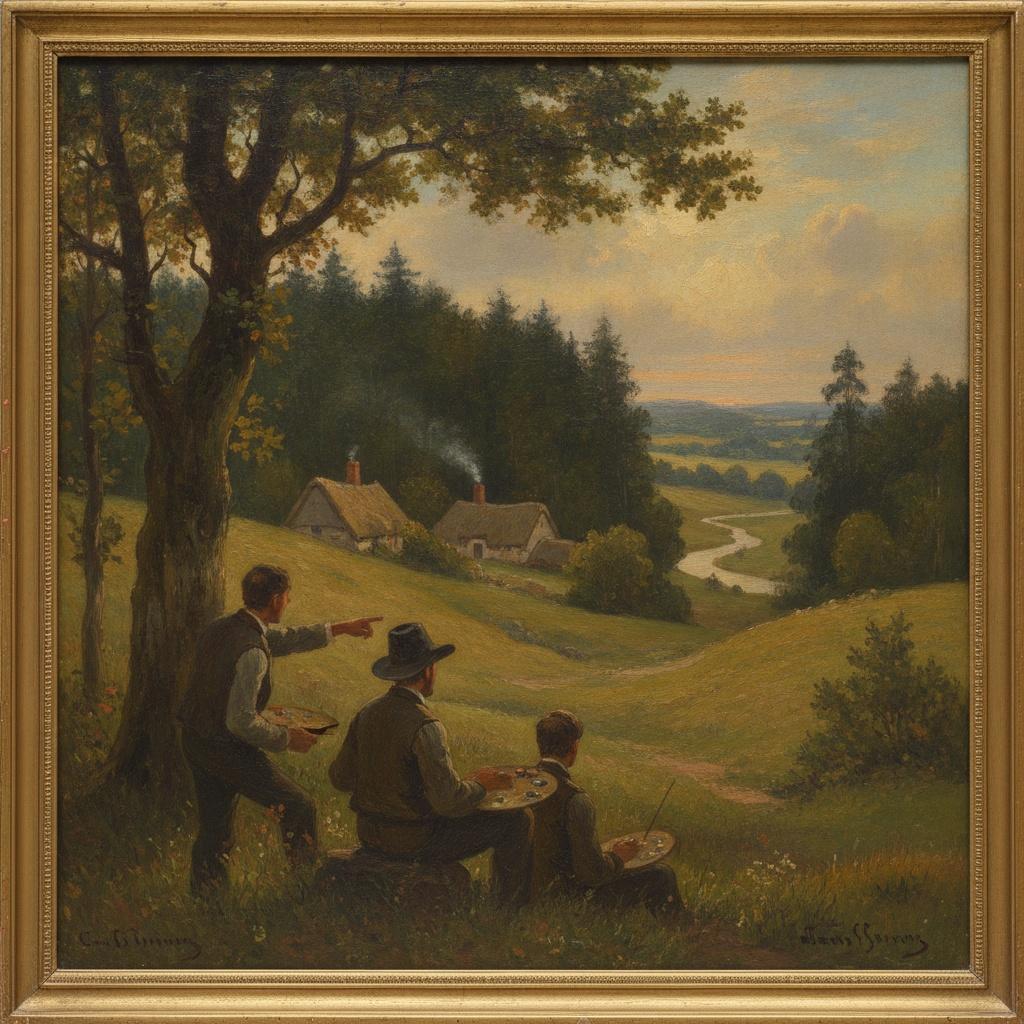
The true revolution of the Barbizon painters lay in their courageous decision to abandon the controlled, artificial lighting of the academic studio for the unpredictable brilliance of the outdoors. This was the dawn of plein air painting—the practice of painting entirely in the open air. It was a physically demanding endeavor, requiring artists to contend with sudden rain showers, biting winds, and the shifting, fleeting moments of twilight. Yet, it was precisely this vulnerability to the elements that allowed their work to achieve such unparalleled authenticity.
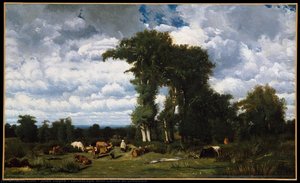
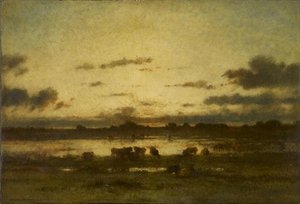
By bringing their easels directly into the landscape, masters like Jules Dupré captured a sense of dynamic movement and raw vitality that studio compositions could never replicate. In works such as Landscape with Cattle at Limousin, one can feel the weight of the atmosphere and the pulse of rural life. This commitment to naturalism meant that every stroke of oil on canvas was an attempt to freeze a moment of pure, unadulterical existence. They moved away from idealized, mythological landscapes toward a gritty, honest portrayal of the French countryside, finding beauty in the mundane and the monumental alike.
Chiaroscuro to Color: How Barbizon Paved the Way for Impressionism
While we often celebrate Impressionism for its explosion of light and color, it is essential to recognize that this brilliance was built upon the tonal foundations laid by the Barbizon masters. The transition from the deep, dramatic chiaroscuro—the heavy use of light and dark—to the luminous, broken color of the later movement was a gradual, evolutionary process. The Barbizon artists were the bridge between these two worlds. They maintained a certain gravity and tonal depth, yet they began to experiment with how light interacts with surfaces, how mist softens edges, and how shadows are never truly black, but infused with reflected hues.
This shift in perception was fundamental. By focusing on the atmospheric effects of moisture, heat, and shade, they taught subsequent generations that light is not merely something that illuminates an object, but something that defines its very essence. The heavy, textured applications of paint used to depict rugged terrain provided a tactile precursor to the thick impasto techniques later perfected by Van Gogh. Without the Barbizon School's investigation into the nuances of atmosphere and their rejection of static composition, the radical light-drenched canvases of the Impressionist era might never have found their footing.
Atmospheric Legacies: From the Grey School to the Light of Monet
The influence of this movement rippled far beyond the borders of France, touching the very soul of European art. We see its echoes in the Belgian "Grey School," where Adriaan Josef Heymans utilized Barbizon-inspired landscapes to explore a more muted, realistic beauty. In Hungary, László Paál carried this atmospheric torch, creating evocative scenes that felt as though they were breathed out by the landscape itself. Even in England, Sir Alfred Edward East drew inspiration from these French pioneers to capture the romantic, misty essence of the Cotswolds.
This legacy is a lineage of light. The "Grey School" and the Spanish Olot school, led by figures like Josep Berga i Boix, all owe a debt to the Barbizon way of seeing—a way that values the subtle gradations of tone and the emotional weight of a landscape. When we look at the works of Monet, we are seeing the ultimate flowering of a seed planted in the soil of Fontainebleau. The Impressionists took the Barbizon fascination with atmosphere and expanded it into a full-spectrum celebration of color, yet the underlying reverence for nature's fleeting, soulful moments remains unchanged.
Bringing the Serenity of Nature Home: Collecting the Barbizon Spirit
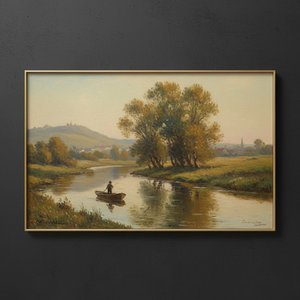
For the modern collector, the allure of the Barbizon style lies in its ability to bring a sense of profound peace and timelessness into the contemporary home. There is a restorative quality to these landscapes; they act as windows into a slower, more contemplative era. Whether it is a large-scale oil reproduction that anchors a room with its dramatic shadows or a delicate study of light that brightens a quiet corner, these works offer more than mere decoration—they offer an emotional sanctuary.
At ArtsDot.com, we invite you to explore this enduring legacy. We specialize in the curation of works that capture the very essence of this movement, offering hand-painted reproductions that honor the authentic brushstrokes and tonal depth of the masters. For those looking to transform a personal memory into something timeless, our custom services allow you to reimagine your own landscapes through the light-drenched lens of history. We believe that fine art should be an intimate experience, a way to surround oneself with the enduring beauty of the natural world, one brushstroke at a time.