 Preview
 Send
Send Share
Share
 Details

 Download
 Similars
 X-Ray
X-Ray Diaporama
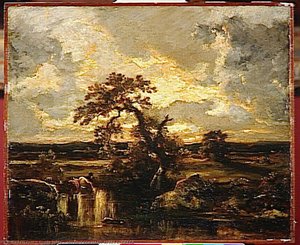
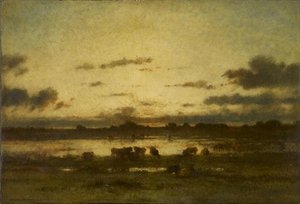
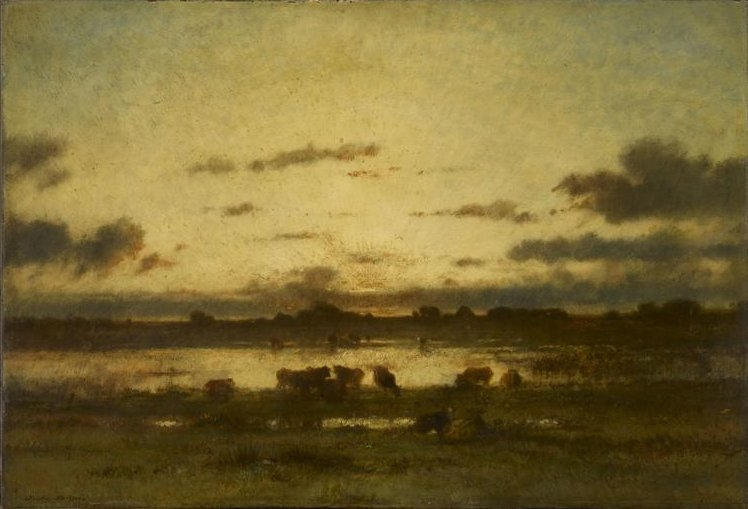
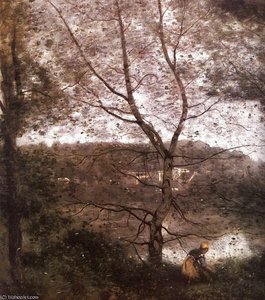
SOLEIL COUCHANT SUR UN MARAIS


 Read More
Hand Made Oil Reproduction
Hand-painted oil on canvas in your size and frame, made to order by our artists. ( Buy Print Buy Image)




P118B $10

P118H $10

P118W $10

P438Z $10

P508JH $12

P508YH $12

P805H $10

P805Z $10

P919BZ $10

P919G $10

P919XJ $10

P959ZH $10

P968JZ $12

W106C $8

W218G $10

W218JH $8

W218Y $10

W307PJ $10

W316G $10

W316PJ $8

W316Y $10

W398PJ $8

W4111J $10

W500HY $15

W500JH $15

W692G $12

W849H $8

W940BG $15

W953PJ $8




Pick from our preset sizes that match the artwork's original proportions.

You may enter your own dimensions to fit a specific frame or space. If your selected size does not match the original image's proportions, we will either crop the artwork or extend the painting with additional hand-painted elements. A digital mockup will be sent for your approval before production begins.
Please note that the on-screen preview does not reflect the actual cropping or extension. Only the mockup will accurately show the final composition.
While custom sizes are available, we recommend selecting a dimension from the predefined list to preserve the original proportions.
After order, ArtsDot.com team will email client for instructions and provide a mockup preview
Worldwide Delivery () in 3/4 weeks instead of standard 5 weeks. (17 August). No compromise on quality.

Free Worldwide Express Shipping

High-Quality Linen Canvas

Full Shipping Insurance

Customs Tax Refund Guarantee

True Color Matching Guarantee

60-Day Return Policy (Defects Only)

100% Money-Back Guarantee

Bulk Discount Offer
 Glass option is only available in size under 110 CM

SOLEIL COUCHANT SUR UN MARAIS
Reproduction Medium
Reproduction Size
-


Total Price
$ 263
Artwork Description
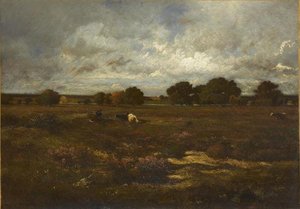
A Symphony of Dusk: Exploring Jules Dupré’s ‘Soleil Couchant Sur Un Marais’
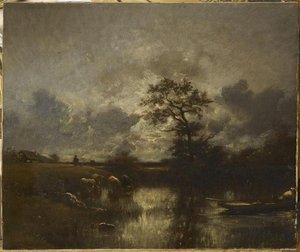
The Barbizon School, born in the mid-19th century amidst a fervent desire for artistic authenticity, represented a radical departure from academic conventions. Artists like Jules Dupré sought inspiration not in idealized visions but in the palpable realities of rural France—the weathered landscapes and evocative moods that spoke to the human spirit. ‘Soleil Couchant Sur Un Marais’ (Setting Sun on a Marsh), painted around 1825-1850, embodies this ethos with breathtaking precision and emotional depth. It's more than just a depiction of scenery; it’s an immersion into a particular moment in time, imbued with the melancholic beauty characteristic of Dupré’s oeuvre.The Landscape as Emotional Conduit
Dupré’s masterful technique captures the essence of twilight—the gradual fading of daylight and the emergence of cool hues—with remarkable sensitivity. He eschewed meticulous detail, favoring loose brushstrokes that convey atmosphere rather than photographic accuracy. The marshland itself is rendered with textured surfaces, achieved through layering oil paint to simulate the dampness and unevenness of the terrain. Notice how Dupré skillfully utilizes glazes – thin washes of translucent pigment – to build up depth and luminosity, particularly in the sky where scattered clouds diffuse the last vestiges of sunlight. This deliberate disregard for idealized beauty aligns perfectly with the Barbizon’s core belief: that art should reflect genuine experience.Composition and Symbolism: Echoes of Reflection
The horizontal format emphasizes the expansive horizon line, mirroring the vastness of the marsh and sky—a visual metaphor for contemplation and acceptance. The placement of cattle grazing within the marsh adds a subtle layer of symbolism; they represent pastoral tranquility and sustenance – fundamental themes explored throughout Dupré’s artistic career. More profoundly, however, the painting speaks to the universal human fascination with endings and beginnings. The setting sun symbolizes not merely darkness but also transformation—a reminder that beauty can be found even in decay.Historical Context: Romanticism's Embrace of Nature
‘Soleil Couchant Sur Un Marais’ emerged during a period of significant artistic ferment, coinciding with the burgeoning Romantic movement. Artists like Dupré reacted against Neoclassical formalism, prioritizing emotion and imagination over rational calculation. They found solace in the untamed wilderness—a refuge from the anxieties of industrialization and urban life—and sought to express their inner feelings through direct observation of nature. The painting reflects this broader cultural preoccupation with capturing fleeting moments of sublime beauty before they vanished forever.A Legacy of Atmospheric Impressionism
Dupré’s influence extends far beyond his own lifetime, establishing him as a pivotal figure in the development of Impressionist aesthetics. His pioneering use of color and texture paved the way for artists like Monet and Renoir to explore similar techniques—a testament to Dupré's enduring vision of art as a conduit for emotional experience and an honest portrayal of the natural world. Reproductions of ‘Soleil Couchant Sur Un Marais’ continue to inspire collectors and interior designers alike, offering a glimpse into the profound beauty of a bygone era.Related Artworks
Artist Biography
The Dramatic Soul of Barbizon
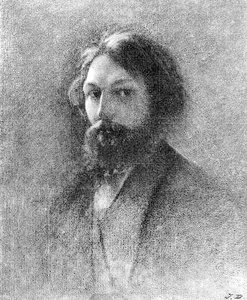
Jules Dupré (1811–1889) stands as a cornerstone figure within the Barbizon School, an artistic movement that championed raw observation and emotional resonance in landscape painting. Unlike his contemporaries like Corot who often sought lyrical beauty and tranquil stillness, Dupré wrestled with the darker, more tempestuous side of nature. He possessed a unique ability to capture the fury of storms, the melancholic grandeur of twilight, and the relentless energy of the elements, conveying these experiences with unparalleled intensity. Born in Nantes, France, Dupré’s artistic journey began amidst a burgeoning fascination for the natural world and its capacity to evoke profound, often turbulent, human feelings.
His early life provided a foundation of meticulous attention to detail and an appreciation for craftsmanship, qualities honed by his father’s porcelain manufacturing business. This formative experience would later translate into his own artistic endeavors, particularly evident in his early works exploring the intricacies of ceramic decoration. As an apprentice porcelain decorator, he learned the discipline of fine lines and textures, a skill set that would eventually evolve into his masterful handling of atmospheric depth and organic forms.
A Vision Shaped by Storm and Sky
The trajectory of Dupré’s career was irrevocably shaped by his encounter with the groundbreaking canvases of John Constable. This exposure to English landscape traditions ignited a desire to capture the essence of nature’s dynamism—the relentless push and pull of wind-driven foliage and the dramatic interplay of light and shadow during the most volatile hours of the day. Traveling to Great Britain in 1831, Dupré made profound studies of these English masters, returning to France with a portfolio of imagery that would redefine his approach to the landscape.
He found particular inspiration in the coastal districts around Southampton and Plymouth. These vast expanses of water, reflecting turbulent skies, provided him with the perfect laboratory to study the tempestuous motion of storm clouds and the movement of seas. His paintings from this period are not merely depictions of scenery; they are visceral expressions of mood and feeling, imbued with a palpable sense of drama and even sorrow. By embracing the Barbizon aesthetic, Dupré prioritized expressive color palettes and bold brushstrokes over idealized or polished representations, allowing the texture of the paint itself to mirror the ruggedness of the earth.
Legacy of the Barbizon Master
As a key figure in the Barbizon group, Dupré developed close ties with other legendary painters, including Théodore Rousseau. His rise within the French art establishment was marked by significant milestones, such as his acceptance into the Salon and receiving official recognition through medals for his landscapes. His work became synonymous with a certain sonorous and resonant color harmony, where the light of a setting sun or the gloom of an approaching gale could be felt by the viewer as much as seen.
Today, Jules Dupré is remembered as one of the most influential 19th-century French landscape artists. His contribution to art lies in his ability to bridge the gap between pure observation and romantic emotion. Through works such as La Petite Charrette, Cows Crossing a Ford, and his evocative depictions of river landscapes, he taught generations of artists that nature is not just a subject to be painted, but a powerful force to be experienced. His legacy remains etched in the heavy, atmospheric textures and the dramatic, breathing skies that continue to captivate the modern imagination.
jules dupré
1811 - 1889 , France
Quick Facts
- Artistic Movement Or Style: Barbizon School
- Artists Or Movements Influenced By This Artist: ['Romantic Painting']
- Artists Who Influenced This Artist: ['Constable']
- Date Of Birth: Nantes, France (1811)
- Date Of Death: October 6, 1889
- Full Name: Jules Dupré
- Nationality: French
- Notable Artworks:
- Morning and Evening at the Louvre
- Crossing the Bridge in the Wallace Collection
- Place Of Birth: France
Related Articles

Beyond the Horizon: 10 Landscape Masterpieces for Your Home Decor
Journey through 10 breathtaking landscape paintings by Monet, Van Gogh & more! Explore iconic artworks, artistic techniques & find inspiration for your home decor. Museum-quality reproductions at ArtsDot.com. Discover all masterpieces on ArtsDot.com
Evoking Nature's Sublime: A Comprehensive Exploration of 19th-Century Landscape Painting
Explore the captivating world of 19th-century landscape painting! Discover renowned artists like Friedrich & Monet, key movements, and find the perfect artwork to bring nature's serenity into your home. Expert insights at ArtsDot.

Romantic Landscapes: 10 Masterpieces for Your Home | ArtsDot
Journey through 10 Romantic landscape masterpieces by Friedrich, Turner & Cole. Explore emotional art, sublime nature scenes & iconic 19th-century paintings. Find museum-quality reproductions for your home at ArtsDot.com – discover the full collection online!
The Barbizon School: Pioneering Realism & the Pastoral Vision in 19th-Century French Painting
Explore the Barbizon School's pivotal role in 19th-century French painting. Discover how these artists revolutionized landscape art with their commitment to Realism and a profound connection to nature. Learn about key figures like Rousseau, Millet & Corot.

Evocations of Place: A Historical Journey Through Landscape Art
Explore the rich history of landscape art with ArtsDot. Discover renowned artists, movements like Impressionism & Romanticism, and expert guidance for collecting timeless pieces. Find your perfect serene escape today!