 Preview
 Send
Send Share
Share
 Details

 Download
 Similars
 X-Ray
X-Ray Diaporama
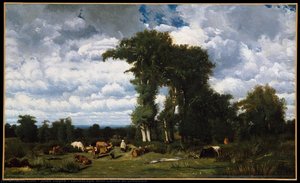
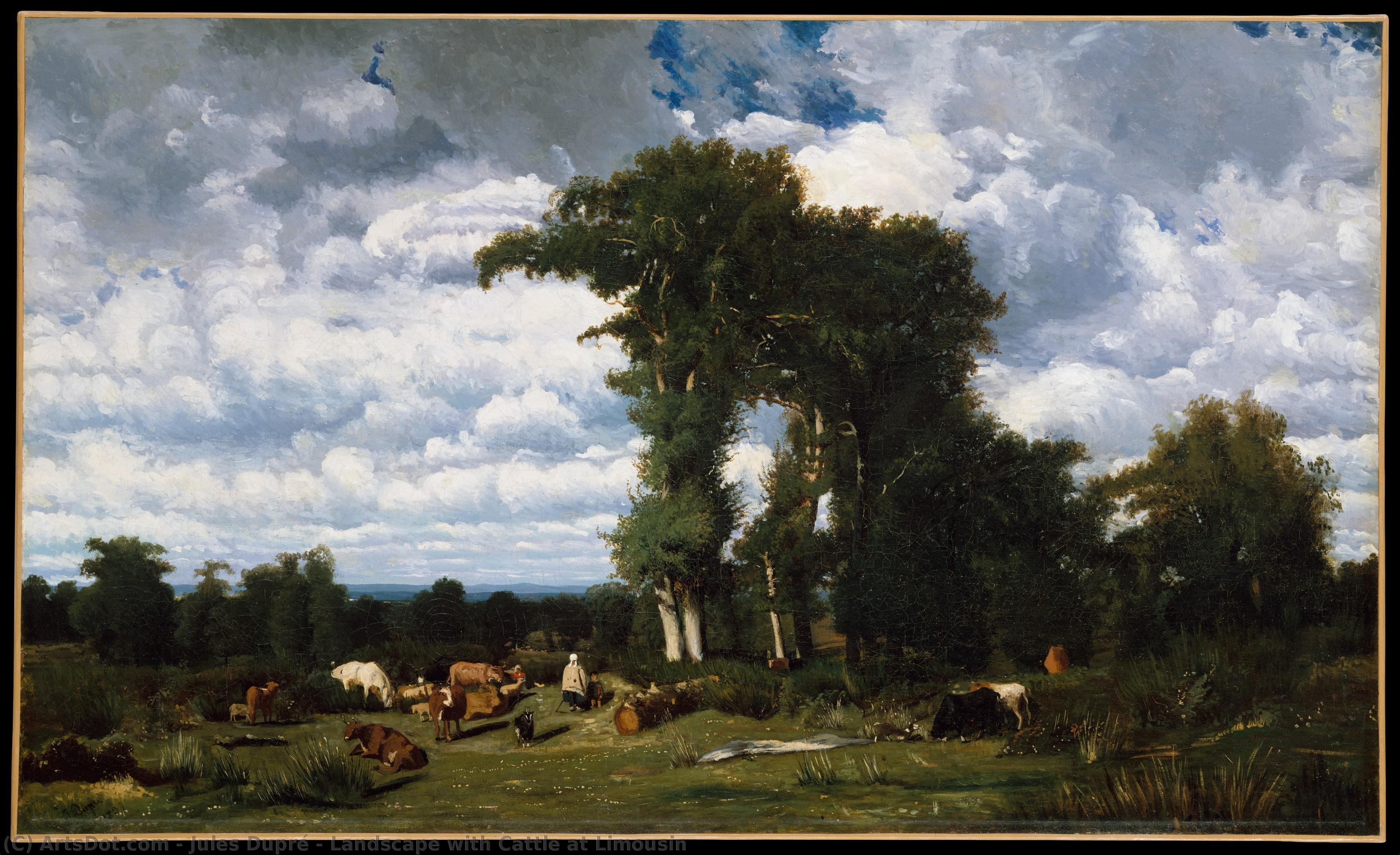
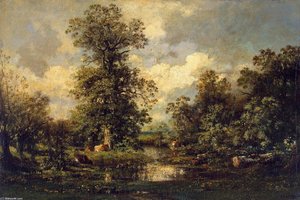
Landscape with Cattle at Limousin
 Oil On Canvas
- WallArt
- Barbizon School
 1837
1837- 19th Century
 79.0 x 131.0 cm
 Metropolitan Museum of Art
 Read More
Hand Made Oil Reproduction
Hand-painted oil on canvas in your size and frame, made to order by our artists. ( Buy Print Buy Image)




P118B $10

P118H $10

P118W $10

P438Z $10

P508JH $12

P508YH $12

P805H $10

P805Z $10

P919BZ $10

P919G $10

P919XJ $10

P959ZH $10

P968JZ $12

W106C $8

W218G $10

W218JH $8

W218Y $10

W307PJ $10

W316G $10

W316PJ $8

W316Y $10

W398PJ $8

W4111J $10

W500HY $15

W500JH $15

W692G $12

W849H $8

W940BG $15

W953PJ $8




Pick from our preset sizes that match the artwork's original proportions.

You may enter your own dimensions to fit a specific frame or space. If your selected size does not match the original image's proportions, we will either crop the artwork or extend the painting with additional hand-painted elements. A digital mockup will be sent for your approval before production begins.
Please note that the on-screen preview does not reflect the actual cropping or extension. Only the mockup will accurately show the final composition.
While custom sizes are available, we recommend selecting a dimension from the predefined list to preserve the original proportions.
After order, ArtsDot.com team will email client for instructions and provide a mockup preview
Worldwide Delivery () in 3/4 weeks instead of standard 5 weeks. (16 August). No compromise on quality.

Free Worldwide Express Shipping

High-Quality Linen Canvas

Full Shipping Insurance

Customs Tax Refund Guarantee

True Color Matching Guarantee

60-Day Return Policy (Defects Only)

100% Money-Back Guarantee

Bulk Discount Offer
 Glass option is only available in size under 110 CM

Landscape with Cattle at Limousin
Reproduction Medium
Reproduction Size
-


Total Price
$ 263
Artwork Description
The Drama of the Pastoral: Capturing Movement in Dupre's Landscape
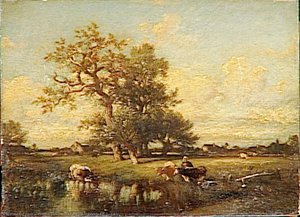
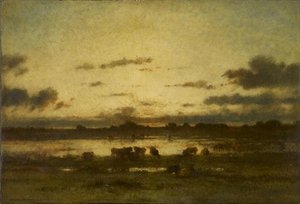
To stand before Jules Dupré’s Landscape with Cattle at Limousin is to be enveloped by a moment suspended between tranquility and impending drama. This magnificent oil on canvas, dating from 1837, transports the viewer deep into the heart of rural France. It is more than just a depiction of grazing cattle beneath an expansive sky; it is a masterful study in atmospheric tension. Duppré captures that fleeting energy inherent in nature—the subtle stir among the herd, the rustle within the foliage—all orchestrated under a sky that refuses to settle into mere placidity. The composition itself guides the eye across a rich tapestry of greens and browns, anchored by the strong horizontal sweep of the earth meeting the vastness above.
A Study in Light and Shadow: Technique and Chromatic Mastery
Technically, this piece showcases Duppré’s unique ability to manipulate light for maximum emotional effect. While the overall impression suggests a diffused, perhaps overcast day, it is within the interplay of light and shadow that the painting finds its true dynamism. The artist employs a dramatic chromatic structuring, contrasting brilliant highlights against deep, ominous cloud formations. One can almost feel the weight of those encroaching dark clouds pressing down upon the pastoral scene. The visible brushwork speaks to an energetic hand at work; it is not merely smooth illusion but a built-up materiality, particularly noticeable in the thick impasto that gives texture and palpable depth to the foliage and the grazing animals. This commitment to visible technique elevates the painting from mere representation to profound sensory experience.
Echoes of Influence: The Barbizon School Context
Within the context of the Barbizon School, Duppré carved out a distinct niche. While many of his peers explored lyrical beauty, Dupré possessed an almost dramatic soul, drawn instead to nature’s more tempestuous moods. His journey to England and his encounter with Constable are key to understanding this work; he absorbed the sense of raw movement characteristic of British landscape painting, integrating it into his own French sensibility. This synthesis results in a piece that feels both deeply rooted in classical observation and thrillingly modern in its emotional pitch. It is a dialogue between disciplined study and untamed feeling.
Symbolism and Emotional Resonance for the Modern Collector
For the contemporary admirer, this artwork offers more than just decorative beauty; it provides an emotional anchor. The subject matter—the cattle grazing peacefully—symbolizes a deep, enduring connection to the rhythms of rural life, a yearning for simplicity amidst modern complexity. Yet, the sky reminds us that nature is inherently powerful, capable of both sublime calm and sudden fury. Owning a reproduction of Landscape with Cattle at Limousin allows one to bring this carefully balanced tension into your own space. It serves as a constant, evocative reminder of the grandeur found in the natural world, making it a breathtaking focal point for any sophisticated interior design scheme or personal collection.
Related Artworks
Artist Biography
The Dramatic Soul of Barbizon
Jules Dupré (1811–1889) stands as a cornerstone figure within the Barbizon School, an artistic movement that championed raw observation and emotional resonance in landscape painting. Unlike his contemporaries like Corot who often sought lyrical beauty and tranquil stillness, Dupré wrestled with the darker, more tempestuous side of nature. He possessed a unique ability to capture the fury of storms, the melancholic grandeur of twilight, and the relentless energy of the elements, conveying these experiences with unparalleled intensity. Born in Nantes, France, Dupré’s artistic journey began amidst a burgeoning fascination for the natural world and its capacity to evoke profound, often turbulent, human feelings.
His early life provided a foundation of meticulous attention to detail and an appreciation for craftsmanship, qualities honed by his father’s porcelain manufacturing business. This formative experience would later translate into his own artistic endeavors, particularly evident in his early works exploring the intricacies of ceramic decoration. As an apprentice porcelain decorator, he learned the discipline of fine lines and textures, a skill set that would eventually evolve into his masterful handling of atmospheric depth and organic forms.
A Vision Shaped by Storm and Sky
The trajectory of Dupré’s career was irrevocably shaped by his encounter with the groundbreaking canvases of John Constable. This exposure to English landscape traditions ignited a desire to capture the essence of nature’s dynamism—the relentless push and pull of wind-driven foliage and the dramatic interplay of light and shadow during the most volatile hours of the day. Traveling to Great Britain in 1831, Dupré made profound studies of these English masters, returning to France with a portfolio of imagery that would redefine his approach to the landscape.
He found particular inspiration in the coastal districts around Southampton and Plymouth. These vast expanses of water, reflecting turbulent skies, provided him with the perfect laboratory to study the tempestuous motion of storm clouds and the movement of seas. His paintings from this period are not merely depictions of scenery; they are visceral expressions of mood and feeling, imbued with a palpable sense of drama and even sorrow. By embracing the Barbizon aesthetic, Dupré prioritized expressive color palettes and bold brushstrokes over idealized or polished representations, allowing the texture of the paint itself to mirror the ruggedness of the earth.
Legacy of the Barbizon Master
As a key figure in the Barbizon group, Dupré developed close ties with other legendary painters, including Théodore Rousseau. His rise within the French art establishment was marked by significant milestones, such as his acceptance into the Salon and receiving official recognition through medals for his landscapes. His work became synonymous with a certain sonorous and resonant color harmony, where the light of a setting sun or the gloom of an approaching gale could be felt by the viewer as much as seen.
Today, Jules Dupré is remembered as one of the most influential 19th-century French landscape artists. His contribution to art lies in his ability to bridge the gap between pure observation and romantic emotion. Through works such as La Petite Charrette, Cows Crossing a Ford, and his evocative depictions of river landscapes, he taught generations of artists that nature is not just a subject to be painted, but a powerful force to be experienced. His legacy remains etched in the heavy, atmospheric textures and the dramatic, breathing skies that continue to captivate the modern imagination.
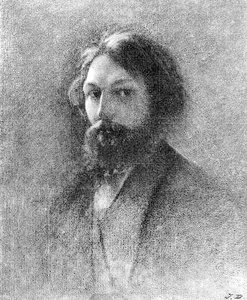
jules dupré
1811 - 1889 , France
Quick Facts
- Artistic Movement Or Style: Barbizon School
- Artists Or Movements Influenced By This Artist: ['Romantic Painting']
- Artists Who Influenced This Artist: ['Constable']
- Date Of Birth: Nantes, France (1811)
- Date Of Death: October 6, 1889
- Full Name: Jules Dupré
- Nationality: French
- Notable Artworks:
- Morning and Evening at the Louvre
- Crossing the Bridge in the Wallace Collection
- Place Of Birth: France
Related Articles
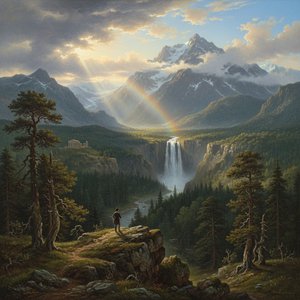
Evoking Nature's Sublime: A Comprehensive Exploration of 19th-Century Landscape Painting
Explore the captivating world of 19th-century landscape painting! Discover renowned artists like Friedrich & Monet, key movements, and find the perfect artwork to bring nature's serenity into your home. Expert insights at ArtsDot.
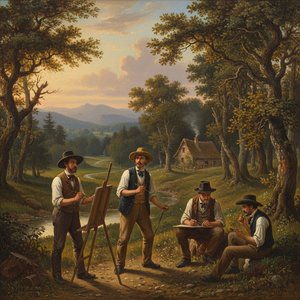
The Barbizon School: Pioneering Realism & the Pastoral Vision in 19th-Century French Painting
Explore the Barbizon School's pivotal role in 19th-century French painting. Discover how these artists revolutionized landscape art with their commitment to Realism and a profound connection to nature. Learn about key figures like Rousseau, Millet & Corot.

Beyond the Horizon: 10 Landscape Masterpieces for Your Home Decor
Journey through 10 breathtaking landscape paintings by Monet, Van Gogh & more! Explore iconic artworks, artistic techniques & find inspiration for your home decor. Museum-quality reproductions at ArtsDot.com. Discover all masterpieces on ArtsDot.com
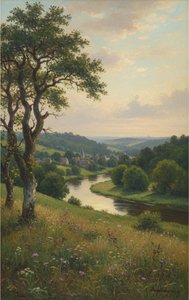
Henri-Joseph Harpignies: Capturing the Poetic Essence of the French Landscape
Explore the serene landscapes of Henri-Joseph Harpignies, a master of the Barbizon School. Discover his atmospheric paintings, recurring themes & enduring legacy in 19th-century French art. Learn more at ArtsDot.
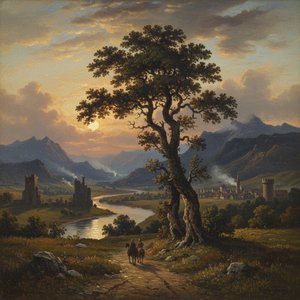
Paul Huet: Capturing the Essence of French Romanticism Through Light and Landscape
Explore the captivating world of Paul Huet (1803-1869), a master of French Romantic landscape painting. Discover his influence on Barbizon & Impressionism, and browse high-quality reproductions at ArtsDot.