 Preview
 Send
Send Share
Share
 Details

 Download
 Similars
 X-Ray
X-Ray Diaporama
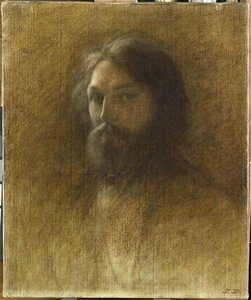
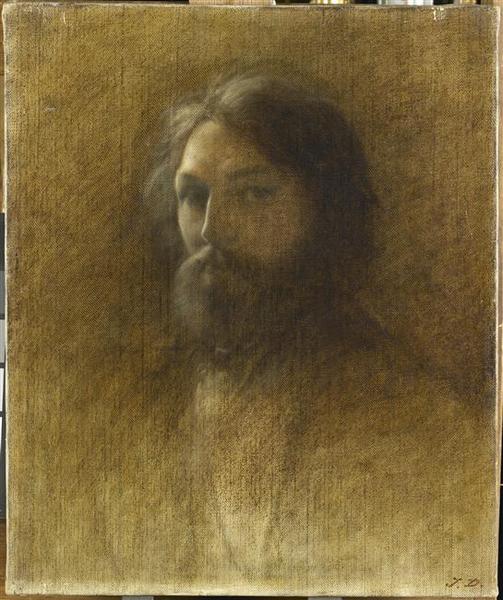
Portrait de l'artiste


 Read More
Hand Made Oil Reproduction
Hand-painted oil on canvas in your size and frame, made to order by our artists. ( Buy Print Buy Image)




P118B $10

P118H $10

P118W $10

P438Z $10

P508JH $12

P508YH $12

P805H $10

P805Z $10

P919BZ $10

P919G $10

P919XJ $10

P959ZH $10

P968JZ $12

W106C $8

W218G $10

W218JH $8

W218Y $10

W307PJ $10

W316G $10

W316PJ $8

W316Y $10

W398PJ $8

W4111J $10

W500HY $15

W500JH $15

W692G $12

W849H $8

W940BG $15

W953PJ $8




Pick from our preset sizes that match the artwork's original proportions.

You may enter your own dimensions to fit a specific frame or space. If your selected size does not match the original image's proportions, we will either crop the artwork or extend the painting with additional hand-painted elements. A digital mockup will be sent for your approval before production begins.
Please note that the on-screen preview does not reflect the actual cropping or extension. Only the mockup will accurately show the final composition.
While custom sizes are available, we recommend selecting a dimension from the predefined list to preserve the original proportions.
After order, ArtsDot.com team will email client for instructions and provide a mockup preview
Worldwide Delivery () in 3/4 weeks instead of standard 5 weeks. (17 August). No compromise on quality.

Free Worldwide Express Shipping

High-Quality Linen Canvas

Full Shipping Insurance

Customs Tax Refund Guarantee

True Color Matching Guarantee

60-Day Return Policy (Defects Only)

100% Money-Back Guarantee

Bulk Discount Offer
 Glass option is only available in size under 110 CM

Portrait de l'artiste
Reproduction Medium
Reproduction Size
-


Total Price
$ 263
Artwork Description
Portrait de l'artiste au soleil couchant : Une Ode à la Nature Dramatique
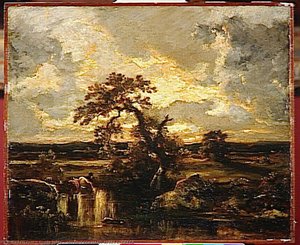
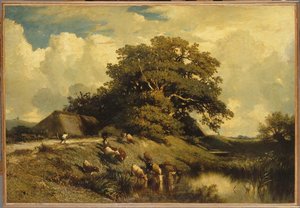
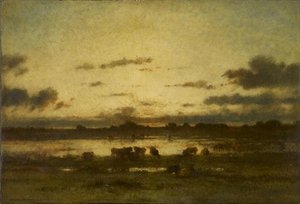
La peinture "Portrait de l’artiste au soleil couchant" attribuée à Jules Dupré représente une œuvre emblématique du mouvement Barbizon, incarnant les préoccupations esthétiques et émotionnelles qui définissent cette période artistique française. Datée probablement vers 1875, cette huile sur toile témoigne d'une maîtrise exceptionnelle de la couleur et d’une sensibilité profonde pour capturer la puissance brute et la beauté fugace de la nature sauvage. Dupré, fidèle à l'esprit du Barbizon, abandonne les effets lumineux et atmosphériques privilégiés par les Impressionnistes pour privilégier une approche directe et instinctive, inspirée par les observations minutieuses faites sur le terrain.- Sujet : Le portrait présente Jules Dupré lui-même, assis au soleil couchant dans un paysage rural calme mais chargé d’énergie atmosphérique. La composition est centrée, mettant en évidence la tête et les épaules du peintre, créant une intimité remarquable tout en guidant le regard vers le sujet principal.
- Style : Le style de Dupré oscille entre réalisme et expressionnisme, cherchant à traduire les émotions ressenties par l’artiste face à la beauté naturelle sans recourir à des artifices stylistiques excessifs. Cette recherche d'authenticité est renforcée par une attention particulière aux détails anatomiques et aux textures superficielles.
- Technique : La peinture utilise une technique raffinée basée sur le mélange délicat de couleurs vives et profondes pour évoquer les effets lumineux du soleil couchant. Les coups de pinceau sont visibles mais soigneusement fondus entre eux, créant une impression de douceur tout en conservant la richesse des matériaux utilisés. Cette approche technique souligne l'importance de l'observation directe et de la maîtrise du pigment pour exprimer pleinement la puissance émotionnelle de l’œuvre.
Les Couleurs Éarthyennes : Une Palette Inspirée par les Paysages Bretonnes
La palette chromatique utilisée par Dupré est dominée par des tons terreux – ocres, roux et jaunes pâles – reflétant la richesse des paysages bretons qui furent une source d’inspiration constante pour le peintre. Ces couleurs chaleureuses créent une atmosphère paisible mais pleine de mouvement, évoquant les dernières heures du jour et la beauté sauvage de la nature. Les nuances subtiles sont utilisées avec parcimonie pour définir les traits du visage et les détails des cheveux, témoignant d'une précision remarquable et d’une sensibilité artistique profonde. Cette maîtrise de la couleur est caractéristique du Barbizon et souligne l'importance de l'expérience visuelle dans la création artistique.Symbolisme et Émotion : Une Exploration Intérieure à travers la Nature
Au-delà de sa beauté esthétique, "Portrait de l’artiste au soleil couchant" porte une signification symbolique importante. La lumière douce et diffuse du soleil couchant représente la sérénité et la contemplation, tandis que le paysage rural calme contraste avec la puissance émotionnelle exprimée par le peintre lui-même. L'absence de fond accentue l'attention portée à l’individu et à son monde intérieur, invitant le spectateur à une réflexion sur les liens entre l’artiste et sa propre sensibilité. Cette œuvre témoigne d’une profonde connaissance des mécanismes psychologiques et émotionnels qui sous-tendent la création artistique et souligne l’importance de l’expérience personnelle dans la recherche esthétique.Un Héritage Barbizon : Une Réinterprétation Dramatique du Paysage
Cette peinture constitue un exemple parfait de l'esprit du mouvement Barbizon, qui cherchait à dépasser les préoccupations esthétiques superficielles des Impressionnistes pour accéder à une véritable expression émotionnelle. Jules Dupré parvient à traduire la puissance brute et la beauté fugace de la nature sauvage avec une sensibilité remarquable, utilisant une technique raffinée et une palette chromatique riche pour évoquer les dernières heures du jour et la beauté sauvage de la région bretonne. Cette œuvre demeure un témoignage précieux de l’histoire artistique française et continue d'inspirer les artistes contemporains et les amateurs d’art à travers le monde.Related Artworks
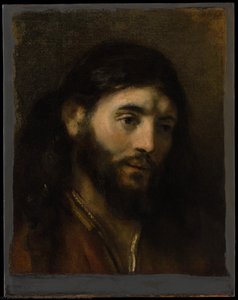
Artist Biography
The Dramatic Soul of Barbizon
Jules Dupré (1811–1889) stands as a cornerstone figure within the Barbizon School, an artistic movement that championed raw observation and emotional resonance in landscape painting. Unlike his contemporaries like Corot who often sought lyrical beauty and tranquil stillness, Dupré wrestled with the darker, more tempestuous side of nature. He possessed a unique ability to capture the fury of storms, the melancholic grandeur of twilight, and the relentless energy of the elements, conveying these experiences with unparalleled intensity. Born in Nantes, France, Dupré’s artistic journey began amidst a burgeoning fascination for the natural world and its capacity to evoke profound, often turbulent, human feelings.
His early life provided a foundation of meticulous attention to detail and an appreciation for craftsmanship, qualities honed by his father’s porcelain manufacturing business. This formative experience would later translate into his own artistic endeavors, particularly evident in his early works exploring the intricacies of ceramic decoration. As an apprentice porcelain decorator, he learned the discipline of fine lines and textures, a skill set that would eventually evolve into his masterful handling of atmospheric depth and organic forms.
A Vision Shaped by Storm and Sky
The trajectory of Dupré’s career was irrevocably shaped by his encounter with the groundbreaking canvases of John Constable. This exposure to English landscape traditions ignited a desire to capture the essence of nature’s dynamism—the relentless push and pull of wind-driven foliage and the dramatic interplay of light and shadow during the most volatile hours of the day. Traveling to Great Britain in 1831, Dupré made profound studies of these English masters, returning to France with a portfolio of imagery that would redefine his approach to the landscape.
He found particular inspiration in the coastal districts around Southampton and Plymouth. These vast expanses of water, reflecting turbulent skies, provided him with the perfect laboratory to study the tempestuous motion of storm clouds and the movement of seas. His paintings from this period are not merely depictions of scenery; they are visceral expressions of mood and feeling, imbued with a palpable sense of drama and even sorrow. By embracing the Barbizon aesthetic, Dupré prioritized expressive color palettes and bold brushstrokes over idealized or polished representations, allowing the texture of the paint itself to mirror the ruggedness of the earth.
Legacy of the Barbizon Master
As a key figure in the Barbizon group, Dupré developed close ties with other legendary painters, including Théodore Rousseau. His rise within the French art establishment was marked by significant milestones, such as his acceptance into the Salon and receiving official recognition through medals for his landscapes. His work became synonymous with a certain sonorous and resonant color harmony, where the light of a setting sun or the gloom of an approaching gale could be felt by the viewer as much as seen.
Today, Jules Dupré is remembered as one of the most influential 19th-century French landscape artists. His contribution to art lies in his ability to bridge the gap between pure observation and romantic emotion. Through works such as La Petite Charrette, Cows Crossing a Ford, and his evocative depictions of river landscapes, he taught generations of artists that nature is not just a subject to be painted, but a powerful force to be experienced. His legacy remains etched in the heavy, atmospheric textures and the dramatic, breathing skies that continue to captivate the modern imagination.
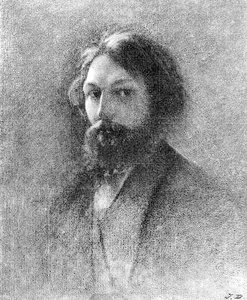
jules dupré
1811 - 1889 , France
Quick Facts
- Artistic Movement Or Style: Barbizon School
- Artists Or Movements Influenced By This Artist: ['Romantic Painting']
- Artists Who Influenced This Artist: ['Constable']
- Date Of Birth: Nantes, France (1811)
- Date Of Death: October 6, 1889
- Full Name: Jules Dupré
- Nationality: French
- Notable Artworks:
- Morning and Evening at the Louvre
- Crossing the Bridge in the Wallace Collection
- Place Of Birth: France
Related Articles
Evoking Nature's Sublime: A Comprehensive Exploration of 19th-Century Landscape Painting
Explore the captivating world of 19th-century landscape painting! Discover renowned artists like Friedrich & Monet, key movements, and find the perfect artwork to bring nature's serenity into your home. Expert insights at ArtsDot.

Beyond the Horizon: 10 Landscape Masterpieces for Your Home Decor
Journey through 10 breathtaking landscape paintings by Monet, Van Gogh & more! Explore iconic artworks, artistic techniques & find inspiration for your home decor. Museum-quality reproductions at ArtsDot.com. Discover all masterpieces on ArtsDot.com

Evocations of Place: A Historical Journey Through Landscape Art
Explore the rich history of landscape art with ArtsDot. Discover renowned artists, movements like Impressionism & tonalism, and expert guidance for collecting timeless pieces. Find your perfect serene escape today!

Romantic Landscapes: 10 Masterpieces for Your Home | ArtsDot
Journey through 10 Romantic landscape masterpieces by Friedrich, Turner & Cole. Explore emotional art, sublime nature scenes & iconic 19th-century paintings. Find museum-quality reproductions for your home at ArtsDot.com – discover the full collection online!

Evocations of Place: A Historical Journey Through Landscape Art
Explore the rich history of landscape art with ArtsDot. Discover renowned artists, movements like Impressionism & Romanticism, and expert guidance for collecting timeless pieces. Find your perfect serene escape today!