 Preview
 Send
Send Share
Share
 Details

 Download
 Similars
 X-Ray
X-Ray Diaporama
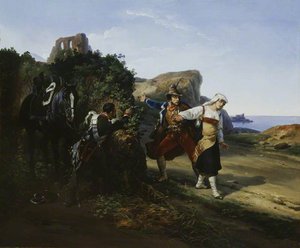
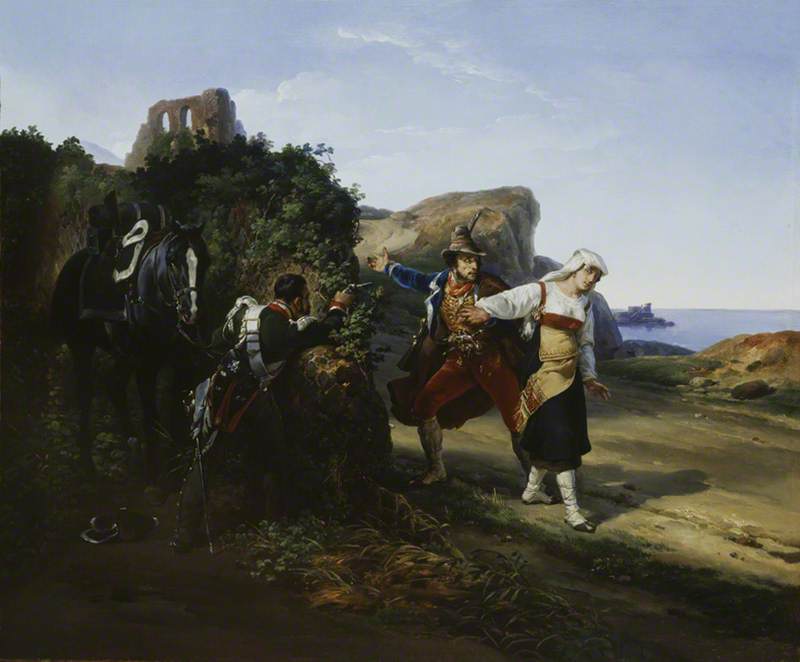
The Brigand Betrayed
 Oil On Canvas
- WallArt
- Romantic Realism
 1830
1830 53.0 x 64.0 cm
 The Wallace Collection
 Read More
Hand Made Oil Reproduction
Hand-painted oil on canvas in your size and frame, made to order by our artists. ( Buy Print Buy Image)




P118B $10

P118H $10

P118W $10

P438Z $10

P508JH $12

P508YH $12

P805H $10

P805Z $10

P919BZ $10

P919G $10

P919XJ $10

P959ZH $10

P968JZ $12

W106C $8

W218G $10

W218JH $8

W218Y $10

W307PJ $10

W316G $10

W316PJ $8

W316Y $10

W398PJ $8

W4111J $10

W500HY $15

W500JH $15

W692G $12

W849H $8

W940BG $15

W953PJ $8




Pick from our preset sizes that match the artwork's original proportions.

You may enter your own dimensions to fit a specific frame or space. If your selected size does not match the original image's proportions, we will either crop the artwork or extend the painting with additional hand-painted elements. A digital mockup will be sent for your approval before production begins.
Please note that the on-screen preview does not reflect the actual cropping or extension. Only the mockup will accurately show the final composition.
While custom sizes are available, we recommend selecting a dimension from the predefined list to preserve the original proportions.
After order, ArtsDot.com team will email client for instructions and provide a mockup preview
Worldwide Delivery () in 3/4 weeks instead of standard 5 weeks. (23 August). No compromise on quality.

Free Worldwide Express Shipping

High-Quality Linen Canvas

Full Shipping Insurance

Customs Tax Refund Guarantee

True Color Matching Guarantee

60-Day Return Policy (Defects Only)

100% Money-Back Guarantee

Bulk Discount Offer
 Glass option is only available in size under 110 CM

The Brigand Betrayed
Reproduction Medium
Reproduction Size
-


Total Price
$ 263
Artwork Description
The Dramatic Landscape of Betrayal: An Exploration of Horace Vernet’s “The Brigand Betrayed”
Horace Vernet's "The Brigand Betrayed," completed in 1830, stands as a cornerstone of Romantic painting and exemplifies Vernet’s masterful ability to convey both visceral emotion and meticulous observation. More than just a depiction of a bandit encounter, the canvas delves into themes of deception, vulnerability, and the perilous intersection between human ambition and natural indifference—elements that continue to resonate powerfully with audiences today.A Masterful Synthesis of Observation and Emotion
Vernet’s artistic approach was fundamentally rooted in realism, yet he skillfully elevated it beyond mere representation. Unlike his predecessors who favored idealized forms, Vernet sought to capture the immediacy of experience, immersing viewers within a landscape fraught with tension. The rocky terrain dominates the composition, mirroring the instability inherent in the situation unfolding before us—a visual metaphor for the precariousness of trust and loyalty. This deliberate choice aligns perfectly with the Romantic ethos, prioritizing feeling over intellect as a conduit for artistic expression.Technique: Vernet’s Brushstrokes Capture Movement and Atmosphere
The painting's technique is characterized by loose, expressive brushstrokes that imbue the scene with palpable dynamism. Vernet employed a palette dominated by earthy tones—ochres, browns, and greys—creating an atmosphere of brooding seriousness. He skillfully utilized chiaroscuro – dramatic contrasts between light and dark – to sculpt the figures against the backdrop of the landscape, intensifying their emotional impact. The artist’s meticulous attention to detail is evident in the rendering of textures: the rough stone surface, the weathered clothing of the bandits, and the delicate folds of the women's dresses—all contribute to a richly layered visual experience.Historical Context: Napoleon’s Influence on Vernet’s Vision
“The Brigand Betrayed” was created during Napoleon Bonaparte’s reign, marking a pivotal moment in French artistic history. Vernet, appointed director of the Académie Française in Rome, embraced the grandeur and heroism championed by Napoleon—though he tempered this enthusiasm with a profound respect for natural beauty. The painting reflects the Romantic fascination with portraying heroic figures amidst challenging environments, mirroring themes explored in other celebrated works from the period. It’s important to note that Vernet's earlier paintings of bandits, notably “Italian Brigands Surprised by Papal Troops,” foreshadowed this stylistic shift and solidified his reputation as a pioneer of Romantic realism.Symbolism: Deception and Vulnerability Embodied in Form and Color
Beyond its technical prowess, "The Brigand Betrayed" is laden with symbolic significance. The central figures—the bandit attempting to lure the woman into a trap—represent the dangers inherent in manipulative behavior and the vulnerability of innocence confronted by deceitful intentions. The color palette reinforces these themes: the dominant reds and blues symbolize passion and aggression versus calm composure, respectively. Furthermore, the positioning of the figures against the imposing landscape underscores humanity’s insignificance when compared to the forces of nature—a recurring motif within Romantic art that speaks to a broader contemplation of mortality and existential uncertainty.Emotional Resonance: A Painting That Still Captivates
Ultimately, Vernet's "The Brigand Betrayed" succeeds in eliciting profound emotional responses from viewers. The painting’s dramatic lighting, coupled with its expressive brushstrokes, conveys a sense of urgency and suspense—drawing the eye into the unfolding drama. More importantly, it compels contemplation on fundamental questions concerning trust, betrayal, and the human condition. Its enduring appeal testifies to Vernet's ability to transform observation into artful storytelling, securing his place as one of the most influential painters of the Romantic era.Related Artworks
Artist Biography
Émile Jean-Horace Vernet: A Life in Paint
Early Life and Family Legacy
Émile Jean-Horace Vernet was born on June 30, 1789, in Paris, France – remarkably, within the Louvre Palace while his parents resided there during the French Revolution. He came from a distinguished artistic lineage; his father was Carle Vernet, also a renowned painter, and his grandfather was Claude Joseph Vernet, celebrated for his marine landscapes. This familial background profoundly shaped his early exposure to art and laid the foundation for his own career.Artistic Development and Early Influences
Vernet quickly developed a preference for depicting contemporary life rather than adhering to the high-minded seriousness of academic Classicism. He rejected idealized representations, favoring a more realistic and vernacular style. During Napoleon Bonaparte’s reign, he began portraying French soldiers with a newfound familiarity, diverging from the grand, Davidian approach. Early works like “The Taking of an Entrenched Camp” showcased his developing character and directness. His artistic development was also influenced by observing the realities of war and military life firsthand.Rise to Prominence During the Restoration
The Bourbon Restoration brought Vernet significant recognition. He secured a series of commissions from the Duc d'Orleans (the future King Louis-Philippe) for battle paintings. Critics were impressed by his speed and accuracy, noting that his works combined historical detail with compelling landscapes. His “Four Battles” series – including “The Battle of Jemappes,” “The Battle of Montmirail,” “The Battle of Hanau,” and “The Battle of Valmy” – established him as a leading battle painter of the era.Director of the French Academy in Rome
Vernet’s talent and reputation led to his appointment as director of the French Academy in Rome from 1829 to 1835. This period allowed him to study classical art and architecture, further refining his skills and broadening his artistic horizons. However, he remained committed to representing contemporary subjects upon his return to France.Patronage Under Louis-Philippe and the Second Empire
King Louis-Philippe became a prolific patron of Vernet, commissioning him to decorate the entire Constantine room at the Palace of Versailles within three years. These paintings depicted French colonization in Algeria, portraying scenes of military conquest and “civilizing” efforts. After the Revolution of 1848, Napoléon III also became a supporter, continuing Vernet’s commissions during the Second Empire. He continued to depict heroic representations of the French army, maintaining his commitment to realism.The Crimean War and Later Years
Vernet accompanied the French army during the Crimean War, producing paintings such as “The Battle of the Alma.” While not as well-received as his earlier works, these pieces demonstrated his dedication to documenting contemporary events. He famously refused a request to remove an unpopular general from one of his paintings, stating his commitment to historical truth.Major Achievements and Historical Significance
- Vernet’s realistic depictions of soldiers and battle scenes revolutionized military painting in France.
- His work provides valuable insights into 19th-century French society, politics, and colonial endeavors.
- He skillfully blended historical accuracy with artistic flair, creating compelling and visually striking compositions.
- His paintings served as powerful propaganda tools, shaping public perception of the French army and its campaigns.
Legacy
Émile Jean-Horace Vernet died in Paris on January 17, 1863. His work continues to be studied and admired for its historical significance and artistic merit. He is also a curious footnote in popular culture as the alleged relative of Sherlock Holmes (according to Arthur Conan Doyle’s story “The Adventure of the Greek Interpreter”). Vernet's legacy lies in his ability to capture the spirit of 19th-century France through vivid, realistic, and often dramatic depictions of war, colonialism, and everyday life.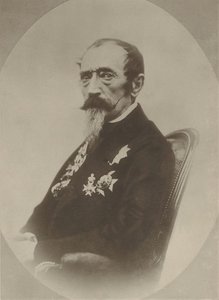
emile jean horace vernet
1789 - 1863
Quick Facts
- Birth Date: 1789
- Death Date: 1863
- Influenced By:
- Carle Vernet
- Claude Joseph Vernet
- Movement:
- Romanticism
- Orientalism
- Name: Émile Jean-Horace Vernet
- Nationality: French
- Notable Works:
- The Battle of Valmy
- Polish Prometheus
- The Artist's Studio
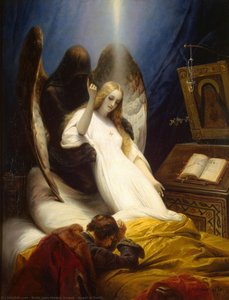
- Angel of Death
Related Articles
Émile Jean Horace Vernet: Romantic Realism & Depicting 19th-Century Life
Explore the life & art of Émile Jean Horace Vernet, a master of Romantic Realism. Discover his captivating battle scenes, portraits, and Orientalist works – a window into 19th-century France. Learn about his techniques & enduring legacy.

Romantic Realism's Finest: 10 Masterpieces for Your Home | ArtsDot
Explore 10 defining masterpieces of Romantic Realism! Discover Courbet, Millet & Daumier's powerful paintings—capturing emotion and social realities. Find museum-quality reproductions for your home at ArtsDot.com.
Simon Vouet: A Baroque Master's Journey from Italian Influence to French Classicism
Explore the life & art of Simon Vouet, a pivotal French Baroque painter who introduced Italian styles to France. Discover his masterpieces and lasting influence on 17th-century art.
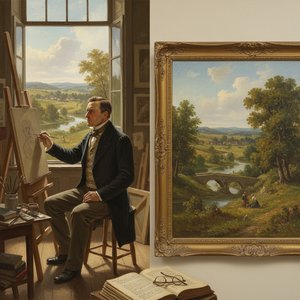
The Poetic Truth of Observation: Exploring 19th-Century Realism in Painting
Explore the captivating world of 19th-century Realism! Discover key artists like Courbet & Millet, masterpieces, and the powerful social commentary behind this influential art movement. Expert insights at ArtsDot.
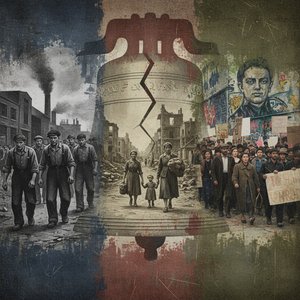
Echoes of Society: Exploring Social Realism's Enduring Legacy in Art
Explore the powerful world of Social Realism art! Discover key artists, masterpieces & its profound social commentary. Expert insights into this influential movement's history and enduring legacy.