 Preview
 Send
Send Share
Share
 Details

 Download
 Similars
 X-Ray
X-Ray Diaporama
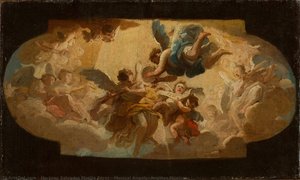
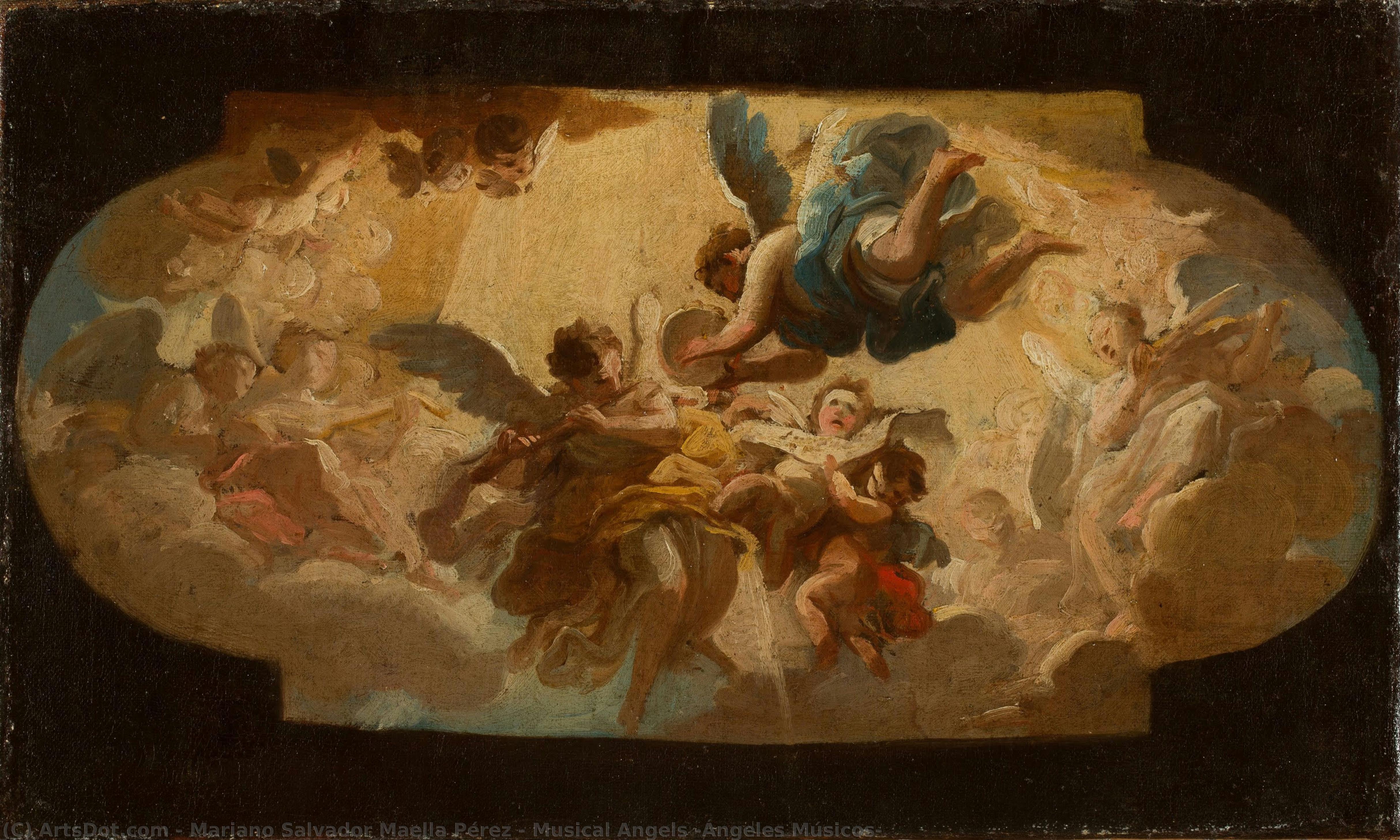
Musical Angels (Ángeles Músicos)
 Oil On Canvas
- WallArt
- Baroque
 Early Modern
 5.0 x 51.0 cm
 Zaragoza Museum
 Read More
Hand Made Oil Reproduction
Hand-painted oil on canvas in your size and frame, made to order by our artists. ( Buy Print Buy Image)




P118B $10

P118H $10

P118W $10

P438Z $10

P508JH $12

P508YH $12

P805H $10

P805Z $10

P919BZ $10

P919G $10

P919XJ $10

P959ZH $10

P968JZ $12

W106C $8

W218G $10

W218JH $8

W218Y $10

W307PJ $10

W316G $10

W316PJ $8

W316Y $10

W398PJ $8

W4111J $10

W500HY $15

W500JH $15

W692G $12

W849H $8

W940BG $15

W953PJ $8




Pick from our preset sizes that match the artwork's original proportions.

You may enter your own dimensions to fit a specific frame or space. If your selected size does not match the original image's proportions, we will either crop the artwork or extend the painting with additional hand-painted elements. A digital mockup will be sent for your approval before production begins.
Please note that the on-screen preview does not reflect the actual cropping or extension. Only the mockup will accurately show the final composition.
While custom sizes are available, we recommend selecting a dimension from the predefined list to preserve the original proportions.
After order, ArtsDot.com team will email client for instructions and provide a mockup preview
Worldwide Delivery () in 3/4 weeks instead of standard 5 weeks. (16 August). No compromise on quality.

Free Worldwide Express Shipping

High-Quality Linen Canvas

Full Shipping Insurance

Customs Tax Refund Guarantee

True Color Matching Guarantee

60-Day Return Policy (Defects Only)

100% Money-Back Guarantee

Bulk Discount Offer
 Glass option is only available in size under 110 CM

Musical Angels (Ángeles Músicos)
Reproduction Medium
Reproduction Size
-


Total Price
$ 338
Artwork Description
A Celestial Symphony in Light and Shadow
In the breathtaking expanse of Musical Angels (Ángeles Músicos), the viewer is not merely observing a painting but is being invited into a divine orchestration. This exquisite Baroque-style oil masterpiece captures a moment of eternal celebration within a celestial realm, where the boundaries between the earthly and the divine dissolve through the power of music. The composition is a whirlwind of motion, characterized by swirling angelic figures that seem to emerge from a luminous center, their forms intertwined with soft, cloud-like formations. As the eye wanders through this heavenly assembly, one encounters a breathtaking use of chiaroscuro, where intense, radiant light pierces through deep, velvety shadows, creating a dramatic tension that is quintessential to the Baroque spirit. It is a scene that breathes with energy, pulling the observer into a rhythmic dance of light and movement.
The technical mastery displayed in this work speaks to a profound understanding of texture and luminosity. The artist employs a meticulous layering of oil paints on canvas, utilizing an impasto technique in the most brilliant areas to suggest the physical weight of divine light. This tactile quality gives the golden hues and pale yellows a shimmering, almost three-dimensional presence against the darker, more somber tones of the background. The color palette is a sophisticated harmony of warmth; rich ochres and golds dominate the central figures, providing a sense of warmth and sanctity, while deep blues and earthy browns ground the composition, offering a necessary contrast that enhances the perceived depth of the heavens. Every brushstroke serves to build volume, making the drapery of the angels' garments feel heavy with grace and their limbs appear fluidly caught in mid-motion.
Beyond its visual splendor, the painting is steeped in profound symbolism. The inclusion of musical instruments—the delicate flutes and the resonant lyres—serves as a metaphor for divine harmony, suggesting that the universe itself is composed of a sacred, mathematical beauty. Each angel acts as a vessel for spiritual grace, their very existence a testament to the joy of the celestial spheres. For the discerning collector or interior designer, this piece offers more than just decoration; it provides an emotional anchor. Whether placed in a grand hall or a quiet study, Musical Angels radiates an aura of reverence and peace. It is a window into an idealized realm, making it an incomparable choice for those looking to infuse their spaces with a sense of timeless elegance, spiritual depth, and the enduring magic of the Baroque era.
Related Artworks


Artist Biography
Robert Barker: The Pioneer of the Panorama
Born in Kells, County Meath, Ireland, in 1739, Robert Barker’s life was a fascinating blend of artistic innovation and entrepreneurial ambition. While often overshadowed by his invention – the panorama – Barker himself remains a somewhat enigmatic figure within art history. His career spanned decades, marked by a relentless pursuit of capturing expansive views and transforming them into immersive experiences for the public. Initially a portrait painter in London, Barker’s true legacy lies not just in individual paintings but in his groundbreaking creation of the panoramic spectacle.
Barker's early artistic training remains somewhat obscure, though he likely honed his skills within the established circles of London’s art scene. However, it was his keen observation and understanding of perspective – a subject increasingly explored during this period – that laid the foundation for his later success. He wasn’t simply copying landscapes; he was meticulously constructing them to create an illusion of vastness, a feat demanding considerable technical skill and a deep appreciation for spatial relationships.
The Birth of the Panorama
The genesis of the panorama can be traced back to 1792 when Barker unveiled his “Edinburgh from Calton Hill” in Leicester Square. This wasn’t merely a painting; it was a cylindrical canvas, meticulously painted to depict the city as seen from Calton Hill. Viewers stood on a central platform, gazing upwards at the panoramic scene, experiencing an unprecedented sense of immersion. The term "panorama" itself, derived from Greek words meaning “all-seeing,” perfectly captured the experience.
Barker’s innovation was revolutionary. He had effectively created a moving picture – albeit a static one – offering a comprehensive survey of a city that would have been impossible to achieve through traditional means. This concept quickly caught on, and Barker rapidly established himself as a hugely successful showman. His success wasn't just about the visual spectacle; it tapped into a growing public appetite for entertainment and a fascination with the burgeoning industrial world.
A Commercial Phenomenon
The demand for panoramic experiences was immense, leading Barker to construct a dedicated building in Leicester Square – a purpose-built panorama house. This structure allowed him to showcase larger and more detailed panoramas, further solidifying his position as a pioneer of the medium. He wasn’t just an artist; he was a shrewd businessman, recognizing the commercial potential of his invention and meticulously managing every aspect of the operation, from canvas production to ticket sales.
Barker's influence extended beyond London. He soon replicated his panoramas in other major cities across Europe, including Paris and Rome, adapting them to reflect local landscapes and architectural features. The concept of the panorama spread rapidly, inspiring artists like Franz Roubaud in Russia to create similar immersive experiences depicting historical battles and events.
Technique and Influence
Barker’s mastery of perspective was central to his success. He employed a complex system of foreshortening and aerial projection to create the illusion of depth and distance, techniques that were remarkably advanced for his time. His work demonstrated an understanding of how viewers would perceive space, anticipating the principles of visual perception that would later be formalized by artists like Leonardo da Vinci.
While often overshadowed by more celebrated painters of the era, Barker’s contribution to art history is undeniable. He didn't simply create beautiful paintings; he fundamentally altered the way people experienced and understood space. His invention paved the way for subsequent developments in visual media, including photography and cinema. His legacy endures not just through his original panoramas but also through the very concept of immersive viewing that continues to captivate audiences today.
Connections to Other Artists
Barker’s career intersected with several prominent figures in the art world. He was associated with Francis Towne, a contemporary watercolourist known for his landscapes and innovative techniques. Charles Jervas, another portrait painter of the period, also influenced Barker's approach to perspective and composition. These connections highlight the vibrant artistic community that flourished in London during the late 18th century.
Furthermore, Barker’s work reflects the broader intellectual currents of his time, including a growing interest in the picturesque – a concept emphasizing the beauty of natural landscapes and the charm of rural settings. His panoramas captured this aesthetic sensibility, offering viewers a romanticized vision of both urban and natural environments.

mariano salvador maella pérez
1739 - 1819 , Spain
Quick Facts
- Artistic Movement Or Style: Panoramic painting
- Artists Or Movements Influenced By This Artist: ['Charles Jervas']
- Date Of Birth: 1739
- Date Of Death: 1806
- Full Name: Robert Barker
- Nationality: Irish
- Notable Artworks: ['The Panorama of Edinburgh']
- Place Of Birth: Kells, County Meath, Ireland
- Useful Links: [{'content': '---\ntitle: Robert Barker (painter) - Wikipedia\nauthor: Authority control databases\nurl: https://en.wikipedia.org/wiki/Robert_Barker_%28painter%29\nhostname: wikipedia.org\nsitename: Wikimedia Foundation, Inc.\ndate: 2008-03-30\n---\n# Robert Barker (painter)\n\n\n**Robert Barker** (1739 – 8 April 1806) was a painter from [Kells, County Meath](https://en.wikipedia.org/wiki/Kells,_County_Meath), Ireland, known for his panoramic paintings and for his coinage of the word "panorama".[[1]](https://en.wikipedia.org#cite_note-1)\n\n## Biography\n\n[[edit](https://en.wikipedia.org/w/index.php?title=Robert_Barker_(painter)&action=edit§ion=1)]\n\nThe itinerant portrait painter Robert Barker coined the word "[panorama](https://en.wikipedia.org/wiki/Panorama)", from [Greek](https://en.wikipedia.org/wiki/Greek_language) *pan* ("all") *horama* ("view"), in 1792 to describe his paintings of [Edinburgh](https://en.wikipedia.org/wiki/Edinburgh), [Scotland](https://en.wikipedia.org/wiki/Scotland), shown on a cylindrical surface, which he soon was exhibiting in London, as "The Panorama". The **Barker Panorama of Edinburgh from Calton Hill** is considered to be the earliest panorama view and held within [University of Edinburgh](https://en.wikipedia.org/wiki/University_of_Edinburgh). [2] This six-piece set of engravings show a 360-degree view of the city of Edinburgh from a standing position on Calton Hill.\n\nIn 1793, Barker moved his panoramas to the first purpose-built panorama building in the world, designed by [Robert Mitchell](https://en.wikipedia.org/wiki/Robert_Mitchell_(architect)) [3] and built in\n\n[Leicester Square](https://en.wikipedia.org/wiki/Leicester_Square), and made a fortune. Viewers flocked to pay 3 shillings to stand on a central platform under a skylight, which offered an even lighting, and get an experience that was "panoramic" (an adjective that didn\'t appear in print until 1813). The extended meaning of a "comprehensive survey" of a subject followed sooner, in 1801. Visitors to Barker\'s semi-circular Panorama of London, painted as if viewed from the roof of\n\n[Albion Mills](https://en.wikipedia.org/wiki/Albion_Mills,_Southwark)on the South Bank, could purchase a series of six prints that modestly recalled the experience; end-to-end the prints stretched 3.25 meters.\n\nBarker\'s accomplishment involved sophisticated manipulations of [perspective](https://en.wikipedia.org/wiki/Perspective_(graphical)) not encountered in the panorama\'s predecessors, the wide-angle "prospect" of a city familiar since the 16th century, or [Wenceslas Hollar](https://en.wikipedia.org/wiki/Wenceslas_Hollar)\'s * Long View of London from Bankside*, etched on several contiguous sheets. When Barker first patented his technique in 1787, he had given it a French title:\n\n*La Nature à Coup d’ Oeil*("Nature at a glance"). A sensibility to the "\n\n[picturesque](https://en.wikipedia.org/wiki/Picturesque)" was developing among the educated class, and as they toured picturesque districts, like the\n\n[Lake District](https://en.wikipedia.org/wiki/Lake_District), they might have in the carriage with them a large lens set in a picture frame, a "landscape glass" that would contract a wide view into a "picture" when held at arm\'s length.\n\nBarker\'s Panorama was hugely successful and spawned a series of "immersive" panoramas: the Museum of London\'s curators found mention of 126 panoramas that were exhibited between 1793 and 1863. In Europe, panoramas were created of historical events and battles, notably by the Russian painter [Franz Roubaud](https://en.wikipedia.org/wiki/Franz_Roubaud). Most major European cities featured more than one purpose-built structure hosting panoramas. These large fixed-circle panoramas declined in popularity in the latter third of the nineteenth century, though in the United States they experienced a partial revival; in this period, they were more commonly referred to as [cycloramas](https://en.wikipedia.org/wiki/Cyclorama).\n\nIn Britain, and particularly in the US, the panoramic ideal was intensified by unrolling a canvas-backed scroll past the viewer in a * Moving Panorama* (noted in the 1840s), an alteration of an idea that was familiar in the hand-held', 'title': 'Robert Barker (painter) - Wikipedia', 'url': 'https://en.wikipedia.org/wiki/Robert_Barker_(painter)', 'url_image': None}]
Related Articles

Celestial Messengers: A Comprehensive Exploration of Angelic Representation in Art History
Explore the captivating history of angels in art! Discover symbolism, iconic Renaissance masterpieces & renowned artists. Expert insights for art lovers & collectors at ArtsDot.
Celestial Messengers: Angels in Painting – A Historical & Artistic Exploration
Explore the captivating history of angels in painting! Discover symbolism, iconic Renaissance & Byzantine masterpieces, and renowned artists. Expert insights for art lovers & collectors at ArtsDot.
The Golden Age Reforged: Dramatic Realism & Religious Zeal in Spanish Baroque Art
Explore the dramatic world of Spanish Baroque art! Discover masters like Zurbarán & the powerful influence of religious zeal on painting techniques – a guide for collectors and enthusiasts.
Harmonies on Canvas: Exploring the Visual Representation of Music in Art History
Explore the fascinating history of music's visual representation in art! From ancient symbolism to modern abstraction, discover how artists have captured sound and emotion on canvas. Expert insights & stunning examples.

The Dramatic Flourish: Exploring the Baroque Movement's Enduring Legacy in Art History
Explore the dramatic world of Baroque art! Discover iconic artists like Caravaggio & Rubens, defining techniques, and its lasting impact on art history. Expert insights for collectors & enthusiasts at ArtsDot.