

 Preview
 Send
Send Share
Share
 Details

 Download
 Similars
 X-Ray
X-Ray Diaporama
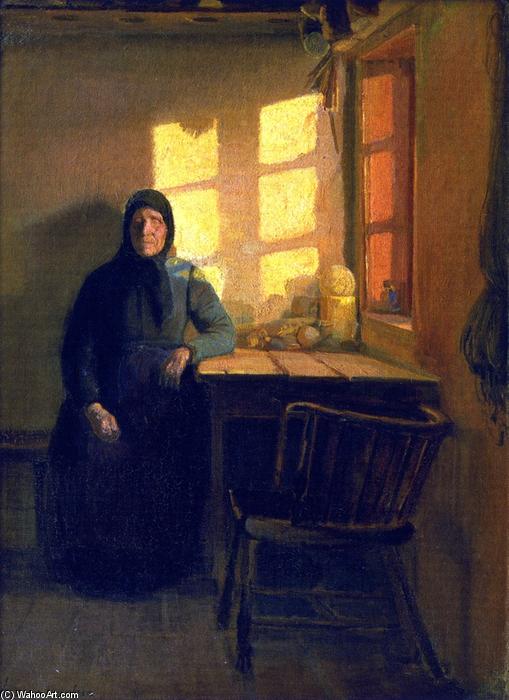
Sunshine in the Blind Woman's Room


 Read More
Purchase a high-resolution, enhanced digital image, far superior to the online preview.
Each file is meticulously prepared by our in-house specialists using advanced tools and expert manual retouching. We ensure every image has exceptional clarity, precise color accuracy, and fine detail.
The final file is delivered via email within 72 hours, optimized for immediate use in professional, editorial, and print environments. This is the same quality trusted by top-tier design studios, publishers, and galleries.
Digital Image
Download a high-resolution file for personal display, printing, and creative projects. ( Buy Print Buy Hand Made Painting)
Included in Every Digital Image Order
Expert Digital Delivery, Guaranteed
When you choose ArtsDot.com, you're not just getting an image - you're receiving a professionally enhanced digital artwork, crafted with precision and backed by a satisfaction guarantee. Here's everything that comes with your order, automatically:

Fast Email Delivery
Your high-resolution digital image file will be emailed to you within 72 hours of ordering - ready for immediate use.

AI-Enhanced Digital File
Your artwork is professionally optimized using advanced AI tools and manual editing, ensuring maximum detail, clarity, and color accuracy.

Free Lifetime Re-Delivery
Accidentally deleted or lost your file? No worries - we'll resend it to you anytime, free of charge.

No Import Fees - Ever
Enjoy your artwork instantly with zero customs, duties, or delivery fees - digital downloads are always tax-free.

Color Accuracy Guarantee
We ensure your digital image reflects the original colors as closely as possible using professional tools and color management.

60-Day Satisfaction Guarantee
If you're not satisfied with your digital image, we'll revise it or refund 100% within 60 days - no questions asked.

100% Money-Back Guarantee
Not satisfied? Get a full refund within 60 days of receiving your digital file - no questions asked.

Bulk Order Discounts
Buy 3 images, save 10% - Buy 5, save 15% - Buy 10+, save 20%. Great for creative projects, galleries, and agencies.
The Enigmatic Portrait
Anna Kirstine Ancher’s “Sunshine in the Blind Woman’s Room,” painted in 1885, isn’t merely a depiction of a scene; it's an immersion into a world of quiet contemplation and subtle sensory experience. The painting captures a moment frozen in time – a woman, identified as Ane Chrestense Nielsdatter, affectionately known as “Blue Ane,” seated at a table bathed in the diffused glow of sunlight streaming through a window. The composition is deceptively simple: a modest room, a wooden chair, a bowl, an apple, and a clock—elements that ground the scene while simultaneously serving to highlight the central figure’s profound solitude. Yet, it's precisely this restraint that elevates the work beyond a straightforward portrait, transforming it into a poignant meditation on perception, loss, and the enduring power of inner life.

A Skagen Masterpiece: Context and Technique
Painted in Skagen, Denmark – a vibrant artistic community nestled at the northernmost point of Jutland – “Sunshine in the Blind Woman’s Room” exemplifies the core tenets of the Skagen School. This group of artists, including Michael Ancher (Anna's husband), P.S. Krøyer, and Lauritz Tuxen, were united by their fascination with capturing the unique qualities of the Nordic light and its impact on everyday life. Ancher’s technique is characterized by a masterful use of color and light—a hallmark of Impressionism—but infused with a distinctly Danish sensibility. She employs broken brushstrokes to render the sunlight, creating an ethereal quality that seems to emanate from within the canvas. The muted palette – dominated by browns, grays, and ochres – further enhances the sense of intimacy and quietude, drawing the viewer into the woman’s private world.
Symbolism of Sight and Absence
The painting's most compelling element lies in its deliberate ambiguity. Ane Chrestense Nielsdatter is depicted with her eyes closed, a gesture that immediately evokes a sense of absence – not just of sight, but also of connection to the external world. This blindness isn’t presented as tragic or pitiable; rather, it becomes a metaphor for a state of profound introspection and detachment. The artist deliberately places her in a room filled with objects—a bowl, an apple, a clock—that represent the tangible realities of daily life, yet remain inaccessible to her. This juxtaposition creates a powerful tension between the visible and the invisible, the known and the unknown. The light itself becomes symbolic, representing not just illumination but also a potential for perception beyond the purely visual.
Emotional Resonance and Legacy
“Sunshine in the Blind Woman’s Room” resonates deeply with viewers because it taps into universal themes of loneliness, contemplation, and the search for meaning. It's a portrait that invites us to consider how we perceive the world around us—and how our own internal experiences shape our understanding of reality. The painting’s enduring appeal lies in its ability to evoke a sense of quiet melancholy while simultaneously offering a glimpse into the beauty of inner life. Today, reproductions of this iconic work continue to captivate art lovers and interior designers alike, serving as a reminder of Ancher's profound artistic vision and her remarkable ability to capture the essence of human experience.
Related Artworks
Artist Biography
A Life Bathed in the Light of Skagen
Anna Kirstine Brøndum Ancher, forever known as Anna Ancher, occupies a unique and cherished position within Danish art history. Born in 1859 in the remote fishing village of Skagen, at the very tip of Denmark’s Jutland peninsula, she was intrinsically linked to the landscape and community that would become synonymous with her artistic vision. Unlike many of her fellow *Skagen Painters*, Anna wasn't a visitor drawn by the dramatic Nordic light; she *was* of Skagen, born and raised within its bracing winds and ever-changing skies. This deep connection imbued her work with an authenticity and intimacy rarely found in artists who merely observed from afar. Her father, Erik Andersen Brøndum, owned the renowned Brøndums Hotel, a haven for artists seeking to capture the raw beauty of the region – a constant exposure that undoubtedly nurtured her early artistic inclinations. From childhood, she was surrounded by creative energy and the stimulating exchange of ideas, laying the foundation for a life dedicated to painting.Formative Years and Artistic Development
Anna’s talent blossomed early, prompting her family to support her formal training. She spent three years at the Vilhelm Kyhn College of Painting in Copenhagen, honing her skills in drawing and developing a distinctive style characterized by sensitive observation and a nuanced understanding of color. However, it was her time studying in Paris, at the atelier of Pierre Puvis de Chavannes alongside Marie Triepcke (later Krøyer), that broadened her artistic horizons. This exposure to new techniques and perspectives proved invaluable, yet she always remained true to her Nordic roots. In 1880, a pivotal moment arrived when she married Michael Ancher, another prominent Skagen Painter. Their partnership was not only a personal union but also an artistic one, fostering mutual inspiration and support throughout their careers. Despite societal expectations that often confined women to domestic roles, Anna continued to paint prolifically after her marriage and the birth of their daughter, Helga, demonstrating remarkable dedication to her craft.Capturing Everyday Life and the Essence of Light
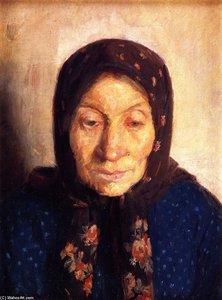
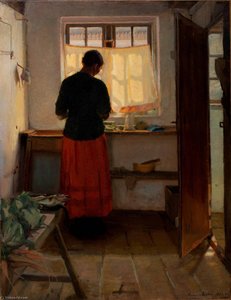
Anna Ancher’s artistic focus centered on portraying the everyday lives of the people of Skagen – fishermen, their wives, and children – within intimate domestic settings. She wasn't interested in grand historical narratives or mythological scenes; instead, she found beauty and significance in the ordinary moments of existence. Her paintings are characterized by a remarkable sensitivity to light and color, skillfully capturing the fleeting effects of sunlight streaming through windows, illuminating interiors with a warm, inviting glow. Works like *Blue Ane* (1882) showcase her mastery of color interplay, while *The Girl in the Kitchen* (1883-1886) offers a poignant glimpse into domestic life. She possessed an exceptional ability to convey atmosphere and emotion through subtle nuances of tone and texture. Her later work, such as *Interior with Clematis* (1913), further demonstrates her evolving skill in exploring the interplay of light and shadow, creating scenes that are both visually captivating and emotionally resonant. She wasn’t merely depicting what she saw; she was conveying how it *felt* to be present in those moments.Legacy and Lasting Influence
Anna Ancher's contributions to Danish art extend beyond her individual paintings. As a pioneering female artist, she challenged conventional norms and paved the way for future generations of women artists. Her work played a crucial role in the development of Danish Impressionism and the broader Nordic Modern Breakthrough movement, which sought a more truthful and authentic representation of reality. Today, her paintings are held in prestigious collections such as the Hirschsprung Collection in Copenhagen, Helga Anchers Fond, and Skagens Museum – testaments to her enduring artistic merit. The Anchers’ home in Skagen has been preserved as a museum, *Anchers Hus*, offering visitors a unique opportunity to step back in time and experience the world that inspired their art. It stands as a living tribute to their lives and work, ensuring that Anna Ancher's legacy continues to inspire and captivate audiences for years to come. Her ability to find profound beauty in the simplicity of everyday life, coupled with her masterful handling of light and color, solidifies her place as one of Denmark’s most beloved and significant artists.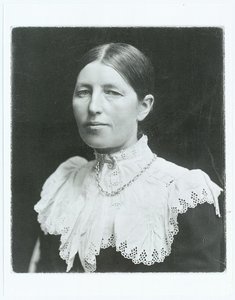
Anna Kirstine Ancher
1859 - 1935 , Denmark
Quick Facts
- Artistic Movement Or Style: Impressionism, Nordic art
- Artists Who Influenced This Artist:
- Pierre Puvis de Chavannes
- Marie Triepcke Krøyer
- Date Of Birth: August 18, 1859
- Date Of Death: April 15, 1935
- Full Name: Anna Kirstine Ancher
- Nationality: Danish
- Notable Artworks:
- Blue Ane
- The Girl in the Kitchen
- Syende fiskerpige
- Interior with Clematis
- Sheep Shearing
- Plucking the Christmas Goose
- Place Of Birth: Skagen, Denmark

