

 Preview
 Send
Send Share
Share
 Details

 Download
 Similars
 X-Ray
X-Ray Diaporama
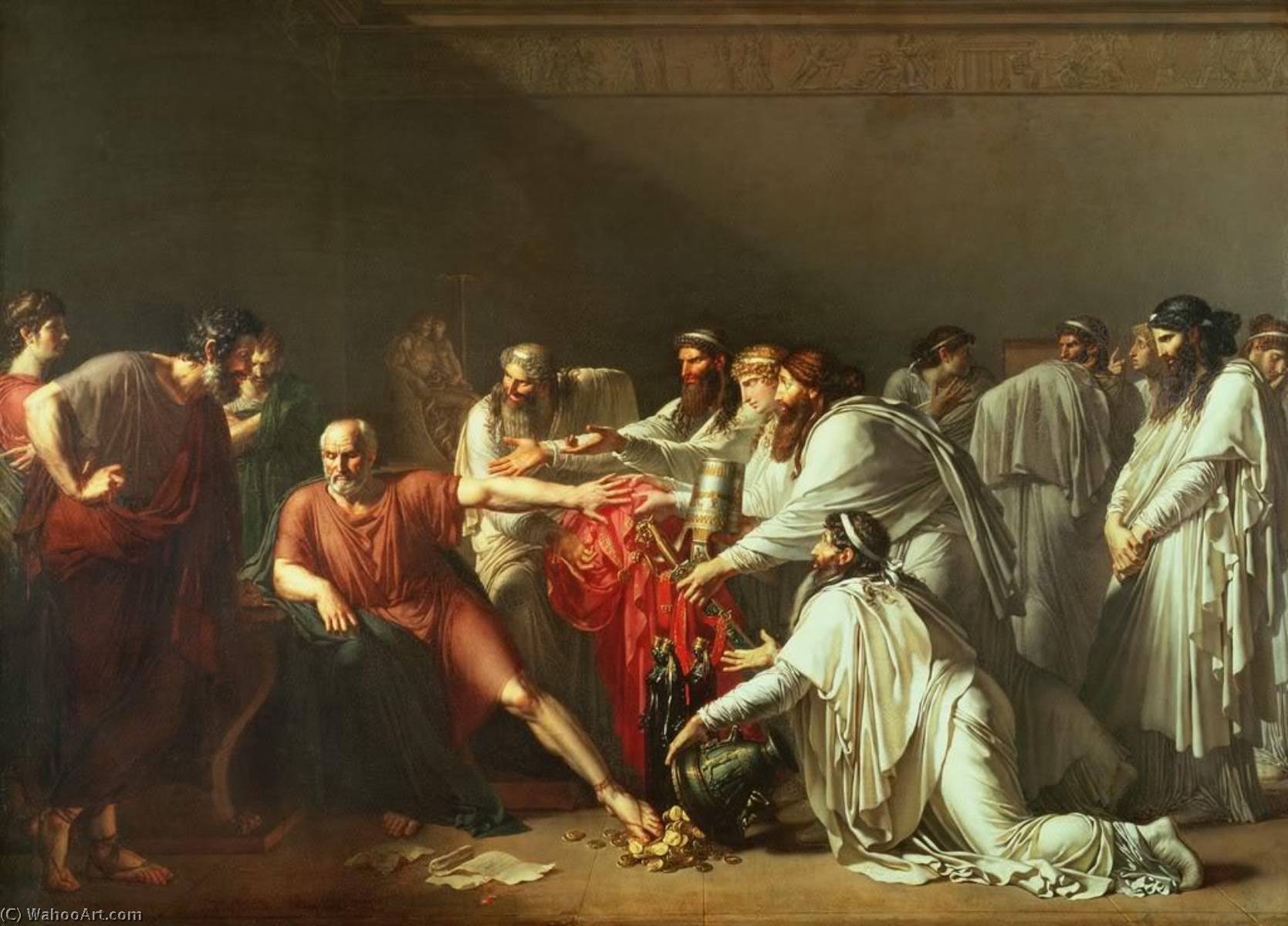
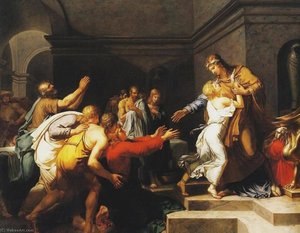
Hyppocrates Refusing the Presents of Artaxerces
 Oil
Oil- WallArt
- Neoclassicism
 1792
1792- 19th Century
 99.0 x 135.0 cm
 Musée D'histoire de la Médecine
 Read More
Purchase a high-resolution, enhanced digital image, far superior to the online preview.
Each file is meticulously prepared by our in-house specialists using advanced tools and expert manual retouching. We ensure every image has exceptional clarity, precise color accuracy, and fine detail.
The final file is delivered via email within 72 hours, optimized for immediate use in professional, editorial, and print environments. This is the same quality trusted by top-tier design studios, publishers, and galleries.
Digital Image
Download a high-resolution file for personal display, printing, and creative projects. ( Buy Print Buy Hand Made Painting)
Included in Every Digital Image Order
Expert Digital Delivery, Guaranteed
When you choose ArtsDot.com, you're not just getting an image - you're receiving a professionally enhanced digital artwork, crafted with precision and backed by a satisfaction guarantee. Here's everything that comes with your order, automatically:

Fast Email Delivery
Your high-resolution digital image file will be emailed to you within 72 hours of ordering - ready for immediate use.

AI-Enhanced Digital File
Your artwork is professionally optimized using advanced AI tools and manual editing, ensuring maximum detail, clarity, and color accuracy.

Free Lifetime Re-Delivery
Accidentally deleted or lost your file? No worries - we'll resend it to you anytime, free of charge.

No Import Fees - Ever
Enjoy your artwork instantly with zero customs, duties, or delivery fees - digital downloads are always tax-free.

Color Accuracy Guarantee
We ensure your digital image reflects the original colors as closely as possible using professional tools and color management.

60-Day Satisfaction Guarantee
If you're not satisfied with your digital image, we'll revise it or refund 100% within 60 days - no questions asked.

100% Money-Back Guarantee
Not satisfied? Get a full refund within 60 days of receiving your digital file - no questions asked.

Bulk Order Discounts
Buy 3 images, save 10% - Buy 5, save 15% - Buy 10+, save 20%. Great for creative projects, galleries, and agencies.
Collectible Description
A Moment of Moral Integrity: The Drama of Hippocrates
In the grand theater of Neoclassical painting, few moments capture the tension between worldly power and ethical steadfastness as poignantly as Anne-Louis Girodet’s Hyppocrates Refusing the Presents of Artaxerces. This masterful composition transports the viewer to an era of ancient grandeur, where the air is thick with the weight of a monumental decision. At the heart of the canvas, we encounter the legendary physician Hippocrates, depicted not merely as a healer of bodies, but as a guardian of integrity. The scene unfolds with a palpable sense of drama; the man in vibrant red clothing stands as a focal point of moral resolve, his extended arm serving as both a physical gesture and a symbolic barrier against the corrupting influence of wealth. Surrounding him, a cast of observers—some engaged in hushed, intense conversation, others watching with bated breath—creates a layered narrative of social consequence and historical gravity.
The painting is a breathtaking study in the transition between the disciplined rigor of Neoclassicism and the burgeoning emotional turbulence of Romanticism. Girodet, a student of the great Jacques-Louis David, utilizes a technique that balances precise, academic draftsmanship with an almost cinematic use of light and shadow. The way the light catches the folds of the crimson drapery and illuminates the focused expressions of the figures invites the eye to wander through the meticulously rendered details. From the delicate placement of a cup on the periphery to the scholarly presence of books tucked into the composition, every element serves to ground this historical legend in a tangible, lived reality. For the discerning collector, this piece offers more than just visual beauty; it provides a window into a period where art was used to explore the very essence of human character.
Symbolism and the Aesthetic of Virtue
Beyond its surface narrative, the artwork is rich with symbolic depth that resonates with anyone moved by the concept of principle over profit. The refusal of Artaxerxes' gifts is not merely a historical anecdote but an allegory for the purity of science and the sanctity of the Hippocratic Oath. The objects scattered throughout the scene—the bowls, the books, and the vessels—act as silent witnesses to the intellectual and physical labor of medicine, contrasting sharply with the material temptations being offered. Girodet’s ability to weave these elements into a cohesive emotional tapestry ensures that the painting remains intellectually stimulating long after the first viewing.
For interior designers and connoisseurs of fine art, this reproduction offers an unparalleled opportunity to introduce a sense of historical prestige and intellectual depth into a space. The rich palette, dominated by deep reds and warm, atmospheric tones, makes it a commanding centerpiece for a sophisticated study, a formal library, or a curated gallery wall. It is a piece that does not merely decorate a room but elevates the entire atmosphere, inviting conversation and contemplation. Owning a high-quality reproduction of this work means possessing a fragment of art history—a timeless reminder that true greatness lies in the courage to remain true to one's convictions.
Related Artworks

Artist Biography
A Bridge Between Worlds: The Life and Art of Anne-Louis Girodet
Anne-Louis Girodet de Roussy-Trioson, a name perhaps less instantly recognizable than his teacher Jacques-Louis David, nevertheless occupies a pivotal position in the transition from Neoclassicism to Romanticism. Born in Montargis, France, in 1767, Girodet’s artistic journey was one of both rigorous academic training and burgeoning emotional expression—a delicate balance that defined his unique style and secured his place as a significant figure in French art. His early life was marked by loss; the deaths of both parents left his upbringing to a guardian, Benoît-François Trioson, a physician who would later become his adoptive father and whose influence remained constant throughout Girodet’s career. This familial connection ultimately led to the artist adopting “Trioson” as part of his name in 1806, signifying a deep personal bond alongside his artistic identity. Initially drawn to architecture, Girodet soon found himself captivated by painting, entering David's studio and immersing himself in the prevailing Neoclassical aesthetic—an emphasis on clarity, precision, and moral gravitas. This foundation proved crucial, instilling within him a mastery of form and composition that would remain evident even as his work began to diverge from strict classical principles. His triumph at the Prix de Rome with a depiction of the story of Joseph and his brethren at the young age of 22 signaled a promising future, and his subsequent years in Italy (1789-1793) were formative, resulting in acclaimed works like *Hippocrate refusant les presents d'Artaxerxes* and *Endymion-dormant*.From Neoclassical Rigor to Romantic Sensibility
Girodet’s artistic evolution wasn’t a sudden break from the past, but rather a gradual infusion of new sensibilities into the established framework of Neoclassicism. While he retained the clarity and precision characteristic of David's school, his work increasingly embraced emotional intensity and explored themes previously considered unconventional. This shift is particularly evident in pieces like *Scène de déluge* (The Deluge), a monumental canvas showcasing dramatic action and raw emotion, and *Atala au tombeau*, a poignant portrayal of tragic beauty that resonated deeply with the growing Romantic fascination with pathos and exoticism. However, it was perhaps *Pygmalion et Galatée*, an ambitious project consuming eight years of his life, that most fully exemplifies Girodet’s artistic vision. Now housed in the Louvre, this work demonstrates not only meticulous attention to detail but also a willingness to delve into mythological themes with a heightened sense of psychological complexity and sensuality. His talent extended beyond mythological and literary subjects; he was sought after for portraits, including those of members of the Bonaparte family, where he skillfully balanced Neoclassical formality with an attempt to capture individual character. *La révolte du Caire*, depicting a historical event, further showcased his ability to convey dynamic action and emotional depth.A Pioneer of Erotic Undertones and Literary Inspirations
What truly set Girodet apart from many of his contemporaries was his willingness to incorporate elements of eroticism into his paintings—a daring move that challenged artistic norms and paved the way for later artists to explore similar themes with greater freedom. This wasn’t mere sensationalism; rather, it reflected a broader Romantic interest in passion, desire, and the complexities of human experience. His fascination with literature also profoundly influenced his art. He didn't simply illustrate stories; he sought to capture their emotional core, often choosing subjects that allowed for dramatic expression and psychological exploration. The influence of writers like Chateaubriand is particularly noticeable, as seen in portraits and scenes inspired by the author’s works. This literary bent distinguished him from artists solely focused on historical or mythological narratives, adding another layer of intellectual depth to his creations. Girodet's *Ossian and the French Generals* stands as a testament to this fusion of literature and art, blending imagery drawn from Macpherson’s Ossianic poems with portraits of fallen heroes—a unique and evocative composition that captured the spirit of its time.Legacy and Enduring Influence
Despite sometimes being overshadowed by his more politically prominent contemporaries like David, Anne-Louis Girodet left an indelible mark on the art world. His contribution to the early Romantic movement is undeniable; he helped bridge the gap between the rational order of Neoclassicism and the emotional intensity of Romanticism. He was a respected member of both the Académie de peinture and the Institut de France, receiving honors including the Légion d'honneur—acknowledgements of his artistic merit and societal standing. His works continue to be admired for their technical brilliance, dramatic power, and psychological insight. They can be found in prestigious museums such as the Musée Girodet in his hometown of Montargis, dedicated to his life and work, and the Louvre in Paris, ensuring that his legacy endures for generations to come. Girodet’s willingness to challenge conventions and explore new artistic territories makes him a compelling figure—a true pioneer who helped shape the course of French painting. He remains a vital link between two defining movements in art history, demonstrating that innovation often arises from a thoughtful synthesis of tradition and experimentation.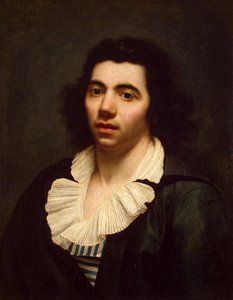
Anne-Louis Girodet
1767 - 1824 , France
Quick Facts
- Artistic Movement Or Style: Neoclassicism & Romanticism
- Artists Or Movements Influenced By This Artist: ['Early Romanticism']
- Artists Who Influenced This Artist: ['Jacques-Louis David']
- Date Of Birth: 1767
- Date Of Death: 1824
- Full Name: Anne-Louis Girodet de Roussy-Trioson
- Nationality: French
- Notable Artworks:
- Scène de déluge
- Atala au tombeau
- Pygmalion et Galatée
- La révolte du Caire
- Place Of Birth: Montargis, France

