 Preview
 Send
Send Share
Share
 Details

 Download
 Similars
 X-Ray
X-Ray Diaporama
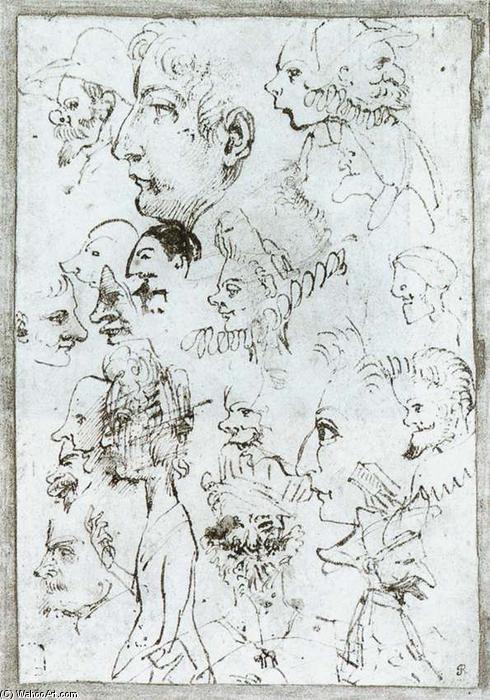
Sheet of caricatures


 Read More
Hand Made Oil Reproduction
Hand-painted oil on canvas in your size and frame, made to order by our artists. ( Buy Print Buy Image)




P118B $10

P118H $10

P118W $10

P438Z $10

P508JH $12

P508YH $12

P805H $10

P805Z $10

P919BZ $10

P919G $10

P919XJ $10

P959ZH $10

P968JZ $12

W106C $8

W218G $10

W218JH $8

W218Y $10

W307PJ $10

W316G $10

W316PJ $8

W316Y $10

W398PJ $8

W4111J $10

W500HY $15

W500JH $15

W692G $12

W849H $8

W940BG $15

W953PJ $8




Pick from our preset sizes that match the artwork's original proportions.

You may enter your own dimensions to fit a specific frame or space. If your selected size does not match the original image's proportions, we will either crop the artwork or extend the painting with additional hand-painted elements. A digital mockup will be sent for your approval before production begins.
Please note that the on-screen preview does not reflect the actual cropping or extension. Only the mockup will accurately show the final composition.
While custom sizes are available, we recommend selecting a dimension from the predefined list to preserve the original proportions.
After order, ArtsDot.com team will email client for instructions and provide a mockup preview
Worldwide Delivery () in 3/4 weeks instead of standard 5 weeks. (16 August). No compromise on quality.

Free Worldwide Express Shipping

High-Quality Linen Canvas

Full Shipping Insurance

Customs Tax Refund Guarantee

True Color Matching Guarantee

60-Day Return Policy (Defects Only)

100% Money-Back Guarantee

Bulk Discount Offer
 Glass option is only available in size under 110 CM

Sheet of caricatures
Reproduction Medium
Reproduction Size
-


Total Price
$ 613
Artwork Description
A Frenzy of Faces: Annibale Carracci’s ‘Sheet of Caricatures’
Annibale Carracci's “Sheet of Caricatures,” painted in 1595, isn’t merely a drawing; it’s a concentrated burst of human observation, a fleeting moment captured with remarkable energy and immediacy. This work, now residing within the British Museum’s collection, offers a rare glimpse into the creative process of one of the most pivotal figures of the Baroque era – Annibale Carracci himself. It's a study in controlled chaos, a testament to his ability to distill complex human character into rapidly executed lines and suggestive forms.
The composition is dominated by an astonishing density of heads—a swirling vortex of faces rendered with a remarkable lack of detail. These aren’t idealized portraits; they are immediate, almost snapshot-like depictions of individuals caught in various expressions: amusement, contemplation, perhaps even a hint of mischief. Carracci doesn't attempt to capture individual likenesses; instead, he focuses on the essence of each face – its mood, its character—using quick, confident strokes to convey a sense of vitality and movement. The arrangement isn’t meticulously planned; it feels spontaneous, as if the artist was simply capturing what his eye encountered.
Baroque Realism: Bridging Renaissance Ideals
Carracci's approach in “Sheet of Caricatures” exemplifies a crucial shift within Italian art during the late 16th century. He skillfully blended elements of Florentine linear draftsmanship, inherited from masters like Raphael and Andrea del Sarto, with the vibrant color and atmospheric effects characteristic of Venetian painting – particularly those of Titian. This synthesis formed the bedrock of what became known as the Bolognese School of Painting, a movement that sought to revive the grandeur of the High Renaissance while embracing a more naturalistic and dynamic style.
The work’s creation coincided with a period of intense artistic experimentation in Bologna, where Carracci and his brothers – Agostino and Ludovico – established the Accademia degli Incamminati. This academy wasn't just a studio; it was a deliberate attempt to break away from the prevailing Mannerist style, which favored artificiality and complex compositions. Instead, they aimed for a return to clarity, naturalism, and a profound understanding of human anatomy and expression – principles vividly demonstrated in “Sheet of Caricatures.”
Technique and Symbolism: A Study in Observation
The piece is executed primarily in pen and ink, with subtle touches of charcoal adding depth and texture. Carracci masterfully employs hatching and cross-hatching to build tone and volume, creating a sense of three-dimensionality despite the predominantly flat composition. The loose, expressive lines suggest a rapid sketching process – an artist working instinctively, capturing fleeting impressions before they vanished. The lack of precise detail isn’t a sign of carelessness; it's deliberate, emphasizing the immediacy and spontaneity of the observation.
Beyond its technical brilliance, “Sheet of Caricatures” carries symbolic weight. It can be interpreted as a study of human character—a meditation on the diversity of faces and expressions within society. The sheer number of figures suggests a commentary on the multitude of individuals that comprise a community. Furthermore, it’s a powerful demonstration of Carracci's keen eye for capturing the essence of his subjects, transforming simple sketches into compelling portraits of humanity.
A Legacy in Reproduction
Today, “Sheet of Caricatures” stands as a testament to Annibale Carracci’s artistic genius and his pivotal role in shaping the Baroque era. Its dynamic composition, masterful technique, and insightful observation continue to captivate viewers centuries later. High-quality reproductions offer an accessible way to appreciate this remarkable work, bringing its frenetic energy and profound humanity into any space – a perfect addition for collectors, art enthusiasts, and those seeking to infuse their interiors with the spirit of Baroque innovation.
Related Artworks
Artist Biography
Early Life and the Bolognese Roots
Annibale Carracci, born in Bologna on November 3, 1560, emerged from a family deeply entrenched in artistic tradition. His initial training likely unfolded within the nurturing environment of his familial workshop, laying the foundation for a career that would profoundly reshape the landscape of Italian painting. Bologna at this time was a vibrant hub of intellectual and artistic ferment, yet it felt somewhat distant from the dominant currents emanating from Rome and Venice. This sense of provincialism fueled a desire among a group of young artists—Annibale, his brother Agostino, and cousin Ludovico—to forge a new path, one that would revitalize Italian art by looking to the masters of the High Renaissance while simultaneously embracing a more naturalistic approach.
In 1582, this ambition materialized in the establishment of the *Accademia degli Incamminati*, initially known as the Academy of the Desiderosi. This wasn’t merely a studio; it was a crucible for artistic innovation, a space dedicated to rigorous life drawing, spirited debate, and a collective pursuit of artistic excellence. The academy's name itself—the “Progressives”—signified their intent: to move beyond the stylistic complexities of Mannerism and chart a new course toward a more grounded, emotionally resonant form of expression. The Incamminati became a model for art academies across Europe, emphasizing observation from life as the cornerstone of artistic training.
A Synthesis of Styles and Influences
Carracci’s artistic vision wasn't born in a vacuum; it was meticulously crafted through a deep engagement with the legacies of past masters. He possessed an extraordinary ability to synthesize diverse influences, creating a style that felt both deeply rooted in tradition and strikingly original. He admired the clarity of line and compositional balance found in the works of Raphael and Andrea del Sarto, seeking to emulate their grace and harmony. Yet, he also recognized the power of color and atmospheric effects championed by Venetian painters like Titian, infusing his own work with a vibrant luminosity and emotional depth.
The influence of Correggio was particularly profound, evident in Carracci’s dynamic compositions and illusionistic techniques—especially those showcased in his frescoes. He wasn't simply copying these masters; he was absorbing their strengths and forging them into something new. This eclectic blend became the hallmark of the Bolognese School, a significant branch of Baroque art that emphasized both classical ideals and naturalistic observation. Carracci’s genius lay in his ability to reconcile seemingly disparate elements, creating a harmonious whole that resonated with both intellectual rigor and emotional power.
The Roman Triumph: Palazzo Farnese and Beyond
The invitation to decorate the Palazzo Farnese in Rome marked a pivotal moment in Annibale Carracci’s career. This monumental commission—a vast fresco cycle depicting scenes from mythology—provided him with an unparalleled opportunity to showcase his artistic prowess and establish his reputation on a grand scale. The *Triumph of Bacchus and Ariadne*, arguably his masterpiece, is a breathtaking display of illusionistic technique, dynamic composition, and vibrant color. The frescoes seem to dissolve the boundaries between painting and reality, drawing the viewer into a world of mythic grandeur.
Alongside the *Triumph*, Carracci also undertook *The Loves of the Gods* at Palazzo Farnese, further exploring themes of mythology and love with a blend of classical idealism and keen observation. These works weren’t merely decorative; they were statements about the power of art to elevate the human spirit and celebrate the beauty of the natural world. His success in Rome solidified his position as one of the leading artists of his time, attracting a stream of commissions and influencing generations of painters.
Legacy and Historical Significance
Annibale Carracci’s impact on art history is immeasurable. He played a crucial role in bridging the gap between the High Renaissance and the Baroque period, moving away from the stylized complexities of Mannerism toward a more dynamic, emotionally charged aesthetic. His emphasis on naturalism—on depicting figures with anatomical accuracy and psychological depth—paved the way for artists like Caravaggio, who would further revolutionize Italian painting with their dramatic use of light and shadow.
The Accademia degli Incamminati, founded by Carracci and his associates, served as a model for art academies throughout Europe, promoting artistic training based on observation and classical principles. His frescoes at Palazzo Farnese remain iconic examples of Baroque illusionism and artistic grandeur, continuing to inspire awe and admiration centuries after their creation. The collective legacy of the Carracci family—Annibale, Agostino, and Ludovico—is one of profound innovation and enduring influence, establishing Bologna as a major center for artistic creativity.
Carracci’s work wasn't simply about technical skill; it was about conveying emotion, telling stories, and celebrating the human experience. He sought to create art that was both beautiful and meaningful, capable of inspiring wonder and provoking thought. His legacy endures not only in his magnificent paintings but also in the enduring principles he championed: a commitment to observation, a reverence for tradition, and an unwavering belief in the power of art to transform the world.
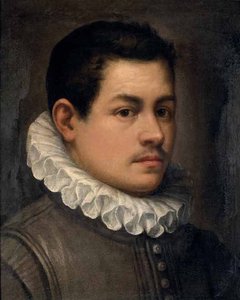
Annibale Carracci
1560 - 1609 , Italy
Quick Facts
- Artistic Movement Or Style: Baroque
- Artists Or Movements Influenced By This Artist:
- Caravaggio
- Bolognese School
- Artists Who Influenced This Artist:
- Raphael
- Andrea del Sarto
- Titian
- Correggio
- Date Of Birth: November 3, 1560
- Date Of Death: July 15, 1609
- Full Name: Annibale Carracci
- Nationality: Italian
- Notable Artworks:
- Triumph of Bacchus
- The Loves of the Gods
- Portrait of Gabrieli
- Place Of Birth: Bologna, Italy
Related Articles
Charcoal & Canvas: 10 Masterpieces of Shadow & Light |
Explore 10 iconic paintings dominated by charcoal tones – from Rembrandt's dramatic chiaroscuro to Goya’s expressive portraits. Discover the stories behind these masterpieces & find museum-quality art reproductions for your home at .
The Subtleties of Shade: Exploring Black, White & Gray Abstraction in Modern Interior Design
Explore the power of black, white & gray abstraction in modern interior design. Discover how minimalist art impacts spatial perception & creates sophisticated hotel spaces. Expert insights for designers.
Echoes of Loss: Exploring Representations of Grief Across Art History
Explore the profound history of grief in art, from Renaissance masterpieces to Baroque drama. Discover how artists captured loss, mourning & faith through powerful imagery. Expert insights at ArtsDot.
The Visceral Language of Loss: Exploring Grief's Depiction in Art History
Explore the profound history of grief in art with ArtsDot. Discover Renaissance & Baroque masterpieces depicting loss, mourning, and faith. Expert insights & handmade reproductions available.
Ivory Black Masters: 10 Paintings That Define Dramatic Art |
Delve into the power of 'Ivory Black' with 10 iconic paintings by masters like Rembrandt & Caravaggio. Explore dramatic chiaroscuro, gothic moods & timeless art history. Find museum-quality reproductions and elevate your home decor at