 Preview
 Send
Send Share
Share
 Details

 Download
 Similars
 X-Ray
X-Ray Diaporama
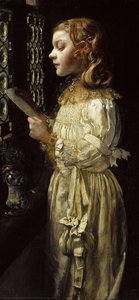
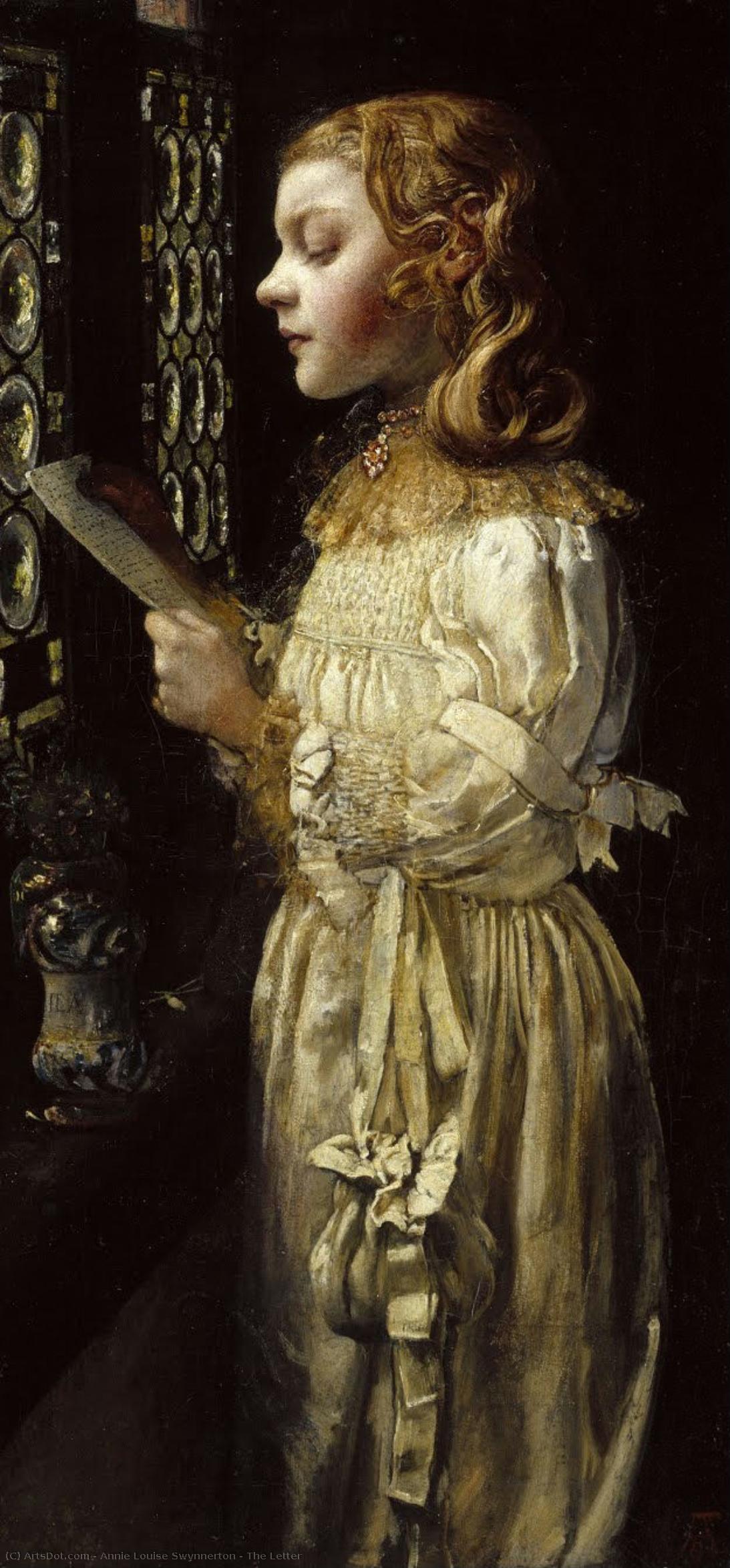
The Letter


 Read More
Hand Made Oil Reproduction
Hand-painted oil on canvas in your size and frame, made to order by our artists. ( Buy Print Buy Image)




P118B $10

P118H $10

P118W $10

P438Z $10

P508JH $12

P508YH $12

P805H $10

P805Z $10

P919BZ $10

P919G $10

P919XJ $10

P959ZH $10

P968JZ $12

W106C $8

W218G $10

W218JH $8

W218Y $10

W307PJ $10

W316G $10

W316PJ $8

W316Y $10

W398PJ $8

W4111J $10

W500HY $15

W500JH $15

W692G $12

W849H $8

W940BG $15

W953PJ $8




Pick from our preset sizes that match the artwork's original proportions.

You may enter your own dimensions to fit a specific frame or space. If your selected size does not match the original image's proportions, we will either crop the artwork or extend the painting with additional hand-painted elements. A digital mockup will be sent for your approval before production begins.
Please note that the on-screen preview does not reflect the actual cropping or extension. Only the mockup will accurately show the final composition.
While custom sizes are available, we recommend selecting a dimension from the predefined list to preserve the original proportions.
After order, ArtsDot.com team will email client for instructions and provide a mockup preview
Worldwide Delivery () in 3/4 weeks instead of standard 5 weeks. (17 August). No compromise on quality.

Free Worldwide Express Shipping

High-Quality Linen Canvas

Full Shipping Insurance

Customs Tax Refund Guarantee

True Color Matching Guarantee

60-Day Return Policy (Defects Only)

100% Money-Back Guarantee

Bulk Discount Offer
 Glass option is only available in size under 110 CM

The Letter
Reproduction Medium
Reproduction Size
-


Total Price
$ 263
Artwork Description
A Pioneer’s Palette: Exploring Annie Louise Swynnerton's “The Letter”
Annie Louise Swynnerton (1844 – 1933) stands as an extraordinary figure in British art history—a woman who defied societal expectations and achieved remarkable success against considerable odds. Her painting, “The Letter,” created around 1900-1920 and housed within the Royal Academy Collection, transcends mere visual representation; it’s a carefully crafted meditation on femininity, confinement, and the unspoken power of communication.
Swynnerton's artistic journey began modestly—supplementing her family’s income with watercolor sales—yet she possessed an unwavering ambition to hone her craft. Her enrollment at Manchester School of Art, where women faced significant barriers in accessing formal training, particularly nude modeling, foreshadowed her determination to challenge conventions. This early struggle instilled a resilience that would permeate her entire artistic career and inform her profound engagement with social reform.
“The Letter” immediately distinguishes itself from the prevailing portraiture style of its era. Unlike many commissions where subjects gazed directly at the viewer—a gesture intended to convey confidence and authority—Swynnerton opted for a profile view, capturing her subject immersed in solitude and absorbed by reading a letter. This deliberate compositional choice speaks volumes about the artist’s understanding of psychology and her desire to portray inner experience rather than outward appearance.
- Style: Swynnerton's style leans heavily into Symbolism, reflecting the artistic currents of the time—a movement concerned with conveying ideas and emotions beyond literal depiction.
- Technique: Employing oil paints on canvas, Swynnerton utilized a meticulous layering technique, creating subtle gradations of light and shadow that contribute to the painting’s atmospheric depth. The narrow format of the canvas itself is noteworthy; it echoes the stylistic conventions of Italian Renaissance altarpieces—a deliberate reference to artistic traditions aimed at evoking contemplation and conveying spiritual significance.
- Historical Context: Created during a period marked by burgeoning feminist activism, “The Letter” subtly embodies Swynnerton’s commitment to advocating for women's rights. The depiction of a young woman alone with her letter can be interpreted as a metaphor for the limitations imposed upon women in Victorian society and the yearning for intellectual freedom.
- Symbolism: The letter itself serves as a potent symbol—representing unspoken desires, hidden truths, and the transformative potential of correspondence. Its ambiguous content invites viewers to engage in imaginative projection, prompting reflection on themes of intimacy, vulnerability, and personal revelation.
Ultimately, “The Letter” is more than just a portrait; it’s an evocative exploration of human emotion and psychological nuance—a testament to Annie Louise Swynnerton's artistic vision and her enduring legacy as Britain’s first woman elected to the Royal Academy.
Related Artworks
Artist Biography
A Pioneer’s Palette: The Life and Art of Annie Louise Swynnerton
Annie Louise Swynnerton, born in the industrial heartland of Hulme, Manchester, in 1844, emerged as a pivotal figure in British art during a period of significant social and artistic change. Her journey from supplementing her family’s income with watercolor sales to becoming the first woman elected to the Royal Academy of Arts is not merely a biographical detail; it's a testament to unwavering dedication, exceptional talent, and a quiet rebellion against the constraints placed upon women in the Victorian era. Swynnerton’s life was interwoven with both artistic innovation and social activism, shaping a body of work that resonates with allegorical depth, psychological insight, and a distinctive stylistic blend. The early struggles faced by her family instilled a sense of resilience and resourcefulness, qualities that would define her approach to both life and art.Formative Years and Artistic Development
Swynnerton’s formal artistic education began at the Manchester School of Art in 1871, where she quickly distinguished herself, earning a gold prize and scholarship for her work in oil and watercolor. This early success provided a foundation upon which she would build a remarkable career. However, her ambition extended beyond the confines of England; from 1874 to 1876, she pursued studies in Rome alongside fellow artist Susan Isabel Dacre, immersing herself in the classical traditions that would profoundly influence her aesthetic sensibilities. This Roman sojourn was followed by further training at the Académie Julian in Paris (1877-1880), where she encountered the burgeoning Impressionist movement and the evocative Symbolism of Jules Bastien-Lepage. These diverse influences – the solidity of classical form, the atmospheric nuances of Impressionism, and the narrative power of Symbolism – coalesced into a unique artistic voice. Her style began to emerge as a compelling synthesis of Neoclassical precision, Pre-Raphaelite romanticism, and an emerging sensitivity to light and color.Themes, Style, and Influences
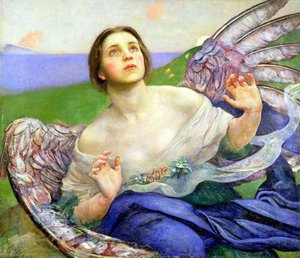
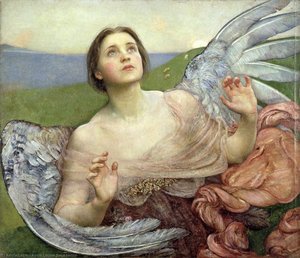
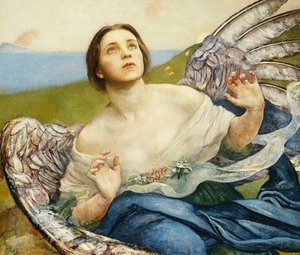
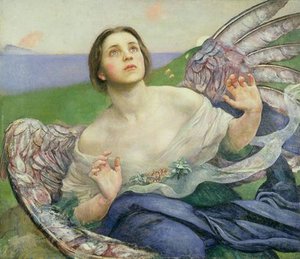
Swynnerton’s oeuvre is characterized by a captivating blend of allegorical scenes, poignant portraits, and evocative depictions of childhood. She was particularly drawn to subjects that explored themes of hope, illusion, and the complexities of the human condition. The influence of George Frederic Watts is readily apparent in her allegorical works, mirroring his grand scale and symbolic weight. Similarly, the ethereal beauty and narrative richness of Edward Burne-Jones can be discerned in her compositions. However, Swynnerton was not merely an imitator; she infused these influences with her own distinctive sensibility, creating a style marked by solid drawing, sculptural forms, and a fresh, broken color palette that hinted at Impressionistic principles. The Sense of Sight, for example, exemplifies her ability to imbue allegorical figures with psychological depth and emotional resonance. Her portraits, too, were notable for their insightful characterizations, capturing not just physical likeness but also the inner lives of her sitters – including prominent figures like Henry James and Millicent Fawcett.Breaking Barriers: Recognition and Legacy
Swynnerton’s career unfolded against a backdrop of societal resistance to women in the arts. Despite these obstacles, she consistently exhibited at the Royal Academy from 1879 onwards, gradually gaining recognition for her talent and originality. The culmination of this perseverance arrived in 1922 when she became the first woman elected as an associate – and subsequently a full member – of the Royal Academy of Arts. This landmark achievement shattered a centuries-old barrier and paved the way for future generations of female artists. Beyond her artistic accomplishments, Swynnerton was a committed feminist and suffragist, actively supporting the movement for women’s rights. Her close friendships with leading suffragists like the Pankhurst family informed her work and underscored her belief in social justice. Her legacy extends far beyond the canvas; she stands as a symbol of female empowerment and artistic innovation, reminding us that talent knows no gender. Swynnerton's contribution to British art is not simply about the beauty of her paintings but also about the courage with which she challenged conventions and opened doors for those who followed in her footsteps.Notable Works
- The Sense of Sight (1895): A powerful allegorical work depicting an angel connected to heaven through vision, showcasing Swynnerton’s mastery of symbolism and emotional depth.
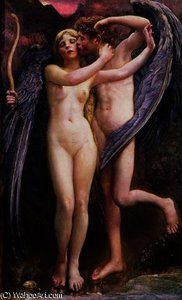
- Cupid and Psyche (1890): A romantic interpretation of the classic myth, demonstrating her skill in portraying mythological narratives with sensitivity and grace.
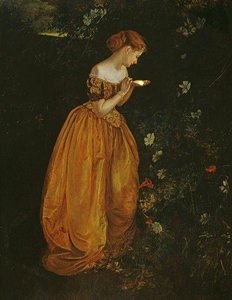
- Glow Worm (c. 1900): A captivating depiction of nature’s luminescence, highlighting Swynnerton's ability to capture atmospheric effects and subtle nuances of light.
- Portrait of Millicent Fawcett: A significant portrait acquired by the Tate Gallery, celebrating a leading figure in the women’s suffrage movement and showcasing Swynnerton’s skill as a portraitist.
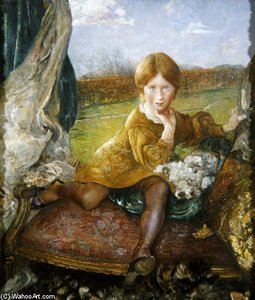
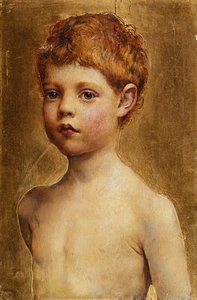
- Evelyn: A realistic portrait capturing the innocence and charm of childhood, demonstrating her ability to portray character with warmth and detail.
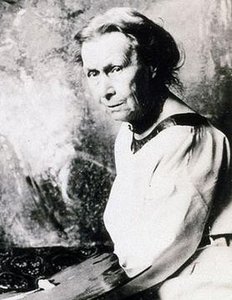
Annie Louise Swynnerton
1880 - 1933 , United Kingdom
Quick Facts
- Artistic Movement Or Style: Neoclassicism, Pre-Raphaelitism
- Artists Who Influenced This Artist:
- George Frederic Watts
- Edward Burne-Jones
- Date Of Birth: February 26, 1844
- Date Of Death: October 24, 1933
- Full Name: Annie Louise Swynnerton
- Nationality: British
- Notable Artworks:
- The Sense of Sight
- Cupid and Psyche
- Glow Worm
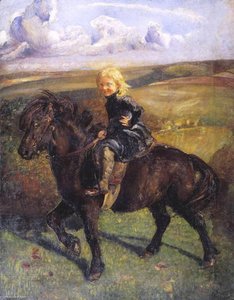
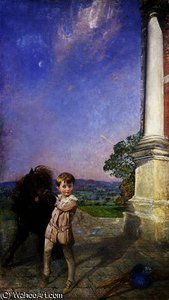
- A Little Boy with a Shetland Pony
- Evelyn
- The Gift Of Sight
- Place Of Birth: Hulme, United Kingdom
Related Articles

Dutch Masters: 10 Golden Age Paintings That Still Inspire |
Journey into the Dutch Golden Age! Explore 10 iconic paintings by Rembrandt, Vermeer & Hals. Discover the stories behind these Baroque masterpieces and find museum-quality art reproductions to elevate your home decor on .
Beyond Reality: Exploring the Mystical Depths of Symbolist Painting (1880-1910)
Explore the captivating world of Symbolist painting (1880-1910). Discover key artists like Moreau & Klimt, decode iconic motifs, and understand its lasting impact on modern art. Expert analysis for collectors.
Eugène Carrière: The 'Peintre d'Âme' & Symbolist Portraiture’s Intimate Vision
Explore the haunting world of Eugène Carrière, a pivotal French Symbolist artist known for his deeply intimate portraits & 'peinture d'âme'. Discover his life, style, and lasting influence on modern masters like Picasso. Shop high-quality reproductions at ArtsDot.
Johannes Vermeer: Light, Intimacy & the Dutch Golden Age – A Comprehensive Exploration
Explore the life, techniques & enduring legacy of Johannes Vermeer, a master of Dutch Golden Age painting. Discover symbolism in his iconic works like 'The Milkmaid' and learn about his revolutionary use of light.
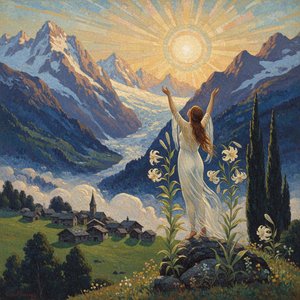
Giovanni Segantini: Capturing Alpine Light & Symbolist Visions
Explore the captivating world of Giovanni Segantini, master of Alpine landscapes & Symbolist art. Discover his innovative techniques, allegorical masterpieces like 'La Vita,' and enduring legacy. Learn about this pivotal 19th-century Italian painter.