Introduction: Beyond Realism – The Emergence of 'Peinture d'Âme'
The late 19th century witnessed a profound shift in artistic sensibilities, a move away from the meticulous realism that had dominated much of the preceding decades. While Impressionism sought to capture fleeting moments of light and color, another current was brewing—one that delved into the depths of human emotion and the mysteries of the inner life. This movement, known as Symbolism, found one of its most compelling exponents in Eugène Anatole Carrière (1849-1906), a French artist whose work became synonymous with what he termed ‘peinture d'âme’ – painting of the soul. Carrière wasn’t interested in depicting the external world so much as evoking the psychological states and spiritual resonances that lay beneath its surface, creating an atmosphere of quiet contemplation and profound intimacy.
A Life Dedicated to Intimacy: Carrière’s Biography & Artistic Foundations
Born into a modest family in Gournay-sur-Marne, France, Carrière's path to artistic recognition was not immediate. His early training involved commercial lithography, but a transformative visit to the Louvre in 1868 ignited a passion for painting, particularly the rich, dramatic works of Peter Paul Rubens. Despite interruptions caused by the Franco-Prussian War and periods of financial hardship, Carrière persevered, studying at the École des Beaux-Arts under Alexandre Cabanel. However, it was his time in London during the 1870s that proved pivotal, exposing him to the atmospheric landscapes of J.M.W. Turner and the subtle tonalism of James McNeill Whistler. These influences, combined with a growing fascination for the Old Masters, began to shape his unique artistic vision.
Crucially, Carrière’s life was deeply intertwined with his family. He married Sophie Desmonceaux in 1879 and together they had seven children, who became his primary subjects. This focus on domestic intimacy wasn't merely a matter of convenience; it reflected a deliberate artistic choice—a desire to explore the universal themes of motherhood, childhood, and familial love through the lens of his own lived experience. His close friendship with Auguste Rodin also proved invaluable, fostering an intellectual environment that encouraged experimentation and a rejection of conventional academic norms.
The Monochrome Palette and Ethereal Technique: Defining Carrière’s Style
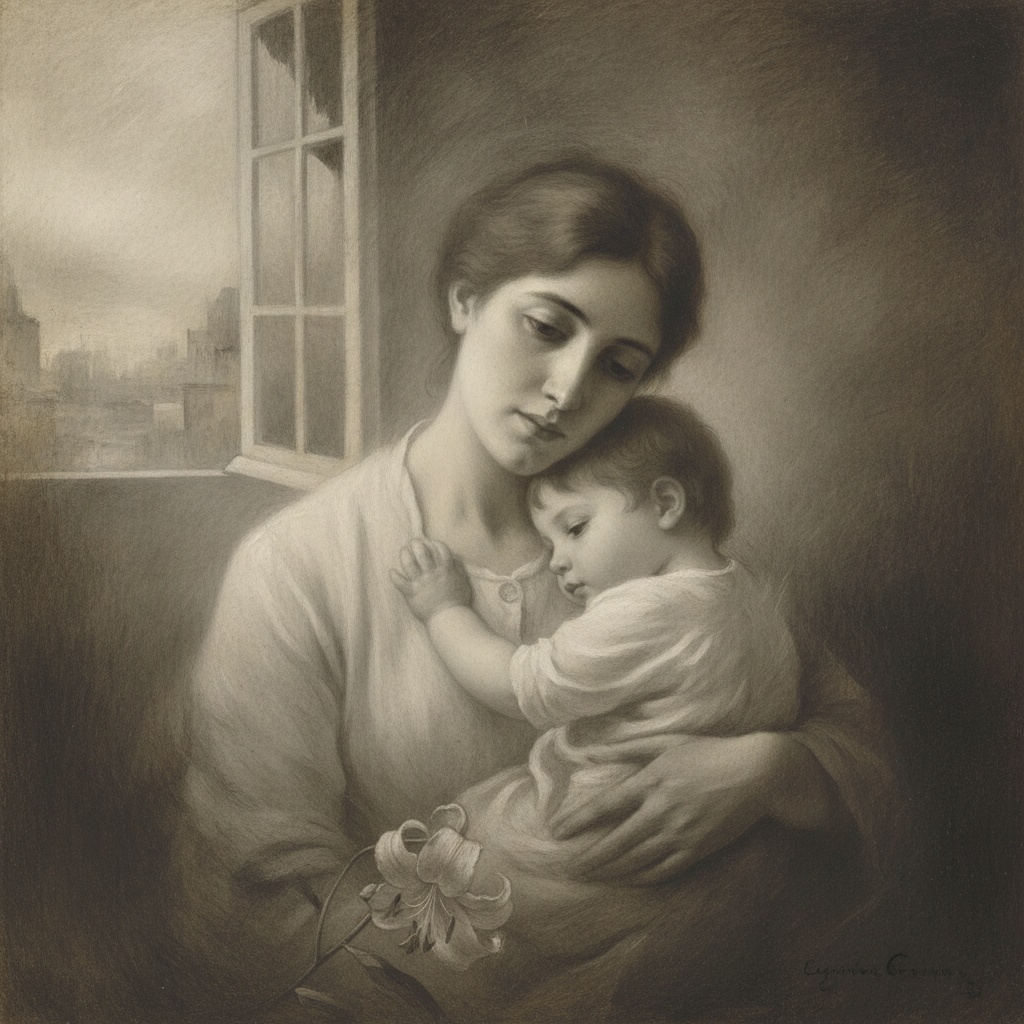
What immediately distinguishes Carrière's work is his strikingly limited palette. Eschewing the vibrant hues favored by many of his contemporaries, he embraced a near-monochrome brown tonality, often described as sepia or umber. This wasn’t simply an aesthetic preference; it was integral to his artistic goals. The subdued colors created a sense of atmosphere and mystery, allowing forms to emerge from the shadows like half-remembered dreams. His technique involved layering thin glazes of paint, building up depth and luminosity in a manner reminiscent of Old Master techniques. This process resulted in surfaces that are both richly textured and remarkably ethereal.
The effect is profoundly moving—a sense of quietude and introspection permeates his canvases. The lack of bright color forces the viewer to focus on form, gesture, and expression, creating an intimate connection with the subjects depicted. Carrière’s paintings aren't about precise representation; they are about capturing a feeling, a mood, a fleeting moment of emotional truth.
Portraits as Psychological Studies: Gauguin, Verlaine, and the Circle of Symbolists
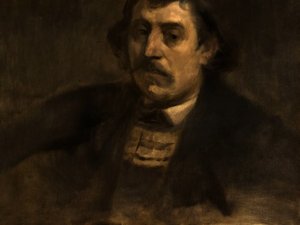 Portrait of Paul Gauguin
Discover Eugène Carrière’s haunting 'Portrait of Paul Gauguin'. A monochrome masterpiece reflecting Symbolism & intimacy. Explore this unique artwork today!
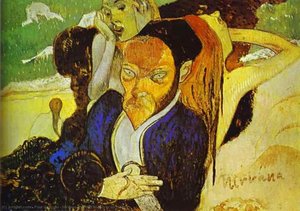
While Carrière is perhaps best known for his portraits of family members, he also painted several prominent figures within the Symbolist circle. His Portrait of Paul Gauguin (1893) offers a fascinating glimpse into the complex personality of the Post-Impressionist master. Rather than presenting a conventional likeness, Carrière captures Gauguin’s brooding intensity and restless spirit through subtle nuances of expression and pose. Similarly, his portrait of the poet Paul Verlaine reveals a sensitivity and vulnerability that transcends mere physical appearance.
These portraits weren't simply commissions; they were acts of artistic kinship—Carrière sought to understand and portray the inner lives of his fellow artists and intellectuals. He wasn’t interested in superficial glamour or social status; he wanted to capture the essence of their being, their hopes, fears, and aspirations. His approach was deeply psychological, anticipating many of the techniques later employed by modern portraitists.
Carrière's Influence on Modern Art: A Precursor to Picasso and Beyond
Despite achieving recognition during his lifetime, Carrière’s influence wasn’t fully appreciated until after his death in 1906. However, his impact on subsequent generations of artists is undeniable. Perhaps most notably, Pablo Picasso acknowledged a profound debt to Carrière's work, particularly during his Blue Period (1901-1904). The somber palette, the emphasis on emotional intensity, and the exploration of themes of poverty and alienation all bear the hallmarks of Carrière’s influence. Picasso even kept reproductions of Carrière’s paintings in his studio as a source of inspiration.
Beyond Picasso, Carrière's work resonated with artists seeking to move beyond realism and explore the subjective realms of emotion and spirituality. His emphasis on atmosphere, his limited palette, and his psychological approach to portraiture paved the way for many of the key developments in modern art. He stands as a crucial link between 19th-century Romanticism and the Symbolist movement.
Collecting Carrière Today: Rediscovering a Master of Emotional Depth
Today, Eugène Carrière’s paintings are increasingly sought after by collectors who appreciate their unique beauty and emotional power. While his works rarely appear on the open market, they can be found in major museums around the world, including the Musée d'Orsay in Paris and the Tate Modern in London. Acquiring a painting by Carrière is not merely purchasing an artwork; it’s acquiring a piece of art history—a testament to the enduring power of ‘peinture d'âme’. At ArtsDot, we offer meticulously hand-painted reproductions of Carrière’s masterpieces, allowing you to experience the quiet intimacy and profound emotional depth of his work in your own home. Explore our collection today and discover the haunting beauty of this often-overlooked Symbolist master. Hand-painted reproductions available.