 Preview
 Send
Send Share
Share
 Details

 Download
 Similars
 X-Ray
X-Ray Diaporama
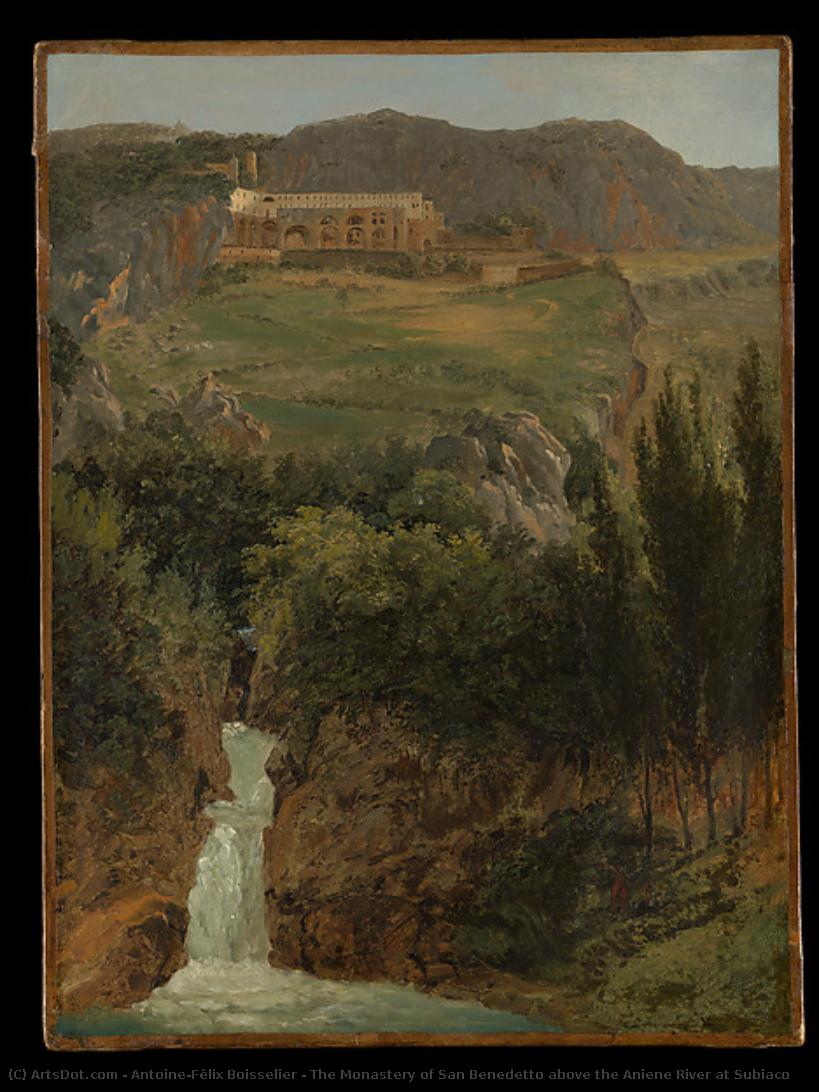
The Monastery of San Benedetto above the Aniene River at Subiaco
 Watercolor
- WallArt
- Romantic Landscape
 1811
1811- 19th Century
 38.0 x 29.0 cm
 Metropolitan Museum of Art
 Read More
Giclée / Art Print
Museum-quality giclée or canvas print with fast production and flexible finish options. ( Buy Hand Made Painting Buy Image)




P118B $10

P118H $10

P118W $10

P438Z $10

P508JH $12

P508YH $12

P805H $10

P805Z $10

P919BZ $10

P919G $10

P919XJ $10

P959ZH $10

P968JZ $12

W106C $8

W218G $10

W218JH $8

W218Y $10

W307PJ $10

W316G $10

W316PJ $8

W316Y $10

W398PJ $8

W4111J $10

W500HY $15

W500JH $15

W692G $12

W849H $8

W940BG $15

W953PJ $8




Pick from our preset sizes that match the artwork's original proportions.

You may enter your own dimensions to fit a specific frame or space. If your selected size does not match the original image's proportions, we will either crop the artwork or extend the image with a mirrored or solid-fill edge. A digital mockup will be sent for your approval before production begins.
Please note that the on-screen preview does not reflect the actual cropping or extension. Only the mockup will accurately show the final composition.
While custom sizes are available, we recommend selecting a dimension from the predefined list to preserve the original proportions.
Worldwide Delivery () in 2 weeks instead of standard 4/5 weeks. (6 September)

Free Worldwide Express Shipping

High-Quality Linen Canvas

Full Shipping Insurance

Customs Tax Refund Guarantee

True Color Matching Guarantee

100-Day Return Policy (Defects Only)

100% Money-Back Guarantee

Bulk Discount Offer
 Glass option is only available in size under 110 CM

The Monastery of San Benedetto above the Aniene River at Subiaco
Giclée / Art Print
Reproduction Size
-


Total Price
$ 63
A Vision of Serenity in the Sabine Hills
To gaze upon this depiction of The Monastery of San Benedetto above the Aniene River at Subiaco is to be transported across time and geography, directly into the heart of Italia's sublime landscape. This painting captures more than just a picturesque view; it encapsulates a moment of profound stillness amidst natural grandeur. The subject matter itself—the ancient monastery nestled against the dramatic backdrop of the Sabine Hills—has long drawn the eye of artists seeking to merge human devotion with untamed nature. Here, Antoine-Félix Boisselier presents this iconic scene, inviting the viewer into a space where contemplation seems not merely suggested, but utterly necessary.
Boisselier's Mastery: Light, Water, and Atmosphere
Technically, the work is a testament to Boisselier’s virtuoso brushwork. He possesses a rare ability to render atmosphere itself as a tangible element. Observe the treatment of the waterfall; it does not merely fall, but seems to dissolve into vapor as it ascends toward the clear, warm sky. This transformation of rushing water into ethereal mist is a hallmark of his genius—a delicate dance between solid form and ephemeral breath. The composition, particularly its vertical orientation, suggests an almost devotional interest in the physical interaction of elements: the weight of the mountain against the lightness of the rising vapor, all framed by the steadfast presence of the distant monastery buildings.
Bridging Eras: Neoclassicism Meets Romantic Spirit
Painted in 1811, this piece sits at a fascinating crossroads in art history. Boisselier’s career saw him navigating the transition from the strictures of Neoclassicism toward the emotional outpouring of Romanticism. While his training provided him with an impeccable attention to form and color—the meticulous rendering of the architecture and foliage speaks to that classical grounding—it is the sheer *feeling* imbued in the landscape that resonates with Romantic fervor. It is a view observed with scientific precision, yet felt with deep, soulful yearning.
Symbolism for the Contemplative Soul
The symbolism woven into this scene is rich and deeply resonant. The monastery itself stands as an enduring symbol of human resilience and spiritual refuge, positioned against the overwhelming power of nature represented by the river and mountains. The confluence of these elements—the built sanctuary versus the wild sublime—invites a dialogue within the viewer. For the collector or decorator, this piece offers more than mere decoration; it is an artifact of contemplation, suggesting a return to simplicity, reflection, and the enduring peace found at the intersection of civilization and wilderness.
Related Artworks
Artist Biography
The Painter of Light and Atmosphere: The Life of Antoine-Félix Boisselier
In the vibrant, shifting landscape of early 19th-century French art, few painters captured the delicate transition from Neoclassical precision to Romantic emotion as gracefully as Antoine-Félix Boisselier. Born in Paris in 1790, Boisselier emerged during a transformative era when the rigid structures of the past were beginning to yield to a more profound, sensory engagement with the natural world. Often referred to as Boisselier le Jeune to distinguish him from his brother Félix, he carved out a unique niche for himself, becoming a master of the landscape—a genre that allowed him to explore the interplay between light, water, and the enduring spirit of the earth.
His artistic foundation was built upon the rigorous classical training provided by Jean-Victor Bertin and his own brother. This education instilled in him an impeccable command of form and composition, a technical discipline that would remain a hallmark of his work even as his style evolved. Around 1811, a pivotal journey to Italy ignited a lifelong fascination with the Mediterranean light and the dramatic topography of the Italian peninsula. These early travels were not merely sightseeing expeditions but profound artistic pilgrimages; his oil studies from this period reveal an artist already deeply enamored with the way sunlight dances across ancient ruins and rugged mountainsides.
A Journey Through Italy and the Romantic Spirit
Boisselier’s career was defined by a restless, searching eye that sought beauty in both the monumental and the ephemeral. His debut at the Salon of 1812 signaled his arrival as a significant voice in Parisian art circles, and he continued to exhibit with distinction for decades. A notable milestone occurred in 1824 when he was awarded a second-class medal at the Salon, a prestigious recognition that solidified his standing among his contemporaries, such as the legendary Camille Corot and Achille Etna Michallon. While he famously placed second in the 1827 Prix de Rome competition for historical landscape, this setback only served to fuel his further explorations of the Italian landscape.
His works from this period are characterized by a remarkable ability to render atmosphere as a tangible, living element. In masterpieces such as The Monastery of San Benedetto above the Aniene River at Subiaco, one can witness his virtuoso brushwork. He possessed a rare gift for capturing the way a waterfall might dissolve into a silver mist or how the heavy weight of a mountain could be balanced by the lightness of rising vapor. This technique allowed him to bridge the gap between two eras: he maintained the structural integrity of Neoclassicism while embracing the sublime and emotional depth central to Romanticism.
Legacy and Artistic Significance
As his career progressed, Boisselier’s subject matter expanded beyond the sun-drenched vistas of Italy to include the rugged beauty of the French provinces. His later works documenting the Auvergne, Dauphiné, and Provence regions demonstrate a continued devotion to the meticulous observation of nature. Whether painting an ancient monastery or a quiet corner of the French countryside, his focus remained on the atmospheric nuances that define a place's soul.
The historical significance of Antoine-Félix Boisselier lies in his role as a stylistic bridge. He stood at the crossroads of art history, helping to transition the landscape genre from a mere backdrop for historical events into a profound medium for emotional expression. His legacy is found in:
- Technical Mastery: The seamless integration of classical anatomical and architectural precision with fluid, expressive brushstrokes.
- Atmospheric Innovation: His pioneering ability to use light and moisture—mist, clouds, and spray—to create a sense of movement and life within a static frame.
- Cultural Documentation: His detailed visual records of the Italian and French landscapes that continue to inspire awe and nostalgia in modern viewers.
Today, Boisselier is remembered not just as a painter of views, but as a poet of the landscape, an artist who understood that to truly paint nature, one must first learn to feel its breath.
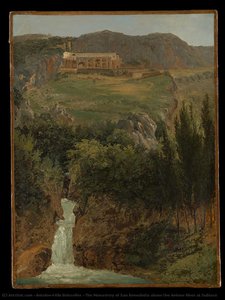
antoine-félix boisselier
1790 - 1857 , France
Quick Facts
- Artistic Movement Or Style: Neoclassicism and Romanticism
- Artists Who Influenced This Artist:
- Jean-Victor Bertin
- Félix Boisselier
- Date Of Birth: 1790
- Date Of Death: 1857
- Full Name: Antoine-Félix Boisselier
- Nationality: French
- Notable Artworks:
- The Monastery of San Benedetto
- The Gorges at Amalfi
- Place Of Birth: Paris, France
Related Articles

John Constable's Masterpieces: Explore 25 Iconic Landscapes for Your Home
Journey through John Constable's 25 most celebrated landscapes. Explore Romanticism, Dedham Vale & his masterful use of light in iconic paintings like 'Hay Wain'. Find museum-quality art reproductions and elevate your home decor on ArtsDot.com.

Romantic Landscapes: 10 Masterpieces for Your Home | ArtsDot
Journey through 10 Romantic landscape masterpieces by Friedrich, Turner & Cole. Explore emotional art, sublime nature scenes & iconic 19th-century paintings. Find museum-quality reproductions for your home at ArtsDot.com – discover the full collection online!

Evocations of Place: A Historical Journey Through Landscape Art
Explore the rich history of landscape art with ArtsDot. Discover renowned artists, movements like Impressionism & Romanticism, and expert guidance for collecting timeless pieces. Find your perfect serene escape today!

Evoking Atmosphere & Identity: A Journey Through Landscape Painting's History
Explore the rich history of landscape painting! Discover renowned artists, movements like Romanticism, & techniques such as atmospheric perspective. Find inspiration and quality reproductions at ArtsDot.
Evocations of Place: A Historical Journey Through Landscape Art
Explore the rich history of landscape art with ArtsDot. Discover renowned artists, movements like Impressionism & tonalism, and expert guidance for collecting timeless pieces. Find your perfect serene escape today!