 Preview
 Send
Send Share
Share
 Details

 Download
 Similars
 X-Ray
X-Ray Diaporama
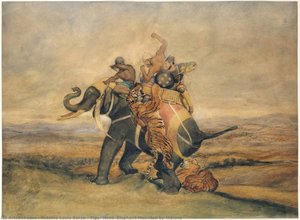
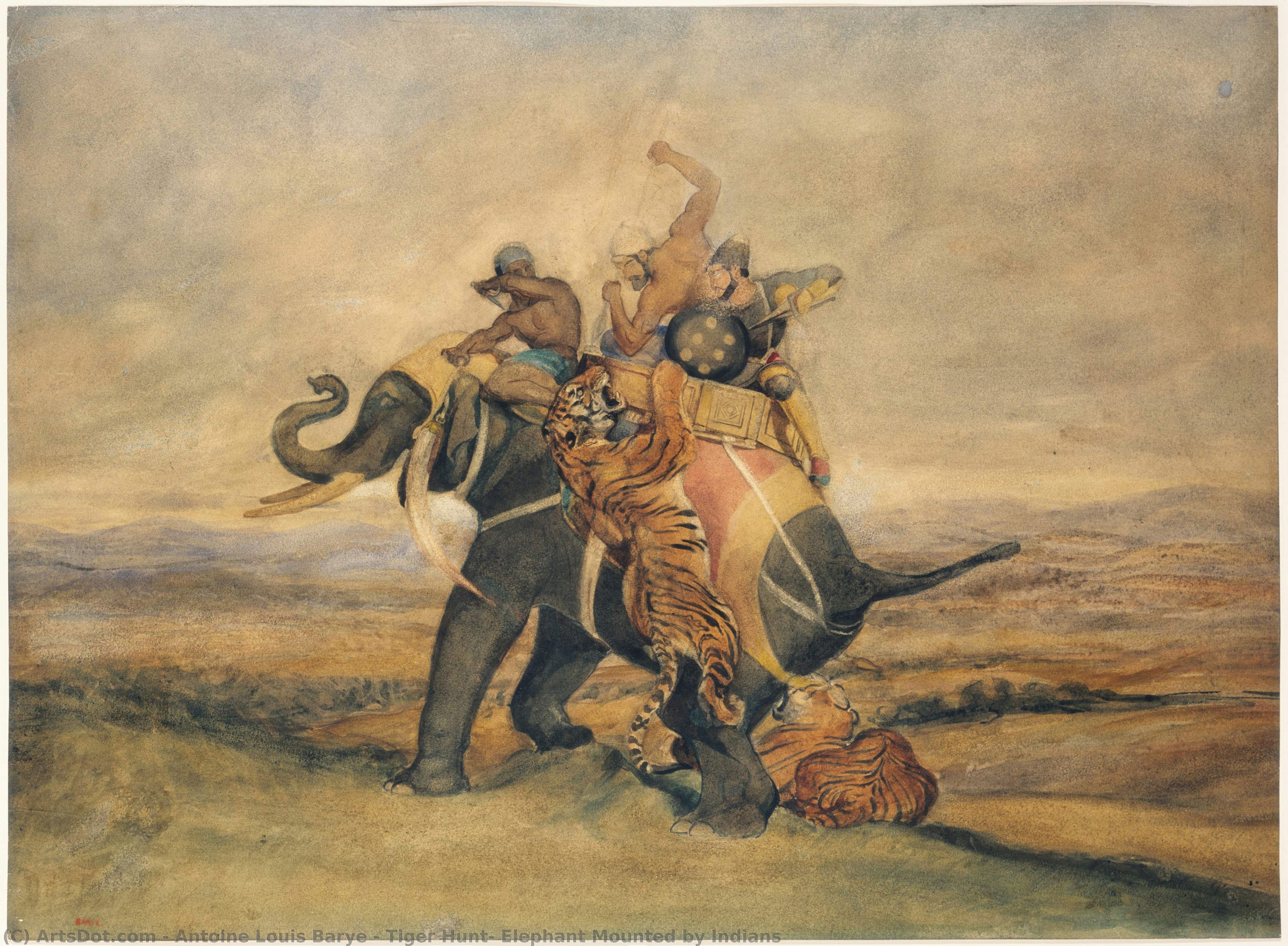
Tiger Hunt, Elephant Mounted by Indians


 Read More
Giclée / Art Print
Museum-quality giclée or canvas print with fast production and flexible finish options. ( Buy Hand Made Painting Buy Image)




P118B $10

P118H $10

P118W $10

P438Z $10

P508JH $12

P508YH $12

P805H $10

P805Z $10

P919BZ $10

P919G $10

P919XJ $10

P959ZH $10

P968JZ $12

W106C $8

W218G $10

W218JH $8

W218Y $10

W307PJ $10

W316G $10

W316PJ $8

W316Y $10

W398PJ $8

W4111J $10

W500HY $15

W500JH $15

W692G $12

W849H $8

W940BG $15

W953PJ $8




Pick from our preset sizes that match the artwork's original proportions.

You may enter your own dimensions to fit a specific frame or space. If your selected size does not match the original image's proportions, we will either crop the artwork or extend the image with a mirrored or solid-fill edge. A digital mockup will be sent for your approval before production begins.
Please note that the on-screen preview does not reflect the actual cropping or extension. Only the mockup will accurately show the final composition.
While custom sizes are available, we recommend selecting a dimension from the predefined list to preserve the original proportions.
Worldwide Delivery () in 2 weeks instead of standard 4/5 weeks. (21 August)

Free Worldwide Express Shipping

High-Quality Linen Canvas

Full Shipping Insurance

Customs Tax Refund Guarantee

True Color Matching Guarantee

60-Day Return Policy (Defects Only)

100% Money-Back Guarantee

Bulk Discount Offer
 Glass option is only available in size under 110 CM

Tiger Hunt, Elephant Mounted by Indians
Giclée / Art Print
Reproduction Size
-


Total Price
$ 63
Collectible Description
The Drama of the Wild: Capturing Motion in Barye's Vision
To stand before a depiction such as this Tiger Hunt, Elephant Mounted by Indians, is to be instantly transported into a moment ripped from the heart of the exotic and untamed world. Antoine-Louis Barye, master chronicler of the animal kingdom, did not merely paint or sculpt scenes; he captured visceral energy. This artwork pulsates with narrative tension. The composition centers around the magnificent interplay between man's organized power—represented by the imposing elephants—and the raw, predatory grace of the tiger. One feels the dust kicked up by hooves and the taut anticipation before a decisive strike. It is a tableau vivant, frozen at its apex of thrilling action.
A Masterclass in Animalier Genre
Barye’s genius lay in his pioneering dedication to the animalier genre. While many artists treated animals as mere props or background elements, Barye elevated them to subjects worthy of profound study and dramatic portrayal. Observe the musculature of the elephants, the alertness in the riders' postures, and the coiled potential within the tiger itself. His technique, whether translated through sculpture or painting, always emphasized anatomical veracity coupled with Romantic fervor. The inclusion of multiple figures—the standing observers, the mounted attendants, and the distant bird—builds a rich tapestry of human interaction with nature, suggesting a complex ecosystem where survival is paramount.
Historical Echoes and Cultural Exchange
The setting itself speaks volumes about the era's fascination with global encounters. The presence of Indian mounts suggests an engagement with colonial-era narratives and the vast reach of European artistic curiosity across continents. These hunts were not just sport; they were cultural spectacles, documented by artists who sought to catalogue the perceived wildness of distant lands for a sophisticated Parisian audience. Owning a reproduction of this piece allows one to bring home not just a painting, but a tangible echo of 19th-century global exploration and artistic ambition.
Emotional Resonance for the Modern Collector
For the contemporary collector or designer, this artwork offers more than mere decoration; it provides an emotional anchor. It speaks to our enduring fascination with untamed power and controlled spectacle. The deep drama inherent in the scene—the thrill of the chase juxtaposed against the steadfast strength of the elephants—lends itself beautifully to grand interiors. Imagine its presence lending a sense of epic adventure to a drawing-room or study. Barye invites us to feel the adrenaline, to appreciate the sheer, breathtaking power contained within every painted stride.
Related Artworks

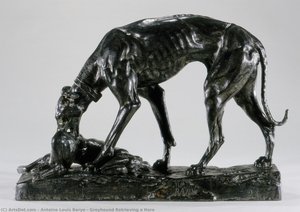
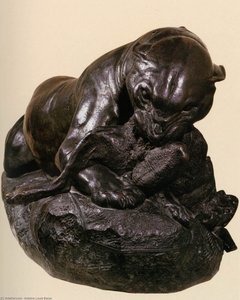
Artist Biography
A Pioneer of Animal Sculpture: The Life and Legacy of Antoine-Louis Barye
Antoine-Louis Barye, born in Paris on September 24, 1795, emerged as a pivotal figure in the world of 19th-century sculpture. He wasn’t merely depicting animals; he was imbuing them with a dramatic intensity and anatomical accuracy previously unseen, effectively launching the *animalier* genre – a dedicated focus on animal forms – into the realm of fine art. Barye's journey began not in the studio of a sculptor, but as an apprentice goldsmith following in his father’s footsteps. This early training instilled within him a meticulous attention to detail and a mastery of technique that would prove invaluable throughout his career. He honed these skills further under sculptors like François-Joseph Bosio and Baron Antoine-Jean Gros, absorbing classical principles while simultaneously developing a uniquely Romantic sensibility. His formal education at the École des Beaux-Arts provided a solid foundation, but it was an encounter with the living world – specifically, the animals housed within the Jardin des Plantes in Paris around 1823 – that truly ignited his artistic vision.From Goldsmith to Animalier: The Development of a Unique Style
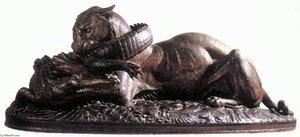
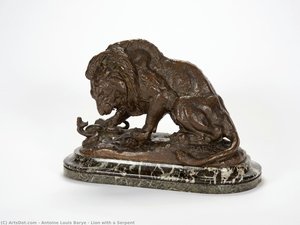
Barye’s dedication to observing animals was obsessive. He didn't simply glance; he studied, sketched, and meticulously analyzed their anatomy, movements, and behaviors. This commitment to realism wasn’t cold or clinical, however. It was infused with the emotional fervor characteristic of the Romantic movement. Early works like “Milo of Crotana Devoured by a Lion” (1819) and “Hercules with the Erymanthean Boar” (c. 1820), created while still a student, hinted at his emerging talent for dynamic composition and dramatic narrative. But it was with sculptures such as "Tiger Devouring a Gavial Crocodile" (1831) – a monumental plaster that caused a sensation at the Salon – and “Lion Crushing a Serpent” (1832), cast in bronze, that Barye truly established his signature style. These weren’t static representations; they were moments of raw power frozen in time, capturing the brutal beauty of nature's struggle for survival. He moved beyond mere imitation to convey the very essence of animal life – their strength, agility, and untamed spirit. His work resonated with a growing public fascination with the exotic and the wild, reflecting a Romantic yearning for experiences beyond the confines of civilized society.Major Works and Monumental Commissions
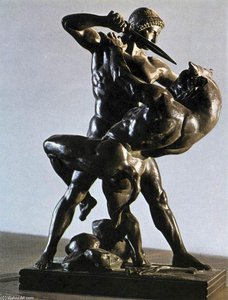
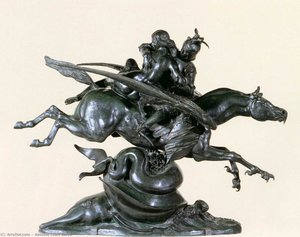
Throughout his career, Barye produced an astonishing array of sculptures, each demonstrating his unparalleled skill in capturing animal form and movement. Beyond the iconic “Tiger Devouring a Gavial Crocodile” and “Lion Crushing a Serpent,” masterpieces like "Theseus and the Minotaur" (1843), “Roger and Angelica on the Hippogriff” (1846), “Lapitha and Centaur” (1848) and “Jaguar Devouring a Hare” (1850) showcased his versatility and imaginative power. He wasn’t limited to depictions of predatory encounters; he also explored mythological scenes, imbuing them with the same dynamic energy and anatomical precision that defined his animal studies. His talent extended beyond smaller-scale bronzes as well. Barye received prestigious commissions for monumental works, including the “Lion of the Column of July,” a powerful symbol of French resilience, and sculptures adorning the Tuileries Garden in Paris. These large-scale projects demonstrated his ability to translate his artistic vision into public art, solidifying his reputation as one of France’s leading sculptors.Influences, Struggles, and Lasting Significance
Barye's work was a synthesis of diverse influences. The Romantic emphasis on emotion and individualism is palpable in the dramatic tension of his sculptures. Simultaneously, he drew inspiration from classical art, evident in his attention to anatomical accuracy and idealized forms. However, what truly set him apart was his scientific approach to observation – a direct result of his countless hours spent studying animals at the Jardin des Plantes. Despite achieving critical acclaim, Barye’s life wasn't without hardship. He struggled with financial difficulties throughout much of his career, largely due to poor business acumen. A bankruptcy in 1848 forced him to sell his models and molds, leading to a period where inferior copies flooded the market, damaging his reputation. He found some stability as Professor of Drawings at the Museum of Natural History in 1854, but it was only posthumously that his genius received its full due. Today, Antoine-Louis Barye is recognized as the father of modern animal sculpture. His influence on subsequent generations of artists is undeniable, and his works are celebrated for their power, realism, and enduring beauty. He elevated the *animalier* genre from a niche pursuit to a respected form of artistic expression, leaving an indelible mark on the history of sculpture. His legacy continues to inspire awe and admiration in collectors and museums worldwide.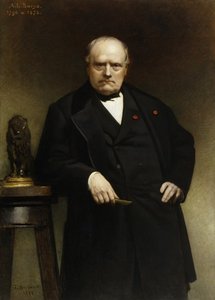
Antoine-Louis Barye
1796 - 1875 , France
Quick Facts
- Artistic Movement Or Style: Romanticism
- Artists Or Movements Influenced By This Artist: ['Animal sculptors']
- Artists Who Influenced This Artist:
- Francois-Joseph Bosio
- Baron Antoine-Jean Gros
- Date Of Birth: September 24, 1795
- Date Of Death: June 25, 1875
- Full Name: Antoine-Louis Barye
- Nationality: French
- Notable Artworks:
- Tiger Devouring a Gavial
- Lion Crushing a Serpent
- Theseus and the Minotaur
- Roger & Angelica
- Lapitha and Centaur
- Jaguar Devouring Hare
- Place Of Birth: Paris, France
Related Articles
Animalia: Exploring the Enduring Presence of Animals in Art & Interior Design
Explore the rich history of animal symbolism in art, from ancient mythology to modern masterpieces. Discover how animals have inspired artists for centuries and learn how to incorporate these powerful motifs into your home décor.

Giclée Prints: Archival Quality & Aesthetic Nuances for the Discerning Collector
Explore the world of giclée prints with ArtsDot. Learn about archival quality, aesthetic nuances & investment potential. Expert guidance for discerning art collectors seeking museum-quality reproductions and lasting value.

Echoes of Time: Exploring the Enduring Appeal & Historical Context of Vintage Art Prints
Explore the captivating world of vintage art prints! Discover their history, collecting tips & enduring appeal. Expert insights on chromolithography and building a legacy collection with ArtsDot.

The Enduring Legacy of Fine Art Prints: Technique, History & Aesthetic Impact
Explore the rich history & techniques of fine art prints. Discover investment potential, assess authenticity, and learn how to preserve your collection with expert guidance. Trusted insights for discerning collectors.
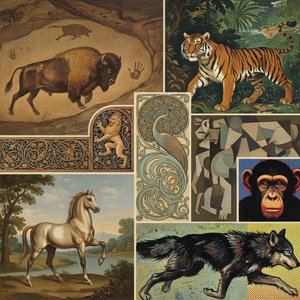
Beastly Brushstrokes: A Historical Journey Through Animal Painting & Aesthetic Movements
Explore the rich history of animal painting across cultures & movements. Discover iconic artists, symbolism, collecting trends & expert art consultation at ArtsDot.com.